Data may be outdated
Last updated: 9 months ago — Click refresh to get the latest statistics.
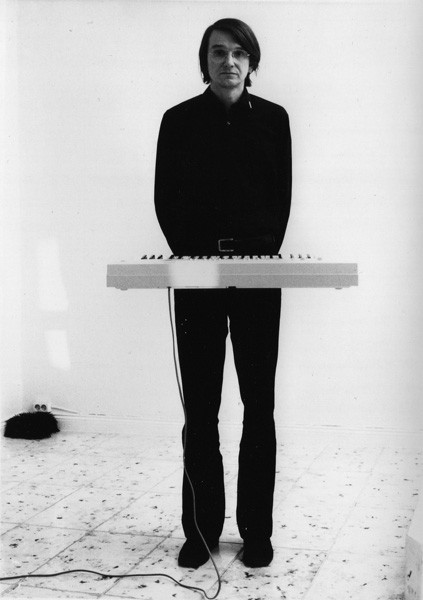
Active since the mid-'60s, synthesizer experimentalist and musique concrète producer Asmus Tietchens has been a major influence on several generations of avant-garde electronic musicians and sound artists. Heavily inspired by <a href="spotify:artist:5PkKmEWhfJ9jHVHXbZl0Ks">Karlheinz Stockhausen</a>, he has pursued "absolute music" through rigid formal exercises. His music is often harsh, alien, and abstract, but he's also recorded several albums of strangely playful material, including a handful of early-'80s <a href="spotify:search:label%3A%22Sky+Records%22">Sky Records</a> releases as well as later works as Hematic Sunsets. In addition to releasing over 100 recordings (including collaborations with <a href="spotify:artist:5UezsklPScipW64XJm7qql">Merzbow</a>, <a href="spotify:artist:2IZOC3H2mKRvJ5F1R34nuR">Vidna Obmana</a>, and <a href="spotify:artist:02H68OmCeljWgjoVQVOB1v">Thomas Köner</a>), Tietchens has taught acoustics at Hamburg universities since 1990, and he has written liner notes for dozens of albums released by the <a href="spotify:search:label%3A%22Bureau+B%22">Bureau B</a> label, particularly reissues of <a href="spotify:artist:5mNY0NPszdalbrb4ITO3M8">Cluster</a>-related albums.
Born in 1947 and based in Hamburg, Tietchens listened to German radio as a child and heard pioneering electric transmissions by the likes of <a href="spotify:artist:5PkKmEWhfJ9jHVHXbZl0Ks">Stockhausen</a> and <a href="spotify:artist:3qiDj7i2mPLTppN6wX7d0I">Gottfried Michael Koenig</a>. He began recording his own home experiments in 1965 with crude reverb devices and picked up a MiniMoog several years later. Also influenced by atonal Krautrockers like <a href="spotify:artist:5mNY0NPszdalbrb4ITO3M8">Cluster</a> and <a href="spotify:artist:4yBBNmdvVaoPEnr2lt14q7">Faust</a>, Tietchens met <a href="spotify:artist:6MVq6VQTSpc7T6xdH2dgEd">Okko Bekker</a> and began a partnership that lasted for decades (<a href="spotify:artist:6MVq6VQTSpc7T6xdH2dgEd">Bekker</a> has produced most of Tietchens' work). Tietchens participated in Liliental, a supergroup featuring <a href="spotify:artist:5mNY0NPszdalbrb4ITO3M8">Cluster</a>'s Dieter Moebius, engineer <a href="spotify:artist:1NvaYXFBSMlgokdn84mOkx">Conny Plank</a>, bassist <a href="spotify:artist:1N7NX0OiC8GYf79unh77nL">Hellmut Hattler</a>, sax player Johannes Pappert, and <a href="spotify:artist:6MVq6VQTSpc7T6xdH2dgEd">Bekker</a>. Their self-titled album was released by <a href="spotify:search:label%3A%22Brain%22">Brain</a> in 1978.
After <a href="spotify:artist:1BGN1IdyiSR0ZYrkoKNchl">Tangerine Dream</a>'s <a href="spotify:artist:4u9mLb6exlbHuNehyJ11jq">Peter Baumann</a> heard a tape of his work, he produced Tietchens' debut album, Nachtstücke, released in 1980 on the French label <a href="spotify:search:label%3A%22Egg%22">Egg</a>. His four albums for <a href="spotify:search:label%3A%22Sky%22">Sky</a> during the early '80s (Biotop, Spät-Europa, In die Nacht, Litia) focused on surprisingly accessible electronic pop, though 1984's Formen Letzter Hausmusik (recorded for <a href="spotify:artist:7BqVdvWeMLlWkZAOGRPe0I">Nurse with Wound</a>'s <a href="spotify:search:label%3A%22United+Dairies%22">United Dairies</a> label) began a period of more abstract, concrète recordings that often use tape experiments as well as synthesizers. These include albums released by A-Mission Records, Discos Esplendor Geométrico, and <a href="spotify:search:label%3A%22Multimood%22">Multimood</a>. In 1986, upon invitation from the Goethe-Institute, he began traveling to South America to present lecture-concerts of his work, after which he began teaching in Hamburg.
During the '90s, Tietchens recorded for dozens of experimental labels including <a href="spotify:search:label%3A%22Barooni%22">Barooni</a>, <a href="spotify:search:label%3A%22Staalplaat%22">Staalplaat</a> and <a href="spotify:search:label%3A%22Syrenia%22">Syrenia</a>. In 2000, he initiated the Menge series of extremely minimal microsound works, initially released by <a href="spotify:search:label%3A%22Mille+Plateaux%22">Mille Plateaux</a> sublabel <a href="spotify:search:label%3A%22Ritornell%22">Ritornell</a> and later continued on <a href="spotify:artist:0GjxGQsnFjuHfQUE9vMmCY">Richard Chartier</a>'s <a href="spotify:search:label%3A%22Line%22">Line</a> imprint. In 2003, <a href="spotify:search:label%3A%22Die+Stadt%22">Die Stadt</a> began reissuing Tietchens' early albums on CD for the first time, starting with the <a href="spotify:search:label%3A%22Sky%22">Sky</a> releases. Tietchens wrote liner notes for these reissues, as well as reissues of <a href="spotify:artist:5mNY0NPszdalbrb4ITO3M8">Cluster</a>-related albums. In 2012, Tietchens collaborated with Moebius for a self-titled album issued by <a href="spotify:search:label%3A%22Bureau+B%22">Bureau B</a>. The label subsequently reissued the <a href="spotify:search:label%3A%22Sky%22">Sky</a> albums on CD and vinyl, with the bonus tracks from the <a href="spotify:search:label%3A%22Die+Stadt%22">Die Stadt</a> reissues compiled as Der Fünfte Himmel. He continued releasing new works on labels such as <a href="spotify:search:label%3A%22Auf+Abwegen%22">Auf Abwegen</a> and Stille Andacht. ~ John Bush & Paul Simpson, Rovi
Born in 1947 and based in Hamburg, Tietchens listened to German radio as a child and heard pioneering electric transmissions by the likes of <a href="spotify:artist:5PkKmEWhfJ9jHVHXbZl0Ks">Stockhausen</a> and <a href="spotify:artist:3qiDj7i2mPLTppN6wX7d0I">Gottfried Michael Koenig</a>. He began recording his own home experiments in 1965 with crude reverb devices and picked up a MiniMoog several years later. Also influenced by atonal Krautrockers like <a href="spotify:artist:5mNY0NPszdalbrb4ITO3M8">Cluster</a> and <a href="spotify:artist:4yBBNmdvVaoPEnr2lt14q7">Faust</a>, Tietchens met <a href="spotify:artist:6MVq6VQTSpc7T6xdH2dgEd">Okko Bekker</a> and began a partnership that lasted for decades (<a href="spotify:artist:6MVq6VQTSpc7T6xdH2dgEd">Bekker</a> has produced most of Tietchens' work). Tietchens participated in Liliental, a supergroup featuring <a href="spotify:artist:5mNY0NPszdalbrb4ITO3M8">Cluster</a>'s Dieter Moebius, engineer <a href="spotify:artist:1NvaYXFBSMlgokdn84mOkx">Conny Plank</a>, bassist <a href="spotify:artist:1N7NX0OiC8GYf79unh77nL">Hellmut Hattler</a>, sax player Johannes Pappert, and <a href="spotify:artist:6MVq6VQTSpc7T6xdH2dgEd">Bekker</a>. Their self-titled album was released by <a href="spotify:search:label%3A%22Brain%22">Brain</a> in 1978.
After <a href="spotify:artist:1BGN1IdyiSR0ZYrkoKNchl">Tangerine Dream</a>'s <a href="spotify:artist:4u9mLb6exlbHuNehyJ11jq">Peter Baumann</a> heard a tape of his work, he produced Tietchens' debut album, Nachtstücke, released in 1980 on the French label <a href="spotify:search:label%3A%22Egg%22">Egg</a>. His four albums for <a href="spotify:search:label%3A%22Sky%22">Sky</a> during the early '80s (Biotop, Spät-Europa, In die Nacht, Litia) focused on surprisingly accessible electronic pop, though 1984's Formen Letzter Hausmusik (recorded for <a href="spotify:artist:7BqVdvWeMLlWkZAOGRPe0I">Nurse with Wound</a>'s <a href="spotify:search:label%3A%22United+Dairies%22">United Dairies</a> label) began a period of more abstract, concrète recordings that often use tape experiments as well as synthesizers. These include albums released by A-Mission Records, Discos Esplendor Geométrico, and <a href="spotify:search:label%3A%22Multimood%22">Multimood</a>. In 1986, upon invitation from the Goethe-Institute, he began traveling to South America to present lecture-concerts of his work, after which he began teaching in Hamburg.
During the '90s, Tietchens recorded for dozens of experimental labels including <a href="spotify:search:label%3A%22Barooni%22">Barooni</a>, <a href="spotify:search:label%3A%22Staalplaat%22">Staalplaat</a> and <a href="spotify:search:label%3A%22Syrenia%22">Syrenia</a>. In 2000, he initiated the Menge series of extremely minimal microsound works, initially released by <a href="spotify:search:label%3A%22Mille+Plateaux%22">Mille Plateaux</a> sublabel <a href="spotify:search:label%3A%22Ritornell%22">Ritornell</a> and later continued on <a href="spotify:artist:0GjxGQsnFjuHfQUE9vMmCY">Richard Chartier</a>'s <a href="spotify:search:label%3A%22Line%22">Line</a> imprint. In 2003, <a href="spotify:search:label%3A%22Die+Stadt%22">Die Stadt</a> began reissuing Tietchens' early albums on CD for the first time, starting with the <a href="spotify:search:label%3A%22Sky%22">Sky</a> releases. Tietchens wrote liner notes for these reissues, as well as reissues of <a href="spotify:artist:5mNY0NPszdalbrb4ITO3M8">Cluster</a>-related albums. In 2012, Tietchens collaborated with Moebius for a self-titled album issued by <a href="spotify:search:label%3A%22Bureau+B%22">Bureau B</a>. The label subsequently reissued the <a href="spotify:search:label%3A%22Sky%22">Sky</a> albums on CD and vinyl, with the bonus tracks from the <a href="spotify:search:label%3A%22Die+Stadt%22">Die Stadt</a> reissues compiled as Der Fünfte Himmel. He continued releasing new works on labels such as <a href="spotify:search:label%3A%22Auf+Abwegen%22">Auf Abwegen</a> and Stille Andacht. ~ John Bush & Paul Simpson, Rovi
Monthly Listeners
2,385
Monthly Listeners History
Track the evolution of monthly listeners over the last 28 days.
Followers
4,800
Followers History
Track the evolution of followers over the last 28 days.
Top Cities
82 listeners

39 listeners

36 listeners

29 listeners
27 listeners

Related Artists




Tod Dockstader

Maurizio Bianchi
Christina Kubisch


Langham Research Centre


Marina Rosenfeld



Geographic North House Band

Claudio Rocchetti
Lieven Martens


Geoffrey D'Ombrain

Harry Bertoia

Andrew Liles