Data may be outdated
Last updated: 9 months ago — Click refresh to get the latest statistics.
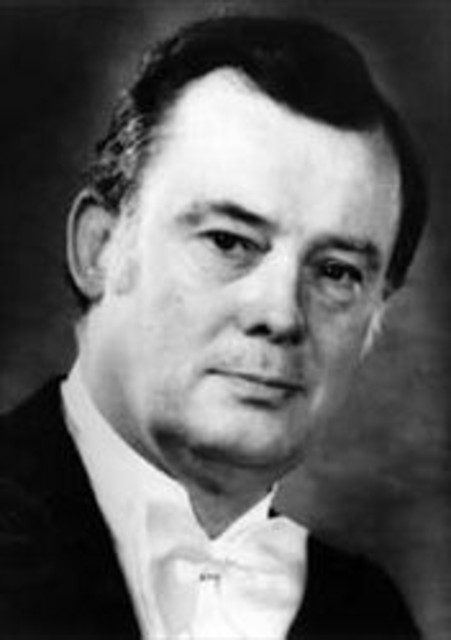
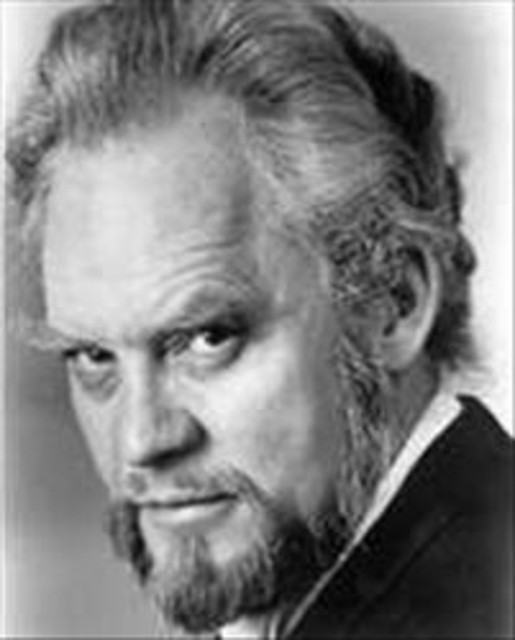
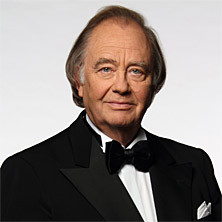
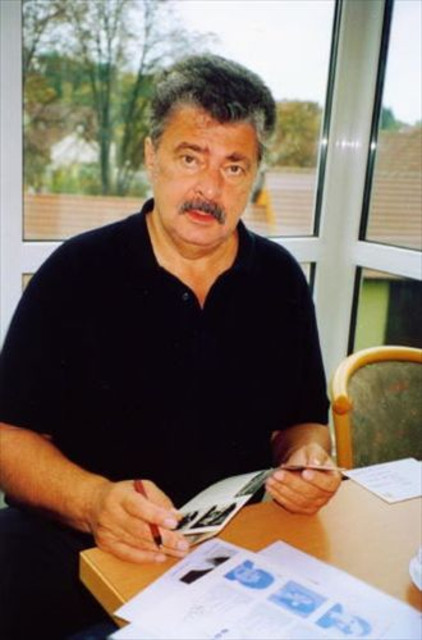
This Austrian singer, whose career trajectory has taken him from lyric to dramatic baritone, has established himself as a strong and reliable artist. At his first appearance in Bayreuth as Wolfram, Weikl revealed a linear, compact instrument with a quick vibrato. While by no means a bass baritone, his lower voice has gained in amplitude over the years, allowing him to fill out the deeper reaches of such roles as <a href="spotify:artist:1C1x4MVkql8AiABuTw6DgE">Wagner</a>'s Dutchman and Hans Sachs, and <a href="spotify:artist:6pAwHPeExeUbMd5w7Iny6D">Strauss</a>' Barak and Mandryka. Indeed, his handsome, burly appearance is now matched by the sound and texture of his expanded voice. By no means a penetrating actor, Weikl still brings earnest intent and solid craft to his stage performances. In addition to the heavier German repertory, Weikl has shown consistent interest in Italian roles, at one point recording an accomplished Rigoletto.
Following studies at Mainz and Hanover, Weikl made his stage debut at the latter city in 1968, singing Ottokar in <a href="spotify:artist:1p6wR69pnH9LBWZvwliuz2">Weber</a>'s Der Freischütz. He joined the company at Düsseldorf in 1970, remaining with that theater for three years. During that period, he was engaged by <a href="spotify:artist:5zCaQxjl110XTrm4LQ1CxY">Karajan</a> for Melot at the 1971 Salzburg Festival and, the year after, made his debut at the Bayreuth Festival as Wolfram. His first-season success led to further engagements as the Herald, Amfortas, and later, Hans Sachs.
For his London debut, <a href="spotify:artist:0roWUeP7Ac4yK4VN6L2gF4">Rossini</a>'s Figaro was the role -- an interpretation noted as boisterous, but somewhat Germanic. Weikl's Metropolitan Opera debut on December 2, 1977, found him singing Wolfram once more, enjoying another success with the part. Subsequently, he has returned to the Metropolitan as Orest, Jochanaan, Amfortas, Mandryka, and Hans Sachs.
Other theaters throughout Europe were likewise as quick to engage Weikl; he became a celebrated singer in his native Vienna as well as in Munich, Berlin, and Hamburg. Industrious in adding new parts, the singer can now boast more than 100 characters in his inventory. Beyond the Continent, he is best-known for his <a href="spotify:artist:1C1x4MVkql8AiABuTw6DgE">Wagner</a> and <a href="spotify:artist:6pAwHPeExeUbMd5w7Iny6D">Strauss</a> roles, but in Austria and Germany he has just as often sung the Italian, Russian, and French repertories; these include such figures as <a href="spotify:artist:1JOQXgYdQV2yfrhewqx96o">Verdi</a>'s Posa, Count di Luna, Ford and Simon Boccanegra, <a href="spotify:artist:4NJhFmfw43RLBLjQvxDuRS">Mozart</a>'s Don Giovanni (recorded with <a href="spotify:artist:0dicUFoK5LIbqu6OoHu8VH">Solti</a>), Count Almaviva, Guglielmo, <a href="spotify:artist:3MKCzCnpzw3TjUYs2v7vDA">Tchaikovsky</a>'s Yevgeny Onegin (also recorded with <a href="spotify:artist:0dicUFoK5LIbqu6OoHu8VH">Solti</a>), Tomsky, Morone in <a href="spotify:artist:5fKj8IWs9IV1F2xerI6SGD">Pfitzner</a>'s Palestrina, and Goloud. Although his primary focus has remained on opera, Weikl is also a positive presence on the concert stage, both as a soloist in choral works and as a recitalist. These activities have largely been centered in Europe.
Of Weikl's many recordings, several deserve special attention. His Hans Sachs, recorded with Cheryl Studer, Ben Heppner, and Kurt Moll under the mature and understanding direction of <a href="spotify:artist:4VFBTPFWvhecBc2BWYOQkF">Wolfgang Sawallisch</a> is worth searching out. His Dutchman with <a href="spotify:artist:3d1jQ9OG2p2PW3rzzTspDY">Sinopoli</a> has much of the requisite torment and is firmly sung. His Eugene Onegin, recorded with a good cast and lovingly led by <a href="spotify:artist:0dicUFoK5LIbqu6OoHu8VH">Solti</a> is worth pursuing, as is his Cardinal Morone in <a href="spotify:artist:1JlF2VuyOSOasy8ZxCbD6C">Kubelik</a>'s recording of Palestrina, captured in excellent sound.
Following studies at Mainz and Hanover, Weikl made his stage debut at the latter city in 1968, singing Ottokar in <a href="spotify:artist:1p6wR69pnH9LBWZvwliuz2">Weber</a>'s Der Freischütz. He joined the company at Düsseldorf in 1970, remaining with that theater for three years. During that period, he was engaged by <a href="spotify:artist:5zCaQxjl110XTrm4LQ1CxY">Karajan</a> for Melot at the 1971 Salzburg Festival and, the year after, made his debut at the Bayreuth Festival as Wolfram. His first-season success led to further engagements as the Herald, Amfortas, and later, Hans Sachs.
For his London debut, <a href="spotify:artist:0roWUeP7Ac4yK4VN6L2gF4">Rossini</a>'s Figaro was the role -- an interpretation noted as boisterous, but somewhat Germanic. Weikl's Metropolitan Opera debut on December 2, 1977, found him singing Wolfram once more, enjoying another success with the part. Subsequently, he has returned to the Metropolitan as Orest, Jochanaan, Amfortas, Mandryka, and Hans Sachs.
Other theaters throughout Europe were likewise as quick to engage Weikl; he became a celebrated singer in his native Vienna as well as in Munich, Berlin, and Hamburg. Industrious in adding new parts, the singer can now boast more than 100 characters in his inventory. Beyond the Continent, he is best-known for his <a href="spotify:artist:1C1x4MVkql8AiABuTw6DgE">Wagner</a> and <a href="spotify:artist:6pAwHPeExeUbMd5w7Iny6D">Strauss</a> roles, but in Austria and Germany he has just as often sung the Italian, Russian, and French repertories; these include such figures as <a href="spotify:artist:1JOQXgYdQV2yfrhewqx96o">Verdi</a>'s Posa, Count di Luna, Ford and Simon Boccanegra, <a href="spotify:artist:4NJhFmfw43RLBLjQvxDuRS">Mozart</a>'s Don Giovanni (recorded with <a href="spotify:artist:0dicUFoK5LIbqu6OoHu8VH">Solti</a>), Count Almaviva, Guglielmo, <a href="spotify:artist:3MKCzCnpzw3TjUYs2v7vDA">Tchaikovsky</a>'s Yevgeny Onegin (also recorded with <a href="spotify:artist:0dicUFoK5LIbqu6OoHu8VH">Solti</a>), Tomsky, Morone in <a href="spotify:artist:5fKj8IWs9IV1F2xerI6SGD">Pfitzner</a>'s Palestrina, and Goloud. Although his primary focus has remained on opera, Weikl is also a positive presence on the concert stage, both as a soloist in choral works and as a recitalist. These activities have largely been centered in Europe.
Of Weikl's many recordings, several deserve special attention. His Hans Sachs, recorded with Cheryl Studer, Ben Heppner, and Kurt Moll under the mature and understanding direction of <a href="spotify:artist:4VFBTPFWvhecBc2BWYOQkF">Wolfgang Sawallisch</a> is worth searching out. His Dutchman with <a href="spotify:artist:3d1jQ9OG2p2PW3rzzTspDY">Sinopoli</a> has much of the requisite torment and is firmly sung. His Eugene Onegin, recorded with a good cast and lovingly led by <a href="spotify:artist:0dicUFoK5LIbqu6OoHu8VH">Solti</a> is worth pursuing, as is his Cardinal Morone in <a href="spotify:artist:1JlF2VuyOSOasy8ZxCbD6C">Kubelik</a>'s recording of Palestrina, captured in excellent sound.
Monthly Listeners
9,652
Monthly Listeners History
Track the evolution of monthly listeners over the last 28 days.
Followers
473
Followers History
Track the evolution of followers over the last 28 days.
Top Cities


Related Artists
Adolf Dallapozza




Josephine Veasey


Ferry Gruber
Franz Muxeneder
Donald Grobe
Waldemar Kmentt
Karl Dönch
Regina Resnik