Data may be outdated
Last updated: 5 months ago — Click refresh to get the latest statistics.
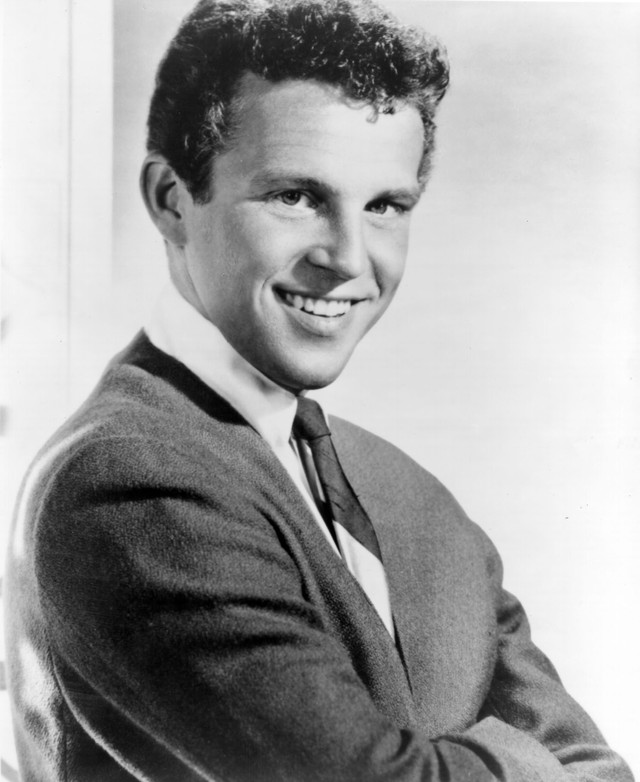
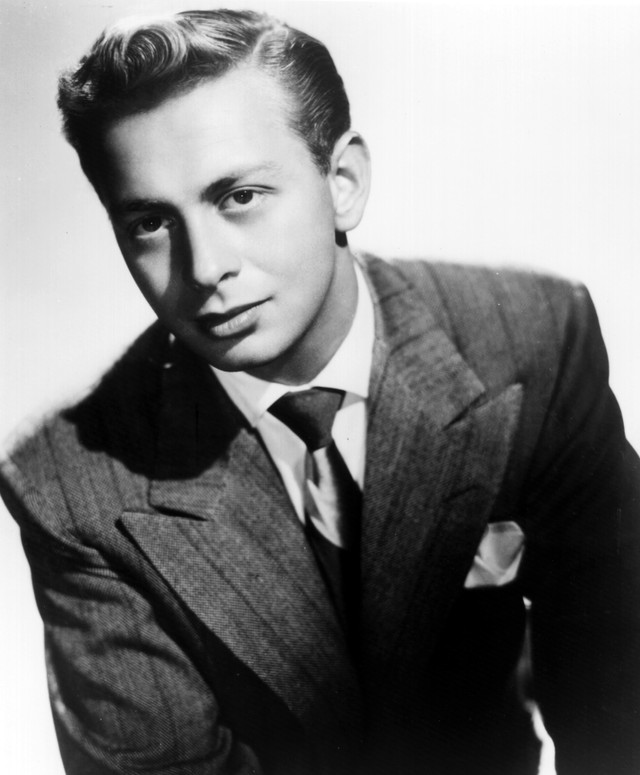
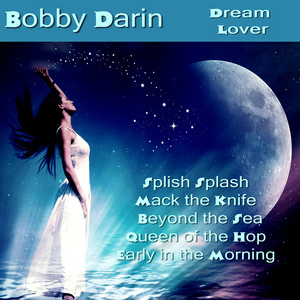
When Darin had his first hits in the late '50s, he was a teen idol of sorts, albeit a teen idol with much more talent and mature command than the typical singer in that style. The novelty-tinged "Splish Splash" was his breakthrough smash, followed by "Queen of the Hop" and the ballad "Dream Lover." There was a slight R&B feel to Darin's delivery that may well have influenced R&B-pop/rock singers such as <a href="spotify:artist:15FyiY3ChN0QRspHIQYq0W">Dion</a>, though it would be an exaggeration to call Darin a blue-eyed soul man. In late 1959, he found a new direction when the swinging "Mack the Knife," a tune from <a href="spotify:artist:0uZEznXmvyfBOsANICyyxT">Brecht</a>-<a href="spotify:artist:69a1b61a56mJlx8iAUMBsY">Weill</a>'s musicalThreepenny Opera, made number one. The song came from an album of pop standards, heralding his move toward light big-band jazz, which was consolidated by the Top Ten success of "Beyond the Sea" in 1960.
In the early '60s, Darin had mostly abandoned rock for the adult pop market, becoming a huge success on the Vegas-nightclub circuit, and moving into the all-around entertainer mode with starring roles in movies (including one as a non-singing jazz musician in John Cassavetes' Too Young Blues). He also continued to score regular hits with the likes of "You Must Have Been a Beautiful Baby," "Things," and "Lazy River." To keep people guessing, there was also a hit cover of "What'd I Say" and some country tunes (one of which, "You're the Reason I'm Living," made it to number three on the pop charts). Around 1963, he put a folk section into his nightclub act that employed guitarist <a href="spotify:artist:3ExrAwcOqgGjt9kFRwdM76">Roger McGuinn</a>, who was then a couple of years away from fame as the leader of <a href="spotify:artist:1PCZpxHJz7WAMF8EEq8bfc">the Byrds</a>.
Darin didn't make the expected retreat into Rat Pack land when his records stopped making the upper reaches of the charts in the mid-'60s. In 1965, there was a rather nice self-penned jangly folk-rocker, "When I Get Home," that become a British hit for <a href="spotify:artist:4QmkLL9JOqM9dusHS1Hghe">the Searchers</a>. Another 1965 flop, "We Didn't Ask to Be Brought Here," was an unexpected antiwar tune. When he made his return to the Top Ten in late 1966, it was with a cover of a gentle <a href="spotify:artist:39GVRVaqlKh7JL8Yl5ZKcb">Tim Hardin</a> folk-rock song, "If I Were a Carpenter." His final Top 40 hit the following year, "Lovin' You," opted for material by another major folk-rock composer, <a href="spotify:artist:3FPF6tyBTP79pCCAJDcPft">John Sebastian</a>.
Darin may indeed have been far hipper and more politically aware than the average nightclub act, covering tunes by <a href="spotify:artist:74ASZWbe4lXaubB36ztrGX">Dylan</a> and <a href="spotify:artist:22bE4uQ6baNwSHPVcDxLCe">the Rolling Stones</a>, participating in a 1965 civil rights march to Alabama, and penning some <a href="spotify:artist:74ASZWbe4lXaubB36ztrGX">Dylan</a>-influenced songs of his own in the late '60s. It doesn't seem accurate to say that this was the true Bobby Darin, shedding his show biz skin for something that came to him more naturally; in 1967, the same year he covered <a href="spotify:artist:3d2pb1dHTm8b61zAGVUVvO">Jagger</a>-<a href="spotify:artist:08avsqaGIlK2x3i2Cu7rKH">Richards</a>' "Back Street Girl," he also recorded material for an album titled Bobby Darin Sings Doctor Dolittle. By the early '70s he was working Vegas and similar joints again, exchanging his blue jeans for a tuxedo, and hosting a TV variety series. In a much odder turn of events, began recording for <a href="spotify:search:label%3A%22Motown%22">Motown</a>, though these efforts met little success.
Afflicted with a rheumatic heart, Darin was always aware that his time might be limited, and he died near the end of 1973 during open-heart surgery. He left behind a considerable quantity (and diversity) of recorded work, and underwent a critical reevaluation of sorts, especially among rock critics, which might have aided his election to the Rock & Roll Hall of Fame in 1990. A 1996 four-CD box set, divided into thematic discs, attempted to put his wide-ranging efforts into perspective. In 2004, actor <a href="spotify:artist:3iWBmARhWjEAX8u6fDg1ZD">Kevin Spacey</a> starred as Bobby Darin in the feature film biography Beyond the Sea. <a href="spotify:artist:3iWBmARhWjEAX8u6fDg1ZD">Spacey</a> also directed and sang Darin's songs for the film, which were released as the film's soundtrack. Beyond the Sea may have been the splashiest celebration of Darin's legacy, but the singer never receded from the pop culture spotlight, as his music continued to appear in films and see reissues, including the 2016 compilation Another Song on My Mind, which shined a spotlight on his underappreciated <a href="spotify:search:label%3A%22Motown%22">Motown</a> work from the early '70s. ~ Richie Unterberger, Rovi
Monthly Listeners
4.0 million
Monthly Listeners History
Track the evolution of monthly listeners over the last 28 days.
Followers
647,341
Followers History
Track the evolution of followers over the last 28 days.
Total Streams
291.1 million
Total Streams History
Track the evolution of total streams over the last 28 days. This data is calculated from all tracks listed in the artist's discography.
Top Cities


Related Artists