Data may be outdated
Last updated: 1 month ago — Click refresh to get the latest statistics.
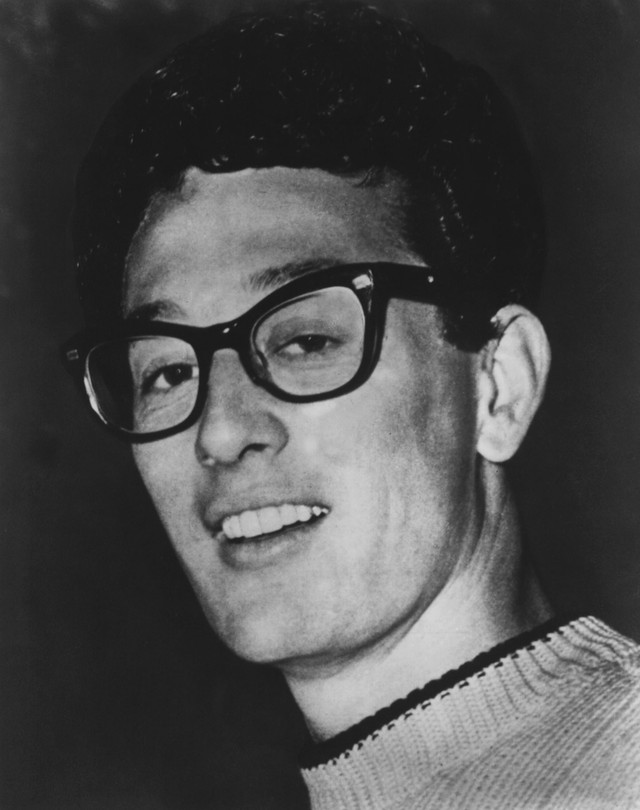
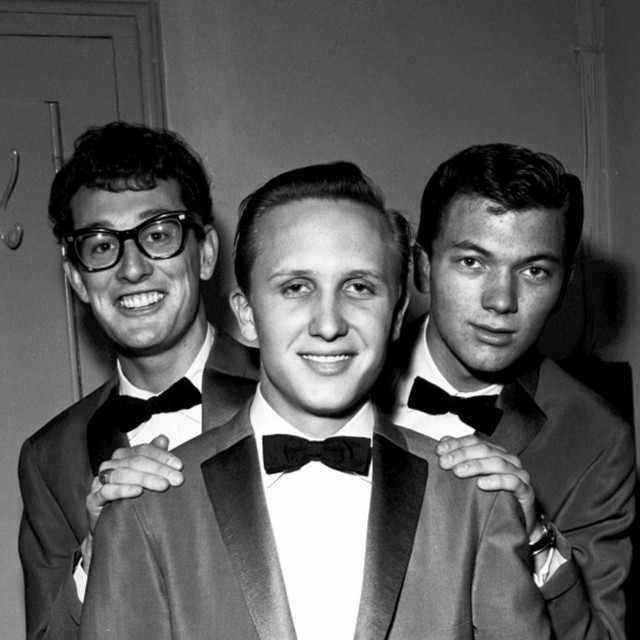
The "Crickets" started out as a ruse. In 1956, <a href="spotify:artist:3wYyutjgII8LJVVOLrGI0D">Buddy Holly</a> signed a contract with <a href="spotify:search:label%3A%22Decca+Records%22">Decca Records</a>, but after two sessions in Nashville, no one was happy with the results, and <a href="spotify:artist:3wYyutjgII8LJVVOLrGI0D">Holly</a> and <a href="spotify:search:label%3A%22Decca%22">Decca</a> parted ways. After finding a more sympathetic producer in <a href="spotify:artist:5M0cZ39iat2YdgcQX627oq">Norman Petty</a>, <a href="spotify:artist:3wYyutjgII8LJVVOLrGI0D">Holly</a>, Jerry Allison, and Joe B. Mauldin decamped to <a href="spotify:artist:5M0cZ39iat2YdgcQX627oq">Petty</a>'s studio in Clovis, New Mexico, and, among other things, cut a new version of one of <a href="spotify:artist:3wYyutjgII8LJVVOLrGI0D">Holly</a>'s <a href="spotify:search:label%3A%22Decca%22">Decca</a> efforts, "That'll Be the Day." Coral Records was interested in <a href="spotify:artist:3wYyutjgII8LJVVOLrGI0D">Holly</a>'s <a href="spotify:artist:0WJDeBl6waQcK0ezUsmcaT">Clovis</a> recordings, but the terms of the <a href="spotify:search:label%3A%22Decca%22">Decca</a> contract meant he couldn't re-record "That'll Be the Day" under his own name, so the new version was credited to the Crickets. The Crickets' "That'll Be the Day" became a Number One hit in 1957, and for the next 15 months, there were records by the Crickets and records by <a href="spotify:artist:3wYyutjgII8LJVVOLrGI0D">Buddy Holly</a> -- which were virtually interchangeable -- and on-stage they were billed as <a href="spotify:artist:15jBNfRUPUgdZOTSaNoF5l">Buddy Holly & the Crickets</a>. By the end of 1958, however, the references to "<a href="spotify:artist:15jBNfRUPUgdZOTSaNoF5l">Buddy Holly & the Crickets</a>" were becoming valid in the worst possible way. <a href="spotify:artist:3wYyutjgII8LJVVOLrGI0D">Holly</a>'s shifting and expanding musical interests, coupled with his move to New York and marriage to Maria Elena Santiago, and the differing relationships that the three had with <a href="spotify:artist:5M0cZ39iat2YdgcQX627oq">Petty</a>, who was now their manager, led to a split between <a href="spotify:artist:3wYyutjgII8LJVVOLrGI0D">Holly</a> and his bandmates in the months immediately prior to <a href="spotify:artist:3wYyutjgII8LJVVOLrGI0D">Holly</a>'s death in a plane crash on February 3, 1959.
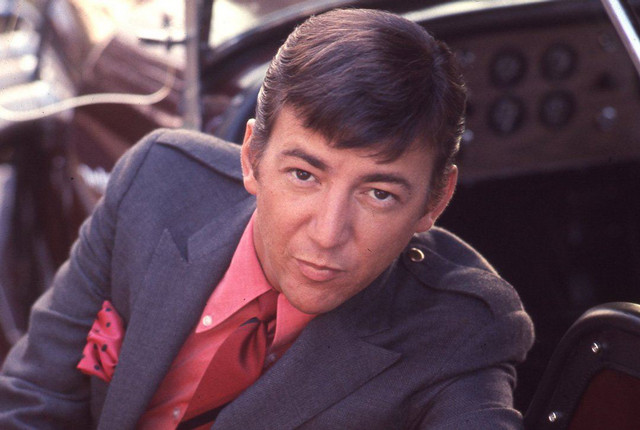
The result of their split was a separate existence for the Crickets. Jerry Allison became the de facto leader of the group, and they were soon a quartet, with <a href="spotify:artist:67eC9fUYu938JT8aOyKXfN">Sonny Curtis</a> on guitar and Earl Sinks as lead singer. In 1959, still managed and produced by <a href="spotify:artist:5M0cZ39iat2YdgcQX627oq">Norman Petty</a>, they recorded "Love's Made a Fool of You" backed with "Someone, Someone," which failed to chart. Their next serious assault on the charts -- a version of <a href="spotify:artist:67eC9fUYu938JT8aOyKXfN">Curtis</a>' "I Fought the Law" cut for Coral Records -- vanished without a trace in 1959, and their rendition of "More Than I Can Say" also failed to find an audience for them, though it did wonders for <a href="spotify:artist:5MX2l6ewjOaeWn1lYNhzlO">Bobby Vee</a> (and, by extension, for <a href="spotify:artist:67eC9fUYu938JT8aOyKXfN">Curtis</a> as its composer). They recorded a handful of singles for Coral Records, and later signed to <a href="spotify:search:label%3A%22Liberty+Records%22">Liberty Records</a> with <a href="spotify:artist:4imGUItg3QaBnZoRAV1QRb">Jerry Naylor</a> in the lead singer spot (sometimes switching off with <a href="spotify:artist:67eC9fUYu938JT8aOyKXfN">Curtis</a>), in addition to recording with <a href="spotify:artist:3wYyutjgII8LJVVOLrGI0D">Buddy Holly</a> soundalike <a href="spotify:artist:5MX2l6ewjOaeWn1lYNhzlO">Bobby Vee</a>.
The group recorded for <a href="spotify:search:label%3A%22Liberty%22">Liberty</a> for four years, from 1961 through 1965, even doing their versions of several <a href="spotify:artist:3WrFJ7ztbogyGnTHbHJFl2">Beatles</a> songs, but apart from a pair of minor hits, "My Little Girl" and "Please Don't Ever Change," were unable to generate any enthusiasm. One of <a href="spotify:artist:4imGUItg3QaBnZoRAV1QRb">Naylor</a>'s successors, <a href="spotify:artist:00l3hmCtoNxygOFJN6V0P0">David Box</a>, died in a plane crash in 1964. They did find some lingering success in England, where they headlined shows as well as serving as a backing band for <a href="spotify:artist:4ACplpEqD6JIVgKrafauzs">the Everly Brothers</a>, and the group even managed to appear in two jukebox movies on either side of the Atlantic, Just for Fun (1963) in England (doing "My Little Girl" and "Teardrops Feel Like Rain") and The Girls on the Beach (1965) in America (doing "La Bamba"). By the end of the '60s, Mauldin had left music while Allison was singing lead; he and <a href="spotify:artist:67eC9fUYu938JT8aOyKXfN">Curtis</a> were also working as session musicians, and <a href="spotify:artist:67eC9fUYu938JT8aOyKXfN">Curtis</a> scored a huge success at the dawn of the '70s as the composer of "Love Is All Around," the theme song for The Mary Tyler Moore Show.
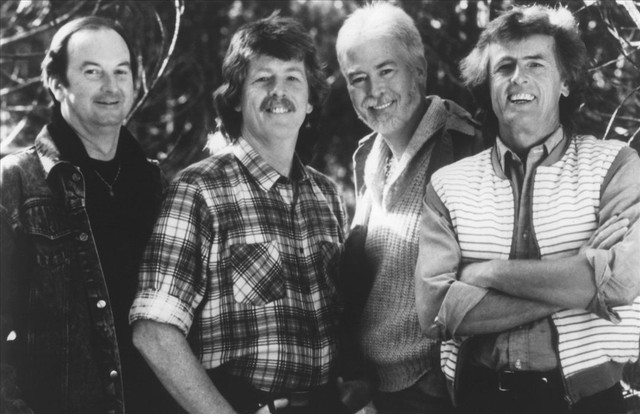
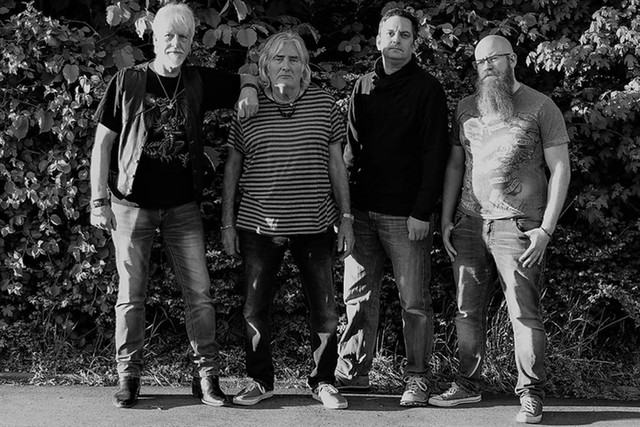
Allison and <a href="spotify:artist:67eC9fUYu938JT8aOyKXfN">Curtis</a> were the core of the group in the early '70s, mostly working as a touring act rather than a recording outfit, though new records did appear on various labels, including <a href="spotify:search:label%3A%22Mercury%22">Mercury</a> and <a href="spotify:search:label%3A%22MCA%22">MCA</a>. In the wake of the revival of interest in <a href="spotify:artist:3wYyutjgII8LJVVOLrGI0D">Holly</a>'s music at the end of the '70s, thanks in part to the 1978 movie The Buddy Holly Story, the Crickets re-formed on a steady basis, with Joe B. Mauldin returning to the lineup after more than a decade out of music. In 1986, <a href="spotify:artist:67eC9fUYu938JT8aOyKXfN">Curtis</a> left the fold to re-establish himself as a solo performer, and was replaced by Gordon Payne on vocals. In 1988, they recorded the single "T-Shirt," produced by noted fan <a href="spotify:artist:4STHEaNw4mPZ2tzheohgXB">Paul McCartney</a>, which became a minor hit and led to the release of an LP of the same name from <a href="spotify:search:label%3A%22Epic+Records%22">Epic Records</a>. The British label <a href="spotify:search:label%3A%22Carlton+Records%22">Carlton Records</a> issued Too Much Monday Morning in 1996, which included guest vocals from Texas country-folk artist <a href="spotify:artist:5CAiy5rDr3LaSoGtJOq6A0">Nanci Griffith</a>. In 2004, the Crickets released The Crickets & their Buddies, in which they re-recorded a number of their <a href="spotify:artist:3wYyutjgII8LJVVOLrGI0D">Holly</a>-era hits with notable guest stars, among them <a href="spotify:artist:6PAt558ZEZl0DmdXlnjMgD">Eric Clapton</a>, <a href="spotify:artist:0nJUwPwC9Ti4vvuJ0q3MfT">John Prine</a>, <a href="spotify:artist:4QIJ2i8I6urte2scKgkVoY">Rodney Crowell</a>, <a href="spotify:artist:2E6Roj0oQnJIm2BeXwDica">Graham Nash</a>, <a href="spotify:artist:5MX2l6ewjOaeWn1lYNhzlO">Bobby Vee</a>, and <a href="spotify:artist:7wCjDgV6nqBsHguQXPAaIM">Waylon Jennings</a> (whose contribution was recorded shortly before his death). After the death of Joe B. Mauldin in 2015 and the advancing age of the other Crickets, the band faded away from both recording and live work, but a steady flow of archival reissues and the group's induction into the Rock & Roll Hall of Fame in 2012 kept their music and memory alive. In 2018, the British Not Now label issued The Crickets Story, which collected the group's complete recordings from 1957 to 1962. Jerry Allison, the last surviving member of the original Crickets, died on August 22, 2022 at the age of 82. ~ Bruce Eder & Mark Deming, Rovi
Monthly Listeners
1.1 million
Monthly Listeners History
Track the evolution of monthly listeners over the last 28 days.
Followers
143,172
Followers History
Track the evolution of followers over the last 28 days.
Total Streams
1.0 billion
Total Streams History
Track the evolution of total streams over the last 28 days. This data is calculated from all tracks listed in the artist's discography.
Top Cities

Related Artists