We are currently migrating our data. We expect the process to take 24 to 48 hours before everything is back to normal.

Last updated: 5 days ago

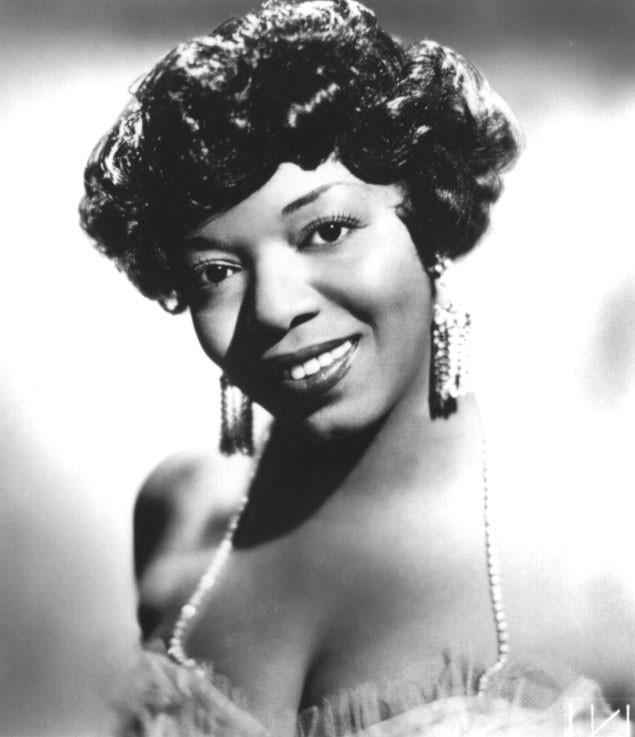
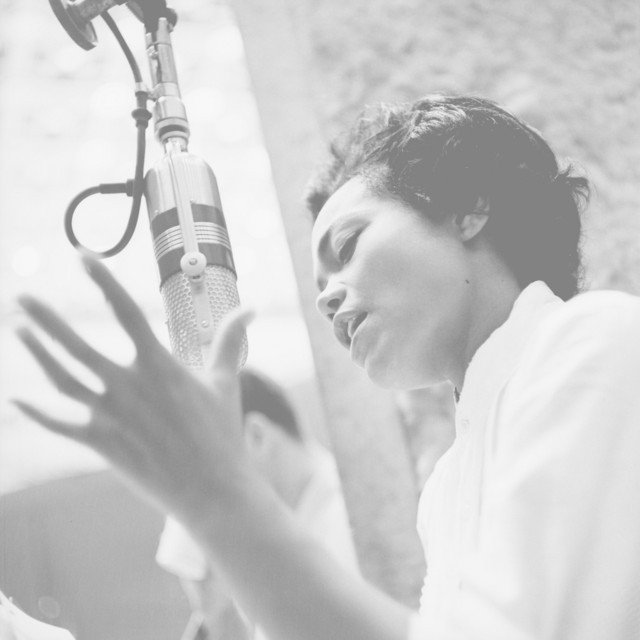
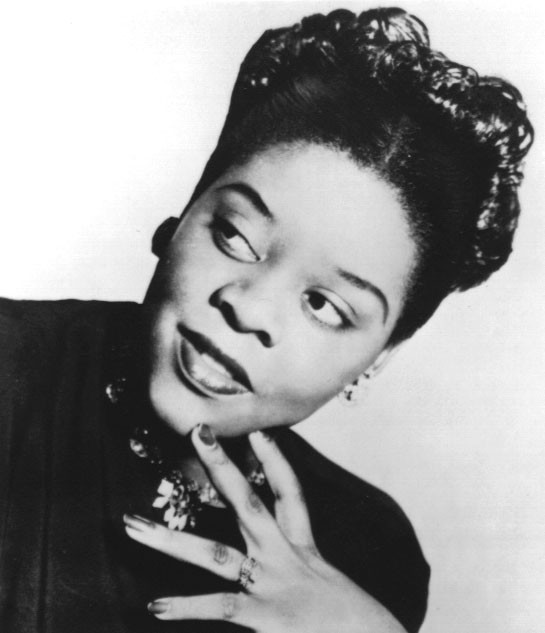
Dinah Washington was one of the most beloved and versatile singers of the mid-20th century, at home in all kinds of music, be it R&B, blues, jazz, gospel, and pop. Hers was a gritty voice, marked by absolute clarity of diction and clipped, bluesy phrasing. Washington's personal life was turbulent and her interpretations showed it, for she displayed a tough, totally unsentimental, yet still gripping hold on the universal subject of lost love. From the 1940s onwards, she scored numerous Top Ten singles on the R&B charts before crossing over to the pop charts with 1959's What a Diff'rence a Day Makes!, which also won her Grammy for Best R&B Performance. Although she died young in 1963, she has had a huge influence on R&B and jazz singers who have followed in her wake, notably <a href="spotify:artist:2JfVCMa3FlvQRlLT5uH9zb">Nancy Wilson</a>, <a href="spotify:artist:0WZ7IgzdjPvwFdjDjjuZm7">Esther Phillips</a>, and <a href="spotify:artist:3YowTUlFJJA6E5Yd67GZNv">Diane Schuur</a>. Her music as been collected on several large-volume series, including The Complete Dinah Washington on Mercury and The Complete Roulette Dinah Washington Sessions.

Born Ruth Lee Jones, she moved to Chicago at age three and was raised in a world of gospel, playing the piano and directing her church choir. At 15, after winning an amateur contest at the Regal Theater, she began performing in nightclubs as a pianist and singer, opening at the Garrick Stage Bar in 1942. Talent manager Joe Glaser heard her there and recommended her to <a href="spotify:artist:2PjgZkwAEk7UTin4jP6HLP">Lionel Hampton</a>, who asked her to join his band. <a href="spotify:artist:2PjgZkwAEk7UTin4jP6HLP">Hampton</a> says that it was he who gave Ruth Jones the name Dinah Washington, although other sources claim it was Glaser or the manager of the Garrick Stage Bar. In any case, she stayed with <a href="spotify:artist:2PjgZkwAEk7UTin4jP6HLP">Hampton</a> from 1943 to 1946 and made her recording debut for <a href="spotify:search:label%3A%22Keynote%22">Keynote</a> at the end of 1943 in a blues session organized by <a href="spotify:artist:18JiHWhqvWBYpHQ44jMaSG">Leonard Feather</a> with a sextet drawn from the <a href="spotify:artist:2PjgZkwAEk7UTin4jP6HLP">Hampton</a> band. With <a href="spotify:artist:18JiHWhqvWBYpHQ44jMaSG">Feather</a>'s "Evil Gal Blues" as her first hit, the records took off, and by the time she left <a href="spotify:artist:2PjgZkwAEk7UTin4jP6HLP">Hampton</a> to go solo, Washington was already an R&B headliner.

Signing with the young <a href="spotify:search:label%3A%22Mercury%22">Mercury</a> label, Washington produced an enviable string of Top Ten hits on the R&B charts from 1948 to 1955, singing blues, standards, novelties, pop covers, and even <a href="spotify:artist:1FClsNYBUoNFtGgzeG74dW">Hank Williams</a>' "Cold, Cold Heart." She also recorded many straight jazz sessions with big bands and small combos, most memorably with <a href="spotify:artist:1HJHwWck1EY096ea2iPAHO">Clifford Brown</a> on Dinah Jams but also with <a href="spotify:artist:5v74mT11KGJqadf9sLw4dA">Cannonball Adderley</a>, <a href="spotify:artist:62xdwGEOLoGQxKUqoJusyU">Clark Terry</a>, <a href="spotify:artist:34W7ZCX0LZeJd8q6boKGOk">Ben Webster</a>, <a href="spotify:artist:5ncBRFyyylFng7kQJaRXN0">Wynton Kelly</a>, and the young <a href="spotify:artist:3DkK9XA1CI1i7U7ovpAo1G">Joe Zawinul</a> (who was her regular accompanist for a couple of years).

In 1959, Washington made a sudden breakthrough into the mainstream pop market with What a Diff'rence a Day Makes! The album featured a revival of composer MarĂ­a Grever's 1930s composition (also previously a hit for <a href="spotify:artist:5gjTHwdSke7uwJH3yDMDjl">the Dorsey Brothers</a>) set to a Latin American bolero rhythm. It was a Top Ten Hot 100 hit and won the Grammy for Best R&B Performance. For the rest of her career, she would largely concentrate on singing ballads backed by lush orchestrations for <a href="spotify:search:label%3A%22Mercury%22">Mercury</a> and <a href="spotify:search:label%3A%22Roulette%22">Roulette</a>, a formula similar to that of another R&B-based singer at that time, <a href="spotify:artist:1eYhYunlNJlDoQhtYBvPsi">Ray Charles</a>. Included among these are gems like her 1961 rendition of <a href="spotify:artist:1YzCsTRb22dQkh9lghPIrp">Billie Holiday</a>'s "Don't Explain," which has a beautiful, bluesy <a href="spotify:artist:2BfPjBXQDG4PLu4TbzcsBt">Ernie Wilkins</a> chart conducted by <a href="spotify:artist:3rxIQc9kWT6Ueg4BhnOwRK">Quincy Jones</a>. Tragically, Washington died of an accidental overdose of diet and sleeping pills mixed with alcohol at the early age of 39, still in peak voice, still singing the blues in an L.A. club only two weeks before the end. ~ Richard S. Ginell, Rovi

Monthly Listeners

2.1 million

Followers

522,716

Total Streams

1.4 billion

Top Cities

41,554 listeners
20,910 listeners
19,119 listeners
19,417 listeners
18,587 listeners

Links

Popular Tracks

776 tracks
1
What A Difference A Day Made - Single Version

What A Difference A Day Made - Single Version

Oct 9, 2007

118.0 million

streams

2
What A Diff'rence A Day Makes

What A Diff'rence A Day Makes

Feb 19, 1959

118.0 million

streams

3
What a Difference a Day Makes

What a Difference a Day Makes

Jan 1, 1959

118.0 million

streams

4
What A Diff'rence A Day Made

What A Diff'rence A Day Made

Jan 1, 1989

118.0 million

streams

5
What a Diff'rence a Day Makes

What a Diff'rence a Day Makes

Oct 6, 2014

118.0 million

streams

6
What a Difference a Day Made

What a Difference a Day Made

Feb 26, 2011

118.0 million

streams

7
September In The Rain

September In The Rain

Jan 1, 1961

52.8 million

streams

8
September in the Rain (11-12-60)

September in the Rain (11-12-60)

Apr 16, 2012

52.8 million

streams

9
Mad About The Boy

Mad About The Boy

Jan 1, 1987

47.7 million

streams

10
Mad About the Boy

Mad About the Boy

Jan 1, 1959

47.7 million

streams