Data may be outdated
Last updated: 9 months ago — Click refresh to get the latest statistics.
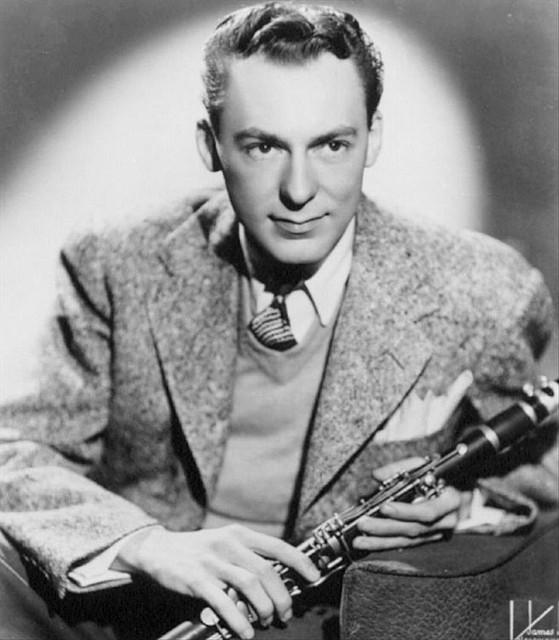
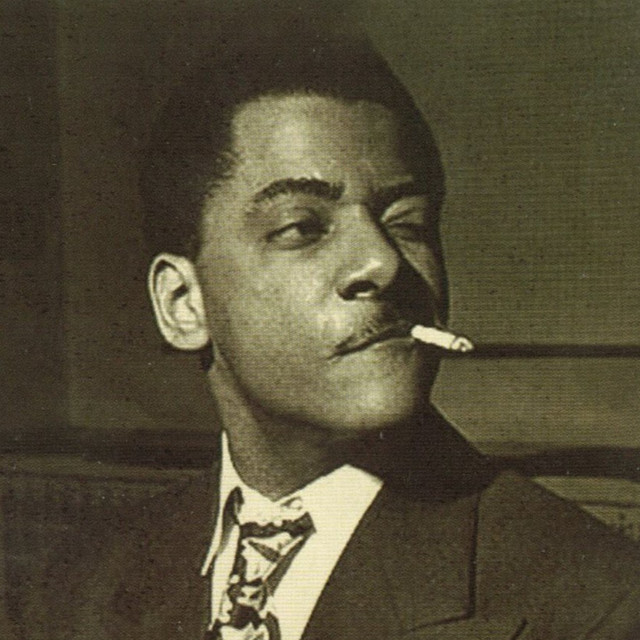
Bobby Hackett's mellow tone and melodic style offered a contrast to the brasher Dixieland-oriented trumpeters. Emphasizing his middle-register and lyricism, Hackett was a flexible soloist who actually sounded little like his main inspiration, <a href="spotify:artist:19eLuQmk9aCobbVDHc6eek">Louis Armstrong</a>.
When Hackett first came up he was briefly known as "the new <a href="spotify:artist:3kfbYBrL3MCPAMUwKDRpc7">Bix</a>" because of the similarity in his approach to that of <a href="spotify:artist:3kfbYBrL3MCPAMUwKDRpc7">Bix Beiderbecke</a>, but very soon he developed his own distinctive sound. Originally a guitarist (which he doubled on until the mid-'40s), Hackett performed in local bands, and by 1936 was leading his own group. He moved to New York in 1937, played with <a href="spotify:artist:5WuO1eeXQHAeMTKuXacaUw">Joe Marsala</a>, appeared at <a href="spotify:artist:1pBuKaLHJlIlqYxQQaflve">Benny Goodman</a>'s 1938 Carnegie Hall concert (recreating <a href="spotify:artist:1mZm40boQmdGKicfbNkd0r">Beiderbecke</a>'s solo on "I'm Coming Virginia"), recorded with <a href="spotify:artist:1YaB5mqH5zlJqvJaKIsBrS">Eddie Condon</a>, and by 1939 had a short-lived big band. Hackett played briefly with <a href="spotify:artist:4l7CLwtYLJMTlrBpoNJtMy">Horace Heidt</a>, and during 1941-1942 was with <a href="spotify:artist:2aAHdB5HweT3mFcRzm0swc">Glenn Miller's Orchestra</a>, taking a famous solo on "String of Pearls." Next up was a stint with <a href="spotify:artist:2RLpFsSPsiB1LKXcDVac4Q">the Casa Loma Orchestra</a>, and then he became a studio musician while still appearing with jazz groups. Hackett was a major asset at <a href="spotify:artist:19eLuQmk9aCobbVDHc6eek">Louis Armstrong</a>'s 1947 Town Hall Concert, in the 1950s he was a star on <a href="spotify:artist:2F0kPpQ5mtta1ORIyO2xex">Jackie Gleason</a>'s commercial but jazz-flavored mood music albums, and he recorded several times with <a href="spotify:artist:1YaB5mqH5zlJqvJaKIsBrS">Eddie Condon</a> and <a href="spotify:artist:3okiREk3dV4F8BmK7cpEJf">Jack Teagarden</a>. During 1956-1957, Hackett led an unusual group that sought to modernize Dixieland (using <a href="spotify:artist:6O69MenfsLHg93UxnbirYw">Dick Cary</a>'s arrangements and an unusual instrumentation), but that band did not catch on. Hackett recorded some commercial dates during 1959-1960 (including one set of Hawaiian songs and another in which he was backed by pipe organ), he worked with <a href="spotify:artist:1pBuKaLHJlIlqYxQQaflve">Benny Goodman</a> (1962-1963); backed <a href="spotify:artist:2lolQgalUvZDfp5vvVtTYV">Tony Bennett</a> in the mid-'60s; co-led a well-recorded quintet with <a href="spotify:artist:3r3wpxv745YZLTjE6aqwIw">Vic Dickenson</a> (1968-1970); and made sessions with Jim Cullum, <a href="spotify:artist:3od5Mdj7OgLATvDkDynmHH">the World's Greatest Jazz Band</a>, and even <a href="spotify:artist:5RzjqfPS0Bu4bUMkyNNDpn">Dizzy Gillespie</a> and <a href="spotify:artist:6hrEc1XqVcGLK0Di6zVADR">Mary Lou Williams</a>, remaining active up until his death. Among the many labels Bobby Hackett recorded for as a leader were Okeh (reissued by Epic), Commodore, Columbia, Epic, Capitol, Sesac, Verve, Project 3, Chiaroscuro, Flying Dutchman, and Honey Dew. ~ Scott Yanow, Rovi
When Hackett first came up he was briefly known as "the new <a href="spotify:artist:3kfbYBrL3MCPAMUwKDRpc7">Bix</a>" because of the similarity in his approach to that of <a href="spotify:artist:3kfbYBrL3MCPAMUwKDRpc7">Bix Beiderbecke</a>, but very soon he developed his own distinctive sound. Originally a guitarist (which he doubled on until the mid-'40s), Hackett performed in local bands, and by 1936 was leading his own group. He moved to New York in 1937, played with <a href="spotify:artist:5WuO1eeXQHAeMTKuXacaUw">Joe Marsala</a>, appeared at <a href="spotify:artist:1pBuKaLHJlIlqYxQQaflve">Benny Goodman</a>'s 1938 Carnegie Hall concert (recreating <a href="spotify:artist:1mZm40boQmdGKicfbNkd0r">Beiderbecke</a>'s solo on "I'm Coming Virginia"), recorded with <a href="spotify:artist:1YaB5mqH5zlJqvJaKIsBrS">Eddie Condon</a>, and by 1939 had a short-lived big band. Hackett played briefly with <a href="spotify:artist:4l7CLwtYLJMTlrBpoNJtMy">Horace Heidt</a>, and during 1941-1942 was with <a href="spotify:artist:2aAHdB5HweT3mFcRzm0swc">Glenn Miller's Orchestra</a>, taking a famous solo on "String of Pearls." Next up was a stint with <a href="spotify:artist:2RLpFsSPsiB1LKXcDVac4Q">the Casa Loma Orchestra</a>, and then he became a studio musician while still appearing with jazz groups. Hackett was a major asset at <a href="spotify:artist:19eLuQmk9aCobbVDHc6eek">Louis Armstrong</a>'s 1947 Town Hall Concert, in the 1950s he was a star on <a href="spotify:artist:2F0kPpQ5mtta1ORIyO2xex">Jackie Gleason</a>'s commercial but jazz-flavored mood music albums, and he recorded several times with <a href="spotify:artist:1YaB5mqH5zlJqvJaKIsBrS">Eddie Condon</a> and <a href="spotify:artist:3okiREk3dV4F8BmK7cpEJf">Jack Teagarden</a>. During 1956-1957, Hackett led an unusual group that sought to modernize Dixieland (using <a href="spotify:artist:6O69MenfsLHg93UxnbirYw">Dick Cary</a>'s arrangements and an unusual instrumentation), but that band did not catch on. Hackett recorded some commercial dates during 1959-1960 (including one set of Hawaiian songs and another in which he was backed by pipe organ), he worked with <a href="spotify:artist:1pBuKaLHJlIlqYxQQaflve">Benny Goodman</a> (1962-1963); backed <a href="spotify:artist:2lolQgalUvZDfp5vvVtTYV">Tony Bennett</a> in the mid-'60s; co-led a well-recorded quintet with <a href="spotify:artist:3r3wpxv745YZLTjE6aqwIw">Vic Dickenson</a> (1968-1970); and made sessions with Jim Cullum, <a href="spotify:artist:3od5Mdj7OgLATvDkDynmHH">the World's Greatest Jazz Band</a>, and even <a href="spotify:artist:5RzjqfPS0Bu4bUMkyNNDpn">Dizzy Gillespie</a> and <a href="spotify:artist:6hrEc1XqVcGLK0Di6zVADR">Mary Lou Williams</a>, remaining active up until his death. Among the many labels Bobby Hackett recorded for as a leader were Okeh (reissued by Epic), Commodore, Columbia, Epic, Capitol, Sesac, Verve, Project 3, Chiaroscuro, Flying Dutchman, and Honey Dew. ~ Scott Yanow, Rovi
Monthly Listeners
32,225
Monthly Listeners History
Track the evolution of monthly listeners over the last 28 days.
Followers
7,268
Followers History
Track the evolution of followers over the last 28 days.
Top Cities
543 listeners
529 listeners

360 listeners

290 listeners
278 listeners
Related Artists


Urbie Green