Last updated: 3 days ago
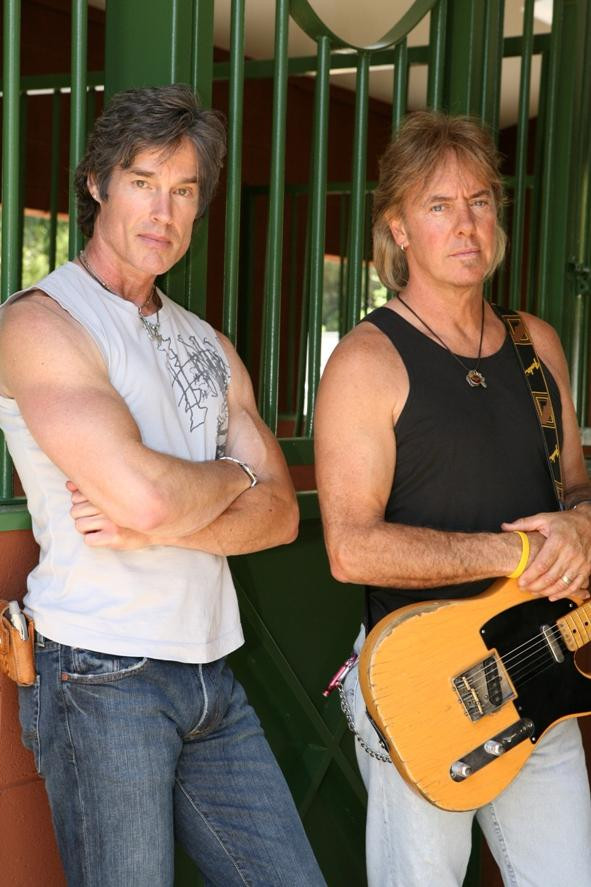
Before he sang lead for <a href="spotify:artist:2m62cc253Xvd9qYQ8d2X3d">the Alan Parsons Project</a>, Chris Rainbow had embarked on a solo career in 1974. For six years, he recorded in the U.K. for <a href="spotify:search:label%3A%22EMI+Records%22">EMI Records</a> and <a href="spotify:search:label%3A%22Polydor+Records%22">Polydor Records</a>, and he also acted as producer and wrote his own material. His first experience in a band occurred just two years before he went solo, in his hometown of Glasgow in a group known as Hope Street. He and his bandmates had been given a contract to record and publish with a London company; but in 1973, <a href="spotify:search:label%3A%22Polydor%22">Polydor</a>'s Nicky Graham heard a demo of a trio of Rainbow's self-penned numbers and he secured his own four-year contract thanks to Norman Jones, a friend of the singer's who submitted the tape.
In addition to his recording deal with <a href="spotify:search:label%3A%22Polydor%22">Polydor</a>, Rainbow signed a deal to publish with <a href="spotify:search:label%3A%22Warner+Bros.+U.K.%22">Warner Bros. U.K.</a> Jones, who changed his name to Van Den Berg, took on the task of managing his friend's career, and Rainbow -- a pseudonym the artist adopted in 1974 -- went on to put out two albums with <a href="spotify:search:label%3A%22Polydor%22">Polydor</a>, Looking Over My Shoulder and Home of the Brave. Five singles followed: "Living in the World Today," "All Night," "Mr. Man," "Give Me What I Cry For," and "Solid State Brain." When Jones relocated to California in 1977, Rainbow hired David Knights, formerly of <a href="spotify:artist:0GbqW5TJr7n4is453VOY4C">Procol Harum</a>. Knights remained Rainbow's manager through 1986. During this time, Rainbow also wrote advertising jingles for BBC Radio 1 and Capitol Radio.
In 1978, his contract with <a href="spotify:search:label%3A%22Polydor%22">Polydor</a> ended and within a week he joined the stable at <a href="spotify:search:label%3A%22EMI%22">EMI</a>. The company released his White Trails album and the singles "Body Music" and "Ring Ring." Soon, however, <a href="spotify:search:label%3A%22EMI%22">EMI</a> started to scrutinize the bottom line and Rainbow was one of a good number of artists dropped by the company. He hooked up with <a href="spotify:artist:2m62cc253Xvd9qYQ8d2X3d">the Alan Parsons Project</a> in 1980 and remained with the band for about a decade. He also devoted two years to New Life with <a href="spotify:artist:2iptQ8hQmUa7kZocEBHt7u">Jon Anderson</a>, who formerly was with <a href="spotify:artist:7AC976RDJzL2asmZuz7qil">Yes</a>, and a similar amount of time to <a href="spotify:artist:3Uz6jx81OY2J5K8Z4wmy2P">Camel</a> and Andy Latimer.
From 1986 through 1998, Rainbow produced records in Scotland. He also performed session work during this time for such artists as <a href="spotify:artist:6HpZkC8GUktP9utE6OPWZG">Parsons</a>, <a href="spotify:artist:7KckozT8XPOqtgJjpAcrnA">Elaine Paige</a>, <a href="spotify:artist:6kz53iCdBSqhQCZ21CoLcc">Culture Club</a>, <a href="spotify:artist:4xPusNsKy8p8h27jt89V90">Eric Woolfson</a>, <a href="spotify:artist:6ZW4qaFplK1HRJ8VbgqV5n">Lenny Zakatek</a>, and Tomoyasu Hotei. In addition, Rainbow provided lead vocals on five numbers included on the <a href="spotify:artist:17a49nqhcCd0kvqHwxbVhP">Ton Scherpenzeel</a> album Heart of the Universe, released by CNR Records in 1984. He also spent almost two decades working as producer for <a href="spotify:artist:0ddfjKqJfbSiddqOvpZRWu">Runrig</a>, a group that performed Scottish-Gaelic rock. The River Detectives, another group from Scotland, also worked closely with Rainbow. His <a href="spotify:search:label%3A%22Vital+Spark+Music%22">Vital Spark Music</a> label issued the band's Elvis Has Left the Building album in 1993. Rainbow, whose birth name was <a href="spotify:artist:2aheWIyRWFmOIPlMNMkqzT">Chris Harley</a>, started recording again as a solo performer in 2000, with the album In a Perfect World planned to hit store shelves during the summer of 2001. However, the album was never released. Chris Rainbow died in February 2015 after battling Parkinson's disease; he was 68 years old. ~ Linda Seida, Rovi
In addition to his recording deal with <a href="spotify:search:label%3A%22Polydor%22">Polydor</a>, Rainbow signed a deal to publish with <a href="spotify:search:label%3A%22Warner+Bros.+U.K.%22">Warner Bros. U.K.</a> Jones, who changed his name to Van Den Berg, took on the task of managing his friend's career, and Rainbow -- a pseudonym the artist adopted in 1974 -- went on to put out two albums with <a href="spotify:search:label%3A%22Polydor%22">Polydor</a>, Looking Over My Shoulder and Home of the Brave. Five singles followed: "Living in the World Today," "All Night," "Mr. Man," "Give Me What I Cry For," and "Solid State Brain." When Jones relocated to California in 1977, Rainbow hired David Knights, formerly of <a href="spotify:artist:0GbqW5TJr7n4is453VOY4C">Procol Harum</a>. Knights remained Rainbow's manager through 1986. During this time, Rainbow also wrote advertising jingles for BBC Radio 1 and Capitol Radio.
In 1978, his contract with <a href="spotify:search:label%3A%22Polydor%22">Polydor</a> ended and within a week he joined the stable at <a href="spotify:search:label%3A%22EMI%22">EMI</a>. The company released his White Trails album and the singles "Body Music" and "Ring Ring." Soon, however, <a href="spotify:search:label%3A%22EMI%22">EMI</a> started to scrutinize the bottom line and Rainbow was one of a good number of artists dropped by the company. He hooked up with <a href="spotify:artist:2m62cc253Xvd9qYQ8d2X3d">the Alan Parsons Project</a> in 1980 and remained with the band for about a decade. He also devoted two years to New Life with <a href="spotify:artist:2iptQ8hQmUa7kZocEBHt7u">Jon Anderson</a>, who formerly was with <a href="spotify:artist:7AC976RDJzL2asmZuz7qil">Yes</a>, and a similar amount of time to <a href="spotify:artist:3Uz6jx81OY2J5K8Z4wmy2P">Camel</a> and Andy Latimer.
From 1986 through 1998, Rainbow produced records in Scotland. He also performed session work during this time for such artists as <a href="spotify:artist:6HpZkC8GUktP9utE6OPWZG">Parsons</a>, <a href="spotify:artist:7KckozT8XPOqtgJjpAcrnA">Elaine Paige</a>, <a href="spotify:artist:6kz53iCdBSqhQCZ21CoLcc">Culture Club</a>, <a href="spotify:artist:4xPusNsKy8p8h27jt89V90">Eric Woolfson</a>, <a href="spotify:artist:6ZW4qaFplK1HRJ8VbgqV5n">Lenny Zakatek</a>, and Tomoyasu Hotei. In addition, Rainbow provided lead vocals on five numbers included on the <a href="spotify:artist:17a49nqhcCd0kvqHwxbVhP">Ton Scherpenzeel</a> album Heart of the Universe, released by CNR Records in 1984. He also spent almost two decades working as producer for <a href="spotify:artist:0ddfjKqJfbSiddqOvpZRWu">Runrig</a>, a group that performed Scottish-Gaelic rock. The River Detectives, another group from Scotland, also worked closely with Rainbow. His <a href="spotify:search:label%3A%22Vital+Spark+Music%22">Vital Spark Music</a> label issued the band's Elvis Has Left the Building album in 1993. Rainbow, whose birth name was <a href="spotify:artist:2aheWIyRWFmOIPlMNMkqzT">Chris Harley</a>, started recording again as a solo performer in 2000, with the album In a Perfect World planned to hit store shelves during the summer of 2001. However, the album was never released. Chris Rainbow died in February 2015 after battling Parkinson's disease; he was 68 years old. ~ Linda Seida, Rovi
Monthly Listeners
8.2 million
Monthly Listeners History
Track the evolution of monthly listeners over the last 28 days.
Followers
90,853
Followers History
Track the evolution of followers over the last 28 days.
Total Streams
177.1 million
Total Streams History
Track the evolution of total streams over the last 28 days. This data is calculated from all tracks listed in the artist's discography.
Top Cities
124,016 listeners

91,486 listeners
111,630 listeners

99,040 listeners
85,983 listeners
Related Artists