Data may be outdated
Last updated: 9 months ago — Click refresh to get the latest statistics.
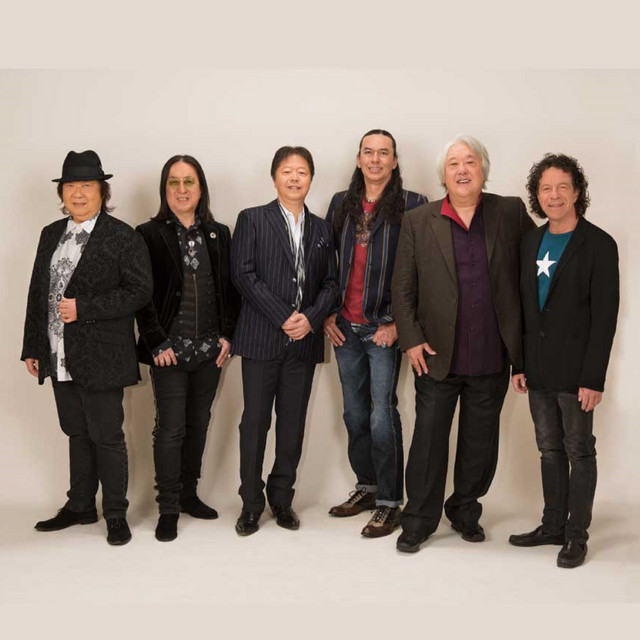
Dubbed "the Japanese <a href="spotify:artist:2iE18Oxc8YSumAU232n4rW">Jackson 5</a>," Finger 5 produced no Far Eastern <a href="spotify:artist:3fMbdgg4jU18AjLCKBhRSm">Michael Jackson</a>, but successfully replicated the concept of a sibling quintet performing <a href="spotify:search:label%3A%22Motown%22">Motown</a>-styled soul and R&B hits (including <a href="spotify:artist:2iE18Oxc8YSumAU232n4rW">Jackson 5</a> covers) on the J-pop scene. Finger 5 were a smash hit with the younger audiences in the mid-'70s, although their popularity only lasted a couple of years.
The first incarnation of the group consisted of a trio of Okinawa kids, Kazuo, Mitsuo, and Masao (born 1955, 1957, and 1959, respectively), who performed as All Brothers at their father's bar, frequented by American soldiers from the local base. The boys had some success, won a talent contest, and decided to take on Tokyo in 1970, but their early releases on King Records (as Baby Brothers) went nowhere with the Japanese public, although they were welcome to play American military bases in the Tokyo region. In 1972, the band moved to <a href="spotify:search:label%3A%22Philips%22">Philips</a>, added Akira (11 at the time) and sister Taeko (ten), and "re-debuted," now as Finger 5. This time it worked: their appearance on TV generated a squall of requests, and the second single, "Kojin Jugyo" (1973) sold nearly one and a half million copies. "Koi no Dial 6700" (1973), their trademark song, and "Gakuen Tengoku" (1974) were million-sellers as well, and Finger 5 became all the rage. Even Akira's oversized glasses came into fashion for a while.
During their heyday in 1973-1975, Finger 5 continued to record singles, appeared in TV shows, and toured like their lives depended on it, performing with the Canadian teen idols <a href="spotify:artist:4Phz26PNbjIHdIt3K8xQCh">the DeFranco Family</a> in 1974. However, the J-pop working schedule, known to drain adult performers, was definitely too hard for a bunch of teens. During one show, Akira collapsed on-stage and had to be hospitalized; there were also nasty rumors about his management pushing him into taking female hormones to delay the change of appearance caused by puberty. In 1975, Kazuo quit, to be replaced by the bandmember's cousin Minoru Gushiken. Later the same year, Finger 5 quit the Japanese scene and moved to the U.S. to improve artistically, but when they returned in 1976 they discovered they were not needed anymore, and their singles stopped selling. In 1978 Finger 5 called it a day. The members launched new careers ranging from hairdressing to politics, and attempted six comebacks from the 1980s into the 2000s, most under slightly different names such as Fingers and Finger 5 Soul Band; however, only the celebration of the band's 30th anniversary in 2003 was something of a success. ~ Alexey Eremenko, Rovi
The first incarnation of the group consisted of a trio of Okinawa kids, Kazuo, Mitsuo, and Masao (born 1955, 1957, and 1959, respectively), who performed as All Brothers at their father's bar, frequented by American soldiers from the local base. The boys had some success, won a talent contest, and decided to take on Tokyo in 1970, but their early releases on King Records (as Baby Brothers) went nowhere with the Japanese public, although they were welcome to play American military bases in the Tokyo region. In 1972, the band moved to <a href="spotify:search:label%3A%22Philips%22">Philips</a>, added Akira (11 at the time) and sister Taeko (ten), and "re-debuted," now as Finger 5. This time it worked: their appearance on TV generated a squall of requests, and the second single, "Kojin Jugyo" (1973) sold nearly one and a half million copies. "Koi no Dial 6700" (1973), their trademark song, and "Gakuen Tengoku" (1974) were million-sellers as well, and Finger 5 became all the rage. Even Akira's oversized glasses came into fashion for a while.
During their heyday in 1973-1975, Finger 5 continued to record singles, appeared in TV shows, and toured like their lives depended on it, performing with the Canadian teen idols <a href="spotify:artist:4Phz26PNbjIHdIt3K8xQCh">the DeFranco Family</a> in 1974. However, the J-pop working schedule, known to drain adult performers, was definitely too hard for a bunch of teens. During one show, Akira collapsed on-stage and had to be hospitalized; there were also nasty rumors about his management pushing him into taking female hormones to delay the change of appearance caused by puberty. In 1975, Kazuo quit, to be replaced by the bandmember's cousin Minoru Gushiken. Later the same year, Finger 5 quit the Japanese scene and moved to the U.S. to improve artistically, but when they returned in 1976 they discovered they were not needed anymore, and their singles stopped selling. In 1978 Finger 5 called it a day. The members launched new careers ranging from hairdressing to politics, and attempted six comebacks from the 1980s into the 2000s, most under slightly different names such as Fingers and Finger 5 Soul Band; however, only the celebration of the band's 30th anniversary in 2003 was something of a success. ~ Alexey Eremenko, Rovi
Monthly Listeners
79,968
Monthly Listeners History
Track the evolution of monthly listeners over the last 28 days.
Followers
20,771
Followers History
Track the evolution of followers over the last 28 days.
Top Cities
Related Artists


矢島美容室
松谷祐子
横浜銀蝿
キャンディーズ

ヒロシ & キーボー




山本リンダ

あんしんパパ


天野春子(小泉今日子)
どぶろっく
布施明