Data may be outdated
Last updated: 2 months ago — Click refresh to get the latest statistics.
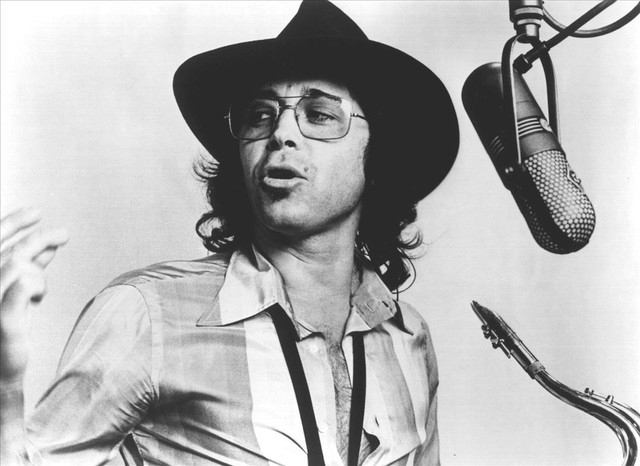
Though Barbieri's family included several musicians, he did not take up an instrument until the age of 12 when a hearing of <a href="spotify:artist:4Ww5mwS7BWYjoZTUIrMHfC">Charlie Parker</a>'s "Now's the Time" encouraged him to study the clarinet. Upon moving to Buenos Aires in 1947, he continued private music lessons, picked up the alto sax, and by 1953 had become a prominent national musician through exposure in the <a href="spotify:artist:39iHRO9MH9To3gjW7wqaW1">Schifrin</a> orchestra. Later in the '50s, Barbieri started leading his own groups, switching to tenor sax. After moving to Rome in 1962 with his Italian-born wife, he met <a href="spotify:artist:3uPWecBPNXAChysw1uOJwI">Don Cherry</a> in Paris the following year and, upon joining his group, became heavily absorbed in the jazz avant-garde. Barbieri also played with Mike Mantler's <a href="spotify:artist:0NwUEueIvj75HohOFizqDV">Jazz Composer's Orchestra</a> in the late '60s; you can hear his fierce tone unleashed in the "Hotel Overture" of <a href="spotify:artist:4Byg6TGm4z9TEkUDvEJBGO">Carla Bley</a>'s epic work Escalator Over the Hill.
Yet after the turn of the next decade, Barbieri experienced a slow change of heart and began to reincorporate and introduce South American melodies, instruments, harmonies, textures, and rhythm patterns into his music. Albums such as the live El Pampero on <a href="spotify:search:label%3A%22Flying+Dutchman%22">Flying Dutchman</a> and the four-part Chapter series on <a href="spotify:search:label%3A%22Impulse%21%22">Impulse!</a> -- the latter of which explored Brazilian and Afro-Cuban rhythms and textures, as well as Argentine -- brought Barbieri plenty of acclaim in the jazz world and gained him a following on American college campuses.
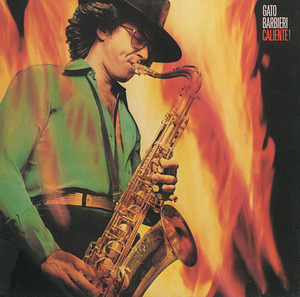
However, it was a commercial accident, his sensuous theme and score for the controversial film Last Tango in Paris in 1972, that made Barbieri an international star and a draw at festivals in Montreux, Newport, Bologna, and other locales. A contract with <a href="spotify:search:label%3A%22A%26M%22">A&M</a> in the U.S. led to a series of softer pop/jazz albums in the late '70s, including the brisk-selling Caliente! He returned to a more intense, rock-influenced, South American-grounded sound in 1981 with the live Gato...Para los Amigos under the aegis of producer <a href="spotify:artist:59fCPbw9bxL29Kl0sFuDSt">Teo Macero</a>, before doubling back to pop/jazz on Apasionado. Yet his profile in the U.S. was diminished later in the decade in the wake of the buttoned-down neo-bop movement.
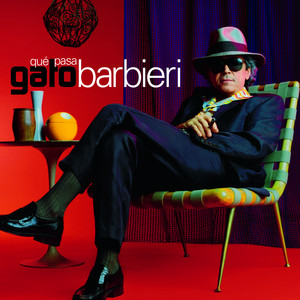
Beset by triple-bypass surgery and bereavement over the death of his wife, Michelle, who was his closest musical confidant, Barbieri was inactive through much of the 1990s. But he returned to action in 1997, playing with most of his impassioned intensity, if limited in ideas, at the Playboy Jazz Festival in Los Angeles and recording a somewhat bland album, Que Pasa, for <a href="spotify:search:label%3A%22Columbia%22">Columbia</a>. Che Corazon followed in 1999.
As the 21st century opened, Barbieri saw a steady stream of collections and reissues of his work appear. A new album, Shadow of the Cat, appeared from <a href="spotify:search:label%3A%22Peak+Records%22">Peak Records</a> in 2002. He died in New York City in April 2016 at the age of 83. ~ Richard S. Ginell, Rovi
Monthly Listeners
124,388
Monthly Listeners History
Track the evolution of monthly listeners over the last 28 days.
Followers
54,937
Followers History
Track the evolution of followers over the last 28 days.
Total Streams
47.4 million
Total Streams History
Track the evolution of total streams over the last 28 days. This data is calculated from all tracks listed in the artist's discography.