Artist
Ghostface Killah
Data may be outdated
Last updated: 7 months ago — Click refresh to get the latest statistics.
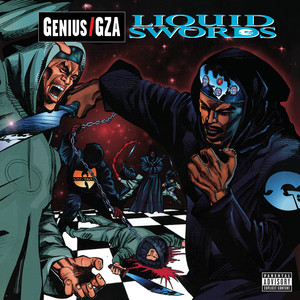
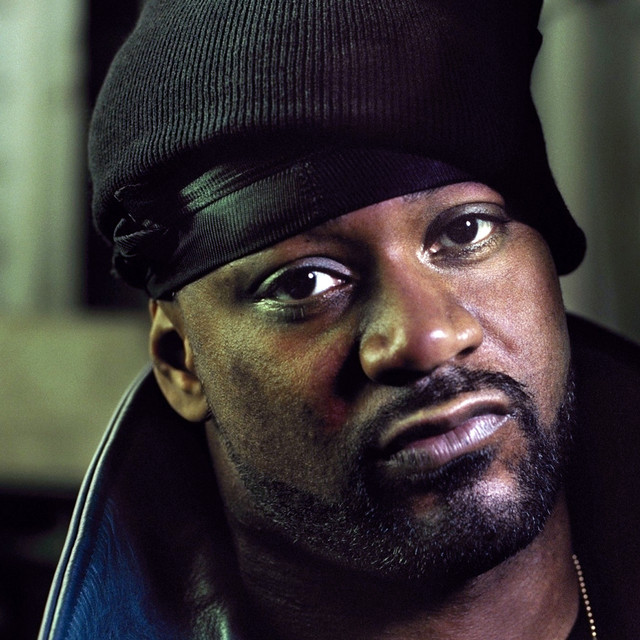
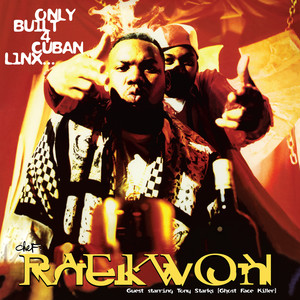
The rapper born Dennis Coles emerged from his native Staten Island as part of <a href="spotify:artist:34EP7KEpOjXcM2TCat1ISk">Wu-Tang Clan</a>, who released their first single in 1992 and became one of the strongest hip-hop institutions the following year with Enter the Wu-Tang (36 Chambers). On the album's fifth and final single, "Can It Be All So Simple," Ghostface rhymed about his intent to "make more hits with Rae and A," singling out fellow <a href="spotify:artist:34EP7KEpOjXcM2TCat1ISk">Wu-Tang</a> members <a href="spotify:artist:2yQf6b8hxahZaT5dHlWaB1">Raekwon</a> and <a href="spotify:artist:4iCwCMnqsNZ6atvRiADgtn">the RZA</a>. He quickly achieved his goal. In August 1995, a few months after Enter the Wu-Tang was certified platinum, "Tony Starks (Ghost Face Killer)" was billed as guest star on <a href="spotify:artist:2yQf6b8hxahZaT5dHlWaB1">Raekwon</a>'s <a href="spotify:artist:4iCwCMnqsNZ6atvRiADgtn">RZA</a>-produced Only Built 4 Cuban Linx. Among the tracks featuring Ghost were the preceding lead single "Heaven & Hell," a remix of "Can It Be All So Simple," and the Top Five Billboard rap hits "Criminology" and "Ice Cream." During the same year, Ghost linked with <a href="spotify:artist:2yQf6b8hxahZaT5dHlWaB1">Raekwon</a> and <a href="spotify:artist:4iCwCMnqsNZ6atvRiADgtn">RZA</a> on other <a href="spotify:artist:34EP7KEpOjXcM2TCat1ISk">Wu-Tang</a> projects, namely <a href="spotify:artist:50NoVNy9GU1lCrDV8iGpyu">Ol' Dirty Bastard</a>'s Return to the 36 Chambers and <a href="spotify:artist:6ns6XAOsw4B0nDUIovAOUO">GZA</a>'s Liquid Swords, and took part in the making of yet another classic, Queensbridge duo <a href="spotify:artist:6O2zJ0tId7g07yzHtX0yap">Mobb Deep</a>'s The Infamous. These appearances, plus subsequent headlining contributions to the soundtracks of Don't Be a Menace to South Central While Drinking Your Juice in the Hood and Sunset Park, primed Ghost for his own solo breakout.
Signed to major-label <a href="spotify:search:label%3A%22Epic%22">Epic</a> via an arrangement with <a href="spotify:artist:4iCwCMnqsNZ6atvRiADgtn">RZA</a> boutique label <a href="spotify:search:label%3A%22Razor+Sharp%22">Razor Sharp</a>, Ghostface Killah became the fifth <a href="spotify:artist:34EP7KEpOjXcM2TCat1ISk">Wu-Tang</a> member to release a solo album when Ironman was racked in October 1996. Continuing <a href="spotify:artist:34EP7KEpOjXcM2TCat1ISk">Wu-Tang</a>'s unprecedented spate of spin-off releases, the LP entered the Billboard 200 at number two and topped the R&B/hip-hop chart. <a href="spotify:artist:4iCwCMnqsNZ6atvRiADgtn">RZA</a> served as producer. <a href="spotify:artist:2yQf6b8hxahZaT5dHlWaB1">Raekwon</a> and Ghost's fellow <a href="spotify:search:label%3A%22Razor+Sharp%22">Razor Sharp</a> signee <a href="spotify:artist:0dS5xeDefwoUNasLUHnCjR">Cappadonna</a> were featured throughout. Its deep R&B foundation and wide emotional range were promoted in the choice of singles, including the strong-arming and deceptively intricate "Daytona 500" (assisted by <a href="spotify:artist:3KpLtTMpLAko7nBDmiYg7Z">the Force M.D.'s</a>) and the bleak autobiographical ballad "All That I Got Is You" (featuring <a href="spotify:artist:1XkoF8ryArs86LZvFOkbyr">Mary J. Blige</a>). The album was certified gold within three months (and years later went platinum). Between one-off featured roles and his group's return with Wu-Tang Forever, Ghost put solo activity on hold. He and <a href="spotify:artist:4iCwCMnqsNZ6atvRiADgtn">RZA</a> also spent time in Africa, an experience that fueled the writing of Supreme Clientele, the second Ghostface Killah LP. Production-wise, <a href="spotify:artist:4iCwCMnqsNZ6atvRiADgtn">RZA</a> handled a few tracks on his own and vacated his seat for affiliate beatmakers such as <a href="spotify:artist:1lVi8dVhx7rkcnOEBzzYz8">Ju-Ju</a> (<a href="spotify:artist:5ynvmGwc83ZoRx2EIWHXLX">the Beatnuts</a>), Hassan (<a href="spotify:artist:5A9hqRsPjYVEmUrnyghqmI">the U.M.C.'s</a>), and Carlos Bess, though he did touch every cut in some capacity. The album went Top Ten pop and number two R&B/hip-hop upon its February 2000 release, and shortly thereafter went gold, pushed by "Apollo Kids" and "Cherchez LaGhost," both of which charted.
"Cherchez LaGhost" actually became Ghost's biggest single as a lead artist -- a number three hit on Hot Rap Songs. That song's comparatively lighter approach carried into Bulletproof Wallets, which rather expeditiously arrived in November 2001 as Ghost's third solo album. Like "Cherchez LaGhost," "Ghost Showers" was built on one of August "Kid Creole" Darnell's high-spirited compositions, and was almost as successful, topping out at number 11 on the rap chart. Veering even farther away from <a href="spotify:artist:4iCwCMnqsNZ6atvRiADgtn">RZA</a>-style grime was another single, "Never Be the Same Again," a smooth contemporary R&B production with then-hot <a href="spotify:artist:7pm77Gj0CCIftLxY0Cx7fB">Bad Boy</a> artist <a href="spotify:artist:6I6t21SFbxZ7RbQgD5dN7U">Carl Thomas</a> on the hook. Only four weeks after the album's arrival, however, <a href="spotify:artist:34EP7KEpOjXcM2TCat1ISk">Wu-Tang Clan</a> returned again with Iron Flag, highlighted by the hard-hitting "Uzi (Pinky Ring)," on which Ghost was back in his familiar raw form. Ghost's next move, The Pretty Toney Album, issued in April 2004 as his first full-length for <a href="spotify:search:label%3A%22Def+Jam%22">Def Jam</a>, gunned for pop success with the <a href="spotify:artist:2wIVse2owClT7go1WT98tk">Missy Elliott</a> collaboration "Tush." It was otherwise more street-oriented than Bulletproof Wallets, outfitted with tougher productions from the likes of <a href="spotify:artist:4iCwCMnqsNZ6atvRiADgtn">RZA</a>, No I.D., <a href="spotify:artist:1iGcDQbhw4Slu7bygkuV2T">Nottz</a>, and <a href="spotify:artist:16FH3fjfgWVv3JbLs8zUA7">K-Def</a>. Only a few months after it became Ghost's third album to reach the pop Top Ten, the group <a href="spotify:artist:3etQyCmhwVq3MCsOWAqgSq">Theodore Unit</a> -- primarily an outlet for Ghost and Trife da God, but open to several other artists -- released the album 718 on the independent <a href="spotify:search:label%3A%22Sure+Shot%22">Sure Shot</a> label. <a href="spotify:artist:3etQyCmhwVq3MCsOWAqgSq">Theodore Unit</a> ground to a halt, but not before welcoming Sun God, Ghost's son.
Ghost's <a href="spotify:search:label%3A%22Def+Jam%22">Def Jam</a> phase was productive. In 2006 alone, he released his second and third albums for the label. First was Fishscale in March, trailed by More Fish in December. The former was particularly successful, landing within the Top Ten of the R&B/hip-hop and Billboard 200 charts, and both featured some of his best collaborations with R&B artists, such as "Back Like That," with <a href="spotify:artist:21E3waRsmPlU7jZsS13rcj">Ne-Yo</a>, and a version of <a href="spotify:artist:6Q192DXotxtaysaqNPy5yR">Amy Winehouse</a>'s "You Know I'm No Good." The production personnel on the albums included <a href="spotify:artist:3BeQqzKdlARoOd6y30kCO2">Pete Rock</a>, <a href="spotify:artist:2pAWfrd7WFF3XhVt9GooDL">MF Doom</a>, <a href="spotify:artist:0IVcLMMbm05VIjnzPkGCyp">J Dilla</a>, <a href="spotify:artist:5LhTec3c7dcqBvpLRWbMcf">Madlib</a>, and <a href="spotify:artist:2S3kEShbYaNGvSyJdd7sJg">Hi-Tek</a>, all revered veterans. Three additional <a href="spotify:search:label%3A%22Def+Jam%22">Def Jam</a> albums followed during the next five years. The Big Doe Rehab had the misfortune of being released only one week before <a href="spotify:artist:34EP7KEpOjXcM2TCat1ISk">Wu-Tang Clan</a>'s 8 Diagrams in December 2007. Ghostdini Wizard of Poetry in Emerald City, a highly libidinous set, followed in September 2009. The <a href="spotify:search:label%3A%22Def+Jam%22">Def Jam</a> alliance concluded in December 2010 with Apollo Kids, a brief and patched-together collection with <a href="spotify:artist:1YfEcTuGvBQ8xSD1f53UnK">Busta Rhymes</a>, <a href="spotify:artist:6DJEUXZm0e2rAohdoZ5Voo">Black Thought</a>, and <a href="spotify:artist:6AMa1VFQ7qCi61tCRtVWXe">Jim Jones</a> mixing it up with <a href="spotify:artist:34EP7KEpOjXcM2TCat1ISk">Wu-Tang</a> members. Production credits for these later <a href="spotify:search:label%3A%22Def+Jam%22">Def Jam</a> LPs were quite variable, with only Fishscale collaborators LV & Sean C present on all three. Between the release dates, Ghost unloaded guest verses by the bushel, most effectively on <a href="spotify:artist:2yQf6b8hxahZaT5dHlWaB1">Raekwon</a>'s well-received Only Built 4 Cuban Linx...Pt. II. He also put together Wu Massacre with Rae and <a href="spotify:artist:4VmEWwd8y9MCLwexFMdpwt">Method Man</a>.
Ghost's recordings throughout the 2010s, supported by a series of independent labels including <a href="spotify:artist:4iCwCMnqsNZ6atvRiADgtn">RZA</a>'s <a href="spotify:search:label%3A%22Soul+Temple%22">Soul Temple</a>, tended to be conceptual and/or whole-album collaborations that enabled him to indulge in the rapper's love of pre-disco R&B. During these years, Ghost also participated in various <a href="spotify:artist:34EP7KEpOjXcM2TCat1ISk">Wu-Tang Clan</a> and related projects, such as the proper album A Better Tomorrow. He lengthened his solo discography with Twelve Reasons to Die and its sequel, both of which were produced by <a href="spotify:artist:4aMeIY7MkJoZg7O91cmDDd">Adrian Younge</a> with giallo scores and dark psychedelic soul epics in mind. (The Brown Tape, an alternate version of the first volume, was produced by <a href="spotify:artist:151BUVKmiB9rHDjIkgbeVE">Apollo Brown</a>.) Issued respectively in April 2013 and July 2015, the Twelve Reasons LPs preceded and followed the December 2014 release 36 Seasons, for which Ghost worked extensively with <a href="spotify:artist:7llHQYNUwfMFlt2Z7elsQd">the Revelations</a>, and the February 2015 arrival Sour Soul, recorded with another retro-contemporary act, <a href="spotify:artist:65dGLGjkw3UbddUg2GKQoZ">BadBadNotGood</a>.
During the next few years, Ghost was active mainly in supporting roles on tracks by <a href="spotify:artist:2yQf6b8hxahZaT5dHlWaB1">Raekwon</a>, <a href="spotify:artist:4iCwCMnqsNZ6atvRiADgtn">RZA</a>'s <a href="spotify:artist:3bWdqOEkgKiSmVnHZM2feN">Banks & Steelz</a>, <a href="spotify:artist:1tVRa7YiCwE6hTGsqqb4Te">Dabrye</a>, and <a href="spotify:artist:75GlHUh2Mr5IthCCRptIQV">Logic</a> (the last of whom orchestrated the posse cut "Wu-Tang Forever"). In February 2019, Ghost returned with Czarface Meets Ghostface, a collaboration with 7L, <a href="spotify:artist:18vvAeSKPdqLCURIxy1xEw">Esoteric</a>, and <a href="spotify:artist:34EP7KEpOjXcM2TCat1ISk">Wu-Tang</a>'s <a href="spotify:artist:4OBbOrkD4geIjOLrICN3wO">Inspectah Deck</a>. Ghostface Killahs, a raw solo effort featuring guest appearances by several <a href="spotify:artist:34EP7KEpOjXcM2TCat1ISk">Wu-Tang</a> members and production by Danny Caiazzo, was released by <a href="spotify:search:label%3A%22Music+Generation+Corp.%22">Music Generation Corp.</a> later in the year. Into the 2020s, Ghost made appearances on tracks such as a remix of <a href="spotify:artist:1plioVQ0mcgAO7uhvWkJJy">Lady Wray</a>'s "Piece of Me" and <a href="spotify:artist:5v0XTlB9FqNvfBfnw8n5b0">Statik Selektah</a>'s "Unpredictable," the latter of which also featured many of his <a href="spotify:artist:34EP7KEpOjXcM2TCat1ISk">Wu-Tang</a> brothers. After signing with <a href="spotify:search:label%3A%22Mass+Appeal%22">Mass Appeal</a>, Ghost released Set the Tone (Guns & Roses) in 2024. The album featured major guest names like <a href="spotify:artist:20qISvAhX20dpIbOOzGK3q">Nas</a>, <a href="spotify:artist:5K4W6rqBFWDnAN6FQUkS6x">Kanye West</a>, <a href="spotify:artist:1J2VVASYAamtQ3Bt8wGgA6">Ja Rule</a>, <a href="spotify:artist:1YfEcTuGvBQ8xSD1f53UnK">Busta Rhymes</a>, and <a href="spotify:artist:3ScY9CQxNLQei8Umvpx5g6">Fat Joe</a>. ~ Andy Kellman, Rovi
Monthly Listeners
1.8 million
Monthly Listeners History
Track the evolution of monthly listeners over the last 28 days.
Followers
1.0 million
Followers History
Track the evolution of followers over the last 28 days.
Total Streams
199.9 million
Total Streams History
Track the evolution of total streams over the last 28 days. This data is calculated from all tracks listed in the artist's discography.
Top Cities


Related Artists

Madlib
Popular Tracks
1127 tracks
Gravel Pit (feat. RZA, Method Man, Ghostface Killah, Raekwon & U-God)
Nov 20, 2000
121.0 million
streams
Gravel Pit (feat. RZA, Method Man, Ghostface Killah, Raekwon & U-God)
Nov 21, 2000
120.9 million
streams
Triumph (feat. Ol' Dirty Bastard, Inspectah Deck, Method Man, Cappadonna, U-God, RZA, GZA, Masta Killa, Ghostface Killah & Raekwon)
Jun 3, 1997
118.9 million
streams
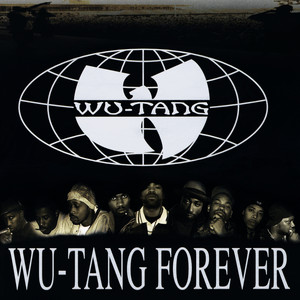
Triumph (feat. Ol' Dirty Bastard, Inspectah Deck, Method Man, Cappadonna, U-God, RZA, GZA, Masta Killa, Ghostface Killah & Raekwon)
Jun 3, 1997
118.9 million
streams
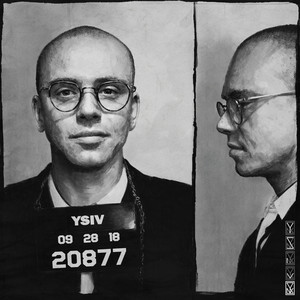
Wu Tang Forever (ft. Ghostface Killah, Raekwon, RZA, Method Man, Inspectah Deck, Cappadonna, Jackpot Scotty Wotty, U-God, Masta Killa, GZA)
Sep 28, 2018
54.7 million
streams