Data may be outdated
Last updated: 1 week ago — Click refresh to get the latest statistics.
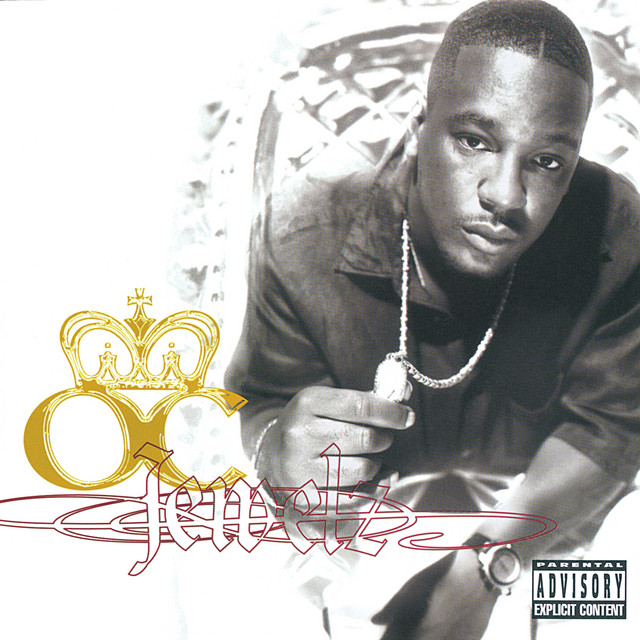
Brooklyn's Talib Kweli is revered for his insightful, intelligent lyrics and advanced technical skills on the mike. The earnest MC became one of the most critically successful rappers of his time, which dawned in the late '90s when he formed <a href="spotify:artist:6vwJ3e6KaQAhLEpBPxCMBC">Reflection Eternal</a> with <a href="spotify:artist:2S3kEShbYaNGvSyJdd7sJg">DJ Hi-Tek</a> and rapped alongside <a href="spotify:artist:0Mz5XE0kb1GBnbLQm2VbcO">Mos Def</a> as part of the group <a href="spotify:artist:67ei8ib6PLT1w3OkhIb4fB">Black Star</a>. Their widely acclaimed 1998 album debut, Black Star, helped make <a href="spotify:search:label%3A%22Rawkus+Records%22">Rawkus Records</a> one of the premier underground rap outposts of the late '90s. <a href="spotify:artist:6vwJ3e6KaQAhLEpBPxCMBC">Reflection Eternal</a>'s debut full-length, 2000's Train of Thought, preceded a prolific solo career, which included the gold-certified Quality (2002) and Eardrum (2007), which hit number two on the Billboard 200. Kweli released several albums and mixtapes through his <a href="spotify:search:label%3A%22Blacksmith+Music%22">Blacksmith Music</a> company, then formed the independent <a href="spotify:search:label%3A%22Javotti+Media%22">Javotti Media</a> in the early 2010s, releasing lower profile but acclaimed efforts like 2017's Radio Silence. He remained busy into the 2020s, with two podcasts as well as a collaboration with <a href="spotify:artist:1YypK4ExBm4UY1TRAOur8M">Diamond D</a> called <a href="spotify:artist:07mQeuxtChKZWF8tvaIIVr">Gotham</a>, and a 2023 joint effort with <a href="spotify:artist:5LhTec3c7dcqBvpLRWbMcf">Madlib</a> titled Liberation 2.
Born in Brooklyn as the eldest of two sons of college professors, Kweli's first name, Talib, is an Arabic name meaning "the seeker or student," while his last name is Ghanaian and means "of truth or knowledge." He began developing his literary gift in elementary school, where he'd write short stories and poems. It wasn't until years later in high school that he turned to hip-hop as an outlet for his self-expression. In high school, he met a young <a href="spotify:artist:0Mz5XE0kb1GBnbLQm2VbcO">Dante Smith</a>, who became better known as <a href="spotify:artist:0Mz5XE0kb1GBnbLQm2VbcO">Mos Def</a> (and is now known as <a href="spotify:artist:6r2niOTnexy9xss5g8GWXH">Yasiin Bey</a>). This fateful meeting further drew Kweli toward hip-hop, and another fateful meeting further convinced him that he had a bright future as an MC. During a 1994 trip to Cincinnati, he met <a href="spotify:artist:2S3kEShbYaNGvSyJdd7sJg">Tony Cottrell</a>, aka <a href="spotify:artist:2S3kEShbYaNGvSyJdd7sJg">DJ Hi-Tek</a>, who at the time was part of a local rap group called <a href="spotify:artist:2u2XHKuu3IWZvTvzXiciqu">Mood</a>. Kweli impressed <a href="spotify:artist:2S3kEShbYaNGvSyJdd7sJg">Hi-Tek</a> during their time together, and the DJ invited the MC to guest on several tracks for <a href="spotify:artist:2u2XHKuu3IWZvTvzXiciqu">Mood</a>'s 1997 album Doom. Shortly afterward, Kweli and <a href="spotify:artist:2S3kEShbYaNGvSyJdd7sJg">Hi-Tek</a> formed a partnership as <a href="spotify:artist:6vwJ3e6KaQAhLEpBPxCMBC">Reflection Eternal</a> and recorded "Fortified Live," which the fledgling <a href="spotify:search:label%3A%22Rawkus%22">Rawkus</a> label released on its first Soundbombing compilation.
Kweli reconnected with <a href="spotify:artist:0Mz5XE0kb1GBnbLQm2VbcO">Mos Def</a> after returning to New York, and the 1998 Black Star album resulted, with several tracks produced by <a href="spotify:artist:2S3kEShbYaNGvSyJdd7sJg">Hi-Tek</a>. And with it came critical acclaim that turned these guys into media darlings overnight. They might not have sold millions of albums, but Kweli, <a href="spotify:artist:2S3kEShbYaNGvSyJdd7sJg">Hi-Tek</a>, and <a href="spotify:artist:0Mz5XE0kb1GBnbLQm2VbcO">Mos Def</a> most certainly impressed a great many people, among them critics, fellow rap artists, and a lot of folks who enjoyed a good old-fashioned hip-hop album with an emphasis on beats, rhymes, and life. In 1999 <a href="spotify:artist:0Mz5XE0kb1GBnbLQm2VbcO">Mos Def</a> released his debut solo album, Black on Both Sides, which featured a Kweli appearance, and pursued an acting career. Kweli and <a href="spotify:artist:2S3kEShbYaNGvSyJdd7sJg">Hi-Tek</a> returned to their <a href="spotify:artist:6vwJ3e6KaQAhLEpBPxCMBC">Reflection Eternal</a> partnership and released Train of Thought in 2000. It spawned a pair of minor hits in "Move Somethin'" and "The Blast."
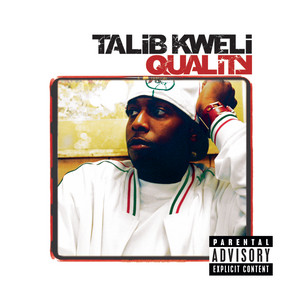
When Kweli returned with his Quality album in 2002, things had changed a bit. For one, he was truly solo. It featured him collaborating with a host of different artists, among them a young and promising yet still largely unknown producer named <a href="spotify:artist:5K4W6rqBFWDnAN6FQUkS6x">Kanye West</a>. "Get By" was the fruit of Kweli's collaboration with <a href="spotify:artist:5K4W6rqBFWDnAN6FQUkS6x">West</a>, and it became the rapper's first Hot 100-charting hit, aided quite a bit by a non-album remix featuring <a href="spotify:artist:3nFkdlSjzX9mRTtwJOzDYB">Jay-Z</a>. The remix got a lot of radio play, but still, Quality didn't put up <a href="spotify:artist:3nFkdlSjzX9mRTtwJOzDYB">Jay-Z</a> numbers and Kweli remained a critical favorite, a reputation cemented even more in late 2003 when <a href="spotify:artist:3nFkdlSjzX9mRTtwJOzDYB">Jigga</a> gave him a high-profile shoutout in "Moment of Clarity": "If skills sold, truth be told/I'd probably be, lyrically, Talib Kweli."
All of this set the stage very well for The Beautiful Struggle, which arrived in fall 2004. The expectations for the album were high because of the <a href="spotify:artist:3nFkdlSjzX9mRTtwJOzDYB">Jay-Z</a> rhyme, and also because a great many hip-hop disciples felt Kweli was long overdue for a commercial breakthrough. The set was undoubtedly his most commercial effort to date, featuring a few radio-ready hook singers like <a href="spotify:artist:1XkoF8ryArs86LZvFOkbyr">Mary J. Blige</a> and <a href="spotify:artist:2DzRMyWgjuMbYvt5BLbpCo">Anthony Hamilton</a>, not to mention a roster of hitmaking producers like <a href="spotify:artist:0KuF7reCTOZwV7YJnHQqgr">the Neptunes</a>, <a href="spotify:artist:2gpPCu8rjzdobGqDZJpHiR">Just Blaze</a>, and <a href="spotify:artist:5K4W6rqBFWDnAN6FQUkS6x">Kanye</a>. Kweli subsequently split from his distributor, <a href="spotify:search:label%3A%22Universal%22">Universal</a>, and lowered his profile for a bit, releasing a stopgap mixtape, Right About Now (2005), via <a href="spotify:search:label%3A%22Koch%22">Koch</a>.
In anticipation of his next solo album, Kweli collaborated with producer <a href="spotify:artist:5LhTec3c7dcqBvpLRWbMcf">Madlib</a> on Liberation, which was initially made available as a free download on New Year's Eve of 2006 on the <a href="spotify:search:label%3A%22Stones+Throw%22">Stones Throw</a> website. Finally, in August 2007, Kweli issued the full-length album Eardrum on his own label, <a href="spotify:search:label%3A%22Blacksmith%22">Blacksmith</a>, via a partnership with <a href="spotify:search:label%3A%22Warner+Bros.%22">Warner Bros.</a> Debuting at number two on the Billboard 200 and selling about 60,000 copies in its first week, Eardrum was Kweli's highest-charting album to date and featured beats from not only <a href="spotify:artist:5LhTec3c7dcqBvpLRWbMcf">Madlib</a> but also <a href="spotify:artist:2S3kEShbYaNGvSyJdd7sJg">Hi-Tek</a>, <a href="spotify:artist:5K4W6rqBFWDnAN6FQUkS6x">Kanye</a>, <a href="spotify:artist:3BeQqzKdlARoOd6y30kCO2">Pete Rock</a>, and <a href="spotify:artist:085pc2PYOi8bGKj0PNjekA">will.i.am</a>, among others.
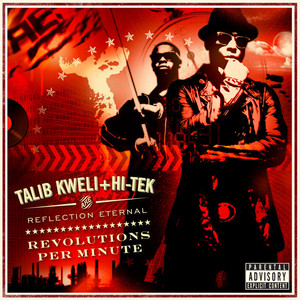
In 2010, the album Revolutions Per Minute reunited Talib and <a href="spotify:artist:2S3kEShbYaNGvSyJdd7sJg">Hi-Tek</a> under their <a href="spotify:artist:6vwJ3e6KaQAhLEpBPxCMBC">Reflection Eternal</a> moniker, then the next year, the solo Gutter Rainbows was the first album to be released by Talib's <a href="spotify:search:label%3A%22Javotti+Media%22">Javotti Media</a> imprint. He collaborated with Philadelphia's <a href="spotify:artist:56YiNz2C704YPpRtPvMBg7">Res</a> as the duo <a href="spotify:artist:5cgamyg8k79hazgMZW4XRB">Idle Warship</a>, releasing the album Habits of the Heart. Kweli's 2013 release Prisoner of Conscious balanced radio-friendly numbers with more abstract tracks and featured <a href="spotify:artist:2gBjLmx6zQnFGQJCAQpRgw">Nelly</a>, <a href="spotify:artist:6X8WdFjrNhXATMDSs26aCc">Curren$y</a>, and <a href="spotify:artist:2YZyLoL8N0Wb9xBt1NhZWg">Kendrick Lamar</a>. The 2014 effort Gravitas followed the same path, this time with <a href="spotify:artist:0CKa42Jqrc9fSFbDjePaXP">Big K.R.I.T.</a>, <a href="spotify:artist:2KsP6tYLJlTBvSUxnwlVWa">Mike Posner</a>, and writer <a href="spotify:artist:5Is2PjIax2qNHglzMBSRWY">Neil Gaiman</a> among its guests. A year later, Kweli released the solo effort Fuck the Money and the <a href="spotify:artist:4s8ZGMVf3OiPktSP4ulpqU">9th Wonder</a> collaboration Indie 500. Another collaborative effort -- The Seven with <a href="spotify:artist:2x8KDZdSONA3872CnhaAlX">Styles P</a> -- was issued in April 2017. Seven months later, Kweli released Radio Silence, an album on which he was joined by the likes of <a href="spotify:artist:4jCbgl5Dmt3uOh8WRQfpPs">Bilal</a>, <a href="spotify:artist:5cM1PvItlR21WUyBnsdMcn">Robert Glasper</a>, <a href="spotify:artist:3jK9MiCrA42lLAdMGUZpwa">Anderson Paak</a>, and <a href="spotify:artist:0TkqXdyWLsssJH7okthMPQ">Jay Electronica</a>.
Kweli started a weekly podcast called The People's Party in 2019, then reunited with past associates <a href="spotify:artist:6r2niOTnexy9xss5g8GWXH">Yasiin Bey</a> (formerly <a href="spotify:artist:0Mz5XE0kb1GBnbLQm2VbcO">Mos Def</a>) and <a href="spotify:artist:504DdVupqJJUEkzmHzJEfs">Dave Chappelle</a> on a podcast named The Midnight Miracle in 2020. Kweli formed <a href="spotify:artist:07mQeuxtChKZWF8tvaIIVr">Gotham</a> with <a href="spotify:artist:6fF9HxdiSPGCXar8svBeHS">D.I.T.C.</a>'s <a href="spotify:artist:1YypK4ExBm4UY1TRAOur8M">Diamond D</a>, and they released their self-titled debut in 2021, with guests including <a href="spotify:artist:1YfEcTuGvBQ8xSD1f53UnK">Busta Rhymes</a> and <a href="spotify:artist:0qHfqHyHZnxvv1lfkJraQc">Skyzoo</a>. The long-awaited <a href="spotify:artist:67ei8ib6PLT1w3OkhIb4fB">Black Star</a> reunion album, No Fear of Time, was produced by <a href="spotify:artist:5LhTec3c7dcqBvpLRWbMcf">Madlib</a> and released through podcasting network Luminary in 2022. The same network also issued Liberation 2, a sequel to Kweli's earlier collaboration with <a href="spotify:artist:5LhTec3c7dcqBvpLRWbMcf">Madlib</a>, in 2023. The album featured a diverse guest list including <a href="spotify:artist:3ZotbHeyVQKxQCPDJuQ4SU">Q-Tip</a>, <a href="spotify:artist:0uZRjholJ0fVC2J9EvnYnj">Meshell Ndegeocello</a>, <a href="spotify:artist:4LLpKhyESsyAXpc4laK94U">Mac Miller</a>, and Detroit poet <a href="spotify:artist:4kjUXLlk49BHRmOMJmGKdj">jessica Care moore</a>. A physical edition followed on <a href="spotify:search:label%3A%22Nature+Sounds%22">Nature Sounds</a>. ~ Jason Birchmeier & Paul Simpson, Rovi
Born in Brooklyn as the eldest of two sons of college professors, Kweli's first name, Talib, is an Arabic name meaning "the seeker or student," while his last name is Ghanaian and means "of truth or knowledge." He began developing his literary gift in elementary school, where he'd write short stories and poems. It wasn't until years later in high school that he turned to hip-hop as an outlet for his self-expression. In high school, he met a young <a href="spotify:artist:0Mz5XE0kb1GBnbLQm2VbcO">Dante Smith</a>, who became better known as <a href="spotify:artist:0Mz5XE0kb1GBnbLQm2VbcO">Mos Def</a> (and is now known as <a href="spotify:artist:6r2niOTnexy9xss5g8GWXH">Yasiin Bey</a>). This fateful meeting further drew Kweli toward hip-hop, and another fateful meeting further convinced him that he had a bright future as an MC. During a 1994 trip to Cincinnati, he met <a href="spotify:artist:2S3kEShbYaNGvSyJdd7sJg">Tony Cottrell</a>, aka <a href="spotify:artist:2S3kEShbYaNGvSyJdd7sJg">DJ Hi-Tek</a>, who at the time was part of a local rap group called <a href="spotify:artist:2u2XHKuu3IWZvTvzXiciqu">Mood</a>. Kweli impressed <a href="spotify:artist:2S3kEShbYaNGvSyJdd7sJg">Hi-Tek</a> during their time together, and the DJ invited the MC to guest on several tracks for <a href="spotify:artist:2u2XHKuu3IWZvTvzXiciqu">Mood</a>'s 1997 album Doom. Shortly afterward, Kweli and <a href="spotify:artist:2S3kEShbYaNGvSyJdd7sJg">Hi-Tek</a> formed a partnership as <a href="spotify:artist:6vwJ3e6KaQAhLEpBPxCMBC">Reflection Eternal</a> and recorded "Fortified Live," which the fledgling <a href="spotify:search:label%3A%22Rawkus%22">Rawkus</a> label released on its first Soundbombing compilation.
Kweli reconnected with <a href="spotify:artist:0Mz5XE0kb1GBnbLQm2VbcO">Mos Def</a> after returning to New York, and the 1998 Black Star album resulted, with several tracks produced by <a href="spotify:artist:2S3kEShbYaNGvSyJdd7sJg">Hi-Tek</a>. And with it came critical acclaim that turned these guys into media darlings overnight. They might not have sold millions of albums, but Kweli, <a href="spotify:artist:2S3kEShbYaNGvSyJdd7sJg">Hi-Tek</a>, and <a href="spotify:artist:0Mz5XE0kb1GBnbLQm2VbcO">Mos Def</a> most certainly impressed a great many people, among them critics, fellow rap artists, and a lot of folks who enjoyed a good old-fashioned hip-hop album with an emphasis on beats, rhymes, and life. In 1999 <a href="spotify:artist:0Mz5XE0kb1GBnbLQm2VbcO">Mos Def</a> released his debut solo album, Black on Both Sides, which featured a Kweli appearance, and pursued an acting career. Kweli and <a href="spotify:artist:2S3kEShbYaNGvSyJdd7sJg">Hi-Tek</a> returned to their <a href="spotify:artist:6vwJ3e6KaQAhLEpBPxCMBC">Reflection Eternal</a> partnership and released Train of Thought in 2000. It spawned a pair of minor hits in "Move Somethin'" and "The Blast."
When Kweli returned with his Quality album in 2002, things had changed a bit. For one, he was truly solo. It featured him collaborating with a host of different artists, among them a young and promising yet still largely unknown producer named <a href="spotify:artist:5K4W6rqBFWDnAN6FQUkS6x">Kanye West</a>. "Get By" was the fruit of Kweli's collaboration with <a href="spotify:artist:5K4W6rqBFWDnAN6FQUkS6x">West</a>, and it became the rapper's first Hot 100-charting hit, aided quite a bit by a non-album remix featuring <a href="spotify:artist:3nFkdlSjzX9mRTtwJOzDYB">Jay-Z</a>. The remix got a lot of radio play, but still, Quality didn't put up <a href="spotify:artist:3nFkdlSjzX9mRTtwJOzDYB">Jay-Z</a> numbers and Kweli remained a critical favorite, a reputation cemented even more in late 2003 when <a href="spotify:artist:3nFkdlSjzX9mRTtwJOzDYB">Jigga</a> gave him a high-profile shoutout in "Moment of Clarity": "If skills sold, truth be told/I'd probably be, lyrically, Talib Kweli."
All of this set the stage very well for The Beautiful Struggle, which arrived in fall 2004. The expectations for the album were high because of the <a href="spotify:artist:3nFkdlSjzX9mRTtwJOzDYB">Jay-Z</a> rhyme, and also because a great many hip-hop disciples felt Kweli was long overdue for a commercial breakthrough. The set was undoubtedly his most commercial effort to date, featuring a few radio-ready hook singers like <a href="spotify:artist:1XkoF8ryArs86LZvFOkbyr">Mary J. Blige</a> and <a href="spotify:artist:2DzRMyWgjuMbYvt5BLbpCo">Anthony Hamilton</a>, not to mention a roster of hitmaking producers like <a href="spotify:artist:0KuF7reCTOZwV7YJnHQqgr">the Neptunes</a>, <a href="spotify:artist:2gpPCu8rjzdobGqDZJpHiR">Just Blaze</a>, and <a href="spotify:artist:5K4W6rqBFWDnAN6FQUkS6x">Kanye</a>. Kweli subsequently split from his distributor, <a href="spotify:search:label%3A%22Universal%22">Universal</a>, and lowered his profile for a bit, releasing a stopgap mixtape, Right About Now (2005), via <a href="spotify:search:label%3A%22Koch%22">Koch</a>.
In anticipation of his next solo album, Kweli collaborated with producer <a href="spotify:artist:5LhTec3c7dcqBvpLRWbMcf">Madlib</a> on Liberation, which was initially made available as a free download on New Year's Eve of 2006 on the <a href="spotify:search:label%3A%22Stones+Throw%22">Stones Throw</a> website. Finally, in August 2007, Kweli issued the full-length album Eardrum on his own label, <a href="spotify:search:label%3A%22Blacksmith%22">Blacksmith</a>, via a partnership with <a href="spotify:search:label%3A%22Warner+Bros.%22">Warner Bros.</a> Debuting at number two on the Billboard 200 and selling about 60,000 copies in its first week, Eardrum was Kweli's highest-charting album to date and featured beats from not only <a href="spotify:artist:5LhTec3c7dcqBvpLRWbMcf">Madlib</a> but also <a href="spotify:artist:2S3kEShbYaNGvSyJdd7sJg">Hi-Tek</a>, <a href="spotify:artist:5K4W6rqBFWDnAN6FQUkS6x">Kanye</a>, <a href="spotify:artist:3BeQqzKdlARoOd6y30kCO2">Pete Rock</a>, and <a href="spotify:artist:085pc2PYOi8bGKj0PNjekA">will.i.am</a>, among others.
In 2010, the album Revolutions Per Minute reunited Talib and <a href="spotify:artist:2S3kEShbYaNGvSyJdd7sJg">Hi-Tek</a> under their <a href="spotify:artist:6vwJ3e6KaQAhLEpBPxCMBC">Reflection Eternal</a> moniker, then the next year, the solo Gutter Rainbows was the first album to be released by Talib's <a href="spotify:search:label%3A%22Javotti+Media%22">Javotti Media</a> imprint. He collaborated with Philadelphia's <a href="spotify:artist:56YiNz2C704YPpRtPvMBg7">Res</a> as the duo <a href="spotify:artist:5cgamyg8k79hazgMZW4XRB">Idle Warship</a>, releasing the album Habits of the Heart. Kweli's 2013 release Prisoner of Conscious balanced radio-friendly numbers with more abstract tracks and featured <a href="spotify:artist:2gBjLmx6zQnFGQJCAQpRgw">Nelly</a>, <a href="spotify:artist:6X8WdFjrNhXATMDSs26aCc">Curren$y</a>, and <a href="spotify:artist:2YZyLoL8N0Wb9xBt1NhZWg">Kendrick Lamar</a>. The 2014 effort Gravitas followed the same path, this time with <a href="spotify:artist:0CKa42Jqrc9fSFbDjePaXP">Big K.R.I.T.</a>, <a href="spotify:artist:2KsP6tYLJlTBvSUxnwlVWa">Mike Posner</a>, and writer <a href="spotify:artist:5Is2PjIax2qNHglzMBSRWY">Neil Gaiman</a> among its guests. A year later, Kweli released the solo effort Fuck the Money and the <a href="spotify:artist:4s8ZGMVf3OiPktSP4ulpqU">9th Wonder</a> collaboration Indie 500. Another collaborative effort -- The Seven with <a href="spotify:artist:2x8KDZdSONA3872CnhaAlX">Styles P</a> -- was issued in April 2017. Seven months later, Kweli released Radio Silence, an album on which he was joined by the likes of <a href="spotify:artist:4jCbgl5Dmt3uOh8WRQfpPs">Bilal</a>, <a href="spotify:artist:5cM1PvItlR21WUyBnsdMcn">Robert Glasper</a>, <a href="spotify:artist:3jK9MiCrA42lLAdMGUZpwa">Anderson Paak</a>, and <a href="spotify:artist:0TkqXdyWLsssJH7okthMPQ">Jay Electronica</a>.
Kweli started a weekly podcast called The People's Party in 2019, then reunited with past associates <a href="spotify:artist:6r2niOTnexy9xss5g8GWXH">Yasiin Bey</a> (formerly <a href="spotify:artist:0Mz5XE0kb1GBnbLQm2VbcO">Mos Def</a>) and <a href="spotify:artist:504DdVupqJJUEkzmHzJEfs">Dave Chappelle</a> on a podcast named The Midnight Miracle in 2020. Kweli formed <a href="spotify:artist:07mQeuxtChKZWF8tvaIIVr">Gotham</a> with <a href="spotify:artist:6fF9HxdiSPGCXar8svBeHS">D.I.T.C.</a>'s <a href="spotify:artist:1YypK4ExBm4UY1TRAOur8M">Diamond D</a>, and they released their self-titled debut in 2021, with guests including <a href="spotify:artist:1YfEcTuGvBQ8xSD1f53UnK">Busta Rhymes</a> and <a href="spotify:artist:0qHfqHyHZnxvv1lfkJraQc">Skyzoo</a>. The long-awaited <a href="spotify:artist:67ei8ib6PLT1w3OkhIb4fB">Black Star</a> reunion album, No Fear of Time, was produced by <a href="spotify:artist:5LhTec3c7dcqBvpLRWbMcf">Madlib</a> and released through podcasting network Luminary in 2022. The same network also issued Liberation 2, a sequel to Kweli's earlier collaboration with <a href="spotify:artist:5LhTec3c7dcqBvpLRWbMcf">Madlib</a>, in 2023. The album featured a diverse guest list including <a href="spotify:artist:3ZotbHeyVQKxQCPDJuQ4SU">Q-Tip</a>, <a href="spotify:artist:0uZRjholJ0fVC2J9EvnYnj">Meshell Ndegeocello</a>, <a href="spotify:artist:4LLpKhyESsyAXpc4laK94U">Mac Miller</a>, and Detroit poet <a href="spotify:artist:4kjUXLlk49BHRmOMJmGKdj">jessica Care moore</a>. A physical edition followed on <a href="spotify:search:label%3A%22Nature+Sounds%22">Nature Sounds</a>. ~ Jason Birchmeier & Paul Simpson, Rovi
Monthly Listeners
678,021
Monthly Listeners History
Track the evolution of monthly listeners over the last 28 days.
Followers
647,724
Followers History
Track the evolution of followers over the last 28 days.
Top Cities
14,506 listeners
13,803 listeners
12,024 listeners
11,145 listeners
9,104 listeners