
Data may be outdated
Last updated: 9 months ago — Click refresh to get the latest statistics.
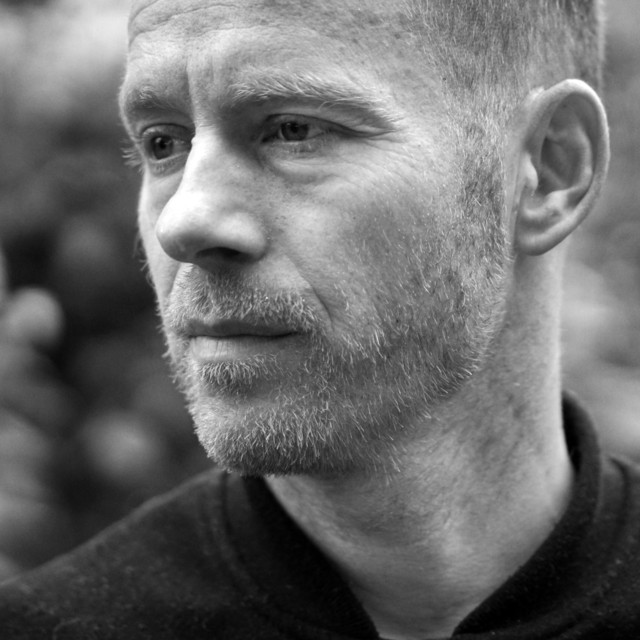
Michał Jacaszek, who primarily records under his last name, is a Polish musician and producer who composes eerie electro-acoustic soundscapes, as well as music for film and theatrical works. First appearing as a solo artist with the left-field miniatures of 2004's Lo-Fi Stories, his sound changed dramatically with 2008's Treny, an album of delicate, sorrowful string arrangements and ethereal vocals threaded together by electronic glitches. Subsequent releases have incorporated Baroque instrumentation (Glimmer, 2011) and poetic lyrics (Kwiaty, 2017), while 2020's Music for Film is a brief sampling of his extensive work for cinema.
Jacaszek debuted in 2004 with Lo-Fi Stories, an instrumental album full of quirky melodies and samples over unpredictable electronic rhythms. He additionally released two albums with singer and poet Miłka Malzahn. As he continued to record throughout the decade, his sound gradually became more understated and subdued, though surges in aggression and noise were not completely eliminated. Norwegian label <a href="spotify:search:label%3A%22Miasmah%22">Miasmah</a> released Jacaszek's haunting 2008 album Treny, which received much acclaim, garnering comparisons to artists like <a href="spotify:artist:1qiwaJwjKod5WhcYZ76O1B">Tim Hecker</a> and <a href="spotify:artist:6u5axd0rpDsWSmzhFfb2VB">William Basinski</a>. This was followed by 2009's Pentral, which was partially recorded in three historic churches in Gdańsk, Poland.
In early 2011, Jacaszek began an association with <a href="spotify:search:label%3A%22Ghostly+International%22">Ghostly International</a> by appearing on the label's SMM: Context compilation beside ambient contemporaries such as Leyland Kirby, Svarte Grenier, and <a href="spotify:artist:6AdRO941ZEDh4GHcCUdEs4">Rafael Anton Irisarri</a>. Toward the end of the year, he released his first <a href="spotify:search:label%3A%22Ghostly%22">Ghostly</a> album, Glimmer. In 2013, Narodowe Centrum Kultury (National Center for Culture) released Piesni, Jacaszek's interpretations of traditional Polish church songs. The following year, <a href="spotify:search:label%3A%22Touch%22">Touch</a> released Catalogue des Arbres, Jacaszek's collaboration with contemporary music quartet <a href="spotify:artist:3ZtNTNYelMtEHWZu7xZe6e">Kwartludium</a>. Jacaszek returned to <a href="spotify:search:label%3A%22Ghostly%22">Ghostly</a> in 2017 with Kwiaty, a vocal-driven album inspired by 17th century metaphysical poetry. Bramy Nieba, with choral ensemble Vocal Varshe, was released in 2018, and won the Grand Prix award at that year's Nowa Tradycja Festival. That October, Jacaszek participated in a performance in commemoration of the victims of the Stutthof concentration camp, held at the Stutthof Museum. A studio recording of the piece was released as Stutthof: Apel Cieni. Music for Film, containing pieces composed for dramas and documentaries over the previous dozen years, was issued by <a href="spotify:search:label%3A%22Ghostly%22">Ghostly</a> in 2020. ~ Andy Kellman & Paul Simpson, Rovi
Jacaszek debuted in 2004 with Lo-Fi Stories, an instrumental album full of quirky melodies and samples over unpredictable electronic rhythms. He additionally released two albums with singer and poet Miłka Malzahn. As he continued to record throughout the decade, his sound gradually became more understated and subdued, though surges in aggression and noise were not completely eliminated. Norwegian label <a href="spotify:search:label%3A%22Miasmah%22">Miasmah</a> released Jacaszek's haunting 2008 album Treny, which received much acclaim, garnering comparisons to artists like <a href="spotify:artist:1qiwaJwjKod5WhcYZ76O1B">Tim Hecker</a> and <a href="spotify:artist:6u5axd0rpDsWSmzhFfb2VB">William Basinski</a>. This was followed by 2009's Pentral, which was partially recorded in three historic churches in Gdańsk, Poland.
In early 2011, Jacaszek began an association with <a href="spotify:search:label%3A%22Ghostly+International%22">Ghostly International</a> by appearing on the label's SMM: Context compilation beside ambient contemporaries such as Leyland Kirby, Svarte Grenier, and <a href="spotify:artist:6AdRO941ZEDh4GHcCUdEs4">Rafael Anton Irisarri</a>. Toward the end of the year, he released his first <a href="spotify:search:label%3A%22Ghostly%22">Ghostly</a> album, Glimmer. In 2013, Narodowe Centrum Kultury (National Center for Culture) released Piesni, Jacaszek's interpretations of traditional Polish church songs. The following year, <a href="spotify:search:label%3A%22Touch%22">Touch</a> released Catalogue des Arbres, Jacaszek's collaboration with contemporary music quartet <a href="spotify:artist:3ZtNTNYelMtEHWZu7xZe6e">Kwartludium</a>. Jacaszek returned to <a href="spotify:search:label%3A%22Ghostly%22">Ghostly</a> in 2017 with Kwiaty, a vocal-driven album inspired by 17th century metaphysical poetry. Bramy Nieba, with choral ensemble Vocal Varshe, was released in 2018, and won the Grand Prix award at that year's Nowa Tradycja Festival. That October, Jacaszek participated in a performance in commemoration of the victims of the Stutthof concentration camp, held at the Stutthof Museum. A studio recording of the piece was released as Stutthof: Apel Cieni. Music for Film, containing pieces composed for dramas and documentaries over the previous dozen years, was issued by <a href="spotify:search:label%3A%22Ghostly%22">Ghostly</a> in 2020. ~ Andy Kellman & Paul Simpson, Rovi
Monthly Listeners
11,416
Monthly Listeners History
Track the evolution of monthly listeners over the last 28 days.
Followers
15,875
Followers History
Track the evolution of followers over the last 28 days.
Top Cities



Related Artists



Michał Jacaszek



Frederic D. Oberland

Acytota

Spicules

Hydras Dream

Andrey Dergachev
Jayne Amara Ross

Bebopovsky And The Orkestry Podyezdov




Lliikkeeaagghhoosstt

American Night

Matvei Kutsev

Stefan Wesołowski

