Data may be outdated
Last updated: 9 months ago — Click refresh to get the latest statistics.
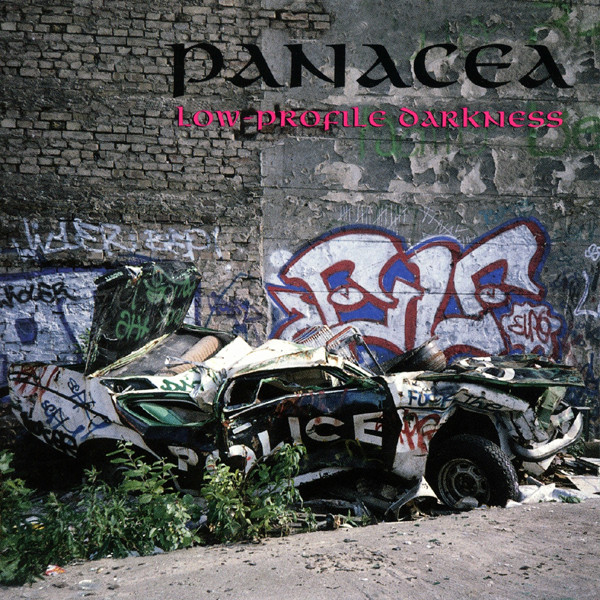
Panacea's Mathis Mootz is one of the first German drum'n'bass producers to make a significant dent among the somewhat insular London jungle crowd, creating a bridge of sorts between the U.K. jungle scene and its Berlin-based antagonist in the "digital hardcore" of <a href="spotify:artist:3YGigudQiWDb5NdJOC5StS">Alec Empire</a>, <a href="spotify:artist:2mx5jUXuSFUX5KNN8ikgLk">Shizuo</a>, <a href="spotify:artist:1EMlPfrse4I1I1hA3iwhk9">Atari Teenage Riot</a>, etc. Although Mootz's work is reported to be only marginally accepted in his home country (and despite high praise by <a href="spotify:artist:3YGigudQiWDb5NdJOC5StS">Empire</a>), the brutalizing, overdriving, near industrial breakbeats and buzzing, hoover-esque basslines of tracks such as "Stormbringer" and "Torture" share much with Berlin hardcore artists. Mootz's most obvious influence is the first he's apt to namecheck -- <a href="spotify:artist:6gj4aZLxVGCdFPMThH6q6q">Ed Rush</a> -- but the appearance of unlikely samples (<a href="spotify:artist:6WH1V41LwGDGmlPUhSZLHO">Autechre</a>, <a href="spotify:artist:3G3Gdm0ZRAOxLrbyjfhii5">My Bloody Valentine</a>) and IDM-ish electro breaks on his less-rinsed tracks make him not nearly the one-trick pony he at first appears to be. Hailing from the countryside town of Summerhausen, Mootz's musical roots lie in the early hardcore breakbeat of industrial dance artists such as <a href="spotify:artist:2tyMOS8xKREgpEwHnLc6EX">Front 242</a>, early <a href="spotify:artist:4k1ELeJKT1ISyDv8JivPpB">Prodigy</a>, and <a href="spotify:artist:7EnAgffrVyerTWH628TJ6f">Nitzer Ebb</a>. One of the first new artists to record for <a href="spotify:search:label%3A%22Force+Inc%22">Force Inc</a>.'s experimental beat music offshoot Chrome, Mootz released no less than three singles his first three weeks out the gate, immediately capturing the attention of the ever-darkening drum'n'bass scene by taking the harsh, dusty darkcore of <a href="spotify:artist:2Hkut4rAAyrQxRdof7FVJq">Rush</a>, <a href="spotify:artist:6g2ys0ODFeBpxoWksZiZtS">Trace</a>, <a href="spotify:artist:05H1pstZ1Lu9ucH1Xg49aZ">Dom & Roland</a>, and Elementz of Noise a step or five forward, fusing dozens of sharp, red-lining breaks and swampy bass rolls (often two or three at once) with dense, gaseous electronics, vocoder samples, and doom-bleating synths into a malicious, chaotic soup. Following "Stormbringer," "Tron," and "Day After," Chrome issued the LP Low-Profile Darkness, with the vinyl a sort of extended double 12" and the CD adding tracks from the earlier 12"s. Additionally, Mootz remixed a track by related labelmate <a href="spotify:artist:1GlO6fbTFkwP6CyQgsjSoe">Mike Ink</a> (his Panacea track the odd man out in a double-pack of minimal house and techno takes on <a href="spotify:artist:1GlO6fbTFkwP6CyQgsjSoe">Ink's</a> "Respect"). Twisted Designz followed in 1998 with an American release to boot, while Mootz also issued an EP and full-length under his hardcore acid alias, Bad Street Boy. The third Panacea LP, released in 1999, was a collaboration with Japanese vocalist <a href="spotify:artist:3vlHafv2NilOdR9geTgKU2">Hanayo</a>. One year later, he released a volume in <a href="spotify:search:label%3A%22Caipirinha%22">Caipirinha</a>'s Brasilia Architettura series focused on the city of Brazilia. German Engineering followed in early 2001. ~ Sean Cooper, Rovi
Monthly Listeners
779
Monthly Listeners History
Track the evolution of monthly listeners over the last 28 days.
Followers
4,225
Followers History
Track the evolution of followers over the last 28 days.
Top Cities
16 listeners

16 listeners

11 listeners

11 listeners

10 listeners
Related Artists
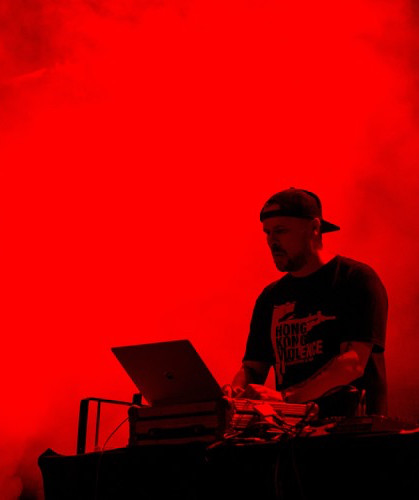

The Redeemer



Plug


P.C.M.


Interlope