Data may be outdated
Last updated: 9 months ago — Click refresh to get the latest statistics.
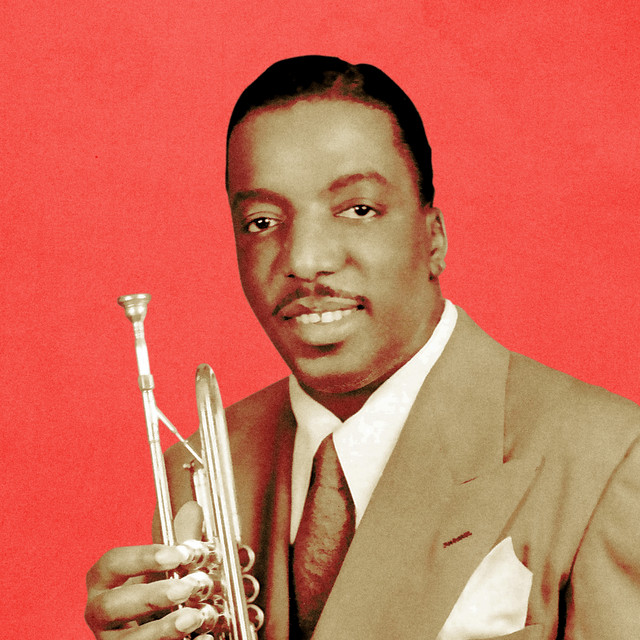
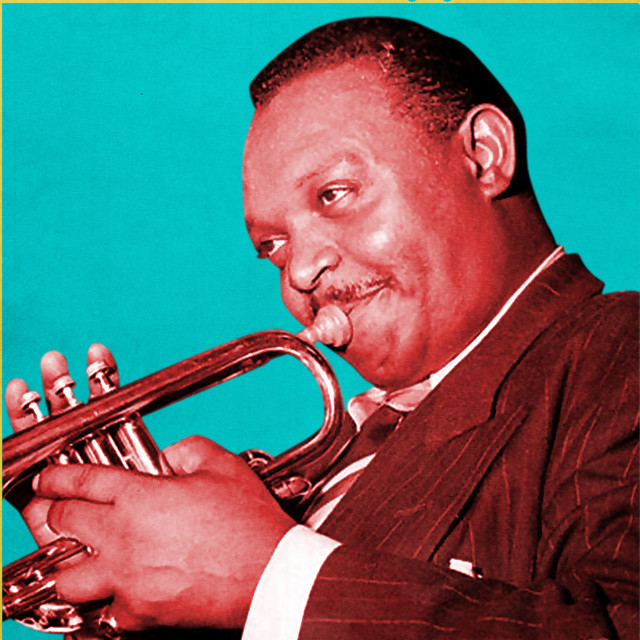
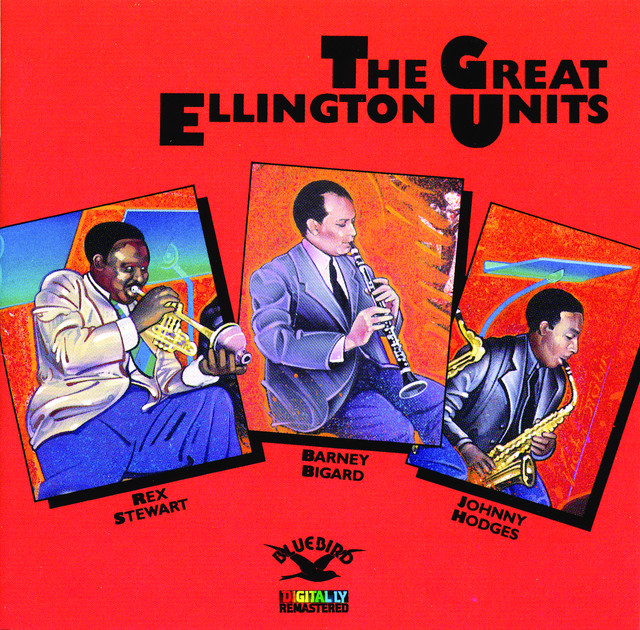
Rex Stewart achieved his greatest glory in a subsidiary role, playing cornet 11 years in <a href="spotify:artist:3W4GTSHxlqXfXjdmSNIbTB">the Duke Ellington Orchestra</a>. His famous "talking" style and half-valve effects were exploited brilliantly by countless <a href="spotify:artist:4F7Q5NV6h5TSwCainz8S5A">Ellington</a> pieces containing perfect passages tailored to showcase Stewart's sound. He played in a forceful, gripping manner that reflected the influences of <a href="spotify:artist:19eLuQmk9aCobbVDHc6eek">Louis Armstrong</a>, <a href="spotify:artist:5HDCdQ8Z534fUX4gZI5IzT">Bubber Miley</a>, and <a href="spotify:artist:3kfbYBrL3MCPAMUwKDRpc7">Bix Beiderbecke</a>, whose solos he once reproduced on record. Stewart played on Potomac riverboats before moving to Philadelphia. He went to New York in 1921. Stewart worked with <a href="spotify:artist:3xNzMGxMGxIhGXYmQTc4iP">Elmer Snowden</a> in 1925, then joined <a href="spotify:artist:2ovJLSejirvJybNers2YG6">Fletcher Henderson</a> a year later. But he felt his talents were not at the necessary level, and departed <a href="spotify:artist:2ovJLSejirvJybNers2YG6">Henderson</a>'s band, joining his brother <a href="spotify:artist:5CH9h1pnlwBLqi38RiqZLM">Horace</a>'s band at Wilberforce College. Stewart returned in 1928. He remained five years and contributed many memorable solos. There was also a brief period in <a href="spotify:artist:5I3S4y3G5KQ6M5DUqxM3wD">McKinney's Cotton Pickers</a> in 1931, a stint heading his own band, and another short stay with <a href="spotify:artist:2QYQ1OaqqulNz8o2c80ViP">Luis Russell</a> before Stewart joined <a href="spotify:artist:3W4GTSHxlqXfXjdmSNIbTB">the Ellington Orchestra</a> in 1934.
He was a star throughout his tenure, co-writing classics "Boy Meets Horn" and "Morning Glory." He also supervised many outside recording sessions using <a href="spotify:artist:4F7Q5NV6h5TSwCainz8S5A">Ellingtonians</a>. After leaving, Stewart led various combos and performed throughout Europe and Australia on an extensive <a href="spotify:artist:1MrfEFvDJwmXQJADGBSEPV">Jazz at the Philharmonic</a> tour from 1947-1951. He lectured at the Paris Conservatory in 1948. Stewart settled in New Jersey to run a farm in the early '50s. He was semi-retired, but found new success in the media. He worked in local radio and television, while leading a band part-time in Boston. Stewart led the <a href="spotify:artist:2ovJLSejirvJybNers2YG6">Fletcher Henderson</a> reunion band in 1957 and 1958, and recorded with them. He played at <a href="spotify:artist:1YaB5mqH5zlJqvJaKIsBrS">Eddie Condon</a>'s club in 1958 and 1959, then moved to the West Coast. Stewart again worked as a disc jockey and became a critic. While he published many excellent pieces, a collection containing many of his best reviews, Jazz Masters of the Thirties, came out posthumously. There's also a Stewart autobiography available. ~ Ron Wynn, Rovi
He was a star throughout his tenure, co-writing classics "Boy Meets Horn" and "Morning Glory." He also supervised many outside recording sessions using <a href="spotify:artist:4F7Q5NV6h5TSwCainz8S5A">Ellingtonians</a>. After leaving, Stewart led various combos and performed throughout Europe and Australia on an extensive <a href="spotify:artist:1MrfEFvDJwmXQJADGBSEPV">Jazz at the Philharmonic</a> tour from 1947-1951. He lectured at the Paris Conservatory in 1948. Stewart settled in New Jersey to run a farm in the early '50s. He was semi-retired, but found new success in the media. He worked in local radio and television, while leading a band part-time in Boston. Stewart led the <a href="spotify:artist:2ovJLSejirvJybNers2YG6">Fletcher Henderson</a> reunion band in 1957 and 1958, and recorded with them. He played at <a href="spotify:artist:1YaB5mqH5zlJqvJaKIsBrS">Eddie Condon</a>'s club in 1958 and 1959, then moved to the West Coast. Stewart again worked as a disc jockey and became a critic. While he published many excellent pieces, a collection containing many of his best reviews, Jazz Masters of the Thirties, came out posthumously. There's also a Stewart autobiography available. ~ Ron Wynn, Rovi
Monthly Listeners
18,532
Monthly Listeners History
Track the evolution of monthly listeners over the last 28 days.
Followers
3,672
Followers History
Track the evolution of followers over the last 28 days.
Top Cities
280 listeners

230 listeners

216 listeners

181 listeners

174 listeners

Related Artists







Art Hodes