Data may be outdated
Last updated: 9 months ago — Click refresh to get the latest statistics.
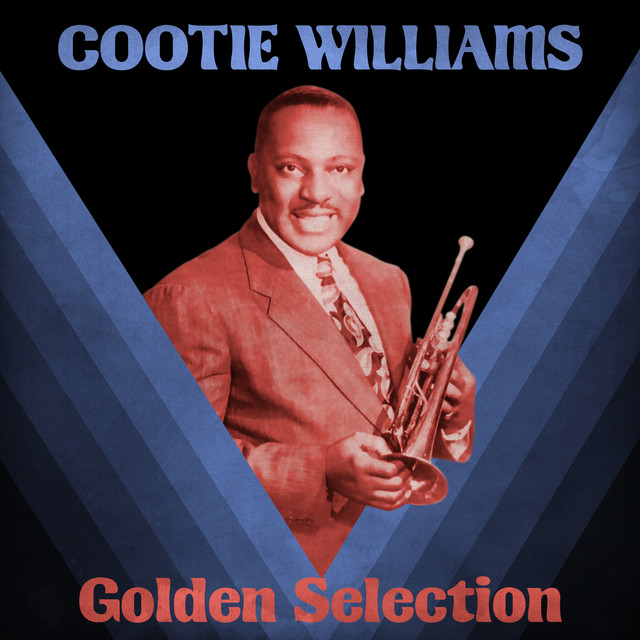
Cootie Williams, one of the finest trumpeters of the 1930s, expanded upon the role originally formed by <a href="spotify:artist:5HDCdQ8Z534fUX4gZI5IzT">Bubber Miley</a> with <a href="spotify:artist:4F7Q5NV6h5TSwCainz8S5A">Duke Ellington's Orchestra</a>. Renowned for his work with the plunger mute, Cootie was also a fine soloist when playing open. Starting as a teenager, Cootie Williams played with a variety of local bands in the South, coming to New York with Alonzo Ross' Syncopators. He played for a short time with the orchestras of <a href="spotify:artist:7AgtFmxbJL1wDbp7yYrzQb">Chick Webb</a> and <a href="spotify:artist:2ovJLSejirvJybNers2YG6">Fletcher Henderson</a> (recording with the latter), before joining <a href="spotify:artist:4F7Q5NV6h5TSwCainz8S5A">Duke Ellington</a> as <a href="spotify:artist:5HDCdQ8Z534fUX4gZI5IzT">Miley</a>'s replacement in February 1929. He was a fixture with <a href="spotify:artist:4F7Q5NV6h5TSwCainz8S5A">Duke</a>'s band during the next 11 years, not only recording many classics with <a href="spotify:artist:4F7Q5NV6h5TSwCainz8S5A">Ellington</a> (including "Echoes of Harlem" and "Concerto for Cootie"), but leading some of his own sessions and recording with <a href="spotify:artist:2PjgZkwAEk7UTin4jP6HLP">Lionel Hampton</a>, <a href="spotify:artist:0tg5uVI4VjzZOFzBryJZii">Teddy Wilson</a>, and <a href="spotify:artist:1YzCsTRb22dQkh9lghPIrp">Billie Holiday</a>, in addition to being a guest at <a href="spotify:artist:1pBuKaLHJlIlqYxQQaflve">Benny Goodman</a>'s Carnegie Hall Concert in 1938. His decision to leave <a href="spotify:artist:4F7Q5NV6h5TSwCainz8S5A">Ellington</a> and join <a href="spotify:artist:1pBuKaLHJlIlqYxQQaflve">Goodman</a>'s orchestra in 1940 was considered a major event in the jazz world. During his year with B.G., Williams was well-featured with both the big band and <a href="spotify:artist:1pBuKaLHJlIlqYxQQaflve">Goodman</a>'s sextet. The following year he became a bandleader, heading his own orchestra which, at times in the 1940s, featured such up-and-coming players as pianist <a href="spotify:artist:570vCzcespB48HIQyTbDO6">Bud Powell</a>, tenorman <a href="spotify:artist:0gNn3uUyIEErdQthThI51i">Eddie "Lockjaw" Davis</a>, altoist/singer <a href="spotify:artist:0R3bGv703d8JFKdZxsHr58">Eddie "Cleanhead" Vinson</a>, and even <a href="spotify:artist:4Ww5mwS7BWYjoZTUIrMHfC">Charlie Parker</a>.
Although he had a hit (thanks to <a href="spotify:artist:5o9MivbKGy9fPcqwC6pQc6">Willis Jackson</a>'s honking tenor) on "Gator," by 1948 Cootie had cut his group back to a sextet. Playing R&B-oriented music, he worked steadily at the Savoy, but by the 1950s was drifting into obscurity. However, in 1962, after a 22-year absence, Cootie Williams rejoined <a href="spotify:artist:4F7Q5NV6h5TSwCainz8S5A">Duke Ellington</a>, staying even beyond <a href="spotify:artist:4F7Q5NV6h5TSwCainz8S5A">Duke</a>'s death in 1974 as a featured soloist. By then his solos were much simpler and more primitive than earlier (gone was the <a href="spotify:artist:19eLuQmk9aCobbVDHc6eek">Louis Armstrong</a>-inspired bravado), but Cootie remained the master with the plunger mute. He was semi-retired during his final decade, taking a final solo in 1978 on a <a href="spotify:artist:2mPL4g4v9DS55zi6QctLbP">Teresa Brewer</a> record, and posthumously serving as an inspiration for <a href="spotify:artist:375zxMmh2cSgUzFFnva0O7">Wynton Marsalis</a>' own plunger playing. ~ Scott Yanow, Rovi
Although he had a hit (thanks to <a href="spotify:artist:5o9MivbKGy9fPcqwC6pQc6">Willis Jackson</a>'s honking tenor) on "Gator," by 1948 Cootie had cut his group back to a sextet. Playing R&B-oriented music, he worked steadily at the Savoy, but by the 1950s was drifting into obscurity. However, in 1962, after a 22-year absence, Cootie Williams rejoined <a href="spotify:artist:4F7Q5NV6h5TSwCainz8S5A">Duke Ellington</a>, staying even beyond <a href="spotify:artist:4F7Q5NV6h5TSwCainz8S5A">Duke</a>'s death in 1974 as a featured soloist. By then his solos were much simpler and more primitive than earlier (gone was the <a href="spotify:artist:19eLuQmk9aCobbVDHc6eek">Louis Armstrong</a>-inspired bravado), but Cootie remained the master with the plunger mute. He was semi-retired during his final decade, taking a final solo in 1978 on a <a href="spotify:artist:2mPL4g4v9DS55zi6QctLbP">Teresa Brewer</a> record, and posthumously serving as an inspiration for <a href="spotify:artist:375zxMmh2cSgUzFFnva0O7">Wynton Marsalis</a>' own plunger playing. ~ Scott Yanow, Rovi
Monthly Listeners
12,232
Monthly Listeners History
Track the evolution of monthly listeners over the last 28 days.
Followers
7,493
Followers History
Track the evolution of followers over the last 28 days.
Top Cities




Related Artists



Gene Krupa Big Band



Andy Kirk & His 12 clouds of Joy