Data may be outdated
Last updated: 1 month ago — Click refresh to get the latest statistics.
Barber was a member of the first class at the Curtis Institute of Music in Philadelphia. In 1928, the 17-year-old <a href="spotify:artist:6ZXkJX29GZJB89aLkckbj0">Gian Carlo Menotti</a> came to study at Curtis, and the two formed a personal and professional bond that would last most of Barber's life. As a student, Barber wrote several works that have entered the repertoire, including the song Dover Beach and Overture to the School for Scandal for orchestra. A fine singer and pianist, as well as composer, much of his work throughout his career featured the voice.
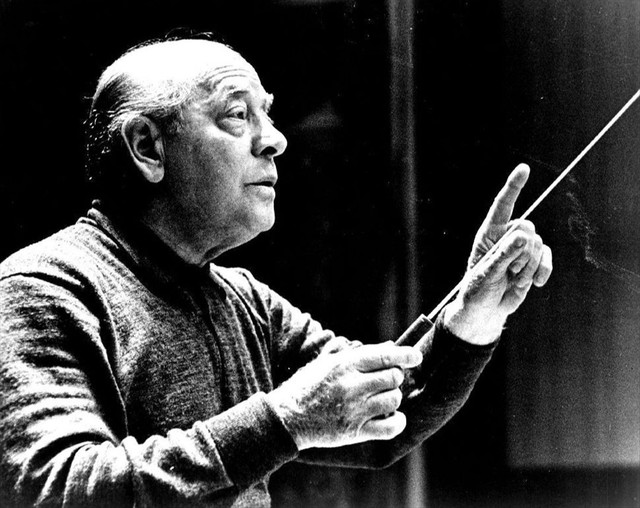
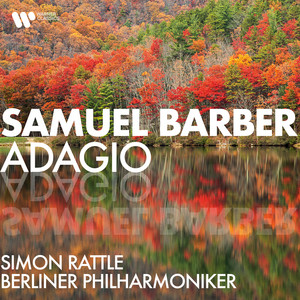
After his graduation from Curtis, Barber wrote a string quartet, the second movement of which became his most famous work, Adagio for Strings. <a href="spotify:artist:4xpgBZSojKNEQqQHXrwSXA">Toscanini</a> performed the Adagio with the <a href="spotify:artist:7JiZysLPLBijVnS9uWX312">NBC Symphony</a> in 1938, and Barber's career was effectively launched. His 1939 Violin Concerto further established his international reputation. During the Second World War, Barber served in the Army Air Corps, where his duties included writing a symphony, his second. Works that followed over the next two decades include the Capricorn Concerto; a Cello Concerto; a Piano Sonata; Knoxville: Summer of 1915, an extended song for voice and orchestra with a text by James Agee; Hermit Songs, for voice and piano, using medieval texts; the chamber opera A Hand of Bridge; Medea's Meditation and Dance of Vengeance, taken from the ballet Cave of the Heart, written for Martha Graham; Summer Music, for wind quintet; the opera Vanessa; and a Piano Concerto. Some of the most prestigious musicians in the world performed his music and became champions of his work, including <a href="spotify:artist:3Qh7r2c4JWTmRLH3swU9dC">Leontyne Price</a>, <a href="spotify:artist:10CN8N2O3FlGlPVJWBiu5D">Dietrich Fischer-Dieskau</a>, <a href="spotify:artist:70Hax3AiiBPUokbXV0nMtB">Eleanor Steber</a>, <a href="spotify:artist:3Sty8LXPRxZC20V9jblPRq">Martina Arroyo</a>, <a href="spotify:artist:4Ws5hSoABAwvGJ4LhHwHgq">Vladimir Horowitz</a>, <a href="spotify:artist:4xpgBZSojKNEQqQHXrwSXA">Arturo Toscanini</a>, <a href="spotify:artist:3naY4Tq98GRh9K8xOsINyv">Eugene Ormandy</a>, <a href="spotify:artist:1p4YAX8Nh6LiW3uPd49oAR">Bruno Walter</a>, <a href="spotify:artist:2CFaOiHKik5FgNGzZJ08sx">George Szell</a>, and <a href="spotify:artist:4wPH3awoVXijuEmNElbpmt">Serge Koussevitzky</a>.
Barber received his first Pulitzer Prize for Vanessa, which had been commissioned by the <a href="spotify:artist:5wn7ofJrDNHlKovbljawzS">Metropolitan Opera</a>, had its premiere in 1958, and was hailed as the first great American "grand opera." His 1962 Piano Concerto won the composer his second Pulitzer Prize. The <a href="spotify:artist:5wn7ofJrDNHlKovbljawzS">Metropolitan Opera</a> commissioned Barber to write an opera to inaugurate its new opera house in Lincoln Center in 1966. Antony and Cleopatra, based on <a href="spotify:artist:0xZ9fVp0OnYjYPeX9Z3c8x">Shakespeare</a> with a libretto by Franco Zeffirelli, proved to be a failure due at least as much to flaws in the production as to the music. Barber was so devastated by the intensity of the animosity toward his work that he never regained his confidence. He was temperamentally disposed to melancholy, which turned into clinical depression, and although he continued to compose sporadically, he produced few further works of substance.
In spite of the indifference or contempt of critics and the academic establishment, Barber's expressive and directly communicative music has never lacked support and devotion from concert audiences, and he remains one of the best-known and beloved American composers. His Adagio for Strings has achieved iconic status as a profound and universally understood expression of grief and remains a testament to Barber's ability to write music of the highest artistic standards that can also touch the heart. ~ Stephen Eddins, Rovi
Monthly Listeners
1.4 million
Monthly Listeners History
Track the evolution of monthly listeners over the last 28 days.
Followers
171,570
Followers History
Track the evolution of followers over the last 28 days.
Total Streams
664.0 million
Total Streams History
Track the evolution of total streams over the last 28 days. This data is calculated from all tracks listed in the artist's discography.