Data may be outdated
Last updated: 1 week ago — Click refresh to get the latest statistics.
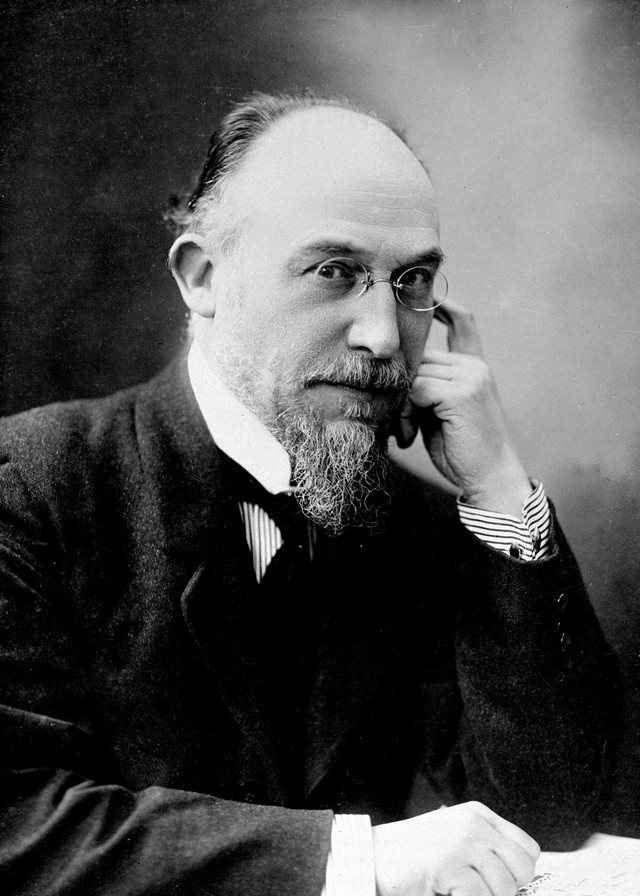
As a child, Satie showed an interest in music and began taking piano lessons from a local church organist named Vinot. While he progressed during this period, he showed no unusual gifts. In 1879, he enrolled in the Paris Conservatory, where he studied under Descombe (piano) and <a href="spotify:artist:7Km5Rdmbub9geiQ2jaYqTM">Lavignac</a> (solfeggio), but failed to meet minimum requirements and was expelled in 1882. Satie departed Paris on November 15, 1886, to join the infantry in Arras, but he found military life distasteful and intentionally courted illness to relieve himself of duty. That same year, his first works were published: Elégie, Trois Mélodies, and Chanson. The years following his military service formed a bohemian period in Satie's life, the most significant events of which would be the beginnings of his friendship with <a href="spotify:artist:1Uff91EOsvd99rtAupatMP">Debussy</a>, his exposure to eastern music at the Paris World Exhibition, and his association with a number of philosophical and religious organizations (most notably the Rosicrucian Brotherhood).
In 1905, Satie decided to resume musical study, enrolling in the conservative and controversial Schola Cantorum, run by <a href="spotify:artist:74t2IgTigmFhqMn5gs5XPt">Vincent d'Indy</a>. His music took on a more academic and rigorous quality and also began to exhibit the dry wit that would become hallmarks of his style. Many of his compositions received odd titles, especially after 1910, such as Dried up embryos and Three real flabby preludes (for a dog). Some of his works also featured odd instructions for the performer, not intended to be taken seriously, as in his 1893 piano work, Vexations, which carries the admonition in the score, "To play this motif 840 times in succession, it would be advisable to prepare oneself beforehand, in the deepest silence, by serious immobilities."
In 1925, Satie developed pleurisy, and his fragile health worsened. He was taken to St. Joseph Hospital, where continued to live for several months. He received the last rites of the Catholic Church in his final days and died on July 1, 1925.
Monthly Listeners
4.2 million
Monthly Listeners History
Track the evolution of monthly listeners over the last 28 days.
Followers
1.0 million
Followers History
Track the evolution of followers over the last 28 days.
Total Streams
7.1 billion
Total Streams History
Track the evolution of total streams over the last 28 days. This data is calculated from all tracks listed in the artist's discography.