Data may be outdated
Last updated: 9 months ago — Click refresh to get the latest statistics.
Heavily influenced by <a href="spotify:artist:3DznKagEU8yMQZR9z33Da5">Labelle</a> and <a href="spotify:artist:2kreKea2n96dXjcyAU9j5N">the Pointer Sisters</a>, Stargard was a female R&B vocal group that was best known for providing the theme song from the 1977 film Which Way Is Up. Rochelle Runnells, <a href="spotify:artist:1E2nMLQPhBaNuvJEsPRyaY">Debra Anderson</a>, and Janice Williams -- who comprised Stargard's original three-woman lineup -- didn't go for the type of breathy, sweet, girlish vocals that <a href="spotify:artist:57bUPid8xztkieZfS7OlEV">the Supremes</a> and the <a href="spotify:artist:2zpFG5cvw00QmrYTUsjApa">Three Degrees</a> were known for. Like <a href="spotify:artist:3DznKagEU8yMQZR9z33Da5">Labelle</a> and <a href="spotify:artist:2kreKea2n96dXjcyAU9j5N">the Pointer Sisters</a>, Stargard favored robust, aggressive belting and brought a gospel-like passion to its funk, soul, and disco.
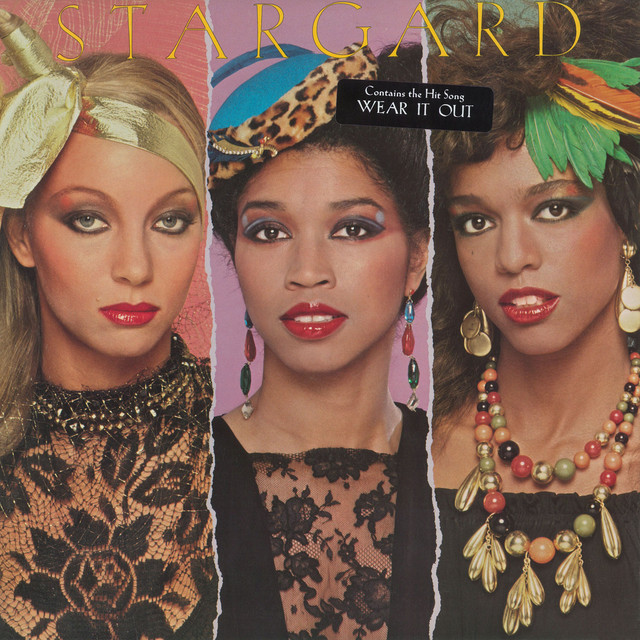
Stargard signed with MCA in 1977, when its first single, the ultra-funky "Theme from 'Which Way Is Up'" (a Norman Whitfield gem), soared to number one on the R&B singles charts. Stargard's self-titled debut album came out in early 1978, and later that year, MCA released the trio's sophomore effort What You Waitin' For. That album's funky title track (also written by Whitfield) became a Top Ten R&B hit, but after that, Stargard lost its commercial momentum. In 1979, Stargard left MCA for Warner Bros. and recorded its third album, The Changing of the Guard, which was produced by Robert Wright and <a href="spotify:artist:4QQgXkCYTt3BlENzhyNETg">Earth, Wind & Fire</a>'s <a href="spotify:artist:4tMJliVd96wXoMVNdcOBHp">Verdine White</a> (<a href="spotify:artist:6T46cZo3M8wXq5eOoXbZBx">Maurice White</a>'s brother) and contained the single "Wear It Out." That superb album had the makings of a smash, but regrettably, it didn't do nearly as well as it should have. In 1980, <a href="spotify:artist:1E2nMLQPhBaNuvJEsPRyaY">Anderson</a> left the group, and Runnells and Williams decided to carry on as a duo instead of hiring a replacement. As a duo, Runnells and Williams recorded 1981's <a href="spotify:artist:1EVNxK3nqJ9gy9BwAZ3w3Q">Norman Whitfield</a>-produced Back 2 Back for Warner Bros. and 1982's Nine Lives (which Runnells produced) for MCA. Both of those LPs received very little attention, and in 1983, Stargard broke up. ~ Alex Henderson, Rovi
Stargard signed with MCA in 1977, when its first single, the ultra-funky "Theme from 'Which Way Is Up'" (a Norman Whitfield gem), soared to number one on the R&B singles charts. Stargard's self-titled debut album came out in early 1978, and later that year, MCA released the trio's sophomore effort What You Waitin' For. That album's funky title track (also written by Whitfield) became a Top Ten R&B hit, but after that, Stargard lost its commercial momentum. In 1979, Stargard left MCA for Warner Bros. and recorded its third album, The Changing of the Guard, which was produced by Robert Wright and <a href="spotify:artist:4QQgXkCYTt3BlENzhyNETg">Earth, Wind & Fire</a>'s <a href="spotify:artist:4tMJliVd96wXoMVNdcOBHp">Verdine White</a> (<a href="spotify:artist:6T46cZo3M8wXq5eOoXbZBx">Maurice White</a>'s brother) and contained the single "Wear It Out." That superb album had the makings of a smash, but regrettably, it didn't do nearly as well as it should have. In 1980, <a href="spotify:artist:1E2nMLQPhBaNuvJEsPRyaY">Anderson</a> left the group, and Runnells and Williams decided to carry on as a duo instead of hiring a replacement. As a duo, Runnells and Williams recorded 1981's <a href="spotify:artist:1EVNxK3nqJ9gy9BwAZ3w3Q">Norman Whitfield</a>-produced Back 2 Back for Warner Bros. and 1982's Nine Lives (which Runnells produced) for MCA. Both of those LPs received very little attention, and in 1983, Stargard broke up. ~ Alex Henderson, Rovi
Monthly Listeners
35,192
Monthly Listeners History
Track the evolution of monthly listeners over the last 28 days.
Followers
14,433
Followers History
Track the evolution of followers over the last 28 days.
Top Cities
1,446 listeners

558 listeners

503 listeners

478 listeners
418 listeners