Data may be outdated
Last updated: 9 months ago — Click refresh to get the latest statistics.
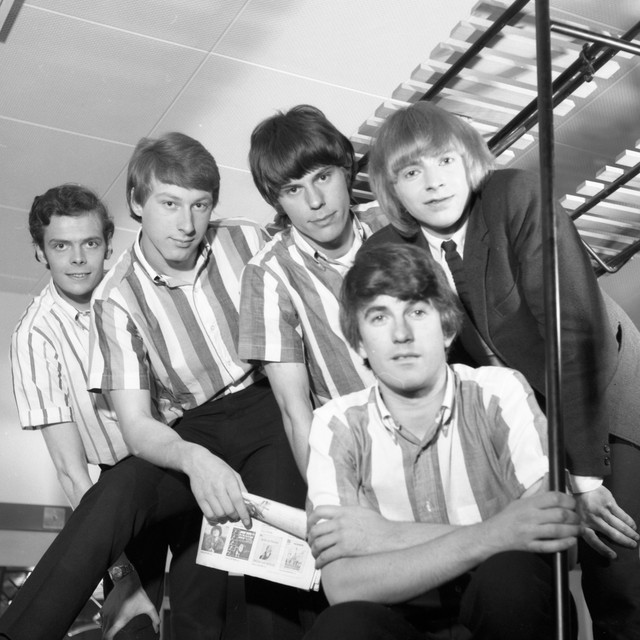
For just a few months in 1964 (approximately July to October), <a href="spotify:artist:67ea9eGLXYMsO2eYQRui3w">the Who</a> changed their name to the High Numbers, releasing one single under that billing before reverting to the more inventive and appropriate "<a href="spotify:artist:67ea9eGLXYMsO2eYQRui3w">the Who</a>." The name change resulted from their association with Pete Meaden, a mod who briefly managed them in mid-1964 (Helmut Gorden was also involved in their management with Meaden for much of that time). Meaden was instrumental in getting the band to gear their music and image more toward the mod movement, and this was reflected in his choice of the name "the High Numbers," which arose from mod slang.
The High Numbers did a single for <a href="spotify:search:label%3A%22Fontana%22">Fontana</a> in July, "I'm the Face"/"Zoot Suit." Both sides of the 45 were written by Meaden, the A-side loosely adapted from <a href="spotify:artist:36hwOoNPgnsKnhoMBYpJrJ">Slim Harpo</a>'s "Got Love If You Want It," a popular cover choice among British bands of the time (including <a href="spotify:artist:1SQRv42e4PjEYfPhS0Tk9E">the Kinks</a> and <a href="spotify:artist:2lxX1ivRYp26soIavdG9bX">the Yardbirds</a>). The flipside is often said to be similarly based on "Country Fool," an obscure New Orleans R&B number by <a href="spotify:artist:31w23Dr0NHugbNF2TQe6xz">the Showmen</a>, although the resemblance to a previous song is not as blatant as it is with "I'm the Face." The lyrics, too, were rather blunt pastiches of mod jargon and sloganeering. Relatively little of <a href="spotify:artist:67ea9eGLXYMsO2eYQRui3w">the Who</a>'s personality came through on the disc. <a href="spotify:artist:24Wa5wIZIo1sPkzVGP0B5p">Pete Townshend</a>'s guitar in particular bore little resemblance to his power chords and searing feedback on <a href="spotify:artist:67ea9eGLXYMsO2eYQRui3w">the Who</a>'s 1965 singles; the leads on the single were so jazzy and thin that one wonders if they were, in fact, the work of a session musician. In fact, "Zoot Suit" rather overshadows the routine R&B of the A-side, with its unusual minor-key tune and rushed tempo. In any case, the single went virtually unnoticed upon initial release. The group did record two R&B-soul covers at the same session, <a href="spotify:artist:2bmixwMZXlkl2sbIbOfviq">Bo Diddley</a>'s "Here 'Tis" and <a href="spotify:artist:2BgyJtxoixkegtJX6HqT4w">Eddie Holland</a>'s "Leaving Here," that showed them to better advantage, if still a long way off from their great 1965 power pop recordings. Both of those songs eventually found official release on archival <a href="spotify:artist:67ea9eGLXYMsO2eYQRui3w">Who</a> compilations.
The High Numbers wisely changed their name back to <a href="spotify:artist:67ea9eGLXYMsO2eYQRui3w">the Who</a> by November 1964, by which time they had also changed management, replacing Meaden with Kit Lambert and Chris Stamp. Whether this was intentional or not, it also erased any stigma that might have been attached to them as the result of the High Numbers' flop 45, and allowed them to present their first 1965 single, "I Can't Explain," as the debut of a brand-new band, <a href="spotify:artist:67ea9eGLXYMsO2eYQRui3w">the Who</a>. Very rare for a decade, "I'm the Face" and 'Zoot Suit" appeared on <a href="spotify:artist:67ea9eGLXYMsO2eYQRui3w">Who</a> compilation albums in the '70s, and later on CD. ~ Richie Unterberger, Rovi
The High Numbers did a single for <a href="spotify:search:label%3A%22Fontana%22">Fontana</a> in July, "I'm the Face"/"Zoot Suit." Both sides of the 45 were written by Meaden, the A-side loosely adapted from <a href="spotify:artist:36hwOoNPgnsKnhoMBYpJrJ">Slim Harpo</a>'s "Got Love If You Want It," a popular cover choice among British bands of the time (including <a href="spotify:artist:1SQRv42e4PjEYfPhS0Tk9E">the Kinks</a> and <a href="spotify:artist:2lxX1ivRYp26soIavdG9bX">the Yardbirds</a>). The flipside is often said to be similarly based on "Country Fool," an obscure New Orleans R&B number by <a href="spotify:artist:31w23Dr0NHugbNF2TQe6xz">the Showmen</a>, although the resemblance to a previous song is not as blatant as it is with "I'm the Face." The lyrics, too, were rather blunt pastiches of mod jargon and sloganeering. Relatively little of <a href="spotify:artist:67ea9eGLXYMsO2eYQRui3w">the Who</a>'s personality came through on the disc. <a href="spotify:artist:24Wa5wIZIo1sPkzVGP0B5p">Pete Townshend</a>'s guitar in particular bore little resemblance to his power chords and searing feedback on <a href="spotify:artist:67ea9eGLXYMsO2eYQRui3w">the Who</a>'s 1965 singles; the leads on the single were so jazzy and thin that one wonders if they were, in fact, the work of a session musician. In fact, "Zoot Suit" rather overshadows the routine R&B of the A-side, with its unusual minor-key tune and rushed tempo. In any case, the single went virtually unnoticed upon initial release. The group did record two R&B-soul covers at the same session, <a href="spotify:artist:2bmixwMZXlkl2sbIbOfviq">Bo Diddley</a>'s "Here 'Tis" and <a href="spotify:artist:2BgyJtxoixkegtJX6HqT4w">Eddie Holland</a>'s "Leaving Here," that showed them to better advantage, if still a long way off from their great 1965 power pop recordings. Both of those songs eventually found official release on archival <a href="spotify:artist:67ea9eGLXYMsO2eYQRui3w">Who</a> compilations.
The High Numbers wisely changed their name back to <a href="spotify:artist:67ea9eGLXYMsO2eYQRui3w">the Who</a> by November 1964, by which time they had also changed management, replacing Meaden with Kit Lambert and Chris Stamp. Whether this was intentional or not, it also erased any stigma that might have been attached to them as the result of the High Numbers' flop 45, and allowed them to present their first 1965 single, "I Can't Explain," as the debut of a brand-new band, <a href="spotify:artist:67ea9eGLXYMsO2eYQRui3w">the Who</a>. Very rare for a decade, "I'm the Face" and 'Zoot Suit" appeared on <a href="spotify:artist:67ea9eGLXYMsO2eYQRui3w">Who</a> compilation albums in the '70s, and later on CD. ~ Richie Unterberger, Rovi
Monthly Listeners
25,168
Monthly Listeners History
Track the evolution of monthly listeners over the last 28 days.
Followers
6,441
Followers History
Track the evolution of followers over the last 28 days.
Top Cities
1,665 listeners

504 listeners
384 listeners
335 listeners

327 listeners