Data may be outdated
Last updated: 2 weeks ago — Click refresh to get the latest statistics.
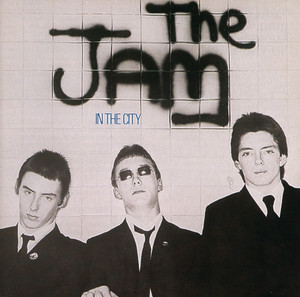
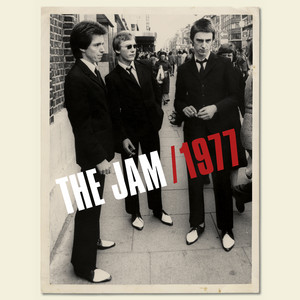
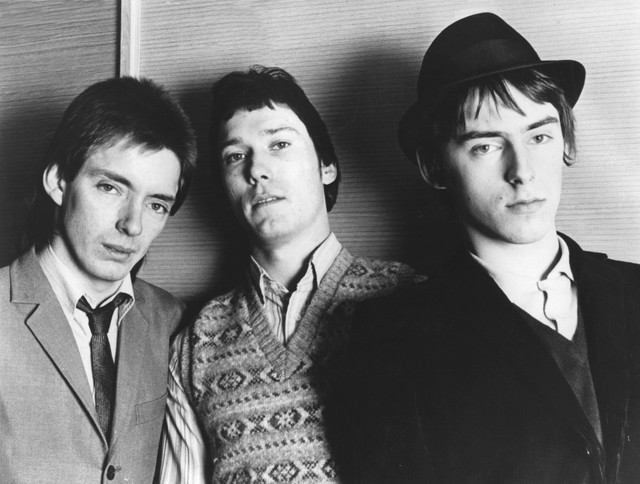
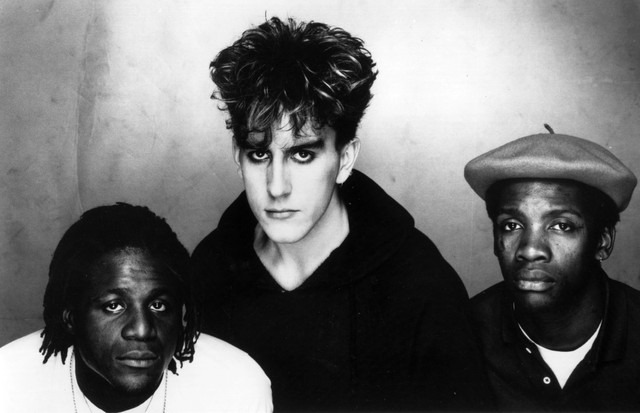
<a href="spotify:artist:7Lf3LOZp3U3u2f6cWMd3AH">Weller</a> formed the Jam with drummer Rick Buckler, bassist <a href="spotify:artist:7JfAcN2AYs4rrzIMyBqCy9">Bruce Foxton</a>, and guitarist Steve Brookes while they were still in school in 1975; Brookes quickly left the band and they remained a trio for the rest of their career. For the next year, the band played gigs around London, building a local following. In February 1977, the group signed a record contract with <a href="spotify:search:label%3A%22Polydor%22">Polydor</a>; two months later, they released their debut single, "In the City," which reached the U.K. Top 40. The following month, the group released their debut album, also called In the City. Recorded in just 11 days, the album featured a combinations of R&B covers and <a href="spotify:artist:7Lf3LOZp3U3u2f6cWMd3AH">Weller</a> originals, all of which sounded a bit like faster, more ragged versions of <a href="spotify:artist:67ea9eGLXYMsO2eYQRui3w">the Who</a>'s early records. Their second single, "All Around the World," nearly broke into the British Top Ten and the group embarked on a successful British tour. During the summer of 1977, they recorded their second album, This Is the Modern World, which was released toward the end of the year. "The Modern World" made it into the Top 40 in November, just as the Jam were beginning their first American tour. Although it was brief, the tour was not successful, leaving bitter memories of the U.S. in the minds of the bandmembers.
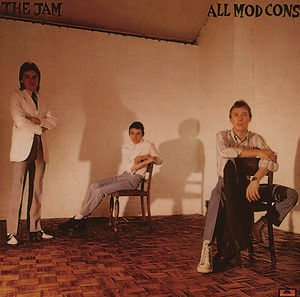
This Is the Modern World peaked in the British charts at number 22, yet it received criticism for repeating the sound of the debut. The band began a headlining tour of the U.K., yet it was derailed shortly after it started when the group got into a nasty fight with a bunch of rugby players in a Leeds hotel. <a href="spotify:artist:7Lf3LOZp3U3u2f6cWMd3AH">Weller</a> broke several bones and was charged with assault, although the Leeds Crown Court would eventually acquit him. The Jam departed for another American tour in March of 1978 and it was again unsuccessful, as they opened for <a href="spotify:artist:00tVTdpEhQQw1bqdu8RCx2">Blue Öyster Cult</a>. It did nothing to win new American fans, yet their star continued to rise in Britain. Bands copying the group's mod look and sound popped up across Britain and the Jam itself performed at the Reading Festival in August. All Mod Cons, released late in 1978, marked a turning point in the Jam's career, illustrating that <a href="spotify:artist:7Lf3LOZp3U3u2f6cWMd3AH">Weller</a>'s songwriting was becoming more melodic, complex, and lyrically incisive, resembling <a href="spotify:artist:6spXkXEP6teMn2cu9sWbBR">Ray Davies</a> more than <a href="spotify:artist:24Wa5wIZIo1sPkzVGP0B5p">Pete Townshend</a>. Even as their sound became more pop-oriented, the group lost none of their tightly controlled energy. All Mod Cons was a major success, peaking at number six on the U.K. charts, even if it didn't make a dent in the U.S. Every one of the band's singles were now charting in the Top 20, with the driving "Eton Rifles" becoming their first Top Ten in November 1979, charting at number three.
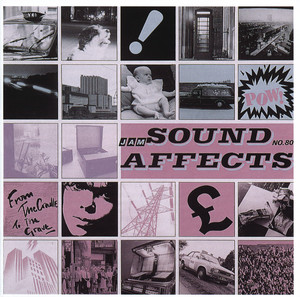
Setting Sons, released at the end of 1979, climbed to number four in the U.K. and marked their first charting album in the U.S., hitting number 137 in the spring of 1980. At that time, the Jam had become full-fledged rock stars in Britain, with their new "Going Underground" single entering the charts at number one. During the summer, the band recorded their fifth album, with the "Taxman"-inspired "Start" released as a teaser single in August; "Start" became their second straight number one. Its accompanying album, the ambitious Sound Affects, hit number two in the U.K. at the end of the year; it was also the band's high-water mark in the U.S., peaking at number 72. "That's Entertainment," one of the standout tracks from Sound Affects, charted at number 21 in the U.K. as an import single, confirming the band's enormous popularity.
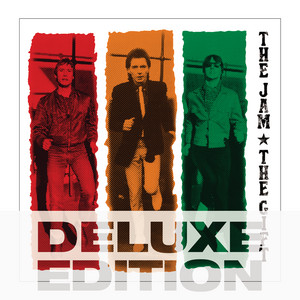
"Funeral Pyre," the band's summer 1981 single, showed signs that <a href="spotify:artist:7Lf3LOZp3U3u2f6cWMd3AH">Weller</a> was becoming fascinated with American soul and R&B, as did the punchy, horn-driven "Absolute Beginners," which hit number four in the fall of the year. As the Jam were recording their sixth album, <a href="spotify:artist:7Lf3LOZp3U3u2f6cWMd3AH">Weller</a> suffered a nervous breakdown, which prompted him to stop drinking. In February 1982, the first single from the new sessions -- the double A-sided "Town Called Malice"/"Precious" -- became their third number one single and the band became the first group since <a href="spotify:artist:3WrFJ7ztbogyGnTHbHJFl2">the Beatles</a> to play two songs on BBC's Top of the Pops. The Gift, released in March of 1982, showcased the band's soul infatuation and became the group's first number one album in the U.K. "Just Who Is the 5 O'Clock Hero" hit number eight in July, becoming the group's second import single to make the U.K. charts.
Although the Jam was at the height of its popularity, <a href="spotify:artist:7Lf3LOZp3U3u2f6cWMd3AH">Weller</a> was becoming frustrated with the trio's sound and made the decision to disband the group. On the heels of the number two hit "The Bitterest Pill," the Jam announced their breakup in October of 1982. They played a farewell tour in the fall and their final single, "Beat Surrender," entered the charts at number one. Dig the New Breed, a compilation of live tracks, charted at number two in December of 1982. All 16 of the group's singles were re-released by <a href="spotify:search:label%3A%22Polydor%22">Polydor</a> in the U.K. at the beginning of 1983; all of them recharted simultaneously. <a href="spotify:artist:7JfAcN2AYs4rrzIMyBqCy9">Bruce Foxton</a> released a solo album, Touch Sensitive, and Rick Buckler played with <a href="spotify:artist:076yHPFRlAkJZeUtzETYrx">the Time UK</a>; neither of these efforts were as noteworthy as the Jam biography the two wrote in the early '90s, which contained many vicious attacks on <a href="spotify:artist:7Lf3LOZp3U3u2f6cWMd3AH">Weller</a>.
Immediately after the breakup of the Jam, <a href="spotify:artist:7Lf3LOZp3U3u2f6cWMd3AH">Weller</a> formed <a href="spotify:artist:3loflELg7MzgrOyNqERolN">the Style Council</a> with Mick Talbot, a member of the Jam-inspired mod revival band <a href="spotify:artist:0tlBR4Gmzw9OBiU9rEkGYj">the Merton Parkas</a>. After a handful of initial hits, <a href="spotify:artist:3loflELg7MzgrOyNqERolN">the Style Council</a> proved to be a disappointment and <a href="spotify:artist:7Lf3LOZp3U3u2f6cWMd3AH">Weller</a> fell out of favor, both critically and commercially. At the end of the decade he disbanded the group and went solo in the early '90s; his solo albums were both artistic and popular successes, returning him to the spotlight in the U.K. The legacy of the Jam is apparent in nearly every British guitar pop band of the '80s and '90s, from <a href="spotify:artist:3yY2gUcIsjMr8hjo51PoJ8">the Smiths</a> to <a href="spotify:artist:7MhMgCo0Bl0Kukl93PZbYS">Blur</a> and <a href="spotify:artist:2DaxqgrOhkeH0fpeiQq2f4">Oasis</a>. More than any other group, the Jam kept the tradition of the three-minute, hook-driven British guitar pop alive through the '70s and '80s, providing a blueprint for generations of bands to come. ~ Stephen Thomas Erlewine, Rovi
Monthly Listeners
1.5 million
Monthly Listeners History
Track the evolution of monthly listeners over the last 28 days.
Followers
869,340
Followers History
Track the evolution of followers over the last 28 days.
Total Streams
968.2 million
Total Streams History
Track the evolution of total streams over the last 28 days. This data is calculated from all tracks listed in the artist's discography.
Top Cities

Related Artists








Skids



Shed Seven