Data may be outdated
Last updated: 9 months ago — Click refresh to get the latest statistics.
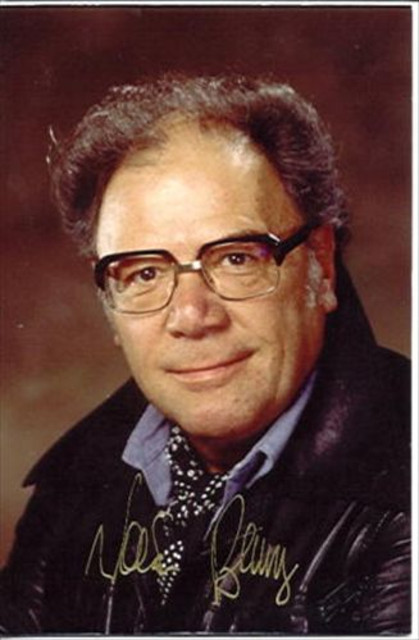
Bass Walter Berry grew, by measured and steady advancement, into one of the leading artists of his time. Beginning at the Vienna Staatsoper at the early age of 21, he progressed through the major <a href="spotify:artist:4NJhFmfw43RLBLjQvxDuRS">Mozart</a> baritone and bass roles to such weightier challenges as Beethoven's Pizarro and <a href="spotify:artist:1C1x4MVkql8AiABuTw6DgE">Wagner</a>'s Kurwenal, Telramund, and even Wotan. He was able to transmute the sunny, rounded, very Viennese sound of his wide-ranging instrument into something more potent, more incisive for his <a href="spotify:artist:1C1x4MVkql8AiABuTw6DgE">Wagner</a> roles and he became one of the most celebrated Wozzecks of his day. His musicianship and sturdy voice made him a welcome guest at many of the world's leading opera venues and he was regarded as an affecting recitalist as well.
Originally intending to pursue a career in engineering, Berry switched to vocal study and trained with Hermann Gallos at the Vienna Musical Academy. He made his debut as a soloist in <a href="spotify:artist:0QDRLNPr0wXKeR5ThXZAUp">Honegger</a>'s Jeanne-d'Arc and soon thereafter joined the Staatsoper. As early as 1953, he was singing Masetto at Salzburg, the first of an outstanding gallery of <a href="spotify:artist:4NJhFmfw43RLBLjQvxDuRS">Mozart</a> characterizations. At the festival, he also participated in the premieres of <a href="spotify:artist:3QinUOuK9Q0aHfTKC00hG8">Gottfried von Einem</a>'s Prozess (1953), Rolf Leibermann's Penelope (1954), and <a href="spotify:artist:7bqCo7INUgpxICZKITcFMh">Werner Egk</a>'s Irische Legende (1954).
America heard Berry for the first time when he presented his genial <a href="spotify:artist:4NJhFmfw43RLBLjQvxDuRS">Mozart</a> Figaro at Chicago's Lyric Opera in 1957. Three years later, he returned to Chicago as part of a more stellar cast (Schwarzkopf, Streich, his then-wife <a href="spotify:artist:1Jgntox16Lhl0bFoRhV3Ar">Christa Ludwig</a>, and <a href="spotify:artist:48WdkO6uSIY07DJlDCxZ0w">Eberhard Wächter</a>) to offer a Figaro unchallenged by any other than <a href="spotify:artist:4XoFqKtEQHiuxL8CmVXLOO">Cesare Siepi</a>'s. Berry subsequently sang Leporello, Don Alfonso, Fernando (Fidelio), and Baron Ochs in Chicago.
On October 2, 1966, Berry made his debut at the Metropolitan Opera in a production of Strauss' Die Frau Ohne Schatten conducted by <a href="spotify:artist:3fyr5uksidSlLzsUjRIz5A">Karl Böhm</a>. Together with <a href="spotify:artist:5I2cYLH1KGi4ezFJ9X7JTI">James King</a>'s Emperor, <a href="spotify:artist:5HxIcwBJWsprET5MpGqgRN">Leonie Rysanek</a>'s Empress and <a href="spotify:artist:1Jgntox16Lhl0bFoRhV3Ar">Christa Ludwig</a>'s Dyer's Wife, Berry's Barak was hailed as a magnificent accomplishment and an immense popular success. A live recording with that same quartet of principals, captured in Salzburg in 1974, reveals each singer performing at such a pitch of vocal and interpretive splendor as to have made the collaboration legendary. Although his marriage to Ludwig had ended in 1971, Berry was still the partner of choice for the mezzo-soprano's intense and soaring Dyer's Wife. Berry made his Covent Garden debut as Barak in 1976 and sang the role in San Francisco that same year.
Berry's increasingly powerful voice tended toward the lower end of bass-baritone spectrum and his Baron Ochs managed the bottommost notes with authority. His recording with Bernstein is both substantially sung and interpreted with Viennese lightness. Berry had accumulated an extensive discography by the time of his death, remaining in good voice until the very end of his life (he participated in a <a href="spotify:artist:3SK3gLBgy1jRuA4VnLlcs8">Renée Fleming</a> Strauss recital shortly before his death). His hearty and endearing Papageno was recorded twice. His Pizarro in the 1961 Klemperer recording of Fidelio, despite the conductor's slow pacing, served notice that his was an art destined for more than <a href="spotify:artist:4NJhFmfw43RLBLjQvxDuRS">Mozart</a>. His singing of the bass arias in Klemperer's recording of Bach's St. Matthew Passion is fluent and deeply felt, notwithstanding, once again, some glacial tempi.
Though never quite viewed as a star personality, Berry crafted his own unique spot among the great singers who reigned in the twentieth century's second half.
Originally intending to pursue a career in engineering, Berry switched to vocal study and trained with Hermann Gallos at the Vienna Musical Academy. He made his debut as a soloist in <a href="spotify:artist:0QDRLNPr0wXKeR5ThXZAUp">Honegger</a>'s Jeanne-d'Arc and soon thereafter joined the Staatsoper. As early as 1953, he was singing Masetto at Salzburg, the first of an outstanding gallery of <a href="spotify:artist:4NJhFmfw43RLBLjQvxDuRS">Mozart</a> characterizations. At the festival, he also participated in the premieres of <a href="spotify:artist:3QinUOuK9Q0aHfTKC00hG8">Gottfried von Einem</a>'s Prozess (1953), Rolf Leibermann's Penelope (1954), and <a href="spotify:artist:7bqCo7INUgpxICZKITcFMh">Werner Egk</a>'s Irische Legende (1954).
America heard Berry for the first time when he presented his genial <a href="spotify:artist:4NJhFmfw43RLBLjQvxDuRS">Mozart</a> Figaro at Chicago's Lyric Opera in 1957. Three years later, he returned to Chicago as part of a more stellar cast (Schwarzkopf, Streich, his then-wife <a href="spotify:artist:1Jgntox16Lhl0bFoRhV3Ar">Christa Ludwig</a>, and <a href="spotify:artist:48WdkO6uSIY07DJlDCxZ0w">Eberhard Wächter</a>) to offer a Figaro unchallenged by any other than <a href="spotify:artist:4XoFqKtEQHiuxL8CmVXLOO">Cesare Siepi</a>'s. Berry subsequently sang Leporello, Don Alfonso, Fernando (Fidelio), and Baron Ochs in Chicago.
On October 2, 1966, Berry made his debut at the Metropolitan Opera in a production of Strauss' Die Frau Ohne Schatten conducted by <a href="spotify:artist:3fyr5uksidSlLzsUjRIz5A">Karl Böhm</a>. Together with <a href="spotify:artist:5I2cYLH1KGi4ezFJ9X7JTI">James King</a>'s Emperor, <a href="spotify:artist:5HxIcwBJWsprET5MpGqgRN">Leonie Rysanek</a>'s Empress and <a href="spotify:artist:1Jgntox16Lhl0bFoRhV3Ar">Christa Ludwig</a>'s Dyer's Wife, Berry's Barak was hailed as a magnificent accomplishment and an immense popular success. A live recording with that same quartet of principals, captured in Salzburg in 1974, reveals each singer performing at such a pitch of vocal and interpretive splendor as to have made the collaboration legendary. Although his marriage to Ludwig had ended in 1971, Berry was still the partner of choice for the mezzo-soprano's intense and soaring Dyer's Wife. Berry made his Covent Garden debut as Barak in 1976 and sang the role in San Francisco that same year.
Berry's increasingly powerful voice tended toward the lower end of bass-baritone spectrum and his Baron Ochs managed the bottommost notes with authority. His recording with Bernstein is both substantially sung and interpreted with Viennese lightness. Berry had accumulated an extensive discography by the time of his death, remaining in good voice until the very end of his life (he participated in a <a href="spotify:artist:3SK3gLBgy1jRuA4VnLlcs8">Renée Fleming</a> Strauss recital shortly before his death). His hearty and endearing Papageno was recorded twice. His Pizarro in the 1961 Klemperer recording of Fidelio, despite the conductor's slow pacing, served notice that his was an art destined for more than <a href="spotify:artist:4NJhFmfw43RLBLjQvxDuRS">Mozart</a>. His singing of the bass arias in Klemperer's recording of Bach's St. Matthew Passion is fluent and deeply felt, notwithstanding, once again, some glacial tempi.
Though never quite viewed as a star personality, Berry crafted his own unique spot among the great singers who reigned in the twentieth century's second half.
Monthly Listeners
21,780
Monthly Listeners History
Track the evolution of monthly listeners over the last 28 days.
Followers
1,572
Followers History
Track the evolution of followers over the last 28 days.
Top Cities




Related Artists
Werner Krenn



Christof Fischesser
Sieglinde Wagner
Gösta Winbergh
Robert Heger


Waldemar Kmentt