Data may be outdated
Last updated: 9 months ago — Click refresh to get the latest statistics.
Bass Cesare Siepi was, as mezzo-soprano <a href="spotify:artist:0InCkatXLya6zM1ab3Ifzp">Giulietta Simionato</a> observed in Lanfranco Rasponi's book The Last Prima Donnas, "the king of the bassos, a grand seigneur on the stage." For 23 seasons, he was the Metropolitan Opera's leading basso cantante, as adept in the elegance of <a href="spotify:artist:4NJhFmfw43RLBLjQvxDuRS">Mozart</a>'s Don Giovanni and Figaro as he was in the long-lined, vocally demanding bass protagonists of <a href="spotify:artist:1JOQXgYdQV2yfrhewqx96o">Verdi</a>.
His Met debut occurred when Bulgarian bass <a href="spotify:artist:7D9goxJ3SeeDhLdsuTVBF2">Boris Christoff</a> was unable to receive security clearance for travel to the United States. New general manager Rudolf Bing intended his new production of <a href="spotify:artist:1JOQXgYdQV2yfrhewqx96o">Verdi</a>'s Don Carlo as a prototype of the beautifully sung and theatrically vivid events he wanted to make the rule rather than the exception. Siepi's brooding, superlatively sung King Phillip established the 27-year-old singer as an artist of the first rank.
Born in Milan, Siepi initially studied to become a schoolteacher and undertook courses leading toward that goal. While music had been an important element in his life and he had studied voice singly in public at the age of 15, he had no intention of pursuing music professionally. At the age of 18, however, urged by friends and knowing only two arias, he entered a national voice competition in Florence and won first prize. An impresario in the audience heard his potential and engaged the tall, handsome singer for a production of Rigoletto. Thus, Siepi, at the age of 18, made his debut as Sparafucile in Schio (near Venice) and earned reviews that made him look seriously a future in music.
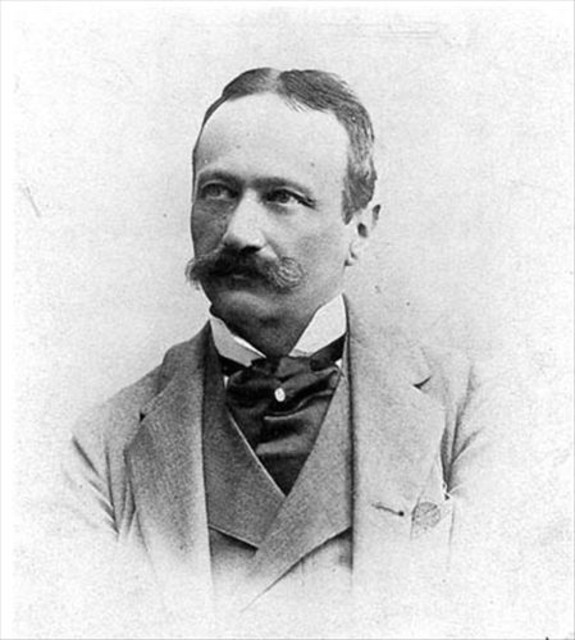
The outbreak of war in Europe put his career on hold. When Italy was occupied by the Nazis, Siepi escaped to neutral Switzerland and remained there for the duration of WWII. Returning to Italy following the cessation of hostilities, he appeared at La Fenice as Silva in <a href="spotify:artist:1JOQXgYdQV2yfrhewqx96o">Verdi</a>'s Ernani. During a La Scala summer season, he sang Sparafucile once more, as well as Ramfis and Padre Guardiano. A further honor came when he was asked to sing Zaccaria in <a href="spotify:artist:1JOQXgYdQV2yfrhewqx96o">Verdi</a>'s Nabucco in the first production held in La Scala's reconstructed theater building. Siepi continued to appear with the company until 1950 in a series of leading roles. He also took part in <a href="spotify:artist:4xpgBZSojKNEQqQHXrwSXA">Toscanini</a>'s commemoration of composer/librettist <a href="spotify:artist:4QHgItlRsXcYDTm3eJoFDP">Arrigo Boito</a> in 1948 and created the role of Nonno Innocenzo in <a href="spotify:artist:7gQZRcyE4kVm7gM26hUwiA">Pizzetti</a>'s L'oro.
After the success of his Met debut, Siepi quickly established himself as heir to <a href="spotify:artist:1aBhzPAmObaZsTlYFCBUXQ">Ezio Pinza</a>. Like <a href="spotify:artist:1aBhzPAmObaZsTlYFCBUXQ">Pinza</a>, Siepi was endowed with that animal magnetism indispensable for true stardom. In roles such as Padre Guardiano, he exuded a calm authority, but as Don Giovanni, he breathed a sensuality barely concealing a core of danger and self-absorption. His suavely vocalized Don was conspicuously on display at Salzburg Festivals during the mid-1950s and is preserved on several excellent live recordings.
Siepi was also shown to advantage as bass soloist in two exceptional recordings of <a href="spotify:artist:1JOQXgYdQV2yfrhewqx96o">Verdi</a>'s Manzoni Requiem, first with <a href="spotify:artist:4xpgBZSojKNEQqQHXrwSXA">Toscanini</a> and his <a href="spotify:artist:7JiZysLPLBijVnS9uWX312">NBC Symphony</a> in 1951 and, later, with <a href="spotify:artist:6pkOp4PgHXN7BRIEMEi1wt">Victor de Sabata</a> and the La Scala Orchestra and Chorus.
Siepi's relationship with the Met resulted in a total of 379 performances over 23 seasons, all of them in leading roles (71 as Don Giovanni and 56 as Figaro). Other roles included Basilio, Ramfis, Alvise, Boris Godunov (sung in English), Silva, Zaccaria, Méphistophélès, Fiesco, Oroveso, and (in German) Gurnemanz.
Despite his close relationship with the Met, Siepi performed frequently with other houses in America and Europe. He continued to sing well into his sixties.
His Met debut occurred when Bulgarian bass <a href="spotify:artist:7D9goxJ3SeeDhLdsuTVBF2">Boris Christoff</a> was unable to receive security clearance for travel to the United States. New general manager Rudolf Bing intended his new production of <a href="spotify:artist:1JOQXgYdQV2yfrhewqx96o">Verdi</a>'s Don Carlo as a prototype of the beautifully sung and theatrically vivid events he wanted to make the rule rather than the exception. Siepi's brooding, superlatively sung King Phillip established the 27-year-old singer as an artist of the first rank.
Born in Milan, Siepi initially studied to become a schoolteacher and undertook courses leading toward that goal. While music had been an important element in his life and he had studied voice singly in public at the age of 15, he had no intention of pursuing music professionally. At the age of 18, however, urged by friends and knowing only two arias, he entered a national voice competition in Florence and won first prize. An impresario in the audience heard his potential and engaged the tall, handsome singer for a production of Rigoletto. Thus, Siepi, at the age of 18, made his debut as Sparafucile in Schio (near Venice) and earned reviews that made him look seriously a future in music.
The outbreak of war in Europe put his career on hold. When Italy was occupied by the Nazis, Siepi escaped to neutral Switzerland and remained there for the duration of WWII. Returning to Italy following the cessation of hostilities, he appeared at La Fenice as Silva in <a href="spotify:artist:1JOQXgYdQV2yfrhewqx96o">Verdi</a>'s Ernani. During a La Scala summer season, he sang Sparafucile once more, as well as Ramfis and Padre Guardiano. A further honor came when he was asked to sing Zaccaria in <a href="spotify:artist:1JOQXgYdQV2yfrhewqx96o">Verdi</a>'s Nabucco in the first production held in La Scala's reconstructed theater building. Siepi continued to appear with the company until 1950 in a series of leading roles. He also took part in <a href="spotify:artist:4xpgBZSojKNEQqQHXrwSXA">Toscanini</a>'s commemoration of composer/librettist <a href="spotify:artist:4QHgItlRsXcYDTm3eJoFDP">Arrigo Boito</a> in 1948 and created the role of Nonno Innocenzo in <a href="spotify:artist:7gQZRcyE4kVm7gM26hUwiA">Pizzetti</a>'s L'oro.
After the success of his Met debut, Siepi quickly established himself as heir to <a href="spotify:artist:1aBhzPAmObaZsTlYFCBUXQ">Ezio Pinza</a>. Like <a href="spotify:artist:1aBhzPAmObaZsTlYFCBUXQ">Pinza</a>, Siepi was endowed with that animal magnetism indispensable for true stardom. In roles such as Padre Guardiano, he exuded a calm authority, but as Don Giovanni, he breathed a sensuality barely concealing a core of danger and self-absorption. His suavely vocalized Don was conspicuously on display at Salzburg Festivals during the mid-1950s and is preserved on several excellent live recordings.
Siepi was also shown to advantage as bass soloist in two exceptional recordings of <a href="spotify:artist:1JOQXgYdQV2yfrhewqx96o">Verdi</a>'s Manzoni Requiem, first with <a href="spotify:artist:4xpgBZSojKNEQqQHXrwSXA">Toscanini</a> and his <a href="spotify:artist:7JiZysLPLBijVnS9uWX312">NBC Symphony</a> in 1951 and, later, with <a href="spotify:artist:6pkOp4PgHXN7BRIEMEi1wt">Victor de Sabata</a> and the La Scala Orchestra and Chorus.
Siepi's relationship with the Met resulted in a total of 379 performances over 23 seasons, all of them in leading roles (71 as Don Giovanni and 56 as Figaro). Other roles included Basilio, Ramfis, Alvise, Boris Godunov (sung in English), Silva, Zaccaria, Méphistophélès, Fiesco, Oroveso, and (in German) Gurnemanz.
Despite his close relationship with the Met, Siepi performed frequently with other houses in America and Europe. He continued to sing well into his sixties.
Monthly Listeners
10,513
Monthly Listeners History
Track the evolution of monthly listeners over the last 28 days.
Followers
4,112
Followers History
Track the evolution of followers over the last 28 days.
Top Cities
302 listeners

226 listeners

164 listeners
163 listeners

120 listeners

Related Artists
Fernando Corena
Giorgio Tozzi

Enrico Fissore
Ugo Benelli

Lisa della Casa


Arrigo Boito

Coro del Maggio Musicale Fiorentino



Alberto Zedda

Malcolm King
Mario Petri

Gabriel Bacquier


Sesto Bruscantini
Simone Alaimo
Alex Esposito