Last updated: 4 hours ago
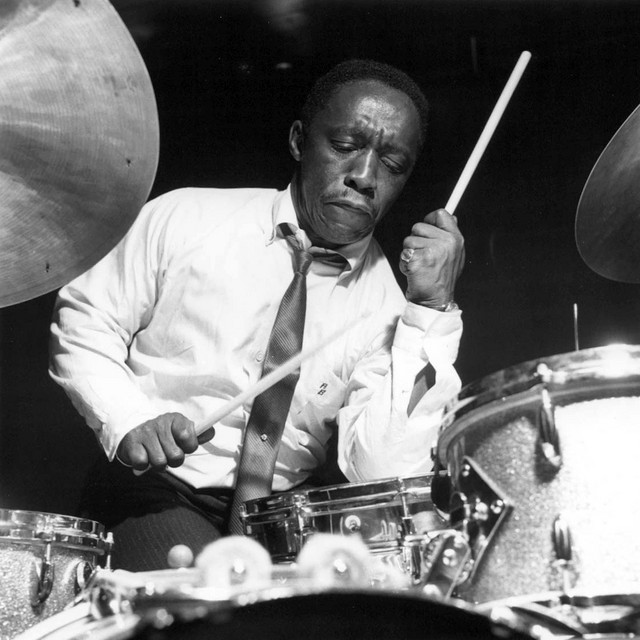
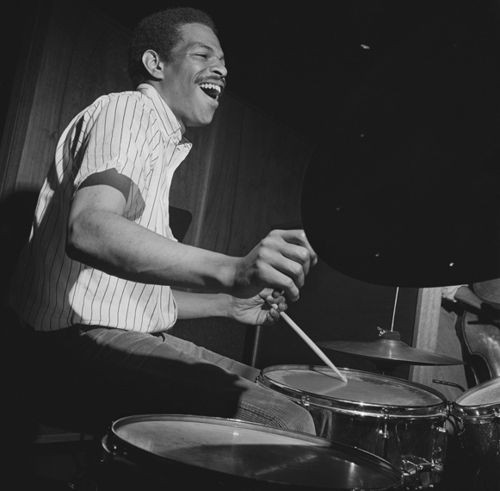
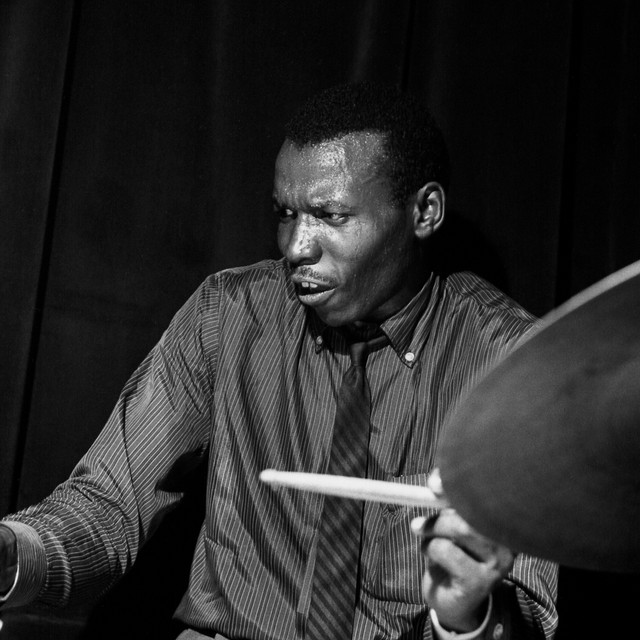
A rhythmic force of nature, drummer Elvin Jones elevated the role of the drummer in the modern jazz tradition, both on his own and as a key member of saxophonist <a href="spotify:artist:2hGh5VOeeqimQFxqXvfCUf">John Coltrane</a>'s classic '60s quartet. Jones cultivated a singularly edgy style, often playing along with rather than behind a soloist, making bold, out-of-meter accents, and favoring a propulsive, polyrhythmic flow over simply keeping time, traits that bridged hard bop, modal jazz, and the avant-garde and influencing even rock artists like <a href="spotify:artist:6NAJM9Zc8wUQbKCzxpt6kM">John Bonham</a> and <a href="spotify:artist:5xTbqEbkihxdjj2jyYSthw">Ginger Baker</a>. He brought all of these elements to fruition with <a href="spotify:artist:2hGh5VOeeqimQFxqXvfCUf">Coltrane</a>, recording landmark albums like A Love Supreme, My Favorite Things, Ascension, and Live at Birdland. Yet even before that, he had established his reputation alongside his brothers, pianist <a href="spotify:artist:0BhFfJmScFj7OzqVaDqnSv">Hank</a> and trumpeter <a href="spotify:artist:6DbqS0X8cSFOPGsvyze2yh">Thad</a>, and on albums with <a href="spotify:artist:0kbYTNQb4Pb1rPbbaF0pT4">Miles Davis</a>, <a href="spotify:artist:1VEzN9lxvG6KPR3QQGsebR">Sonny Rollins</a>, and <a href="spotify:artist:1sdyFmN4bVOcuFDpTVsxBB">Kenny Burrell</a>. He also left his mark on other classic jazz albums by <a href="spotify:artist:0ZqhrTXYPA9DZR527ZnFdO">Wayne Shorter</a>, <a href="spotify:artist:3BG0nwVh3Gc7cuT4XdsLtt">Joe Henderson</a>, and <a href="spotify:artist:6dAtGAnHCQ1ujMUZ9Ep82k">Grant Green</a>, among others. After leaving <a href="spotify:artist:2hGh5VOeeqimQFxqXvfCUf">Coltrane</a>, he led his own groups, working with tenor firebrands <a href="spotify:artist:550VNM96M8mO90texkUWDC">Joe Farrell</a>, <a href="spotify:artist:2vT4xpcRUnhG8CHAt2YOJO">Steve Grossman</a>, and <a href="spotify:artist:429bUEZe2Hq5QJvO2CmhLn">David Liebman</a> and recording a series of passionate, exploratory post-bop albums for <a href="spotify:search:label%3A%22Blue+Note%22">Blue Note</a>, like Puttin' It Together, Genesis, and Merry-Go-Round. He also formed <a href="spotify:artist:3CUdIyrQdxUGFfpE4RouMX">the Elvin Jones Jazz Machine</a>, his <a href="spotify:artist:4oMI5jKhAOEg3T8HIY3HxI">Jazz Messengers</a>-style ensemble by which he communed with the next generation of players, including <a href="spotify:artist:3uaHfXYx9Fh4HjqMbrWn5S">Joshua Redman</a>, <a href="spotify:artist:3cwVFmQ6mcUoGR6ZvIPuZ4">Nicholas Payton</a>, and <a href="spotify:artist:7acdJJMSkYQly2X92K3u7u">Ravi Coltrane</a>. By the time of his passing in 2004, Jones had seen his influence spread far beyond jazz.
Born in 1927 in Pontiac, Michigan, Jones grew up in a remarkable musical family, the younger brother of <a href="spotify:artist:0BhFfJmScFj7OzqVaDqnSv">Hank</a> and <a href="spotify:artist:6DbqS0X8cSFOPGsvyze2yh">Thad Jones</a>. Inspired in part by seeing circus parades, he started playing drums at a young age and was a member of his high school marching band. After spending time in the Army (1946-1949), he was a part of the very fertile Detroit jazz scene of the early '50s. He moved to New York in 1955, worked with <a href="spotify:artist:2LQeYKxQ99Y844Y2fxCGQn">Teddy Charles</a> and the <a href="spotify:artist:570vCzcespB48HIQyTbDO6">Bud Powell</a> Trio, and recorded with <a href="spotify:artist:0kbYTNQb4Pb1rPbbaF0pT4">Miles Davis</a> on 1955's Blue Moods. He also appeared on <a href="spotify:artist:1VEzN9lxvG6KPR3QQGsebR">Sonny Rollins</a>' famous 1957 A Night at the Village Vanguard, Vol. 1. There were also stints with <a href="spotify:artist:3hZ5sdhYTvgrmXIwtVwqmS">J.J. Johnson</a>, <a href="spotify:artist:3ZUZYvTkSr7kJQyAXVpqaL">Donald Byrd</a>, <a href="spotify:artist:0rB0wkUa4moqzOfReaAVGF">Tyree Glenn</a>, and <a href="spotify:artist:4rZoL92ShDgN9SLLg4OPPN">Harry "Sweets" Edison</a>.
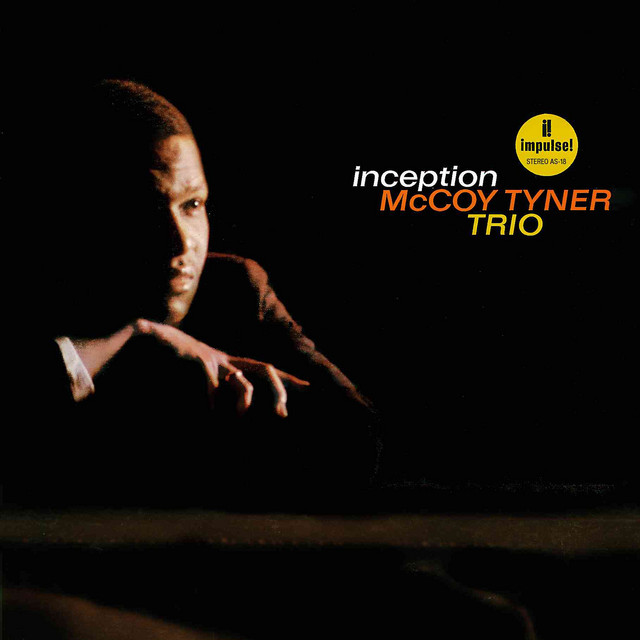
By 1962, Jones had become an important member of <a href="spotify:artist:2hGh5VOeeqimQFxqXvfCUf">John Coltrane</a>'s classic quartet with pianist <a href="spotify:artist:2EsmKkHsXK0WMNGOtIhbxr">McCoy Tyner</a> and bassist <a href="spotify:artist:5EwMPIB049C7NXsU4yG2xu">Jimmy Garrison</a>. Marked by a deep creative and familial bond, the quartet embraced an innovative mix of Eastern musical ideas, including pentatonic scales, flowing modal structures, and dynamic polyrhythms, all of which evoked <a href="spotify:artist:2hGh5VOeeqimQFxqXvfCUf">Coltrane</a>'s deep spiritual leanings. Jones' powerful, combustible, free-flowing style (which combined a hard swing with West African polyrhythms and elements of avant-garde free jazz) was akin to <a href="spotify:artist:2hGh5VOeeqimQFxqXvfCUf">Coltrane</a>'s own "sheets of sound" and helped push the saxophonist to remarkable heights, resulting in such landmark recordings as 1961's Africa/Brass, 1961's My Favorite Things, 1961's Olé Coltrane, 1962's Coltrane, 1966's Ascension, and 1965's monumental A Love Supreme.
It was also during the early '60s that the drummer began recording on his own, often with his brothers as on 1962's Elvin!. Illumination arrived the following year and featured several of Jones' <a href="spotify:artist:2hGh5VOeeqimQFxqXvfCUf">Coltrane</a> bandmates, including <a href="spotify:artist:5EwMPIB049C7NXsU4yG2xu">Garrison</a> and <a href="spotify:artist:2EsmKkHsXK0WMNGOtIhbxr">Tyner</a>. Around the time <a href="spotify:artist:2hGh5VOeeqimQFxqXvfCUf">Coltrane</a> added <a href="spotify:artist:0kXAzHqzGdJH3IGyOc6Srz">Rashied Ali</a> to his band in late 1965 as second drummer, Jones parted ways with the ensemble. He went on a European tour with the <a href="spotify:artist:4F7Q5NV6h5TSwCainz8S5A">Duke Ellington</a> Orchestra and increasingly led his own projects, as on 1966's Midnight Walk on <a href="spotify:search:label%3A%22Atlantic%22">Atlantic</a> and 1967's Heavy Sounds. Along with his solo work, Jones remained prolific as a sideman, recording with luminaries like <a href="spotify:artist:0fTHKjepK5HWOrb2rkS5Em">Freddie Hubbard</a>, <a href="spotify:artist:4ORSNkNYSzva169PBZCzvy">Andrew Hill</a>, and <a href="spotify:artist:6Y6kAZs0W9NNsxNbpImPvq">Larry Young</a>, among others. He appeared on a slew of classic jazz albums, including <a href="spotify:artist:0ZqhrTXYPA9DZR527ZnFdO">Wayne Shorter</a>'s Juju, <a href="spotify:artist:2EsmKkHsXK0WMNGOtIhbxr">McCoy Tyner</a>'s The Real McCoy, and <a href="spotify:artist:3BG0nwVh3Gc7cuT4XdsLtt">Joe Henderson</a>'s Inner Urge.
The drummer's work began to take on vital new sonic shades during this period with the addition of saxophonist and multi-instrumentalist <a href="spotify:artist:550VNM96M8mO90texkUWDC">Joe Farrell</a> to his ensemble. Together with bassist <a href="spotify:artist:5EwMPIB049C7NXsU4yG2xu">Garrison</a>, they recorded Puttin' It Together and The Ultimate in 1968 for <a href="spotify:search:label%3A%22Blue+Note%22">Blue Note</a>. Jones soon revamped the group, bringing on board saxophonist <a href="spotify:artist:2bznm4QNyfgutcxCbRAfwH">George Coleman</a>, bassist Wilbur Little, and conguero <a href="spotify:artist:6PyAzOON3Toc5MPZrZMA5i">Candido</a> for 1969's Poly-Currents and then adding <a href="spotify:artist:1UBOhgHqPdFDiDW3qF1y1d">Frank Foster</a> for 1970's Coalition. It was also during this period that he met and married his second wife, classical pianist Keiko Okuya Jones, who would become both a strong creative and business partner for the rest of his life.
He recorded regularly for <a href="spotify:search:label%3A%22Blue+Note%22">Blue Note</a> throughout the 1970's, leading a series of bands that showcased his frenetic, intelligent, and deeply passionate approach to modal post-bop. 1971's Genesis introduced the core of his '70s ensemble featuring saxophonist's <a href="spotify:artist:2vT4xpcRUnhG8CHAt2YOJO">Steve Grossman</a> and <a href="spotify:artist:429bUEZe2Hq5QJvO2CmhLn">Dave Liebman</a> with bassist <a href="spotify:artist:0sKmlpyHCG43bw8Kp92CQs">Gene Perla</a>. Merry Go-Round arrived the same year and found the group expanded with saxophonist <a href="spotify:artist:550VNM96M8mO90texkUWDC">Farrell</a> and keyboardists <a href="spotify:artist:5olDKSsFhhmwh8UCWwKtpq">Chick Corea</a> and <a href="spotify:artist:50zRydJXfkLzGIOj9mITfy">Jan Hammer</a>, as well as percussionist <a href="spotify:artist:7C7gHDXEwGrihpfXqOfV3e">Don Alias</a>. Different configurations of this group would pop up throughout the decade on albums like 1972' Mr. Jones, 1972's Live at the Lighthouse, and The Prime Element. Other interesting projects came his way during the decade, including playing on poet <a href="spotify:artist:1yA9QiqL6p9Qo3nHFb8DkT">Allen Ginsberg</a>'s album of William Blake poetry, Songs of Innocence and Experience. He also appeared as gunslinger/drummer Job Cain in director George Englund's 1971 musical western Zachariah.
In 1974, he moved to the Eastwest label for Mr. Thunder, a visceral, spiritual jazz date that introduced yet another combination of players, including saxophonist <a href="spotify:artist:2vT4xpcRUnhG8CHAt2YOJO">Steve Grossman</a>, guitarist <a href="spotify:artist:1Y52yw65KUdxXrSOh3tw0U">Roland Prince</a>, bassist Milton Suggs, and percussionists <a href="spotify:artist:2KlyqzVuZw64IzmPHfCPJO">Luis Agudo</a> and Sjunne Ferger. A year later, he recorded On the Mountain, a trio album with <a href="spotify:artist:50zRydJXfkLzGIOj9mITfy">Jan Hammer</a> and <a href="spotify:artist:0sKmlpyHCG43bw8Kp92CQs">Gene Perla</a> for the PM label. He eventually settled at <a href="spotify:search:label%3A%22Vanguard+Records%22">Vanguard Records</a>, where he released a string of eclectic albums, beginning with 1975's New Agenda, a groovy, funk-influenced album featuring saxophonist <a href="spotify:artist:2vT4xpcRUnhG8CHAt2YOJO">Grossman</a>, guitarist <a href="spotify:artist:1Y52yw65KUdxXrSOh3tw0U">Roland Prince</a>, and bassist Dave Williams. He also co-led 1976's Together with <a href="spotify:artist:0CyVUjy6HZzEXgGA0ydd3t">Oregon</a> and returned to a more hard-swinging style with Summit Meeting, featuring veteran stars like <a href="spotify:artist:4aEpM8RuVFDhH7ry8TUn4M">James Moody</a> and <a href="spotify:artist:62xdwGEOLoGQxKUqoJusyU">Clark Terry</a>. It was also during the late-'70s that he began leading groups under the title of the <a href="spotify:artist:3CUdIyrQdxUGFfpE4RouMX">Elvin Jones Jazz Machine</a>, a moniker he first introduced on 1978's Remembrance. Although the line-ups occasionally changed, the core <a href="spotify:artist:3CUdIyrQdxUGFfpE4RouMX">Jazz Machine</a> members often included saxophonists <a href="spotify:artist:1UBOhgHqPdFDiDW3qF1y1d">Frank Foster</a> and <a href="spotify:artist:5RUD9RUhciOcJG5dL8s3Ja">Pat LaBarbera</a>, guitarist <a href="spotify:artist:1Y52yw65KUdxXrSOh3tw0U">Prince</a>, and bassist Andy McCloud III.
Working with his <a href="spotify:artist:3CUdIyrQdxUGFfpE4RouMX">Jazz Machine</a> and under just his name, Jones stayed busy throughout the next decade. He continued his tradition of working with both younger and more established players as on 1982's Earth Jones, a fusion and post-bop date featuring saxophonist <a href="spotify:artist:429bUEZe2Hq5QJvO2CmhLn">Liebman</a>, pianist <a href="spotify:artist:3fvBGGCTOjiCsIqL3MFU6l">Kenny Kirkland</a>, trumpeter <a href="spotify:artist:2BiwOj6ssDQ2KfqaowIpHH">Terumasa Hino</a>, and bassist <a href="spotify:artist:6o1OpKGBkE7eSYjtaMfQKe">George Mraz</a>. That same year, he reunited with several of his <a href="spotify:artist:2hGh5VOeeqimQFxqXvfCUf">Coltrane</a> associates, including <a href="spotify:artist:2EsmKkHsXK0WMNGOtIhbxr">McCoy Tyner</a>, <a href="spotify:artist:3JLUCojZaHrX2LaUkSj7Ud">Pharoah Sanders</a>, <a href="spotify:artist:3tQPY0Fnpo6prpzlV079Fl">Jean-Paul Bourelly</a>, and <a href="spotify:artist:6Xktfsmu8Tlg3071prbJej">Richard Davis</a> for Love & Peace. More <a href="spotify:artist:3CUdIyrQdxUGFfpE4RouMX">Jazz Machine</a> albums arrived in the '90s, like In Europe and Youngblood, which found him working with then-young lions like <a href="spotify:artist:7acdJJMSkYQly2X92K3u7u">Ravi Coltrane</a>, <a href="spotify:artist:3uaHfXYx9Fh4HjqMbrWn5S">Joshua Redman</a>, and <a href="spotify:artist:3cwVFmQ6mcUoGR6ZvIPuZ4">Nicholas Payton</a>, among others. Released in 1994, Tribute to John Coltrane: A Love Supreme featured the drummer leading a "special quartet" with trumpeter <a href="spotify:artist:375zxMmh2cSgUzFFnva0O7">Wynton Marsalis</a>, pianist <a href="spotify:artist:6dz608P8sHylVvVVo5OLx2">Marcus Roberts</a>, and bassist <a href="spotify:artist:6yAxgJZxxxrAjplbOglvF4">Reginald Veal</a> and exploring two of <a href="spotify:artist:2hGh5VOeeqimQFxqXvfCUf">Coltrane</a>'s classic compositions.
Despite health problems, Jones remained active into the 2000s, often teaching and giving clinics at schools. In 2001, he was bestowed with an Honorary Doctorate of Music from Berklee College of Music. He also reunited with his brother, pianist <a href="spotify:artist:0BhFfJmScFj7OzqVaDqnSv">Hank Jones</a>, and bassist <a href="spotify:artist:6Xktfsmu8Tlg3071prbJej">Richard Davis</a> for a 2003 standards album, Autumn Leaves. Jones died from heart failure on May 18, 2004 at the age of 76. One of his final albums was a 1999 concert album, released posthumously as The Truth: Heard Live at the Blue Note and featuring his <a href="spotify:artist:3CUdIyrQdxUGFfpE4RouMX">Jazz Machine</a> with special guest saxophonist <a href="spotify:artist:5IkynsVZoak9UR2Xt8qsMj">Michael Brecker</a>. More archival albums have followed, including 2017's At Onkel Pö's Carnegie Hall Hamburg, 1981 and 2022's Revival: Live at Pookie's Pub. ~ Matt Collar, Rovi
Born in 1927 in Pontiac, Michigan, Jones grew up in a remarkable musical family, the younger brother of <a href="spotify:artist:0BhFfJmScFj7OzqVaDqnSv">Hank</a> and <a href="spotify:artist:6DbqS0X8cSFOPGsvyze2yh">Thad Jones</a>. Inspired in part by seeing circus parades, he started playing drums at a young age and was a member of his high school marching band. After spending time in the Army (1946-1949), he was a part of the very fertile Detroit jazz scene of the early '50s. He moved to New York in 1955, worked with <a href="spotify:artist:2LQeYKxQ99Y844Y2fxCGQn">Teddy Charles</a> and the <a href="spotify:artist:570vCzcespB48HIQyTbDO6">Bud Powell</a> Trio, and recorded with <a href="spotify:artist:0kbYTNQb4Pb1rPbbaF0pT4">Miles Davis</a> on 1955's Blue Moods. He also appeared on <a href="spotify:artist:1VEzN9lxvG6KPR3QQGsebR">Sonny Rollins</a>' famous 1957 A Night at the Village Vanguard, Vol. 1. There were also stints with <a href="spotify:artist:3hZ5sdhYTvgrmXIwtVwqmS">J.J. Johnson</a>, <a href="spotify:artist:3ZUZYvTkSr7kJQyAXVpqaL">Donald Byrd</a>, <a href="spotify:artist:0rB0wkUa4moqzOfReaAVGF">Tyree Glenn</a>, and <a href="spotify:artist:4rZoL92ShDgN9SLLg4OPPN">Harry "Sweets" Edison</a>.
By 1962, Jones had become an important member of <a href="spotify:artist:2hGh5VOeeqimQFxqXvfCUf">John Coltrane</a>'s classic quartet with pianist <a href="spotify:artist:2EsmKkHsXK0WMNGOtIhbxr">McCoy Tyner</a> and bassist <a href="spotify:artist:5EwMPIB049C7NXsU4yG2xu">Jimmy Garrison</a>. Marked by a deep creative and familial bond, the quartet embraced an innovative mix of Eastern musical ideas, including pentatonic scales, flowing modal structures, and dynamic polyrhythms, all of which evoked <a href="spotify:artist:2hGh5VOeeqimQFxqXvfCUf">Coltrane</a>'s deep spiritual leanings. Jones' powerful, combustible, free-flowing style (which combined a hard swing with West African polyrhythms and elements of avant-garde free jazz) was akin to <a href="spotify:artist:2hGh5VOeeqimQFxqXvfCUf">Coltrane</a>'s own "sheets of sound" and helped push the saxophonist to remarkable heights, resulting in such landmark recordings as 1961's Africa/Brass, 1961's My Favorite Things, 1961's Olé Coltrane, 1962's Coltrane, 1966's Ascension, and 1965's monumental A Love Supreme.
It was also during the early '60s that the drummer began recording on his own, often with his brothers as on 1962's Elvin!. Illumination arrived the following year and featured several of Jones' <a href="spotify:artist:2hGh5VOeeqimQFxqXvfCUf">Coltrane</a> bandmates, including <a href="spotify:artist:5EwMPIB049C7NXsU4yG2xu">Garrison</a> and <a href="spotify:artist:2EsmKkHsXK0WMNGOtIhbxr">Tyner</a>. Around the time <a href="spotify:artist:2hGh5VOeeqimQFxqXvfCUf">Coltrane</a> added <a href="spotify:artist:0kXAzHqzGdJH3IGyOc6Srz">Rashied Ali</a> to his band in late 1965 as second drummer, Jones parted ways with the ensemble. He went on a European tour with the <a href="spotify:artist:4F7Q5NV6h5TSwCainz8S5A">Duke Ellington</a> Orchestra and increasingly led his own projects, as on 1966's Midnight Walk on <a href="spotify:search:label%3A%22Atlantic%22">Atlantic</a> and 1967's Heavy Sounds. Along with his solo work, Jones remained prolific as a sideman, recording with luminaries like <a href="spotify:artist:0fTHKjepK5HWOrb2rkS5Em">Freddie Hubbard</a>, <a href="spotify:artist:4ORSNkNYSzva169PBZCzvy">Andrew Hill</a>, and <a href="spotify:artist:6Y6kAZs0W9NNsxNbpImPvq">Larry Young</a>, among others. He appeared on a slew of classic jazz albums, including <a href="spotify:artist:0ZqhrTXYPA9DZR527ZnFdO">Wayne Shorter</a>'s Juju, <a href="spotify:artist:2EsmKkHsXK0WMNGOtIhbxr">McCoy Tyner</a>'s The Real McCoy, and <a href="spotify:artist:3BG0nwVh3Gc7cuT4XdsLtt">Joe Henderson</a>'s Inner Urge.
The drummer's work began to take on vital new sonic shades during this period with the addition of saxophonist and multi-instrumentalist <a href="spotify:artist:550VNM96M8mO90texkUWDC">Joe Farrell</a> to his ensemble. Together with bassist <a href="spotify:artist:5EwMPIB049C7NXsU4yG2xu">Garrison</a>, they recorded Puttin' It Together and The Ultimate in 1968 for <a href="spotify:search:label%3A%22Blue+Note%22">Blue Note</a>. Jones soon revamped the group, bringing on board saxophonist <a href="spotify:artist:2bznm4QNyfgutcxCbRAfwH">George Coleman</a>, bassist Wilbur Little, and conguero <a href="spotify:artist:6PyAzOON3Toc5MPZrZMA5i">Candido</a> for 1969's Poly-Currents and then adding <a href="spotify:artist:1UBOhgHqPdFDiDW3qF1y1d">Frank Foster</a> for 1970's Coalition. It was also during this period that he met and married his second wife, classical pianist Keiko Okuya Jones, who would become both a strong creative and business partner for the rest of his life.
He recorded regularly for <a href="spotify:search:label%3A%22Blue+Note%22">Blue Note</a> throughout the 1970's, leading a series of bands that showcased his frenetic, intelligent, and deeply passionate approach to modal post-bop. 1971's Genesis introduced the core of his '70s ensemble featuring saxophonist's <a href="spotify:artist:2vT4xpcRUnhG8CHAt2YOJO">Steve Grossman</a> and <a href="spotify:artist:429bUEZe2Hq5QJvO2CmhLn">Dave Liebman</a> with bassist <a href="spotify:artist:0sKmlpyHCG43bw8Kp92CQs">Gene Perla</a>. Merry Go-Round arrived the same year and found the group expanded with saxophonist <a href="spotify:artist:550VNM96M8mO90texkUWDC">Farrell</a> and keyboardists <a href="spotify:artist:5olDKSsFhhmwh8UCWwKtpq">Chick Corea</a> and <a href="spotify:artist:50zRydJXfkLzGIOj9mITfy">Jan Hammer</a>, as well as percussionist <a href="spotify:artist:7C7gHDXEwGrihpfXqOfV3e">Don Alias</a>. Different configurations of this group would pop up throughout the decade on albums like 1972' Mr. Jones, 1972's Live at the Lighthouse, and The Prime Element. Other interesting projects came his way during the decade, including playing on poet <a href="spotify:artist:1yA9QiqL6p9Qo3nHFb8DkT">Allen Ginsberg</a>'s album of William Blake poetry, Songs of Innocence and Experience. He also appeared as gunslinger/drummer Job Cain in director George Englund's 1971 musical western Zachariah.
In 1974, he moved to the Eastwest label for Mr. Thunder, a visceral, spiritual jazz date that introduced yet another combination of players, including saxophonist <a href="spotify:artist:2vT4xpcRUnhG8CHAt2YOJO">Steve Grossman</a>, guitarist <a href="spotify:artist:1Y52yw65KUdxXrSOh3tw0U">Roland Prince</a>, bassist Milton Suggs, and percussionists <a href="spotify:artist:2KlyqzVuZw64IzmPHfCPJO">Luis Agudo</a> and Sjunne Ferger. A year later, he recorded On the Mountain, a trio album with <a href="spotify:artist:50zRydJXfkLzGIOj9mITfy">Jan Hammer</a> and <a href="spotify:artist:0sKmlpyHCG43bw8Kp92CQs">Gene Perla</a> for the PM label. He eventually settled at <a href="spotify:search:label%3A%22Vanguard+Records%22">Vanguard Records</a>, where he released a string of eclectic albums, beginning with 1975's New Agenda, a groovy, funk-influenced album featuring saxophonist <a href="spotify:artist:2vT4xpcRUnhG8CHAt2YOJO">Grossman</a>, guitarist <a href="spotify:artist:1Y52yw65KUdxXrSOh3tw0U">Roland Prince</a>, and bassist Dave Williams. He also co-led 1976's Together with <a href="spotify:artist:0CyVUjy6HZzEXgGA0ydd3t">Oregon</a> and returned to a more hard-swinging style with Summit Meeting, featuring veteran stars like <a href="spotify:artist:4aEpM8RuVFDhH7ry8TUn4M">James Moody</a> and <a href="spotify:artist:62xdwGEOLoGQxKUqoJusyU">Clark Terry</a>. It was also during the late-'70s that he began leading groups under the title of the <a href="spotify:artist:3CUdIyrQdxUGFfpE4RouMX">Elvin Jones Jazz Machine</a>, a moniker he first introduced on 1978's Remembrance. Although the line-ups occasionally changed, the core <a href="spotify:artist:3CUdIyrQdxUGFfpE4RouMX">Jazz Machine</a> members often included saxophonists <a href="spotify:artist:1UBOhgHqPdFDiDW3qF1y1d">Frank Foster</a> and <a href="spotify:artist:5RUD9RUhciOcJG5dL8s3Ja">Pat LaBarbera</a>, guitarist <a href="spotify:artist:1Y52yw65KUdxXrSOh3tw0U">Prince</a>, and bassist Andy McCloud III.
Working with his <a href="spotify:artist:3CUdIyrQdxUGFfpE4RouMX">Jazz Machine</a> and under just his name, Jones stayed busy throughout the next decade. He continued his tradition of working with both younger and more established players as on 1982's Earth Jones, a fusion and post-bop date featuring saxophonist <a href="spotify:artist:429bUEZe2Hq5QJvO2CmhLn">Liebman</a>, pianist <a href="spotify:artist:3fvBGGCTOjiCsIqL3MFU6l">Kenny Kirkland</a>, trumpeter <a href="spotify:artist:2BiwOj6ssDQ2KfqaowIpHH">Terumasa Hino</a>, and bassist <a href="spotify:artist:6o1OpKGBkE7eSYjtaMfQKe">George Mraz</a>. That same year, he reunited with several of his <a href="spotify:artist:2hGh5VOeeqimQFxqXvfCUf">Coltrane</a> associates, including <a href="spotify:artist:2EsmKkHsXK0WMNGOtIhbxr">McCoy Tyner</a>, <a href="spotify:artist:3JLUCojZaHrX2LaUkSj7Ud">Pharoah Sanders</a>, <a href="spotify:artist:3tQPY0Fnpo6prpzlV079Fl">Jean-Paul Bourelly</a>, and <a href="spotify:artist:6Xktfsmu8Tlg3071prbJej">Richard Davis</a> for Love & Peace. More <a href="spotify:artist:3CUdIyrQdxUGFfpE4RouMX">Jazz Machine</a> albums arrived in the '90s, like In Europe and Youngblood, which found him working with then-young lions like <a href="spotify:artist:7acdJJMSkYQly2X92K3u7u">Ravi Coltrane</a>, <a href="spotify:artist:3uaHfXYx9Fh4HjqMbrWn5S">Joshua Redman</a>, and <a href="spotify:artist:3cwVFmQ6mcUoGR6ZvIPuZ4">Nicholas Payton</a>, among others. Released in 1994, Tribute to John Coltrane: A Love Supreme featured the drummer leading a "special quartet" with trumpeter <a href="spotify:artist:375zxMmh2cSgUzFFnva0O7">Wynton Marsalis</a>, pianist <a href="spotify:artist:6dz608P8sHylVvVVo5OLx2">Marcus Roberts</a>, and bassist <a href="spotify:artist:6yAxgJZxxxrAjplbOglvF4">Reginald Veal</a> and exploring two of <a href="spotify:artist:2hGh5VOeeqimQFxqXvfCUf">Coltrane</a>'s classic compositions.
Despite health problems, Jones remained active into the 2000s, often teaching and giving clinics at schools. In 2001, he was bestowed with an Honorary Doctorate of Music from Berklee College of Music. He also reunited with his brother, pianist <a href="spotify:artist:0BhFfJmScFj7OzqVaDqnSv">Hank Jones</a>, and bassist <a href="spotify:artist:6Xktfsmu8Tlg3071prbJej">Richard Davis</a> for a 2003 standards album, Autumn Leaves. Jones died from heart failure on May 18, 2004 at the age of 76. One of his final albums was a 1999 concert album, released posthumously as The Truth: Heard Live at the Blue Note and featuring his <a href="spotify:artist:3CUdIyrQdxUGFfpE4RouMX">Jazz Machine</a> with special guest saxophonist <a href="spotify:artist:5IkynsVZoak9UR2Xt8qsMj">Michael Brecker</a>. More archival albums have followed, including 2017's At Onkel Pö's Carnegie Hall Hamburg, 1981 and 2022's Revival: Live at Pookie's Pub. ~ Matt Collar, Rovi
Monthly Listeners
62,818
Monthly Listeners History
Track the evolution of monthly listeners over the last 28 days.
Followers
57,783
Followers History
Track the evolution of followers over the last 28 days.
Top Cities
1,120 listeners
910 listeners
907 listeners
813 listeners
686 listeners