Data may be outdated
Last updated: 9 months ago — Click refresh to get the latest statistics.
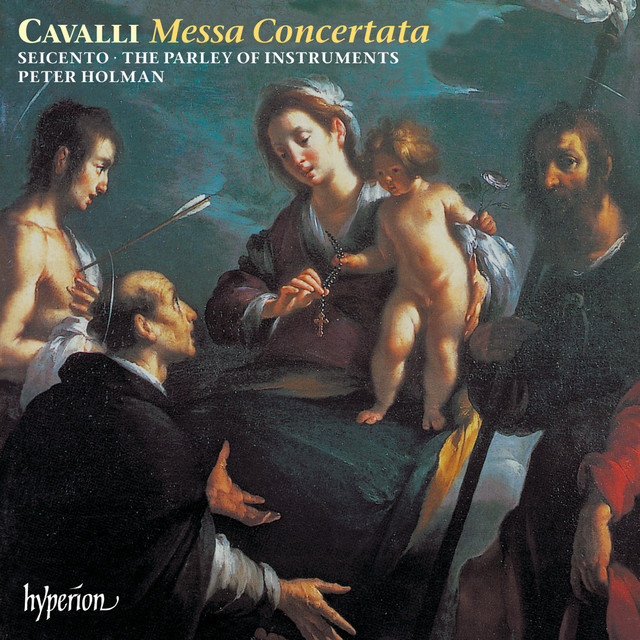
After <a href="spotify:artist:5iAhVgz6P8Nylxijb0C65v">Monteverdi</a>'s death, Francesco Cavalli became the leading opera composer in Venice. Tremendously popular during his lifetime, he was soon forgotten after his death, and his operas vanished from the stage until their resurrection toward the end of the twentieth century.
Cavalli's father, G.B. Caletti, was probably his first music teacher. Federico Cavalli, the Venetian governor of Crema whose name Cavalli eventually adopted, was taken with young Francesco's voice and brought him back to Venice with him at the end of his term. Cavalli entered the cappella of St. Mark's in Venice as a boy soprano in 1616. After his voice changed, he remained in the cappella as a tenor.
During Cavalli's first 25 years at St. Mark's, he sang under the direction of <a href="spotify:artist:5iAhVgz6P8Nylxijb0C65v">Claudio Monteverdi</a> (1567-1643), with whom he cultivated a relationship, and with he may have studied formally. His earliest known publication is a motet printed in Leonard Simonetti's Ghirlanda sacra, an anthology of motets by 26 composers.
Cavalli supplemented his income from St. Mark's by taking other positions in Venice, including that of organist at the church of Sts. Giovanni e Paolo. He also sang and played at numerous church festivals. His marriage (January 7, 1630) to Maria Sozomeno brought the composer a substantial dowry and some measure of financial independence.
Cavalli was appointed second organist at St. Marks in 1639; at approximately the same time, he invested in the Teatro San Cassiano (the first public opera house in Venice [built in 1637]), and began writing operas for that theater. This proved to be a sound financial venture for Cavalli, since he earned far more money writing for the theater than he did from his position at St. Mark's. By 1670, he had composed 41 stage works, most for the San Cassiano. Cavalli's Egisto (1643), Ormindo (1644), and Calisto were all especially successful productions; these, as well as others, have been revived in the twentieth century (often by <a href="spotify:artist:6RX3X6dI939ANy78YXqWXT">Raymond Leppard</a>, who greatly altered Cavalli's scores).
Cavalli visited Paris twice, and a modified version of his Serse (1654) was given there in 1660 as part of Louis XIV's wedding celebration. This represented a compromise, because the opera Cavalli had been commissioned to compose, Ercole amante (Hercules in love), was not completed in time for the performance. Finished in 1662, Ercole amante is notable among Cavalli's works for the use of orchestral strings to accompany recitative; earlier works had made use of basso continuo alone.
The most popular of Cavalli's operas was Giasone, composed in 1649; it is a perfect example of Cavalli's stark division between recitative and aria. In the perhaps inevitable comparison between Giasone and Cavalli's other operas with the works of <a href="spotify:artist:5iAhVgz6P8Nylxijb0C65v">Monteverdi</a>, the younger composer's recitatives are less passionate, less probing into the psyche of the character, and lacking in the variety of <a href="spotify:artist:5iAhVgz6P8Nylxijb0C65v">Monteverdi</a>'s. However, Cavalli's arias are more developed than <a href="spotify:artist:5iAhVgz6P8Nylxijb0C65v">Monteverdi</a>'s. Strophic in format, Cavalli's arias are generally in triple meter and the words are set syllabically, except for occasional decorative melismas. In each opera, there is usually at least one lament, often employing a repeated, descending bass line and resembling a passacaglia.
It is in his sacred works that Cavalli most resembles <a href="spotify:artist:5iAhVgz6P8Nylxijb0C65v">Monteverdi</a>; his earliest known sacred piece, Cantate Domino, could be mistaken for a work by the older master. The conservative nature of Cavalli's sacred works no doubt stems from his desire to maintain the musical tradition of St. Mark's, developed in previous decades by Gabrieli and <a href="spotify:artist:5iAhVgz6P8Nylxijb0C65v">Monteverdi</a>.
Cavalli's father, G.B. Caletti, was probably his first music teacher. Federico Cavalli, the Venetian governor of Crema whose name Cavalli eventually adopted, was taken with young Francesco's voice and brought him back to Venice with him at the end of his term. Cavalli entered the cappella of St. Mark's in Venice as a boy soprano in 1616. After his voice changed, he remained in the cappella as a tenor.
During Cavalli's first 25 years at St. Mark's, he sang under the direction of <a href="spotify:artist:5iAhVgz6P8Nylxijb0C65v">Claudio Monteverdi</a> (1567-1643), with whom he cultivated a relationship, and with he may have studied formally. His earliest known publication is a motet printed in Leonard Simonetti's Ghirlanda sacra, an anthology of motets by 26 composers.
Cavalli supplemented his income from St. Mark's by taking other positions in Venice, including that of organist at the church of Sts. Giovanni e Paolo. He also sang and played at numerous church festivals. His marriage (January 7, 1630) to Maria Sozomeno brought the composer a substantial dowry and some measure of financial independence.
Cavalli was appointed second organist at St. Marks in 1639; at approximately the same time, he invested in the Teatro San Cassiano (the first public opera house in Venice [built in 1637]), and began writing operas for that theater. This proved to be a sound financial venture for Cavalli, since he earned far more money writing for the theater than he did from his position at St. Mark's. By 1670, he had composed 41 stage works, most for the San Cassiano. Cavalli's Egisto (1643), Ormindo (1644), and Calisto were all especially successful productions; these, as well as others, have been revived in the twentieth century (often by <a href="spotify:artist:6RX3X6dI939ANy78YXqWXT">Raymond Leppard</a>, who greatly altered Cavalli's scores).
Cavalli visited Paris twice, and a modified version of his Serse (1654) was given there in 1660 as part of Louis XIV's wedding celebration. This represented a compromise, because the opera Cavalli had been commissioned to compose, Ercole amante (Hercules in love), was not completed in time for the performance. Finished in 1662, Ercole amante is notable among Cavalli's works for the use of orchestral strings to accompany recitative; earlier works had made use of basso continuo alone.
The most popular of Cavalli's operas was Giasone, composed in 1649; it is a perfect example of Cavalli's stark division between recitative and aria. In the perhaps inevitable comparison between Giasone and Cavalli's other operas with the works of <a href="spotify:artist:5iAhVgz6P8Nylxijb0C65v">Monteverdi</a>, the younger composer's recitatives are less passionate, less probing into the psyche of the character, and lacking in the variety of <a href="spotify:artist:5iAhVgz6P8Nylxijb0C65v">Monteverdi</a>'s. However, Cavalli's arias are more developed than <a href="spotify:artist:5iAhVgz6P8Nylxijb0C65v">Monteverdi</a>'s. Strophic in format, Cavalli's arias are generally in triple meter and the words are set syllabically, except for occasional decorative melismas. In each opera, there is usually at least one lament, often employing a repeated, descending bass line and resembling a passacaglia.
It is in his sacred works that Cavalli most resembles <a href="spotify:artist:5iAhVgz6P8Nylxijb0C65v">Monteverdi</a>; his earliest known sacred piece, Cantate Domino, could be mistaken for a work by the older master. The conservative nature of Cavalli's sacred works no doubt stems from his desire to maintain the musical tradition of St. Mark's, developed in previous decades by Gabrieli and <a href="spotify:artist:5iAhVgz6P8Nylxijb0C65v">Monteverdi</a>.
Monthly Listeners
40,145
Monthly Listeners History
Track the evolution of monthly listeners over the last 28 days.
Followers
6,194
Followers History
Track the evolution of followers over the last 28 days.
Top Cities
642 listeners
622 listeners

614 listeners

601 listeners

439 listeners

Related Artists
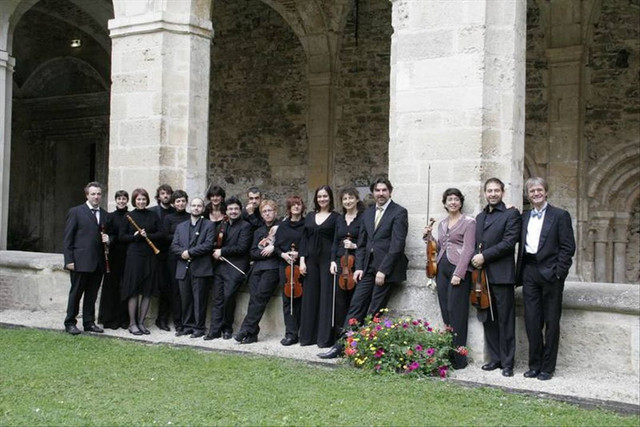
La Risonanza

Giles Tomkins


Céline Scheen

Giovanni Legrenzi




Il Seminario Musicale
André Campra
John Blow

Matthew Locke

Stefano Montanari

Jean-Paul Fouchécourt
Luigi Rossi