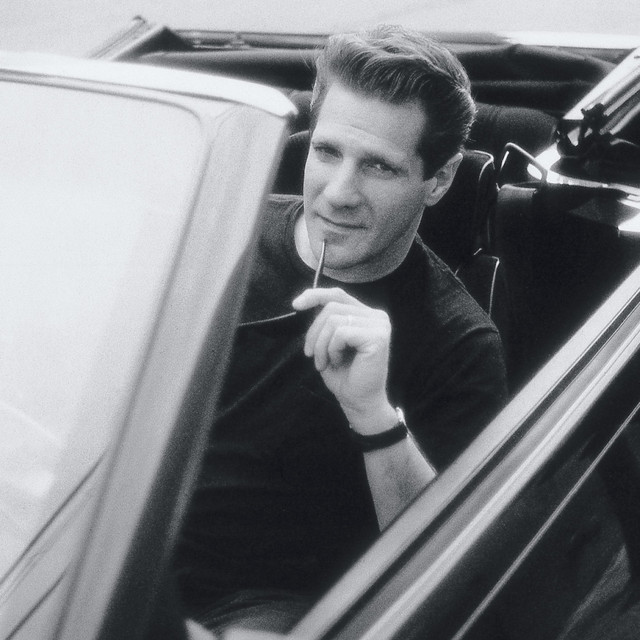
Artist
Glenn Frey
Data may be outdated
Last updated: 8 months ago — Click refresh to get the latest statistics.
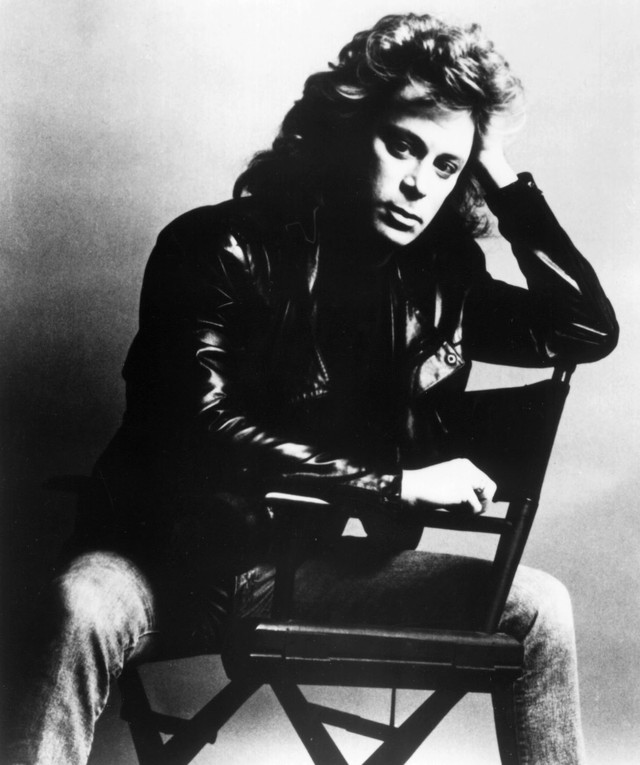
Glenn Frey was best known as one of the two most popular and longest tenured members (along with <a href="spotify:artist:5dbuFbrHa1SJlQhQX9OUJ2">Don Henley</a>) of <a href="spotify:artist:0ECwFtbIWEVNwjlrfc6xoL">the Eagles</a>, and as an intermittently successful solo artist in the decades since that band broke up. Although associated closely with <a href="spotify:artist:0ECwFtbIWEVNwjlrfc6xoL">the Eagles</a>' brand of Southern California-spawned laid-back country-rock, Frey's origins were a long way away from the place and the music that his work came to epitomize. He was born in Detroit in 1948 and grew up in Royal Oak, Michigan. Music was just one of many interests that drove him during childhood. A precocious youth, he was an avid reader and, despite his relatively small stature, a serious athlete in elementary and junior high school. He also took piano lessons from age five -- at the insistence of his parents -- until just before his teen years. His interests in high school included such advanced and outre subjects as the writings of <a href="spotify:artist:6rkTjnYzrPQ4nQ0TAYIwBC">Jack Kerouac</a> and the films and image of actor <a href="spotify:artist:2OKJKQMfvqkN1eM6UUdJIR">James Dean</a>, who died when Frey was seven years old; they reflected a rebellious and aggressive nature that also manifested itself in an attraction to rock & roll. The music had come along during Frey's childhood -- he was seven when "Rock Around the Clock" shot to number one on the charts, and eight when <a href="spotify:artist:43ZHCT0cAZBISjO8DG9PnE">Elvis Presley</a> became a national phenomenon. In contrast to his future bandmate <a href="spotify:artist:2VbrivHnDf4Z43xPTgqvym">Timothy B. Schmit</a>, Frey was never a would-be folkie, but jumped right into rock & roll, especially after he saw -- at age 16 -- how girls reacted to rock stars on-stage.
He took up the guitar in earnest after seeing <a href="spotify:artist:3WrFJ7ztbogyGnTHbHJFl2">the Beatles</a> perform in 1964, and passed through several amateur and semi-professional Detroit-based bands in his late teens, including the Mushrooms. The band became a major-local attraction on the local television show Robin Seymour's Swinging Time, and appeared regularly at a teen club called the Hideout, and cut a single, "Such a Lovely Child," for <a href="spotify:search:label%3A%22Hideout+Records%22">Hideout Records</a> (produced by a somewhat older, more advanced local rocker named <a href="spotify:artist:485uL27bPomh29R4JmQehQ">Bob Seger</a>). The Mushrooms split soon after, and Frey joined the folk-rock group the Four of Us; he subsequently formed two more Detroit teen bands, the Subterraneans and <a href="spotify:artist:5WWNWN1xY73sSeb26Qd7HO">the Heavy Metal Kids</a>. Frey attended college somewhat reluctantly, preferring to devote most of his energy to playing music, chasing girls, and smoking marijuana. In the course of his early career, he did manage to sit in on a couple of sessions with <a href="spotify:artist:485uL27bPomh29R4JmQehQ">Seger</a>, and at age 19 played acoustic guitar and sang backup on "Ramblin' Gamblin' Man" from the latter's <a href="spotify:search:label%3A%22Capitol+Records%22">Capitol Records</a> debut in 1968.
Frey eventually decided, however, that Detroit wasn't the place for him to launch a serious career in rock music and headed west to California. He was fortunate enough to make contact with <a href="spotify:artist:0I7UnRLIdCD310ZBgeuqh5">John David Souther</a>, a fellow Detroit transplant who was already a promising practitioner of what would soon be known as country-rock. He was dating Frey's girlfriend's sister, and he soon showed Frey how to play and sing country music, which was increasingly making itself felt in the rock music coming out of the Golden State. The two tried composing as a team, even landing a publishing contract that helped keep them going during those lean late-'60s years, splitting $90.00 a week between them. The publishing deal fell apart because of their inability to write the kind of commercial material that was being sought, but in the course of writing together, they'd developed a coherent sound that soon became very attractive, and something they could build on.
Thus was born <a href="spotify:artist:7bK26KSS2vRPxiT2UDeYSF">Longbranch Pennywhistle</a>, a country-rock group whose timing was a little premature on a commercial level but not too soon to be signed to <a href="spotify:search:label%3A%22Amos+Records%22">Amos Records</a>, a small Los Angeles-based label. The group's self-titled album, which included <a href="spotify:artist:5THBJK4ynnBnn5uvIamir1">Doug Kershaw</a>, as well as <a href="spotify:artist:1CPwHx5lgVxv0rfcp7UXLx">Ry Cooder</a> and the renowned L.A. session men <a href="spotify:artist:2RAajwxQybgx0iIibcGHLo">James Burton</a> on guitar, Larry Knechtel on piano, and <a href="spotify:artist:5OGnIiN0VDdkwDTSXF0b56">Joe Osborn</a> on bass, never got the promotion it would have taken to make it a success. <a href="spotify:artist:0I7UnRLIdCD310ZBgeuqh5">Souther</a> and Frey kept making the rounds of the folk clubs in the city and the surrounding area, crossing paths with the likes of <a href="spotify:artist:5lkiCO9UQ8B23dZ1o0UV4m">Jackson Browne</a> -- then an ex-member of <a href="spotify:artist:7y70dch6JuuuNnwlsOQvwW">the Nitty Gritty Dirt Band</a> with some great songs to his credit as a composer -- and <a href="spotify:artist:1sXbwvCQLGZnaH0Jp2HTVc">Linda Ronstadt</a>. Eventually, Frey, <a href="spotify:artist:0I7UnRLIdCD310ZBgeuqh5">Souther</a>, and <a href="spotify:artist:5lkiCO9UQ8B23dZ1o0UV4m">Browne</a> ended up sharing a house together, and the two of them sang on <a href="spotify:artist:5lkiCO9UQ8B23dZ1o0UV4m">Browne</a>'s demo of "Jamaica Say You Will." <a href="spotify:artist:5lkiCO9UQ8B23dZ1o0UV4m">Browne</a> was already being managed by David Geffen, who, at <a href="spotify:artist:5lkiCO9UQ8B23dZ1o0UV4m">Browne</a>'s urging, also became Frey's informal music business advisor. Meanwhile, he and <a href="spotify:artist:0I7UnRLIdCD310ZBgeuqh5">Souther</a> were forced to disband their own group in order to get out of the contract with <a href="spotify:search:label%3A%22Amos+Records%22">Amos Records</a>, which seemed like a dead end, and both spent a fair amount of time around the Troubadour, the club that constituted the folk-rock mecca for the West Coast. Frey wanted to try forming a new group, but was persuaded instead to consider going on the road backing <a href="spotify:artist:1sXbwvCQLGZnaH0Jp2HTVc">Linda Ronstadt</a>, who was about to tour in support of the release of her debut <a href="spotify:search:label%3A%22Asylum+Records%22">Asylum Records</a> album, Silk Purse.
Frey also met <a href="spotify:artist:5dbuFbrHa1SJlQhQX9OUJ2">Don Henley</a>, who was in a band called Shiloh -- which was also signed to <a href="spotify:search:label%3A%22Amos+Records%22">Amos Records</a> and also getting nowhere fast -- and persuaded him, in the course of their mutual commiserations, to join the band working behind <a href="spotify:artist:1sXbwvCQLGZnaH0Jp2HTVc">Ronstadt</a>. The ranks of the band, formed in the summer of 1971, eventually came to include Frey and <a href="spotify:artist:5dbuFbrHa1SJlQhQX9OUJ2">Henley</a>, and <a href="spotify:artist:00f43SIUld0KU349dnwsmC">Randy Meisner</a>, who'd lately played with <a href="spotify:artist:73sSFVlM6pkweLXE8qw1OS">Rick Nelson</a> on-stage and on the Rudy the Fifth album, and ex-<a href="spotify:artist:0rESpKEusFHxhW59MIf7eM">Flying Burrito Brothers</a> member <a href="spotify:artist:6Owil7XUQjKn5rnhhcBelK">Bernie Leadon</a>. Within a short time, however, they'd made plans to separate themselves from <a href="spotify:artist:1sXbwvCQLGZnaH0Jp2HTVc">Ronstadt</a> and go off on their own. After a cold audition -- with no advance demo tape -- in front of <a href="spotify:search:label%3A%22Geffen%22">Geffen</a>, they had a manager and, after getting Frey out of his contract with <a href="spotify:search:label%3A%22Amos+Records%22">Amos Records</a>, they went to Colorado for some time off. There they worked out who they were and what their sound would be, picked up their first producer, Glyn Johns, took on the name <a href="spotify:artist:0ECwFtbIWEVNwjlrfc6xoL">the Eagles</a>, and were signed to <a href="spotify:search:label%3A%22Geffen%22">Geffen</a>'s newly formed <a href="spotify:search:label%3A%22Asylum+Records%22">Asylum Records</a>.
Although all four members of <a href="spotify:artist:0ECwFtbIWEVNwjlrfc6xoL">the Eagles</a> composed songs and sang, Frey and <a href="spotify:artist:5dbuFbrHa1SJlQhQX9OUJ2">Henley</a> quickly emerged as the two with the most commercial musical ears, Frey as co-author (with <a href="spotify:artist:5lkiCO9UQ8B23dZ1o0UV4m">Jackson Browne</a>) and lead singer on their first single, "Take It Easy," which reached number 12 on the charts in the summer of 1972, and <a href="spotify:artist:5dbuFbrHa1SJlQhQX9OUJ2">Henley</a> as co-author (with <a href="spotify:artist:6Owil7XUQjKn5rnhhcBelK">Leadon</a>) of "Witchy Woman," which got to number nine that fall. Although the group had succeeded in attracting generally favorable press attention and reasonably good sales, with one Top Ten single and a debut album that peaked at number 22 in a seven-week run on the charts, Frey and <a href="spotify:artist:5dbuFbrHa1SJlQhQX9OUJ2">Henley</a> decided this wasn't enough, and that their next album would have to be something more than just a body of good tunes and a couple of AM-friendly cuts. The pair turned what became Desperado into a very ambitious (for the time) thematic-based concept album, which was something relatively unusual in country-rock. Frey and <a href="spotify:artist:5dbuFbrHa1SJlQhQX9OUJ2">Henley</a> also co-wrote the title track, which was perhaps the finest album track in the group's history (although it's arguable that every track on Desperado that didn't make it onto a 45 fits into that category). Although the concept caught <a href="spotify:artist:6Owil7XUQjKn5rnhhcBelK">Leadon</a> and <a href="spotify:artist:00f43SIUld0KU349dnwsmC">Meisner</a> by surprise, especially as songwriters, they quickly came aboard and Desperado ended up being one of the finest records ever to come out of the '70s country-rock scene.
And it was a measure of the unity that the band still felt at this time that, when Desperado stalled on the charts just outside of the Top 40 and neither of its two singles did better than number 59 -- mostly owing to disorganization of <a href="spotify:search:label%3A%22Asylum+Records%22">Asylum Records</a> at the time, which was being sold and merged with <a href="spotify:search:label%3A%22Elektra+Records%22">Elektra Records</a> -- all of the members took this as a professional affront. Frey's singing also improved markedly between the first two albums, and he was effectively, with <a href="spotify:artist:5dbuFbrHa1SJlQhQX9OUJ2">Henley</a>, one of two co-equal focal points in the band. By the time of their third album, a fifth <a href="spotify:artist:0ECwFtbIWEVNwjlrfc6xoL">Eagle</a> had joined in the guise of <a href="spotify:artist:73G0P8aYEnVht7jjliF7Ok">Don Felder</a>, whose guitar sound toughened up the band's overall sound, and especially their harder rock & roll side. By the time he joined, for the On the Border album, which marked a commercial comeback, peaking at number 17, the band had split into two divisions, with Frey and <a href="spotify:artist:5dbuFbrHa1SJlQhQX9OUJ2">Henley</a> more or less the stable core, while <a href="spotify:artist:6Owil7XUQjKn5rnhhcBelK">Leadon</a> -- who wasn't entirely happy over <a href="spotify:artist:73G0P8aYEnVht7jjliF7Ok">Felder</a>'s guitar being added to their sound, when he wanted to play more straight-ahead electric guitar -- and <a href="spotify:artist:00f43SIUld0KU349dnwsmC">Meisner</a> seemed to be part of a less cohesive unit just outside of that core.
By the time they toured in support of their fourth album, One of These Nights, <a href="spotify:artist:6Owil7XUQjKn5rnhhcBelK">Leadon</a> was on his way out, to be replaced by <a href="spotify:artist:5bDxAyJiTYBat1YnFJhvEK">Joe Walsh</a>, and <a href="spotify:artist:00f43SIUld0KU349dnwsmC">Meisner</a> followed out the door on the Hotel California tour. By that time, Frey and <a href="spotify:artist:5dbuFbrHa1SJlQhQX9OUJ2">Henley</a> (in coordination with their manager, Irving Azoff, a protégé of <a href="spotify:search:label%3A%22Geffen%22">Geffen</a>'s who'd taken the latter's place when he became too wired up in running his record label), as co-authors of the string of hit singles that included "One of These Nights," "Lyin' Eyes," "Take It to the Limit," "Hotel California," "New Kid in Town," "Life in the Fast Lane," "The Long Run," "I Can't Tell You Why," and "Heartache Tonight," and one or the other of them on lead vocals for all but two of those songs, were more or less running things. <a href="spotify:artist:5bDxAyJiTYBat1YnFJhvEK">Walsh</a>, <a href="spotify:artist:73G0P8aYEnVht7jjliF7Ok">Felder</a>, and new member <a href="spotify:artist:2VbrivHnDf4Z43xPTgqvym">Timothy B. Schmit</a> stayed along for the ride that continued through 1982, when Frey and <a href="spotify:artist:5dbuFbrHa1SJlQhQX9OUJ2">Henley</a>, in conjunction with the others -- all of whom were now set up financially better than they ever could have dreamed, following a string of arena- and stadium-scale tours, hit singles, and three more multi-million-selling albums -- put the group on hiatus. What's more, <a href="spotify:artist:0ECwFtbIWEVNwjlrfc6xoL">the Eagles</a>' catalog continued to sell for decades after, on LP and CD, in multiple editions of the latter.
Frey began a solo career in 1982 with No Fun Aloud, notching a pair of Top 40 hits with "I Found Somebody" and "The One You Love." He also embarked on an unexpected acting career in the wake of 1984's The Allnighter, which spawned the hit "Smuggler's Blues," a song that subsequently inspired an episode of the hit TV series Miami Vice on which Frey guest starred; his acting work later continued in an extended guest role on the acclaimed Wiseguy as well as a starring turn in 1993's South of Sunset, which as a result of its premiere episode's 6.1 Nielsen rating -- believed to be the lowest fall debut in major network history -- was canceled after only one episode.
Frey's solo musical career reached its peak in 1985 with the Top Ten smash "The Heat Is On," a single from the soundtrack to the <a href="spotify:artist:1Zq8pfBl4ejCMrWdeAdphc">Eddie Murphy</a> comedy Beverly Hills Cop. Frey's contribution to the Miami Vice soundtrack, "You Belong to the City," was also a blockbuster, narrowly missing the top of the charts. However, his next solo LP, Soul Searchin', didn't follow until 1988, notching only one Top 40 entry, "True Love"; Strange Weather, issued four years later, missed the charts altogether. After issuing Glenn Frey Live in 1993, he joined the reunited <a href="spotify:artist:0ECwFtbIWEVNwjlrfc6xoL">Eagles</a> on their phenomenally successful Hell Freezes Over tour, with a live album of the same name reaching number one a year later. For a time, his releases consisted of compilations of earlier solo work. In the late '90s, Frey co-founded his own label, <a href="spotify:search:label%3A%22Mission+Records%22">Mission Records</a>, with attorney Peter Lopez. Frey returned with his first solo album in some 20 years with 2012's After Hours, a collection of classic American pop songs done in a kind of pop lounge style, with the title tune, co-written with <a href="spotify:artist:0EF6xbK4Czm9ld5f6VpcXQ">Jack Tempchin</a>, the only original. The <a href="spotify:artist:0ECwFtbIWEVNwjlrfc6xoL">Eagles</a> put together a "History of the Eagles" live show, and toured with it from 2013 to 2015. Frey's health took a sudden turn in December 2015. He passed away on January 18, 2016. He was 67 years old.
The first posthumous Frey collection, the triple disc Above The Clouds, arrived in May 2018. ~ Bruce Eder & Jason Ankeny, Rovi
He took up the guitar in earnest after seeing <a href="spotify:artist:3WrFJ7ztbogyGnTHbHJFl2">the Beatles</a> perform in 1964, and passed through several amateur and semi-professional Detroit-based bands in his late teens, including the Mushrooms. The band became a major-local attraction on the local television show Robin Seymour's Swinging Time, and appeared regularly at a teen club called the Hideout, and cut a single, "Such a Lovely Child," for <a href="spotify:search:label%3A%22Hideout+Records%22">Hideout Records</a> (produced by a somewhat older, more advanced local rocker named <a href="spotify:artist:485uL27bPomh29R4JmQehQ">Bob Seger</a>). The Mushrooms split soon after, and Frey joined the folk-rock group the Four of Us; he subsequently formed two more Detroit teen bands, the Subterraneans and <a href="spotify:artist:5WWNWN1xY73sSeb26Qd7HO">the Heavy Metal Kids</a>. Frey attended college somewhat reluctantly, preferring to devote most of his energy to playing music, chasing girls, and smoking marijuana. In the course of his early career, he did manage to sit in on a couple of sessions with <a href="spotify:artist:485uL27bPomh29R4JmQehQ">Seger</a>, and at age 19 played acoustic guitar and sang backup on "Ramblin' Gamblin' Man" from the latter's <a href="spotify:search:label%3A%22Capitol+Records%22">Capitol Records</a> debut in 1968.
Frey eventually decided, however, that Detroit wasn't the place for him to launch a serious career in rock music and headed west to California. He was fortunate enough to make contact with <a href="spotify:artist:0I7UnRLIdCD310ZBgeuqh5">John David Souther</a>, a fellow Detroit transplant who was already a promising practitioner of what would soon be known as country-rock. He was dating Frey's girlfriend's sister, and he soon showed Frey how to play and sing country music, which was increasingly making itself felt in the rock music coming out of the Golden State. The two tried composing as a team, even landing a publishing contract that helped keep them going during those lean late-'60s years, splitting $90.00 a week between them. The publishing deal fell apart because of their inability to write the kind of commercial material that was being sought, but in the course of writing together, they'd developed a coherent sound that soon became very attractive, and something they could build on.
Thus was born <a href="spotify:artist:7bK26KSS2vRPxiT2UDeYSF">Longbranch Pennywhistle</a>, a country-rock group whose timing was a little premature on a commercial level but not too soon to be signed to <a href="spotify:search:label%3A%22Amos+Records%22">Amos Records</a>, a small Los Angeles-based label. The group's self-titled album, which included <a href="spotify:artist:5THBJK4ynnBnn5uvIamir1">Doug Kershaw</a>, as well as <a href="spotify:artist:1CPwHx5lgVxv0rfcp7UXLx">Ry Cooder</a> and the renowned L.A. session men <a href="spotify:artist:2RAajwxQybgx0iIibcGHLo">James Burton</a> on guitar, Larry Knechtel on piano, and <a href="spotify:artist:5OGnIiN0VDdkwDTSXF0b56">Joe Osborn</a> on bass, never got the promotion it would have taken to make it a success. <a href="spotify:artist:0I7UnRLIdCD310ZBgeuqh5">Souther</a> and Frey kept making the rounds of the folk clubs in the city and the surrounding area, crossing paths with the likes of <a href="spotify:artist:5lkiCO9UQ8B23dZ1o0UV4m">Jackson Browne</a> -- then an ex-member of <a href="spotify:artist:7y70dch6JuuuNnwlsOQvwW">the Nitty Gritty Dirt Band</a> with some great songs to his credit as a composer -- and <a href="spotify:artist:1sXbwvCQLGZnaH0Jp2HTVc">Linda Ronstadt</a>. Eventually, Frey, <a href="spotify:artist:0I7UnRLIdCD310ZBgeuqh5">Souther</a>, and <a href="spotify:artist:5lkiCO9UQ8B23dZ1o0UV4m">Browne</a> ended up sharing a house together, and the two of them sang on <a href="spotify:artist:5lkiCO9UQ8B23dZ1o0UV4m">Browne</a>'s demo of "Jamaica Say You Will." <a href="spotify:artist:5lkiCO9UQ8B23dZ1o0UV4m">Browne</a> was already being managed by David Geffen, who, at <a href="spotify:artist:5lkiCO9UQ8B23dZ1o0UV4m">Browne</a>'s urging, also became Frey's informal music business advisor. Meanwhile, he and <a href="spotify:artist:0I7UnRLIdCD310ZBgeuqh5">Souther</a> were forced to disband their own group in order to get out of the contract with <a href="spotify:search:label%3A%22Amos+Records%22">Amos Records</a>, which seemed like a dead end, and both spent a fair amount of time around the Troubadour, the club that constituted the folk-rock mecca for the West Coast. Frey wanted to try forming a new group, but was persuaded instead to consider going on the road backing <a href="spotify:artist:1sXbwvCQLGZnaH0Jp2HTVc">Linda Ronstadt</a>, who was about to tour in support of the release of her debut <a href="spotify:search:label%3A%22Asylum+Records%22">Asylum Records</a> album, Silk Purse.
Frey also met <a href="spotify:artist:5dbuFbrHa1SJlQhQX9OUJ2">Don Henley</a>, who was in a band called Shiloh -- which was also signed to <a href="spotify:search:label%3A%22Amos+Records%22">Amos Records</a> and also getting nowhere fast -- and persuaded him, in the course of their mutual commiserations, to join the band working behind <a href="spotify:artist:1sXbwvCQLGZnaH0Jp2HTVc">Ronstadt</a>. The ranks of the band, formed in the summer of 1971, eventually came to include Frey and <a href="spotify:artist:5dbuFbrHa1SJlQhQX9OUJ2">Henley</a>, and <a href="spotify:artist:00f43SIUld0KU349dnwsmC">Randy Meisner</a>, who'd lately played with <a href="spotify:artist:73sSFVlM6pkweLXE8qw1OS">Rick Nelson</a> on-stage and on the Rudy the Fifth album, and ex-<a href="spotify:artist:0rESpKEusFHxhW59MIf7eM">Flying Burrito Brothers</a> member <a href="spotify:artist:6Owil7XUQjKn5rnhhcBelK">Bernie Leadon</a>. Within a short time, however, they'd made plans to separate themselves from <a href="spotify:artist:1sXbwvCQLGZnaH0Jp2HTVc">Ronstadt</a> and go off on their own. After a cold audition -- with no advance demo tape -- in front of <a href="spotify:search:label%3A%22Geffen%22">Geffen</a>, they had a manager and, after getting Frey out of his contract with <a href="spotify:search:label%3A%22Amos+Records%22">Amos Records</a>, they went to Colorado for some time off. There they worked out who they were and what their sound would be, picked up their first producer, Glyn Johns, took on the name <a href="spotify:artist:0ECwFtbIWEVNwjlrfc6xoL">the Eagles</a>, and were signed to <a href="spotify:search:label%3A%22Geffen%22">Geffen</a>'s newly formed <a href="spotify:search:label%3A%22Asylum+Records%22">Asylum Records</a>.
Although all four members of <a href="spotify:artist:0ECwFtbIWEVNwjlrfc6xoL">the Eagles</a> composed songs and sang, Frey and <a href="spotify:artist:5dbuFbrHa1SJlQhQX9OUJ2">Henley</a> quickly emerged as the two with the most commercial musical ears, Frey as co-author (with <a href="spotify:artist:5lkiCO9UQ8B23dZ1o0UV4m">Jackson Browne</a>) and lead singer on their first single, "Take It Easy," which reached number 12 on the charts in the summer of 1972, and <a href="spotify:artist:5dbuFbrHa1SJlQhQX9OUJ2">Henley</a> as co-author (with <a href="spotify:artist:6Owil7XUQjKn5rnhhcBelK">Leadon</a>) of "Witchy Woman," which got to number nine that fall. Although the group had succeeded in attracting generally favorable press attention and reasonably good sales, with one Top Ten single and a debut album that peaked at number 22 in a seven-week run on the charts, Frey and <a href="spotify:artist:5dbuFbrHa1SJlQhQX9OUJ2">Henley</a> decided this wasn't enough, and that their next album would have to be something more than just a body of good tunes and a couple of AM-friendly cuts. The pair turned what became Desperado into a very ambitious (for the time) thematic-based concept album, which was something relatively unusual in country-rock. Frey and <a href="spotify:artist:5dbuFbrHa1SJlQhQX9OUJ2">Henley</a> also co-wrote the title track, which was perhaps the finest album track in the group's history (although it's arguable that every track on Desperado that didn't make it onto a 45 fits into that category). Although the concept caught <a href="spotify:artist:6Owil7XUQjKn5rnhhcBelK">Leadon</a> and <a href="spotify:artist:00f43SIUld0KU349dnwsmC">Meisner</a> by surprise, especially as songwriters, they quickly came aboard and Desperado ended up being one of the finest records ever to come out of the '70s country-rock scene.
And it was a measure of the unity that the band still felt at this time that, when Desperado stalled on the charts just outside of the Top 40 and neither of its two singles did better than number 59 -- mostly owing to disorganization of <a href="spotify:search:label%3A%22Asylum+Records%22">Asylum Records</a> at the time, which was being sold and merged with <a href="spotify:search:label%3A%22Elektra+Records%22">Elektra Records</a> -- all of the members took this as a professional affront. Frey's singing also improved markedly between the first two albums, and he was effectively, with <a href="spotify:artist:5dbuFbrHa1SJlQhQX9OUJ2">Henley</a>, one of two co-equal focal points in the band. By the time of their third album, a fifth <a href="spotify:artist:0ECwFtbIWEVNwjlrfc6xoL">Eagle</a> had joined in the guise of <a href="spotify:artist:73G0P8aYEnVht7jjliF7Ok">Don Felder</a>, whose guitar sound toughened up the band's overall sound, and especially their harder rock & roll side. By the time he joined, for the On the Border album, which marked a commercial comeback, peaking at number 17, the band had split into two divisions, with Frey and <a href="spotify:artist:5dbuFbrHa1SJlQhQX9OUJ2">Henley</a> more or less the stable core, while <a href="spotify:artist:6Owil7XUQjKn5rnhhcBelK">Leadon</a> -- who wasn't entirely happy over <a href="spotify:artist:73G0P8aYEnVht7jjliF7Ok">Felder</a>'s guitar being added to their sound, when he wanted to play more straight-ahead electric guitar -- and <a href="spotify:artist:00f43SIUld0KU349dnwsmC">Meisner</a> seemed to be part of a less cohesive unit just outside of that core.
By the time they toured in support of their fourth album, One of These Nights, <a href="spotify:artist:6Owil7XUQjKn5rnhhcBelK">Leadon</a> was on his way out, to be replaced by <a href="spotify:artist:5bDxAyJiTYBat1YnFJhvEK">Joe Walsh</a>, and <a href="spotify:artist:00f43SIUld0KU349dnwsmC">Meisner</a> followed out the door on the Hotel California tour. By that time, Frey and <a href="spotify:artist:5dbuFbrHa1SJlQhQX9OUJ2">Henley</a> (in coordination with their manager, Irving Azoff, a protégé of <a href="spotify:search:label%3A%22Geffen%22">Geffen</a>'s who'd taken the latter's place when he became too wired up in running his record label), as co-authors of the string of hit singles that included "One of These Nights," "Lyin' Eyes," "Take It to the Limit," "Hotel California," "New Kid in Town," "Life in the Fast Lane," "The Long Run," "I Can't Tell You Why," and "Heartache Tonight," and one or the other of them on lead vocals for all but two of those songs, were more or less running things. <a href="spotify:artist:5bDxAyJiTYBat1YnFJhvEK">Walsh</a>, <a href="spotify:artist:73G0P8aYEnVht7jjliF7Ok">Felder</a>, and new member <a href="spotify:artist:2VbrivHnDf4Z43xPTgqvym">Timothy B. Schmit</a> stayed along for the ride that continued through 1982, when Frey and <a href="spotify:artist:5dbuFbrHa1SJlQhQX9OUJ2">Henley</a>, in conjunction with the others -- all of whom were now set up financially better than they ever could have dreamed, following a string of arena- and stadium-scale tours, hit singles, and three more multi-million-selling albums -- put the group on hiatus. What's more, <a href="spotify:artist:0ECwFtbIWEVNwjlrfc6xoL">the Eagles</a>' catalog continued to sell for decades after, on LP and CD, in multiple editions of the latter.
Frey began a solo career in 1982 with No Fun Aloud, notching a pair of Top 40 hits with "I Found Somebody" and "The One You Love." He also embarked on an unexpected acting career in the wake of 1984's The Allnighter, which spawned the hit "Smuggler's Blues," a song that subsequently inspired an episode of the hit TV series Miami Vice on which Frey guest starred; his acting work later continued in an extended guest role on the acclaimed Wiseguy as well as a starring turn in 1993's South of Sunset, which as a result of its premiere episode's 6.1 Nielsen rating -- believed to be the lowest fall debut in major network history -- was canceled after only one episode.
Frey's solo musical career reached its peak in 1985 with the Top Ten smash "The Heat Is On," a single from the soundtrack to the <a href="spotify:artist:1Zq8pfBl4ejCMrWdeAdphc">Eddie Murphy</a> comedy Beverly Hills Cop. Frey's contribution to the Miami Vice soundtrack, "You Belong to the City," was also a blockbuster, narrowly missing the top of the charts. However, his next solo LP, Soul Searchin', didn't follow until 1988, notching only one Top 40 entry, "True Love"; Strange Weather, issued four years later, missed the charts altogether. After issuing Glenn Frey Live in 1993, he joined the reunited <a href="spotify:artist:0ECwFtbIWEVNwjlrfc6xoL">Eagles</a> on their phenomenally successful Hell Freezes Over tour, with a live album of the same name reaching number one a year later. For a time, his releases consisted of compilations of earlier solo work. In the late '90s, Frey co-founded his own label, <a href="spotify:search:label%3A%22Mission+Records%22">Mission Records</a>, with attorney Peter Lopez. Frey returned with his first solo album in some 20 years with 2012's After Hours, a collection of classic American pop songs done in a kind of pop lounge style, with the title tune, co-written with <a href="spotify:artist:0EF6xbK4Czm9ld5f6VpcXQ">Jack Tempchin</a>, the only original. The <a href="spotify:artist:0ECwFtbIWEVNwjlrfc6xoL">Eagles</a> put together a "History of the Eagles" live show, and toured with it from 2013 to 2015. Frey's health took a sudden turn in December 2015. He passed away on January 18, 2016. He was 67 years old.
The first posthumous Frey collection, the triple disc Above The Clouds, arrived in May 2018. ~ Bruce Eder & Jason Ankeny, Rovi
Monthly Listeners
2.2 million
Monthly Listeners History
Track the evolution of monthly listeners over the last 28 days.
Followers
682,160
Followers History
Track the evolution of followers over the last 28 days.
Top Cities
57,350 listeners

47,629 listeners
45,898 listeners
38,689 listeners
34,314 listeners