Last updated: 2 hours ago
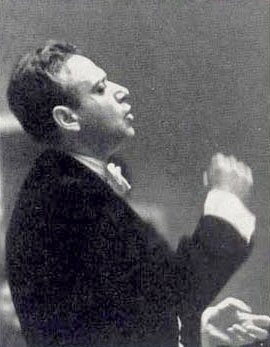
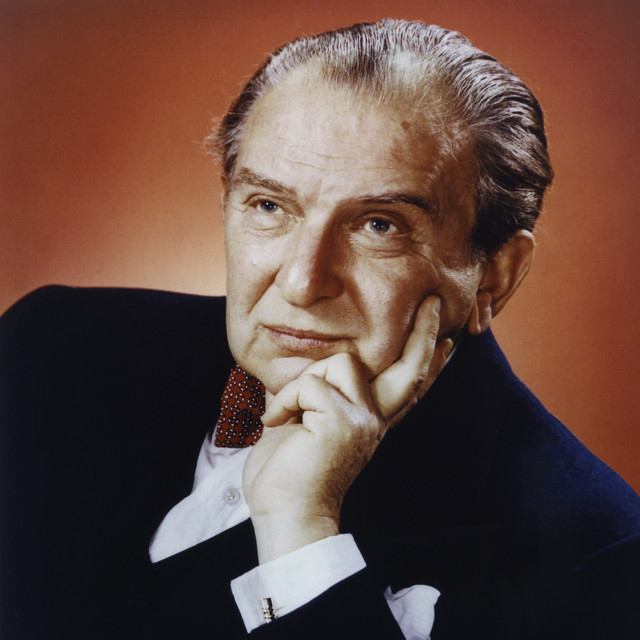
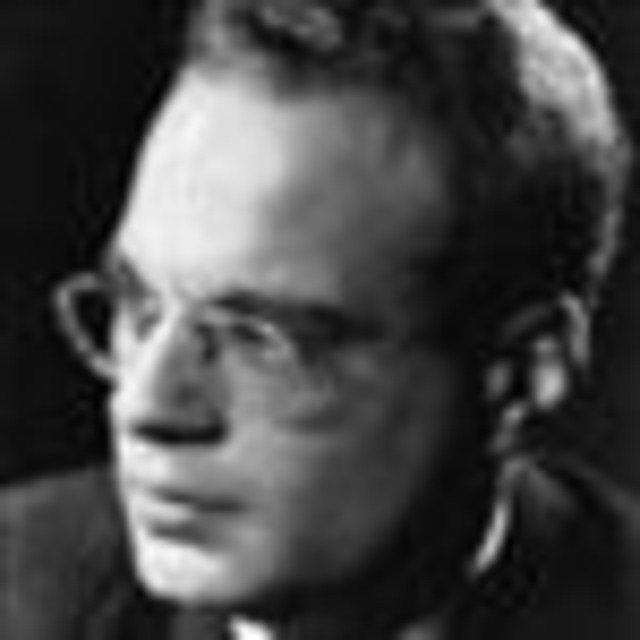
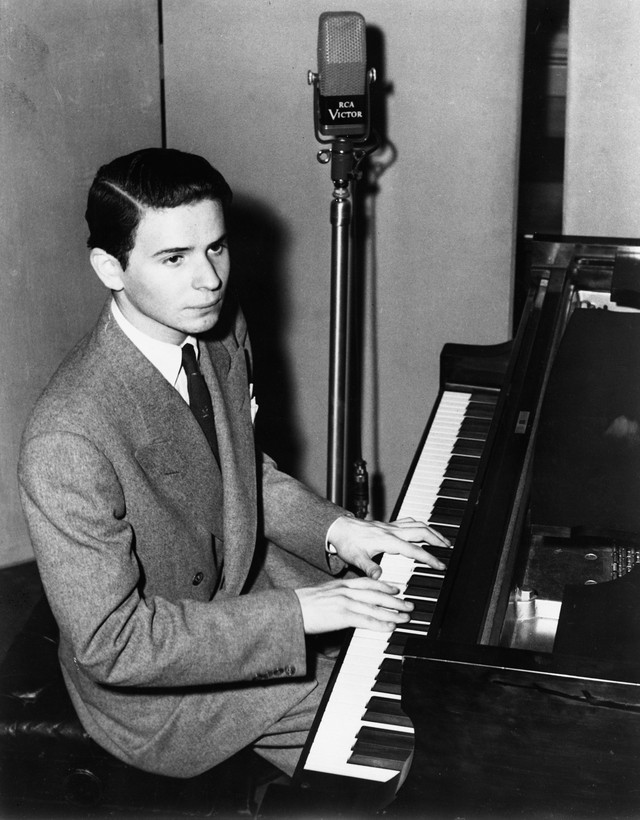
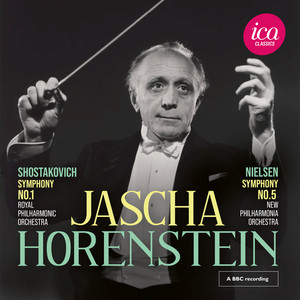
A champion of modern music and an intellectual and philosophical conductor of a sort not much encountered any more, Jascha Horenstein moved to Vienna with his family at age six. He went on to study violin with <a href="spotify:artist:5u7R8NKhXqVII6g8nNp28Y">Adolf Busch</a>, Indian philosophy at the University of Vienna, and music at the Vienna School of Music. By 20 he had already decided to become a conductor and left Vienna for study in Berlin, where he conducted the Schubert Choir and became an assistant to <a href="spotify:artist:4tvRZdoY4H9Wgcf0w1rZqs">Furtwängler</a>. In 1924, he made his debut with the Vienna Symphony Orchestra, conducting <a href="spotify:artist:2ANtgfhQkKpsW6EYSDqldz">Mahler</a>'s then-little-known First Symphony. From 1925 to 1928, he conducted the <a href="spotify:artist:5pF76lplGIvEFGb8lI48hA">Berlin Symphony Orchestra</a>, and in 1929, as guest conductor, he led the <a href="spotify:artist:6uRJnvQ3f8whVnmeoecv5Z">Berlin Philharmonic Orchestra</a> in the premiere of <a href="spotify:artist:60ju8DuNEmkdLw3ymddLje">Alban Berg</a>'s Lyric Suite. As a young man he made the acquaintance of <a href="spotify:artist:5U827e4jbYz6EjtN0fIDt9">Schoenberg</a>, <a href="spotify:artist:6cg7ooZDeSSLYVTWGpASjX">Webern</a>, <a href="spotify:artist:7ie36YytMoKtPiL7tUvmoE">Stravinsky</a>, <a href="spotify:artist:0Kekt6CKSo0m5mivKcoH51">Rachmaninov</a>, <a href="spotify:artist:6pAwHPeExeUbMd5w7Iny6D">Richard Strauss</a>, <a href="spotify:artist:7xH3VOMwOjnqGu7NERNUx1">Busoni</a>, and <a href="spotify:artist:46xXzoOdtD7SL2PTRq5irp">Janacek</a>, and frequently programmed their music for the rest of his life.
On <a href="spotify:artist:4tvRZdoY4H9Wgcf0w1rZqs">Furtwängler</a>'s recommendation, Horenstein was appointed director of the Düsseldorf Opera in 1929, and remained there until, as a Jew, he was forced to leave Nazi Germany. In the 1930s he lived in Paris and traveled extensively, conducting in Brussels, Vienna, and the USSR, visiting Scandinavia with the Ballets Russe, and touring Australia and New Zealand. He settled in the U.S. in 1942, became a U.S. citizen, conducted many of the leading orchestras of both North and South America and was one of four conductors, including <a href="spotify:artist:4xpgBZSojKNEQqQHXrwSXA">Toscanini</a>, to conduct the newly formed Palestine Symphony Orchestra. Though in great demand from the 1930s onwards, Horenstein did not actively seek a permanent conductorship; he appeared to prefer to work on his own terms.
After the Second World War, Horenstein returned to Europe and lived in Lausanne, Switzerland. Highlights of his renewed European career came in 1950, when he introduced Berg's opera Wozzeck in Paris, and in 1959, when his performance of <a href="spotify:artist:2ANtgfhQkKpsW6EYSDqldz">Mahler</a>'s Eighth Symphony for the BBC did much to stimulate a <a href="spotify:artist:2ANtgfhQkKpsW6EYSDqldz">Mahler</a> revival in Britain. After 1964, when he presented <a href="spotify:artist:7xH3VOMwOjnqGu7NERNUx1">Busoni</a>'s Doktor Faust in New York, he gave many concerts in London with the <a href="spotify:artist:5yxyJsFanEAuwSM5kOuZKc">London Symphony Orchestra</a> and in Manchester with the <a href="spotify:artist:5NqA4QTka4vDPBKCn34RWc">BBC Northern Symphony Orchestra</a>. In his later years, he appeared frequently at London's Covent Garden.
From <a href="spotify:artist:4tvRZdoY4H9Wgcf0w1rZqs">Furtwängler</a>, Horenstein learned the importance in searching for the metaphysical rather than theoretical meaning of music, and that outlook coincided with his own interest in Eastern philosophy. As a conductor, Horenstein greatly admired <a href="spotify:artist:52sDxFX9DvIxUupTy8f1yx">Stokowski</a> for his broad repertoire and the sense of occasion he brought to every performance. He was intolerant of routine performances, even from the greatest orchestras, and in rehearsal, he would run through large sections of a work to establish coherence and continuity before proceeding to finer details of interpretation. In the words of his assistant Lazar, "[t]he exceptional unity and cohesion that characterized his performances arose from the way he controlled rhythm, harmony, dynamics and tempo so that each individual moment might achieve the most vivid characterization, but the overall line and cumulative effect would not be lost."
In the early days of the LP record, Horenstein was widely known for his recordings of the Viennese masters, particularly <a href="spotify:artist:2ANtgfhQkKpsW6EYSDqldz">Mahler</a> and <a href="spotify:artist:2bM3j1JQWBkmzuoZKu4zj2">Bruckner</a>, and derived inspiration from the interpretations of his idols, Nikisch, Walter, and <a href="spotify:artist:4tvRZdoY4H9Wgcf0w1rZqs">Furtwängler</a>. Before he was 30, he had recorded <a href="spotify:artist:2ANtgfhQkKpsW6EYSDqldz">Mahler</a>'s Kindertotenlieder and <a href="spotify:artist:2bM3j1JQWBkmzuoZKu4zj2">Bruckner</a>'s Seventh Symphony. Shortly before his death, he said that "[o]ne of the greatest regrets in dying is that I shall never again be able to hear 'Das Lied von der Erde.'"
On <a href="spotify:artist:4tvRZdoY4H9Wgcf0w1rZqs">Furtwängler</a>'s recommendation, Horenstein was appointed director of the Düsseldorf Opera in 1929, and remained there until, as a Jew, he was forced to leave Nazi Germany. In the 1930s he lived in Paris and traveled extensively, conducting in Brussels, Vienna, and the USSR, visiting Scandinavia with the Ballets Russe, and touring Australia and New Zealand. He settled in the U.S. in 1942, became a U.S. citizen, conducted many of the leading orchestras of both North and South America and was one of four conductors, including <a href="spotify:artist:4xpgBZSojKNEQqQHXrwSXA">Toscanini</a>, to conduct the newly formed Palestine Symphony Orchestra. Though in great demand from the 1930s onwards, Horenstein did not actively seek a permanent conductorship; he appeared to prefer to work on his own terms.
After the Second World War, Horenstein returned to Europe and lived in Lausanne, Switzerland. Highlights of his renewed European career came in 1950, when he introduced Berg's opera Wozzeck in Paris, and in 1959, when his performance of <a href="spotify:artist:2ANtgfhQkKpsW6EYSDqldz">Mahler</a>'s Eighth Symphony for the BBC did much to stimulate a <a href="spotify:artist:2ANtgfhQkKpsW6EYSDqldz">Mahler</a> revival in Britain. After 1964, when he presented <a href="spotify:artist:7xH3VOMwOjnqGu7NERNUx1">Busoni</a>'s Doktor Faust in New York, he gave many concerts in London with the <a href="spotify:artist:5yxyJsFanEAuwSM5kOuZKc">London Symphony Orchestra</a> and in Manchester with the <a href="spotify:artist:5NqA4QTka4vDPBKCn34RWc">BBC Northern Symphony Orchestra</a>. In his later years, he appeared frequently at London's Covent Garden.
From <a href="spotify:artist:4tvRZdoY4H9Wgcf0w1rZqs">Furtwängler</a>, Horenstein learned the importance in searching for the metaphysical rather than theoretical meaning of music, and that outlook coincided with his own interest in Eastern philosophy. As a conductor, Horenstein greatly admired <a href="spotify:artist:52sDxFX9DvIxUupTy8f1yx">Stokowski</a> for his broad repertoire and the sense of occasion he brought to every performance. He was intolerant of routine performances, even from the greatest orchestras, and in rehearsal, he would run through large sections of a work to establish coherence and continuity before proceeding to finer details of interpretation. In the words of his assistant Lazar, "[t]he exceptional unity and cohesion that characterized his performances arose from the way he controlled rhythm, harmony, dynamics and tempo so that each individual moment might achieve the most vivid characterization, but the overall line and cumulative effect would not be lost."
In the early days of the LP record, Horenstein was widely known for his recordings of the Viennese masters, particularly <a href="spotify:artist:2ANtgfhQkKpsW6EYSDqldz">Mahler</a> and <a href="spotify:artist:2bM3j1JQWBkmzuoZKu4zj2">Bruckner</a>, and derived inspiration from the interpretations of his idols, Nikisch, Walter, and <a href="spotify:artist:4tvRZdoY4H9Wgcf0w1rZqs">Furtwängler</a>. Before he was 30, he had recorded <a href="spotify:artist:2ANtgfhQkKpsW6EYSDqldz">Mahler</a>'s Kindertotenlieder and <a href="spotify:artist:2bM3j1JQWBkmzuoZKu4zj2">Bruckner</a>'s Seventh Symphony. Shortly before his death, he said that "[o]ne of the greatest regrets in dying is that I shall never again be able to hear 'Das Lied von der Erde.'"
Monthly Listeners
15,158
Monthly Listeners History
Track the evolution of monthly listeners over the last 28 days.
Followers
1,082
Followers History
Track the evolution of followers over the last 28 days.
Top Cities
342 listeners
334 listeners
161 listeners
153 listeners
153 listeners