Data may be outdated
Last updated: 9 months ago — Click refresh to get the latest statistics.
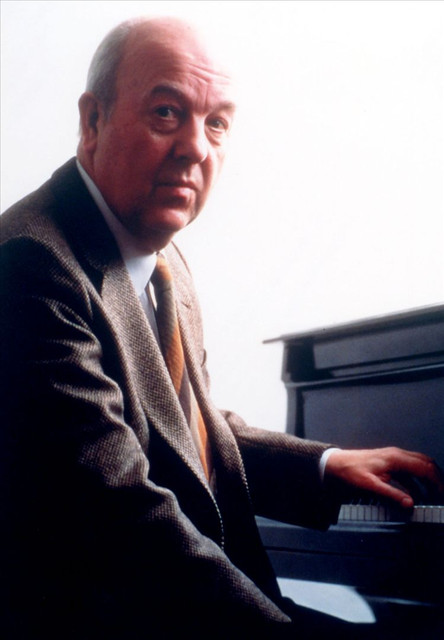
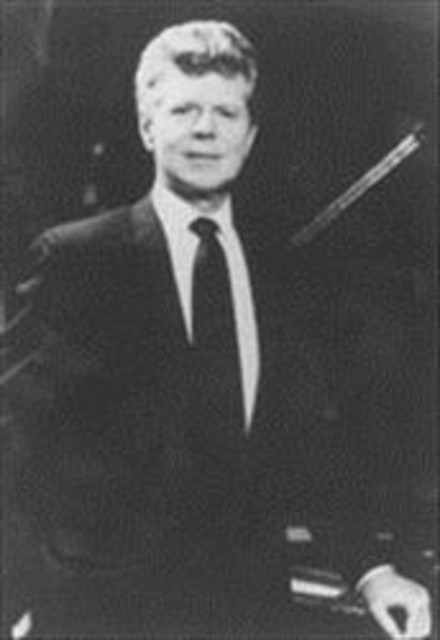
Kairos is a word used by ancient Greek writers to signify "the right point of time...the exact or critical time..." of action, a favorable planetary conjunction, or otherwise. Cliburn's career was an illustration. In the tensest days of the Cold War -- of Civil Defense, air raid sirens, bomb shelters, atomic angst, and the launch of the Soviet satellite Sputnik that put the Russians first into space -- handsome, lanky 6'4", 23-year-old Van Cliburn, with his Southerner's air of innocent modesty and tremendous keyboard technique, in April 1958 carried off the Gold Medal at the International <a href="spotify:artist:3MKCzCnpzw3TjUYs2v7vDA">Tchaikovsky</a> Competition in Moscow with a transcendent performance of <a href="spotify:artist:3MKCzCnpzw3TjUYs2v7vDA">Tchaikovsky</a>'s Piano Concerto No. 1. Timing -- kairos -- and talent combined to make his triumph symbolic, heroic, and permanently memorable; the recording he made of it soon after, with <a href="spotify:artist:1nBRaXFNbBFqcFNeB1AMg2">Kiril Kondrashin</a> conducting the RCA Victor Symphony Orchestra, is warmly glowing with an incomparable magic that has kept his performance competitive with later interpreters decade after decade. But such moments do not happen without preparation. Cliburn's mother, who had studied with <a href="spotify:artist:1385hLNbrnbCJGokfH2ac2">Liszt</a> pupil Arthur Friedheim, was his first teacher. He gave his first recital at 4, played with <a href="spotify:artist:4b1OFVRz9W1m6T5pFtwjGG">the Houston Symphony</a> at 13, and at 14 was heard in Carnegie Hall. Appearances, prizes, and awards followed in a regular spate without amounting to public recognition or a genuine career. At 17 he had begun studies with Rosina Lhévinne at the Juilliard School -- taken with his mother's <a href="spotify:artist:1385hLNbrnbCJGokfH2ac2">Liszt</a>/Friedheim connection, he became an unselfconscious inheritor of the grand Romantic tradition. And it was Rosina Lhévinne who prompted his entrance to the <a href="spotify:artist:3MKCzCnpzw3TjUYs2v7vDA">Tchaikovsky</a> Competition. Following his win, of course, Cliburn enjoyed a major career, and the recordings he made in the succeeding decade possess a large-scale grandeur. He was at his best in Romantic repertoire -- <a href="spotify:artist:1385hLNbrnbCJGokfH2ac2">Liszt</a>, <a href="spotify:artist:7y97mc3bZRFXzT2szRM4L4">Chopin</a>, <a href="spotify:artist:2UqjDAXnDxejEyE0CzfUrZ">Schumann</a>, <a href="spotify:artist:5ihY290YPGc3aY2xTyx7Gy">Grieg</a>, <a href="spotify:artist:3Pw22ANvFqf1RBh5VgHiJ2">MacDowell</a>, <a href="spotify:artist:0Kekt6CKSo0m5mivKcoH51">Rachmaninov</a> -- though his <a href="spotify:artist:4NJhFmfw43RLBLjQvxDuRS">Mozart</a> and Beethoven can seem academic. And with the years, the grand manner devolved into careless mannerism as the public clamored for a reprise of the <a href="spotify:artist:3MKCzCnpzw3TjUYs2v7vDA">Tchaikovsky</a> Concerto No. 1. He founded the Van Cliburn International Piano Competition in Fort Worth, Texas, in 1962, to which he devoted more time than to his own career as a performing artist. His return to the concert scene after a ten-year sabbatical was hardly noticed. In August 2012 it was announced that Cliburn was suffering from advanced bone cancer, and he passed away at home in Fort Worth in February 2013 at the age of 78. But the legend, the peculiar kairos that realized itself through him, remains imperishable.
Monthly Listeners
107,261
Monthly Listeners History
Track the evolution of monthly listeners over the last 28 days.
Followers
9,242
Followers History
Track the evolution of followers over the last 28 days.
Top Cities
1,950 listeners

1,877 listeners

1,105 listeners
1,095 listeners

1,012 listeners

Related Artists

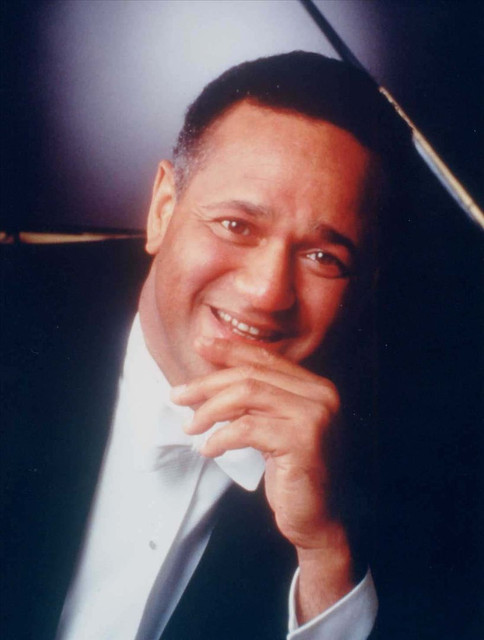
André Watts