Data may be outdated
Last updated: 9 months ago — Click refresh to get the latest statistics.
Jean-Baptiste Forqueray was a bass viol player of extraordinary skill who, with his composer father, left a small but significant body of compositions for the viol. Forqueray was born in Paris on April 3, 1699. His father <a href="spotify:artist:2AzXIw3CD6tKW9HP0ZIoi4">Antoine</a> was also a bass violist whose performing skills, by most accounts, were equal to or greater than his son's. He taught Jean-Baptiste, who learned quickly, astonishing King Louis XIV and his Court when he performed for them at age 5 or 6. Soon <a href="spotify:artist:2AzXIw3CD6tKW9HP0ZIoi4">Antoine</a>, difficult and hot-tempered according to his long-suffering wife, became jealous and resentful of Jean-Baptiste, causing him to be imprisoned briefly in his mid-teens. The younger Forqueray, impoverished by <a href="spotify:artist:2AzXIw3CD6tKW9HP0ZIoi4">Antoine</a>'s neglect, carried on with his concert activity and soon began teaching music. Because of his esteemed reputation, he drew many students of means, among whom was Le Monflambert.
In 1725 <a href="spotify:artist:2AzXIw3CD6tKW9HP0ZIoi4">Antoine Forqueray</a> schemed to have his son expelled from France. Jean-Baptiste lived in exile for about two months, but returned exonerated in February 1726, owing to the efforts of Le Monflambert. He resumed his concert career and soon began developing connections in the highest musical circles in France. Through his 1732 marriage to Jeanne Nolson, Forqueray made the acquaintance of <a href="spotify:artist:4JSWO1Pf2zV991fq64uAce">Rameau</a>, <a href="spotify:artist:4agVy03qW8juSysCTUOuDI">Guignon</a>, and later on of <a href="spotify:artist:2fg5h5pzleqI4RjFopWroj">Telemann</a>, who lavished high praise on Forqueray for his performance skills.
Forqueray's wife died childless in 1740. The composer's fortunes would change, however, over the next several years: he married Marie-Rose Dubois, a well-known harpsichordist, in 1741, and the following year was named Chamber Musician to the King, succeeding his father in this enviable Court post. In 1747 Forqueray's collection Pieces de Viol, containing 32 works, was published. Of these he attributed 29 to his father, though scholars suspect, based on the similar styles of the pieces, that all could be the work (or thorough reworking at least) of the son.
Though Jean-Baptiste held his position at Court until 1779, he gave few concerts from 1760 onward and even performed less at Court after that year, receiving a pension and a change in title: he was now Veteran of the King's music. After his partial retirement, he served as editor of several volumes of Italian musical works and also performed in the service of Prince de Conti until the latter's death in 1776. Suffering paralysis in his last years, Forqueray died in Paris on July 19, 1782.
In 1725 <a href="spotify:artist:2AzXIw3CD6tKW9HP0ZIoi4">Antoine Forqueray</a> schemed to have his son expelled from France. Jean-Baptiste lived in exile for about two months, but returned exonerated in February 1726, owing to the efforts of Le Monflambert. He resumed his concert career and soon began developing connections in the highest musical circles in France. Through his 1732 marriage to Jeanne Nolson, Forqueray made the acquaintance of <a href="spotify:artist:4JSWO1Pf2zV991fq64uAce">Rameau</a>, <a href="spotify:artist:4agVy03qW8juSysCTUOuDI">Guignon</a>, and later on of <a href="spotify:artist:2fg5h5pzleqI4RjFopWroj">Telemann</a>, who lavished high praise on Forqueray for his performance skills.
Forqueray's wife died childless in 1740. The composer's fortunes would change, however, over the next several years: he married Marie-Rose Dubois, a well-known harpsichordist, in 1741, and the following year was named Chamber Musician to the King, succeeding his father in this enviable Court post. In 1747 Forqueray's collection Pieces de Viol, containing 32 works, was published. Of these he attributed 29 to his father, though scholars suspect, based on the similar styles of the pieces, that all could be the work (or thorough reworking at least) of the son.
Though Jean-Baptiste held his position at Court until 1779, he gave few concerts from 1760 onward and even performed less at Court after that year, receiving a pension and a change in title: he was now Veteran of the King's music. After his partial retirement, he served as editor of several volumes of Italian musical works and also performed in the service of Prince de Conti until the latter's death in 1776. Suffering paralysis in his last years, Forqueray died in Paris on July 19, 1782.
Monthly Listeners
2,339
Monthly Listeners History
Track the evolution of monthly listeners over the last 28 days.
Followers
659
Followers History
Track the evolution of followers over the last 28 days.
Top Cities
47 listeners

46 listeners

41 listeners

37 listeners

34 listeners
Related Artists
Giovanni Battista Vitali
Louis de Caix d'Hervelois
Johannes Schenck
Jonathan Dunford
Christopher Simpson
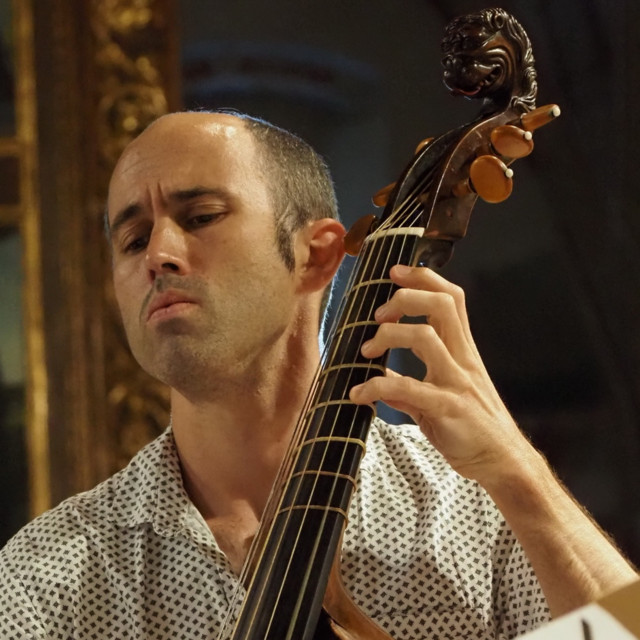
Robert Smith

Nicolas Hotman
August Kuhnel

Dolci Accenti

Susie Napper

Alfonso Ferrabosco the Younger
Pierre Trocellier
Jacques Champion de Chambonnières
Move Records
Les Voix Humaines
Pere Ros

Dietrich Becker
Antonio Bertali
Tragicomedia
Jörg-Andreas Bötticher
Fuoco e Cenere
Petr Hejny
Giovanni Battista Fontana
Francesco Tomei
William Lawes
Le Sieur De Machy
Andreas Arend
Rodney Prada

Ronald Martin Alonso

Jakob David Rattinger
Bartolomé de Selma y Selaverde

Marthe Perl
Orazio Bassani
Mikko Perkola

Sylvia Abramowicz