Data may be outdated
Last updated: 9 months ago — Click refresh to get the latest statistics.
Although born and trained in Italy, Lamberto Gardelli underwent his most crucial development during the ten years he spent as resident conductor of the Swedish Royal Opera in Stockholm. His work there from 1946 to 1955 coincided with the emergence of several singers who went on to international careers and focused on the Italian repertory for which he achieved his greatest celebrity. Although he failed to achieve the superstar level, he was a conscientious and often galvanizing master of the podium. While his American appearances were far fewer in number than those in Europe, his reputation was secured by his many recordings, all of which reflected his stylish and thorough approach to opera. He was also a notable symphonic conductor, albeit one whose concert appearances took second place to his work in the opera house.
After studying at Pesaro's Liceo Musicale Rossini and further training in Rome, Gardelli was chosen by <a href="spotify:artist:3UYZxxxrntUxxEeRycqHvq">Tullio Serafin</a> to be his assistant in the Eternal City. Gardelli's 1944 conducting debut was made in Rome at the Teatro Reale dell'Opera in <a href="spotify:artist:1JOQXgYdQV2yfrhewqx96o">Verdi</a>'s La Traviata. Following other successes in his native country, Gardelli was appointed resident in Stockholm, remaining there until 1955. From 1955 to 1961, he was engaged by the <a href="spotify:artist:1Mf0FQR3CPcg6nAd710cAG">Danish State Radio Symphony</a> where he polished his acquaintance with the symphonic repertory. Gardelli's next appointment was with the Budapest Opera where he continued to conduct for more than three decades. Through this relationship, he came to make a number of recordings, many of them of works in the Italian repertory utilizing casts mixing Hungarian and Italian artists. Under his guidance, a number of Hungarian singers grew into stylistically informed <a href="spotify:artist:1JOQXgYdQV2yfrhewqx96o">Verdi</a> performers.
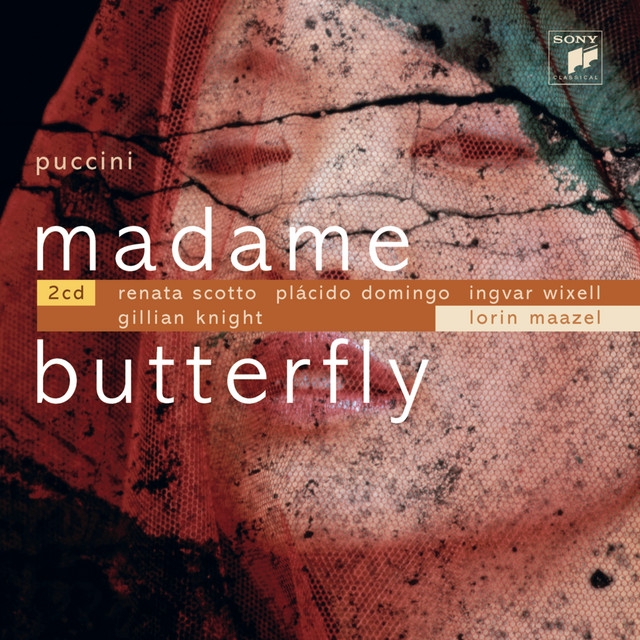
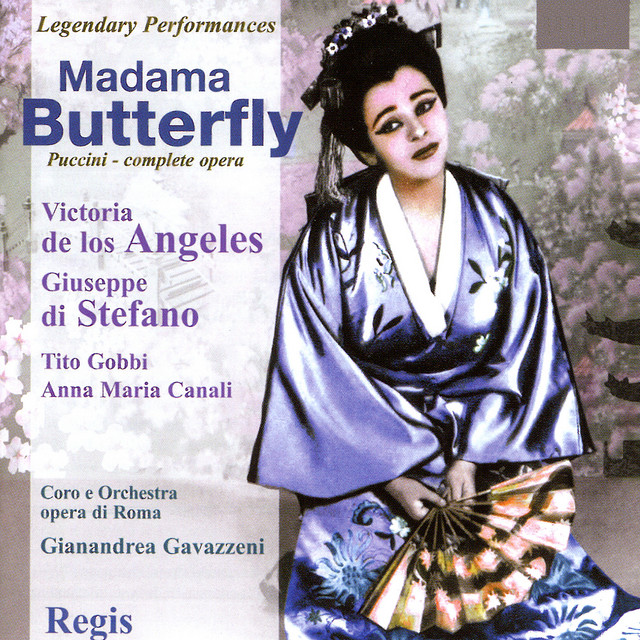
Gardelli made his American debut conducting a concert performance of I Capuleti e i Montecchi at Carnegie Hall. As a result of the positive impression he made there, he was engaged by the <a href="spotify:artist:5wn7ofJrDNHlKovbljawzS">Metropolitan Opera</a> for the 1965-1966 season, making his first appearance on January 30, 1966, leading Andrea Chénier. A Madama Butterfly the following year, though well enough conducted, was all the Metropolitan had to offer that fitted Gardelli's schedule; he thereafter concentrated on work in Europe.
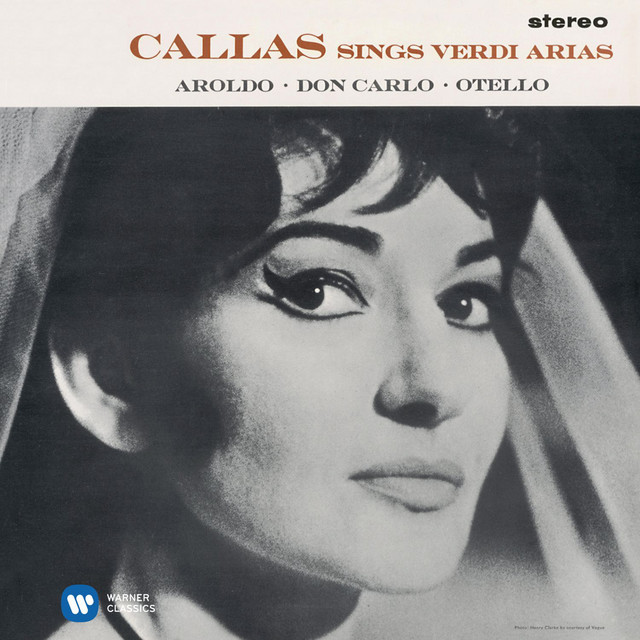
England also heard Gardelli for the first time in 1964 when he led <a href="spotify:artist:1JOQXgYdQV2yfrhewqx96o">Verdi</a>'s Macbeth in a Glyndebourne production. Gardelli's first opera at Covent Garden in 1969 was another <a href="spotify:artist:1JOQXgYdQV2yfrhewqx96o">Verdi</a> title, Otello, shaped with both fire and attention to detail. The conductor became a favored presence in England and his reliability led to his being called upon often to lead recordings. Eventually, his discography grew to encompass such <a href="spotify:artist:1JOQXgYdQV2yfrhewqx96o">Verdi</a> works as Nabucco, I Lombardi, Macbeth, and La forza del destino. His recording of <a href="spotify:artist:0roWUeP7Ac4yK4VN6L2gF4">Rossini</a>'s Guillaume Tell (in French) drew together a strong cast and balanced dramatic force with elegance of expression, both vocally and orchestrally. Gardelli's association with the Hungarian company <a href="spotify:search:label%3A%22Hungaroton%22">Hungaroton</a> resulted in important recordings of operas by <a href="spotify:artist:7KkUirCiJZhgRN3NbgG98L">Respighi</a>, including Belfagor (from 1922), Egiziaca (1931), and La fiamma (1934).
In addition to his podium work, Gardelli was a composer whose oeuvre included symphonic works, lyric pieces, and five operas, the final three of which are portions of a trilogy. Two operas, Alba novella and L'Etrusco, were written in the 1930s. Of the trilogy -- Il sogno (1942), L'impresario delle Americhe (1959), and Il demonio (1971) -- only the second named was performed during Gardelli's lifetime. It was given a broadcast production for Budapest Television in 1982.
After studying at Pesaro's Liceo Musicale Rossini and further training in Rome, Gardelli was chosen by <a href="spotify:artist:3UYZxxxrntUxxEeRycqHvq">Tullio Serafin</a> to be his assistant in the Eternal City. Gardelli's 1944 conducting debut was made in Rome at the Teatro Reale dell'Opera in <a href="spotify:artist:1JOQXgYdQV2yfrhewqx96o">Verdi</a>'s La Traviata. Following other successes in his native country, Gardelli was appointed resident in Stockholm, remaining there until 1955. From 1955 to 1961, he was engaged by the <a href="spotify:artist:1Mf0FQR3CPcg6nAd710cAG">Danish State Radio Symphony</a> where he polished his acquaintance with the symphonic repertory. Gardelli's next appointment was with the Budapest Opera where he continued to conduct for more than three decades. Through this relationship, he came to make a number of recordings, many of them of works in the Italian repertory utilizing casts mixing Hungarian and Italian artists. Under his guidance, a number of Hungarian singers grew into stylistically informed <a href="spotify:artist:1JOQXgYdQV2yfrhewqx96o">Verdi</a> performers.
Gardelli made his American debut conducting a concert performance of I Capuleti e i Montecchi at Carnegie Hall. As a result of the positive impression he made there, he was engaged by the <a href="spotify:artist:5wn7ofJrDNHlKovbljawzS">Metropolitan Opera</a> for the 1965-1966 season, making his first appearance on January 30, 1966, leading Andrea Chénier. A Madama Butterfly the following year, though well enough conducted, was all the Metropolitan had to offer that fitted Gardelli's schedule; he thereafter concentrated on work in Europe.
England also heard Gardelli for the first time in 1964 when he led <a href="spotify:artist:1JOQXgYdQV2yfrhewqx96o">Verdi</a>'s Macbeth in a Glyndebourne production. Gardelli's first opera at Covent Garden in 1969 was another <a href="spotify:artist:1JOQXgYdQV2yfrhewqx96o">Verdi</a> title, Otello, shaped with both fire and attention to detail. The conductor became a favored presence in England and his reliability led to his being called upon often to lead recordings. Eventually, his discography grew to encompass such <a href="spotify:artist:1JOQXgYdQV2yfrhewqx96o">Verdi</a> works as Nabucco, I Lombardi, Macbeth, and La forza del destino. His recording of <a href="spotify:artist:0roWUeP7Ac4yK4VN6L2gF4">Rossini</a>'s Guillaume Tell (in French) drew together a strong cast and balanced dramatic force with elegance of expression, both vocally and orchestrally. Gardelli's association with the Hungarian company <a href="spotify:search:label%3A%22Hungaroton%22">Hungaroton</a> resulted in important recordings of operas by <a href="spotify:artist:7KkUirCiJZhgRN3NbgG98L">Respighi</a>, including Belfagor (from 1922), Egiziaca (1931), and La fiamma (1934).
In addition to his podium work, Gardelli was a composer whose oeuvre included symphonic works, lyric pieces, and five operas, the final three of which are portions of a trilogy. Two operas, Alba novella and L'Etrusco, were written in the 1930s. Of the trilogy -- Il sogno (1942), L'impresario delle Americhe (1959), and Il demonio (1971) -- only the second named was performed during Gardelli's lifetime. It was given a broadcast production for Budapest Television in 1982.
Monthly Listeners
57,524
Monthly Listeners History
Track the evolution of monthly listeners over the last 28 days.
Followers
743
Followers History
Track the evolution of followers over the last 28 days.
Top Cities
1,585 listeners
1,545 listeners

945 listeners
886 listeners

810 listeners