Data may be outdated
Last updated: 9 months ago — Click refresh to get the latest statistics.
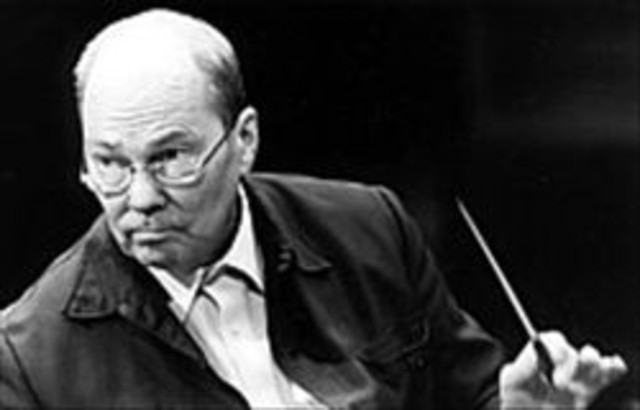
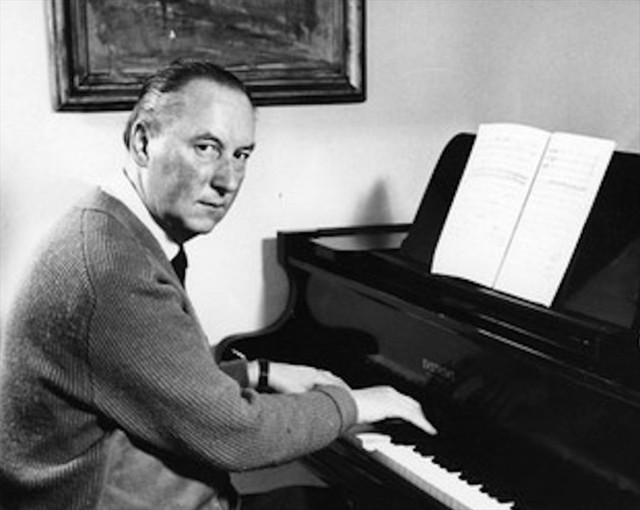
It would be hard to imagine a busier professional life than that of Lars-Erik Larsson, whose activities in composition, education, and broadcasting were a cornerstone of Swedish musical life in the twentieth century. Curiously, Larsson never settled on a single style of composition, switching easily among different approaches at various points in his life.
Larsson was born in 1908 in Akarp. Studies in organ, composition, and conducting culminated in a series of youthful works that highlighted him as a composer worth watching. En spelmans jordafaerd for violin and piano (1928) and the Symphony No. 1 (1927-1928) were written in an attractive Nordic style reminiscent of <a href="spotify:artist:7jzR5qj8vFnSu5JHaXgFEr">Sibelius</a>, and they garnered not only public and professional appreciation, but also a state composer's grant which allowed him to study with <a href="spotify:artist:60ju8DuNEmkdLw3ymddLje">Alban Berg</a> in Vienna and Fritz Reuter in Leipzig in 1929-30. Upon his return to Sweden, Larsson earned his daily bread teaching in Malmö and Lund, writing music criticism for the Lund Dagblad and coaching at the Royal Theatre in Stockholm.
Larsson's year on the Continent alerted him to some of the recent developments in music. These were reflected in works written after his return, such as the Ten Two-Part Piano Pieces of 1932, which contained the first 12-tone music written in Sweden; but it was a bracing, somewhat athletic brand of neo-Classicism that blossomed most fully in Larsson's works, beginning with the Sinfonietta, which was premiered to acclaim at the 1934 ISCM Festival. Other works in this style followed, including the Little Serenade for Strings (1934), the Concert Overture No. 2 (1934), the Divertimento No. 2 (1935), and the Piano Sonatina (1936). More adventurous but less immediately successful were Larsson's Symphony No. 2 (1937) and his opera Princessen av Cypern (The Princess from Cyprus; 1930-1937), both of which were withdrawn shortly after their premieres (the Symphony No. 2 was revised in the 1960s and has since re-entered the repertoire).
In 1937, Larsson began his fruitful association with Swedish radio, composing, conducting, and producing programs for broadcast and thereby influencing the musical tastes of thousands of Swedish listeners. One of his most interesting innovations from this association was the "lyrical suite," which he developed with Hjalmar Gullberg and Pontus Boman. In such works as Dagens stunder (1938), Larsson and his collaborators combined music and poetic recitation in a new and interesting way that was quite different from the old nineteenth century melodramas. During this period Larsson also composed music for films and theater; and when the Second World War broke out, he wrote the Obligationsmarschen, which in a Norwegian version was taken up as music of inspiration by the Norwegian resistance movement.
After World War II, Larsson embarked on another important musical mission as administrator of Sweden's state-run amateur orchestras, for which he wrote 12 attractive Concertinos, Op. 45. These works, with solo parts for all the major string instruments, as well as the major wind instruments and piano, were written for players of moderate ability. It's interesting to note that the Concertinos are more than a little reminiscent of another "practical musician" -- <a href="spotify:artist:3u1fWmwpwPOmMelTAo0Gb8">Paul Hindemith</a>.
At the end of his life, Larsson ventured into distant stylistic realms with a handful of works written in a highly individual version of serialism, in which clusters of notes, or "interval piles," are arranged in groups. These serious and austere works were nevertheless written cheek-by-jowl with some of his most accessible and romantic music. Larsson died in 1986, having retired from his astonishingly busy career 10 years earlier.
Larsson was born in 1908 in Akarp. Studies in organ, composition, and conducting culminated in a series of youthful works that highlighted him as a composer worth watching. En spelmans jordafaerd for violin and piano (1928) and the Symphony No. 1 (1927-1928) were written in an attractive Nordic style reminiscent of <a href="spotify:artist:7jzR5qj8vFnSu5JHaXgFEr">Sibelius</a>, and they garnered not only public and professional appreciation, but also a state composer's grant which allowed him to study with <a href="spotify:artist:60ju8DuNEmkdLw3ymddLje">Alban Berg</a> in Vienna and Fritz Reuter in Leipzig in 1929-30. Upon his return to Sweden, Larsson earned his daily bread teaching in Malmö and Lund, writing music criticism for the Lund Dagblad and coaching at the Royal Theatre in Stockholm.
Larsson's year on the Continent alerted him to some of the recent developments in music. These were reflected in works written after his return, such as the Ten Two-Part Piano Pieces of 1932, which contained the first 12-tone music written in Sweden; but it was a bracing, somewhat athletic brand of neo-Classicism that blossomed most fully in Larsson's works, beginning with the Sinfonietta, which was premiered to acclaim at the 1934 ISCM Festival. Other works in this style followed, including the Little Serenade for Strings (1934), the Concert Overture No. 2 (1934), the Divertimento No. 2 (1935), and the Piano Sonatina (1936). More adventurous but less immediately successful were Larsson's Symphony No. 2 (1937) and his opera Princessen av Cypern (The Princess from Cyprus; 1930-1937), both of which were withdrawn shortly after their premieres (the Symphony No. 2 was revised in the 1960s and has since re-entered the repertoire).
In 1937, Larsson began his fruitful association with Swedish radio, composing, conducting, and producing programs for broadcast and thereby influencing the musical tastes of thousands of Swedish listeners. One of his most interesting innovations from this association was the "lyrical suite," which he developed with Hjalmar Gullberg and Pontus Boman. In such works as Dagens stunder (1938), Larsson and his collaborators combined music and poetic recitation in a new and interesting way that was quite different from the old nineteenth century melodramas. During this period Larsson also composed music for films and theater; and when the Second World War broke out, he wrote the Obligationsmarschen, which in a Norwegian version was taken up as music of inspiration by the Norwegian resistance movement.
After World War II, Larsson embarked on another important musical mission as administrator of Sweden's state-run amateur orchestras, for which he wrote 12 attractive Concertinos, Op. 45. These works, with solo parts for all the major string instruments, as well as the major wind instruments and piano, were written for players of moderate ability. It's interesting to note that the Concertinos are more than a little reminiscent of another "practical musician" -- <a href="spotify:artist:3u1fWmwpwPOmMelTAo0Gb8">Paul Hindemith</a>.
At the end of his life, Larsson ventured into distant stylistic realms with a handful of works written in a highly individual version of serialism, in which clusters of notes, or "interval piles," are arranged in groups. These serious and austere works were nevertheless written cheek-by-jowl with some of his most accessible and romantic music. Larsson died in 1986, having retired from his astonishingly busy career 10 years earlier.
Monthly Listeners
43,220
Monthly Listeners History
Track the evolution of monthly listeners over the last 28 days.
Followers
2,766
Followers History
Track the evolution of followers over the last 28 days.
Top Cities
2,513 listeners

1,288 listeners

1,264 listeners
814 listeners

791 listeners
Related Artists

Stockholm Radio Orchestra

Oskar Lindberg

Niklas Sivelov

Geirr Tveitt

Trondheim Symphony Orchestra
August Söderman
Kork


Karin Ingeback

Niels Wilhelm Gade

Fredrik Sixten
Turku Philharmonic Orchestra
Hilding Rosenberg

Erkki Melartin
South Jutland Symphony Orchestra


Harald Sæverud
Mark Levengood
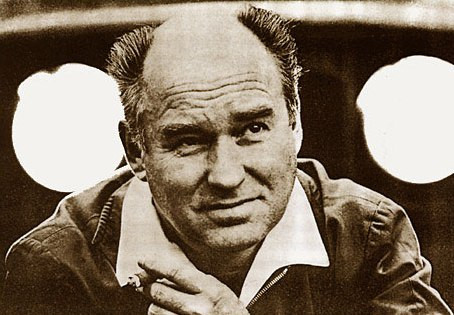
Anna Larsson