Data may be outdated
Last updated: 9 months ago — Click refresh to get the latest statistics.
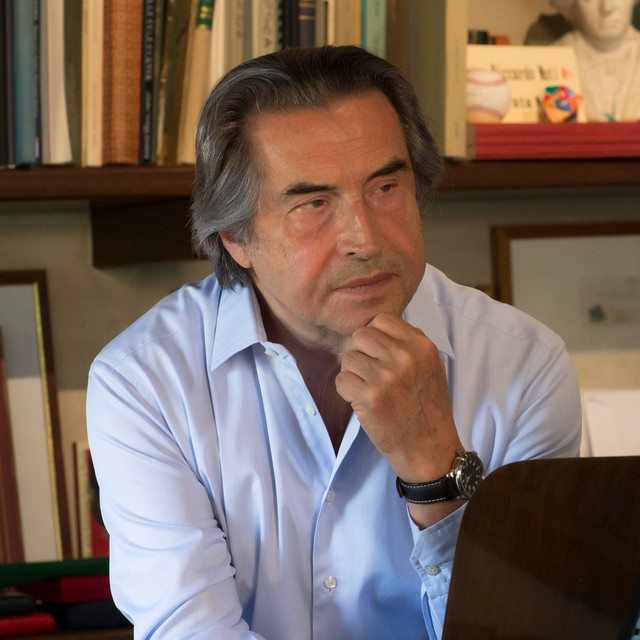
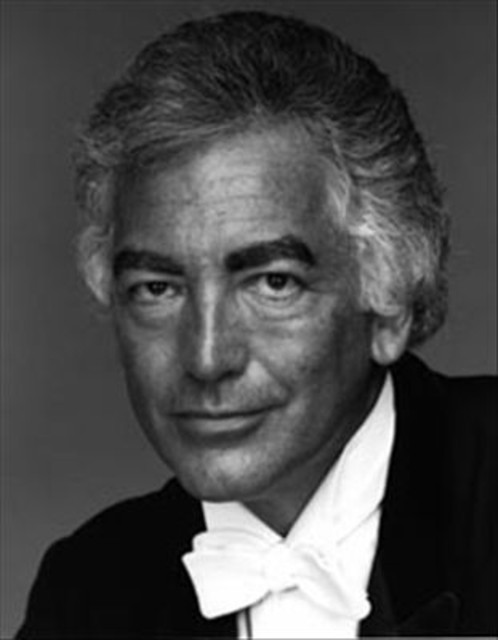
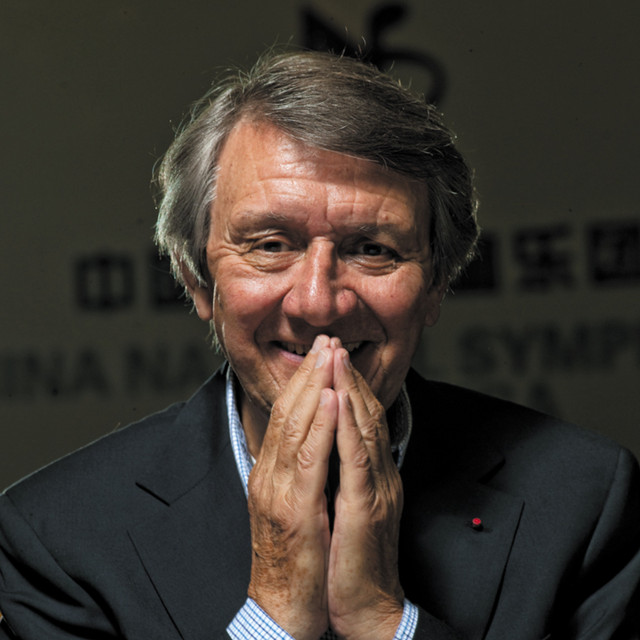
Michel Plasson is one of the most important French conductors from the later twentieth and early twenty-first centuries. He is well known for his interpretations of French opera, particularly those of <a href="spotify:artist:42Vmza0WYHdhsgxFmf9Tui">Gounod</a> and <a href="spotify:artist:1AoIc5YFH0aSFc4mKqBEeB">Massenet</a>. He has also received praise for his work in the choral music of <a href="spotify:artist:7Fph7U6qidZ2E97xKKsD4m">Duruflé</a> and Fauré, and the orchestral works of <a href="spotify:artist:6vXWehXddAhqxqCAbUeQYa">Magnard</a>, <a href="spotify:artist:17hR0sYHpx7VYTMRfFUOmY">Ravel</a>, and other French composers. He has not, however, limited himself to the French repertory, having conducted (and recorded) the <a href="spotify:artist:0Kekt6CKSo0m5mivKcoH51">Rachmaninov</a> piano concertos with soloist <a href="spotify:artist:3bLTVhgwYcsH54wmhf31Nd">Jean-Philippe Collard</a>, the <a href="spotify:artist:5wTAi7QkpP6kp8a54lmTOq">Brahms</a> Schicksalslied, and works by <a href="spotify:artist:1C1x4MVkql8AiABuTw6DgE">Wagner</a> and <a href="spotify:artist:1JOQXgYdQV2yfrhewqx96o">Verdi</a>.
Plasson was born into a family of musicians. He showed unusual talent on piano as a child and took lessons from Lazare Lévy. He later enrolled at the Paris Conservatory, where he studied composition and percussion. In 1962, he received first prize in conducting at Besançon, then, at the suggestion of <a href="spotify:artist:2RKnompMfdeZsyis6Gs4ce">Charles Münch</a>, traveled to the United States to study conducting for the next several years with <a href="spotify:artist:4WAWF88jefCusmHVGL0qem">Erich Leinsdorf</a>, <a href="spotify:artist:5fL4LVKRLKkyN1Xalpt0xx">Pierre Monteux</a>, and <a href="spotify:artist:52sDxFX9DvIxUupTy8f1yx">Leopold Stokowski</a>.
Plasson's first major appointment came in 1966 when he was engaged to become musical director at Metz, a post he held for two years. In 1968, he accepted the dual conducting assignments of director of the orchestra and of the Théâtre du Capitole de Toulouse. In 1974, Plasson initiated a refurbishing effort on the Halle aux Grains, increasing its seating capacity to 3,000; upon completion of the project in 1977, he moved his orchestral operations there. Fidelio was the first important opera he conducted in the new hall. In 1979, he debuted at Covent Garden to critical acclaim and by the early 1980s had developed a concert schedule laden with so many guest appearances that in 1983 he had to resign his post as director of the Théâtre du Capitole de Toulouse, although he retained the orchestral directorship there. This move in no way signaled a reduced focus on opera by Plasson: in 1985, for example, he performed <a href="spotify:artist:0OzxPXyowUEQ532c9AmHUR">Puccini</a>'s Turandot to great acclaim and the following year, the <a href="spotify:artist:1JOQXgYdQV2yfrhewqx96o">Verdi</a> Requiem, which he went on to record for EMI with his Toulouse ensemble and a quartet of soloists led by <a href="spotify:artist:75dN1x42c0LtoRuBOz2huI">Julia Varady</a>. In 1987, Plasson took on another conducting post, that of principal guest conductor of the <a href="spotify:artist:6XB7gCSvNN5AkoAhEFv7Cg">Zurich Tonhalle Orchestra</a>. Then in 1994, he accepted the position as music director of the <a href="spotify:artist:03C9IJtseK0NX9zw53URjF">Dresden Philharmonic Orchestra</a>, which he concurrently held with his music directorship in Toulouse. All through the 1990s, his recording activity remained intense, especially in his <a href="spotify:artist:1AoIc5YFH0aSFc4mKqBEeB">Massenet</a> series of operas. In 1999, he left the <a href="spotify:artist:03C9IJtseK0NX9zw53URjF">Dresden Philharmonic</a>, but retained his long-held French post. Up until his retirement In 2003, Plasson made numerous guest conducting appearances with various European and American orchestras, in addition to conducting at the world's most prominent opera houses, including the Met, the Chicago Lyric Opera, Covent Garden, and many others. Plasson has made about 50 recordings for EMI and a fair number for other labels as well. With his retirement, Plasson finally relinquished his long held post as music director of the Orchestre Capitole de Toulouse, but remains its Honorary Conductor.
Plasson was born into a family of musicians. He showed unusual talent on piano as a child and took lessons from Lazare Lévy. He later enrolled at the Paris Conservatory, where he studied composition and percussion. In 1962, he received first prize in conducting at Besançon, then, at the suggestion of <a href="spotify:artist:2RKnompMfdeZsyis6Gs4ce">Charles Münch</a>, traveled to the United States to study conducting for the next several years with <a href="spotify:artist:4WAWF88jefCusmHVGL0qem">Erich Leinsdorf</a>, <a href="spotify:artist:5fL4LVKRLKkyN1Xalpt0xx">Pierre Monteux</a>, and <a href="spotify:artist:52sDxFX9DvIxUupTy8f1yx">Leopold Stokowski</a>.
Plasson's first major appointment came in 1966 when he was engaged to become musical director at Metz, a post he held for two years. In 1968, he accepted the dual conducting assignments of director of the orchestra and of the Théâtre du Capitole de Toulouse. In 1974, Plasson initiated a refurbishing effort on the Halle aux Grains, increasing its seating capacity to 3,000; upon completion of the project in 1977, he moved his orchestral operations there. Fidelio was the first important opera he conducted in the new hall. In 1979, he debuted at Covent Garden to critical acclaim and by the early 1980s had developed a concert schedule laden with so many guest appearances that in 1983 he had to resign his post as director of the Théâtre du Capitole de Toulouse, although he retained the orchestral directorship there. This move in no way signaled a reduced focus on opera by Plasson: in 1985, for example, he performed <a href="spotify:artist:0OzxPXyowUEQ532c9AmHUR">Puccini</a>'s Turandot to great acclaim and the following year, the <a href="spotify:artist:1JOQXgYdQV2yfrhewqx96o">Verdi</a> Requiem, which he went on to record for EMI with his Toulouse ensemble and a quartet of soloists led by <a href="spotify:artist:75dN1x42c0LtoRuBOz2huI">Julia Varady</a>. In 1987, Plasson took on another conducting post, that of principal guest conductor of the <a href="spotify:artist:6XB7gCSvNN5AkoAhEFv7Cg">Zurich Tonhalle Orchestra</a>. Then in 1994, he accepted the position as music director of the <a href="spotify:artist:03C9IJtseK0NX9zw53URjF">Dresden Philharmonic Orchestra</a>, which he concurrently held with his music directorship in Toulouse. All through the 1990s, his recording activity remained intense, especially in his <a href="spotify:artist:1AoIc5YFH0aSFc4mKqBEeB">Massenet</a> series of operas. In 1999, he left the <a href="spotify:artist:03C9IJtseK0NX9zw53URjF">Dresden Philharmonic</a>, but retained his long-held French post. Up until his retirement In 2003, Plasson made numerous guest conducting appearances with various European and American orchestras, in addition to conducting at the world's most prominent opera houses, including the Met, the Chicago Lyric Opera, Covent Garden, and many others. Plasson has made about 50 recordings for EMI and a fair number for other labels as well. With his retirement, Plasson finally relinquished his long held post as music director of the Orchestre Capitole de Toulouse, but remains its Honorary Conductor.
Monthly Listeners
571,129
Monthly Listeners History
Track the evolution of monthly listeners over the last 28 days.
Followers
6,517
Followers History
Track the evolution of followers over the last 28 days.
Top Cities
14,566 listeners

9,062 listeners

7,366 listeners

6,632 listeners

5,882 listeners