Data may be outdated
Last updated: 9 months ago — Click refresh to get the latest statistics.
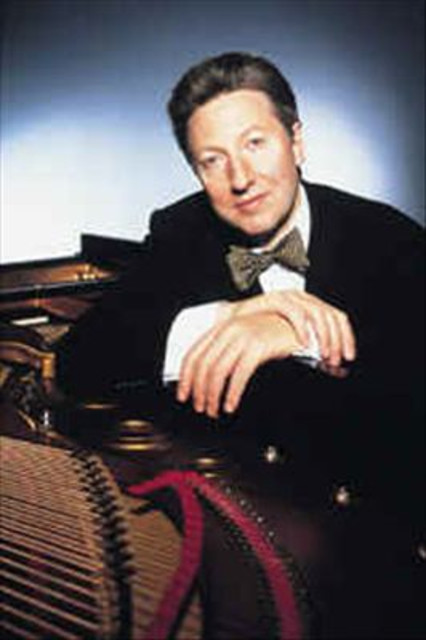
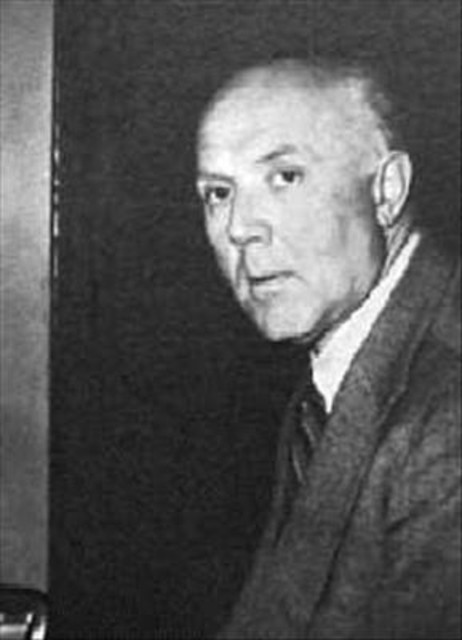
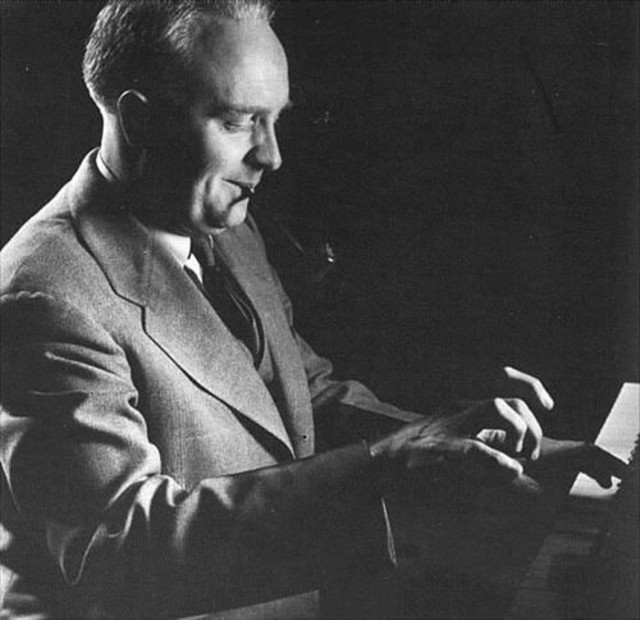
Walter Gieseking was a German pianist known for his sensitivity and control of tone, color, and dynamics. His recordings of <a href="spotify:artist:1Uff91EOsvd99rtAupatMP">Debussy</a> and <a href="spotify:artist:17hR0sYHpx7VYTMRfFUOmY">Ravel</a> remain an important legacy. He was born in Lyon, France in 1895, and his father was a respected doctor and entomologist. Gieseking started playing the piano when he was four years old and made remarkable progress, especially considering that he was largely self-taught. At the age of 16 he began his first formal piano instruction with Karl Leimer at the Hanover Conservatory. Until then he had received a private education, as he constantly traveled France and Italy with his family throughout his childhood. In 1915, he performed nearly all of Beethoven's piano sonatas in a series of recitals in Hanover. The following year, he was drafted into the German army where he served in the regimental band until the end of World War I in 1918. After completing his military service, he worked as an accompanist, vocal coach, and performed in chamber ensembles. He also resumed his career as a recitalist in 1920, with a debut performance in Berlin that proved to be massively successful. By popular demand, he performed a series of seven additional recitals of <a href="spotify:artist:1Uff91EOsvd99rtAupatMP">Debussy</a>, <a href="spotify:artist:17hR0sYHpx7VYTMRfFUOmY">Ravel</a>, and also newer, lesser-known works by <a href="spotify:artist:3u1fWmwpwPOmMelTAo0Gb8">Hindemith</a>, <a href="spotify:artist:3WLh1Qe8WgEBbb2QJWYYal">Szymanowski</a>, and <a href="spotify:artist:5U827e4jbYz6EjtN0fIDt9">Schoenberg</a>. He performed the premiere of <a href="spotify:artist:5fKj8IWs9IV1F2xerI6SGD">Hans Pfitzner</a>'s Piano Concerto in London with conductor <a href="spotify:artist:7LReuqZQAgSitgcqJFIRBu">Fritz Busch</a> in 1923, and in 1926 he debuted in the United States at the Aeolian Hall in New York. Gieseking enjoyed a very prosperous career as a recitalist and soloist throughout Europe and the U.S. until the second World War, when he was accused of being a Nazi sympathizer and was temporarily blacklisted. However he still managed to perform in South America, Japan, and Europe. He was eventually cleared of the accusations, restoring both his political reputation and his career in the U.S., which resumed in 1953 with a recital at Carnegie Hall. This marked a high point in his career that continued until he passed away in 1956. In addition to a busy schedule of performing, Gieseking also recorded a vast repertoire consisting of the complete solo piano music of <a href="spotify:artist:4NJhFmfw43RLBLjQvxDuRS">Mozart</a> and <a href="spotify:artist:1Uff91EOsvd99rtAupatMP">Debussy</a>, and a large selection by <a href="spotify:artist:17hR0sYHpx7VYTMRfFUOmY">Ravel</a>. He started to record all 32 piano sonatas by Beethoven, but was unable to finish before his unexpected death. ~ RJ Lambert, Rovi
Monthly Listeners
53,280
Monthly Listeners History
Track the evolution of monthly listeners over the last 28 days.
Followers
12,798
Followers History
Track the evolution of followers over the last 28 days.
Top Cities
1,027 listeners

673 listeners

660 listeners

618 listeners

529 listeners

Related Artists
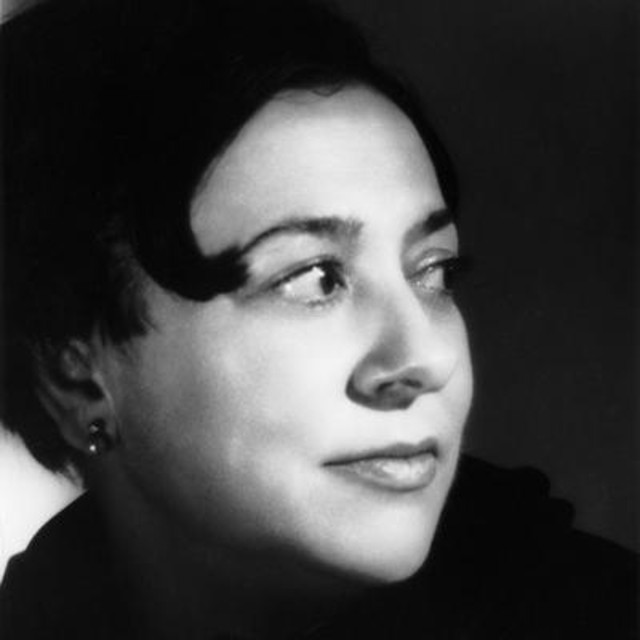


Marcelle Meyer
Harold Bauer
Danielle Laval


Gianluca Luisi

Mieczysław Horszowski
Ragna Schirmer
Myra Hess
Sigismond Thalberg

Chiyan Wong