Data may be outdated
Last updated: 9 months ago — Click refresh to get the latest statistics.
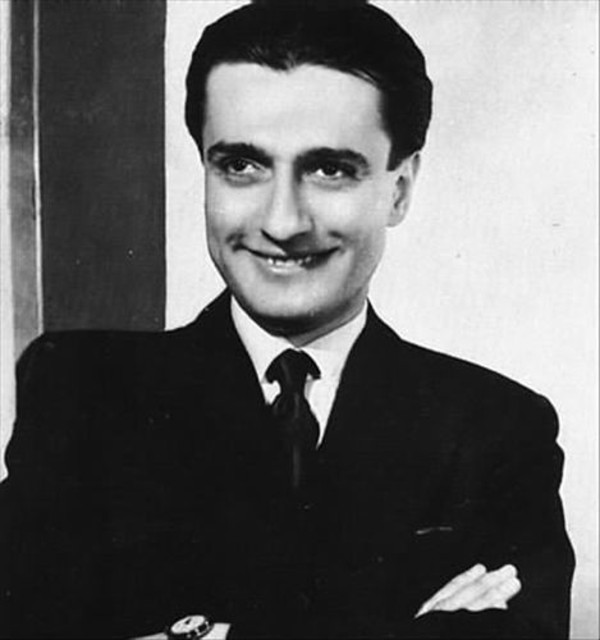
Dinu Lipatti is regarded as a legend among 20th century pianists. <a href="spotify:artist:050gdJliIBXy99gPLsmHiy">Alfred Cortot</a> thought Lipatti's playing "perfection," while <a href="spotify:artist:4HNzRQlaUVSYkQcBvrDJV9">Clara Haskil</a> once wrote to him, "How I envy your talent. The devil take it. Why must you have so much talent and I so little? Is this justice on earth?" Was it justice that such a talented musician had such a short life?
Both Lipatti's parents were musicians: his father was a violinist who had studied with <a href="spotify:artist:3L1iFJfRzE7yzilr2yGl6t">Sarasate</a> and Flesch, his mother a pianist. They, and Lipatti's godfather <a href="spotify:artist:7KKscZTeDLz1g0QthWCMQV">Georges Enescu</a>, nurtured his talents early. Lipatti attended the Bucharest Conservatory, working with Florica Musicescu from 1928 to 1932. <a href="spotify:artist:050gdJliIBXy99gPLsmHiy">Cortot</a> was one of the judges at the 1934 Vienna International Piano Competition, where Lipatti was awarded second prize. <a href="spotify:artist:050gdJliIBXy99gPLsmHiy">Cortot</a>, who thought Lipatti should have won first prize, resigned from the jury and took Lipatti to Paris to study with him and his assistant, <a href="spotify:artist:4ULCpG28KdHVvwdmqdp7Zs">Yvonne Lefébure</a>. Lipatti also studied conducting with <a href="spotify:artist:2RKnompMfdeZsyis6Gs4ce">Charles Münch</a> and composition with <a href="spotify:artist:1vfC2bld90kx966JTCSwf7">Nadia Boulanger</a> and <a href="spotify:artist:3KpcdlqCaWWruPfmM2rWy1">Paul Dukas</a>. Lipatti recitals and concerts in Paris in the late '30s secured his reputation as a performer. He was known for his self-discipline and thoroughness, taking years to learn a concerto before performing it in public. Those who heard him play assumed that either he had studied the music with a composer's eye or he instinctively knew how to make whatever he played sound so obviously what the composer intended, whether it was <a href="spotify:artist:5aIqB5nVVvmFsvSdExz408">Bach</a> or <a href="spotify:artist:2p0UyoPfYfI76PCStuXfOP">Schubert</a> or <a href="spotify:artist:17hR0sYHpx7VYTMRfFUOmY">Ravel</a>. He returned to Bucharest in 1939 to spend the war years teaching, composing, and writing criticism. Just before the end of the war, he was diagnosed with a rare form of leukemia. His illness was relieved somewhat by new medicines in 1946, enough for him to make recordings for <a href="spotify:search:label%3A%22Columbia%22">Columbia</a> at his home in Geneva. He took a post teaching at the Geneva Conservatory in 1949 and also recorded the <a href="spotify:artist:2UqjDAXnDxejEyE0CzfUrZ">Schumann</a> Piano Concerto with <a href="spotify:artist:5zCaQxjl110XTrm4LQ1CxY">Herbert von Karajan</a> in London. The next year, however, he had to cancel tours of Australia and North and South America and cut back his European performance engagements. Just three months before his death at the age of 33, he gave one last recital in Besançon, fortunately recorded for posterity, his playing still unsurpassed despite his illness. ~ Patsy Morita, Rovi
Both Lipatti's parents were musicians: his father was a violinist who had studied with <a href="spotify:artist:3L1iFJfRzE7yzilr2yGl6t">Sarasate</a> and Flesch, his mother a pianist. They, and Lipatti's godfather <a href="spotify:artist:7KKscZTeDLz1g0QthWCMQV">Georges Enescu</a>, nurtured his talents early. Lipatti attended the Bucharest Conservatory, working with Florica Musicescu from 1928 to 1932. <a href="spotify:artist:050gdJliIBXy99gPLsmHiy">Cortot</a> was one of the judges at the 1934 Vienna International Piano Competition, where Lipatti was awarded second prize. <a href="spotify:artist:050gdJliIBXy99gPLsmHiy">Cortot</a>, who thought Lipatti should have won first prize, resigned from the jury and took Lipatti to Paris to study with him and his assistant, <a href="spotify:artist:4ULCpG28KdHVvwdmqdp7Zs">Yvonne Lefébure</a>. Lipatti also studied conducting with <a href="spotify:artist:2RKnompMfdeZsyis6Gs4ce">Charles Münch</a> and composition with <a href="spotify:artist:1vfC2bld90kx966JTCSwf7">Nadia Boulanger</a> and <a href="spotify:artist:3KpcdlqCaWWruPfmM2rWy1">Paul Dukas</a>. Lipatti recitals and concerts in Paris in the late '30s secured his reputation as a performer. He was known for his self-discipline and thoroughness, taking years to learn a concerto before performing it in public. Those who heard him play assumed that either he had studied the music with a composer's eye or he instinctively knew how to make whatever he played sound so obviously what the composer intended, whether it was <a href="spotify:artist:5aIqB5nVVvmFsvSdExz408">Bach</a> or <a href="spotify:artist:2p0UyoPfYfI76PCStuXfOP">Schubert</a> or <a href="spotify:artist:17hR0sYHpx7VYTMRfFUOmY">Ravel</a>. He returned to Bucharest in 1939 to spend the war years teaching, composing, and writing criticism. Just before the end of the war, he was diagnosed with a rare form of leukemia. His illness was relieved somewhat by new medicines in 1946, enough for him to make recordings for <a href="spotify:search:label%3A%22Columbia%22">Columbia</a> at his home in Geneva. He took a post teaching at the Geneva Conservatory in 1949 and also recorded the <a href="spotify:artist:2UqjDAXnDxejEyE0CzfUrZ">Schumann</a> Piano Concerto with <a href="spotify:artist:5zCaQxjl110XTrm4LQ1CxY">Herbert von Karajan</a> in London. The next year, however, he had to cancel tours of Australia and North and South America and cut back his European performance engagements. Just three months before his death at the age of 33, he gave one last recital in Besançon, fortunately recorded for posterity, his playing still unsurpassed despite his illness. ~ Patsy Morita, Rovi
Monthly Listeners
14,768
Monthly Listeners History
Track the evolution of monthly listeners over the last 28 days.
Followers
18,577
Followers History
Track the evolution of followers over the last 28 days.
Top Cities
533 listeners
421 listeners
249 listeners

242 listeners

226 listeners

Related Artists


Gabriel Tacchino

John O'Conor

Laurent Martin


Mieczysław Horszowski



Lilya Zilberstein
Fou Ts'ong