Data may be outdated
Last updated: 3 weeks ago — Click refresh to get the latest statistics.
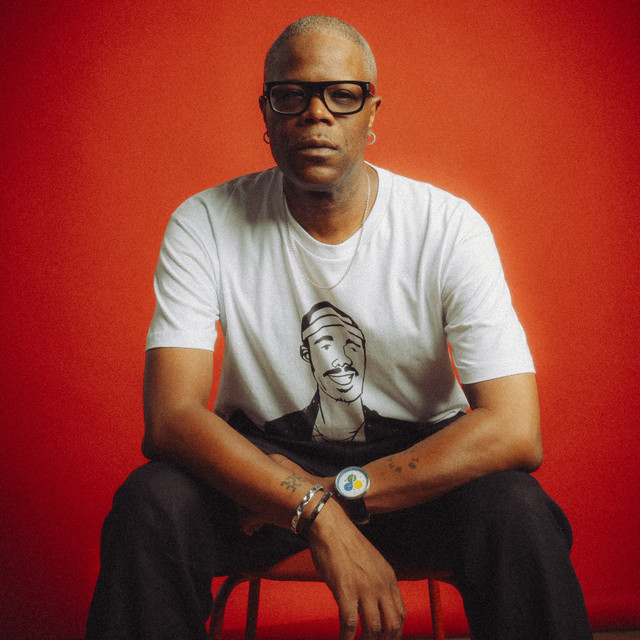
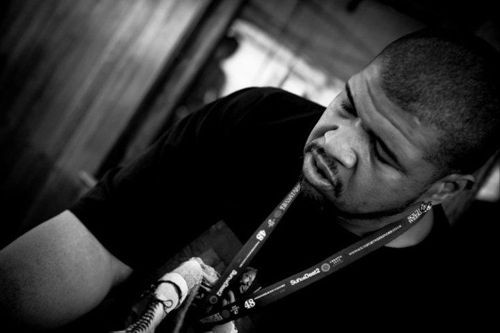
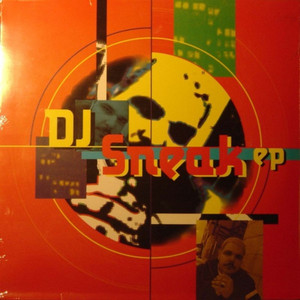
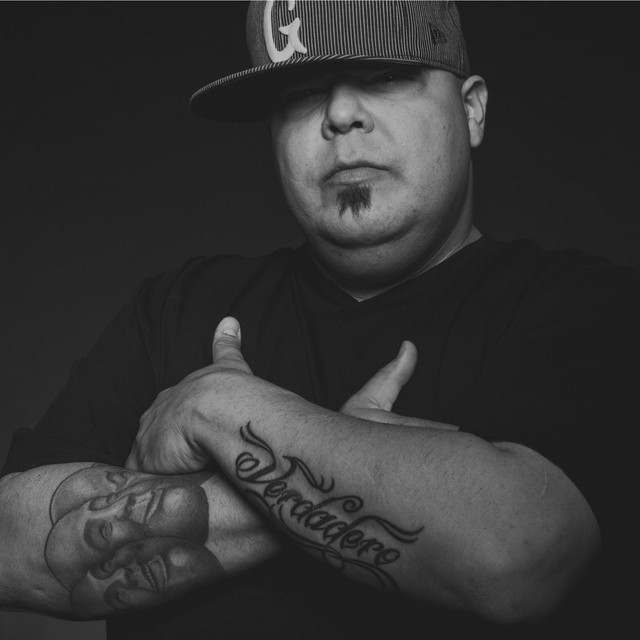
Puerto Rican by birth, DJ Sneak (Carlos Sosa) moved with his family to Chicago in 1983, when he was in his early teens. He expressed himself first through graffiti art and soon devoted himself to spinning records as he soaked up the wide range of dance music -- from salsa and merengue to funk and disco -- he heard on Chicago radio stations. DJs such as fellow Puerto Rican <a href="spotify:artist:0c5584rnmlOvkMpJtpBLTh">Ralphi Rosario</a> and <a href="spotify:artist:0B9P7RXrukgIdmutz9XMVN">Farley Jackmaster Funk</a> were key inspirations to Sneak, who likewise branched into production, debuting in 1993 with the self-released Sneaky Traxx, consisting of two punishing dancefloor workouts. His discography quickly expanded with additional releases on his <a href="spotify:search:label%3A%22Defiant%22">Defiant</a> label, others on <a href="spotify:artist:7lIBLhQHKay3r1xtO3VtWT">Cajmere</a>'s <a href="spotify:search:label%3A%22Cajual%22">Cajual</a> and <a href="spotify:search:label%3A%22Relief%22">Relief</a> imprints -- including his and <a href="spotify:artist:7lIBLhQHKay3r1xtO3VtWT">Cajmere</a>'s first commercial DJ mix, Cajual Relief: The Future Sound of Chicago -- and more yet for New York's <a href="spotify:search:label%3A%22Strictly+Rhythm%22">Strictly Rhythm</a>. Some of his output, including the Hardsteppin' Disko Selection EP, was made in tandem with <a href="spotify:artist:3cQA9WH8liZfeja1DxcDYE">Armand Van Helden</a>. Sneak's 1997 <a href="spotify:search:label%3A%22Defiant%22">Defiant</a> release "U Can't Hide from Your Bud," licensed to <a href="spotify:search:label%3A%22Classic%22">Classic</a> in the U.K. (as "You Can't Hide from Your Bud"), became one of Sneak's signature tracks with its simultaneously physical and heady mutation of <a href="spotify:artist:68kACMx6A3D2BYiO056MeQ">Teddy Pendergrass</a>' "You Can't Hide from Yourself," itself an Chicago club touchstone.
Sneak closed up <a href="spotify:search:label%3A%22Defiant%22">Defiant</a>, but in the early 2000s diversified with Magnetic Recordings, <a href="spotify:search:label%3A%22Oomph%22">Oomph</a>, and Leg as additional outlets for himself and like-minded producers. Although he collaborated with <a href="spotify:artist:4tZwfgrHOc3mvqYlEYSvVi">Daft Punk</a> for the 2001 single "Digital Love," Sneak remained underground and issued a plethora of 12" and full-length projects, primarily through Magnetic, during the 2000s. He finished that decade with the backward-glancing Back in the Box, a two-disc mix incorporating tracks from himself, hometown heroes like <a href="spotify:artist:7lIBLhQHKay3r1xtO3VtWT">Cajmere</a> and <a href="spotify:artist:4BqZuFqHJ8CLn3ig0f1m0G">Paul Johnson</a>, and French comrades such as Bob Sinclair and <a href="spotify:artist:2HNNSjjaK20NZ9PDZ2EMwU">I:Cube</a> (remixed by <a href="spotify:artist:4tZwfgrHOc3mvqYlEYSvVi">Daft Punk</a>). Magnetic kept rolling well into the 2010s, during which Sneak also mixed a fresh set of thoroughly buoyant tracks for Fabric 62. He adapted to the times with a raft of digital-only releases on Magnetic, as well as the DJ Sneaks Classics series, which involved revisions and remixes of previously released material rather than straightforward reissues. All the while, and extending into the 2020s, Sneak was impossible to pin down with 12" singles on numerous labels, DJ sets on multiple continents, multiple podcasts, and live streams. In 2024 alone, Munich's <a href="spotify:search:label%3A%22Toy+Tonics%22">Toy Tonics</a>, Leeds' <a href="spotify:search:label%3A%22Hard+Times%22">Hard Times</a>, and Paris' <a href="spotify:search:label%3A%22Phonogramme%22">Phonogramme</a> released DJ Sneak EPs. ~ Andy Kellman, Rovi
Monthly Listeners
45,260
Monthly Listeners History
Track the evolution of monthly listeners over the last 28 days.
Followers
28,508
Followers History
Track the evolution of followers over the last 28 days.
Total Streams
9.8 million
Total Streams History
Track the evolution of total streams over the last 28 days. This data is calculated from all tracks listed in the artist's discography.