Artist
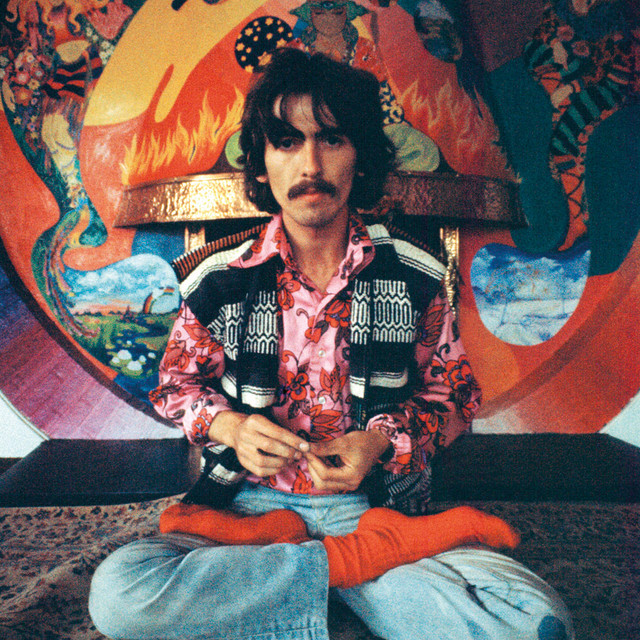
George Harrison
Last updated: 5 hours ago
Nicknamed "the Quiet <a href="spotify:artist:3WrFJ7ztbogyGnTHbHJFl2">Beatle</a>" at the height of Beatlemania, George Harrison did indeed seem somewhat reserved compared to the other members of <a href="spotify:artist:3WrFJ7ztbogyGnTHbHJFl2">the Fab Four</a>. He favored wry wit to <a href="spotify:artist:6DbJi8AcN5ANdtvJcwBSw8">Ringo Starr</a>'s clowning, and he never indulged in either <a href="spotify:artist:4x1nvY2FN8jxqAFA0DA02H">John Lennon</a>'s penchant for controversy or <a href="spotify:artist:4STHEaNw4mPZ2tzheohgXB">Paul McCartney</a>'s crowd-pleasing antics. He preferred sly provocations to larger-than-life bravado. Harrison's measured, considered persona was reflected in his music, particularly his clean, composed lead guitar parts but also in his earliest songs for <a href="spotify:artist:3WrFJ7ztbogyGnTHbHJFl2">the Beatles</a> where he didn't seem to waste a line. With the introduction of psychedelics, spirituality, and Indian music in the mid-'60s, George's horizons expanded considerably and he started to come into his own as a musician, releasing a pair of experimental albums on <a href="spotify:search:label%3A%22Apple%22">Apple</a>'s <a href="spotify:search:label%3A%22Zapple%22">Zapple</a> offshoot before settling into a songwriting style that spliced <a href="spotify:artist:74ASZWbe4lXaubB36ztrGX">Dylanesque</a> introspection with his natural pop grace, while also developing a unique slide guitar technique that owed nothing to the blues. Later <a href="spotify:artist:3WrFJ7ztbogyGnTHbHJFl2">Beatles</a> albums hinted at this flowering of talent; The Beatles and Abbey Road contained some of his strongest work, with the latter including the standard "Something," a song <a href="spotify:artist:1Mxqyy3pSjf8kZZL4QVxS0">Frank Sinatra</a> called "the greatest love song of the past 50 years."
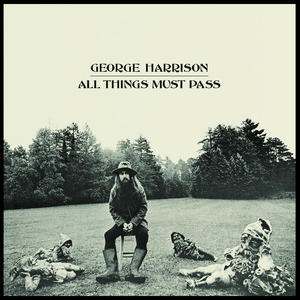
Still, it wasn't until the 1970 release of All Things Must Pass, the post-<a href="spotify:artist:3WrFJ7ztbogyGnTHbHJFl2">Beatles</a> triple album that was effectively his solo debut, that the general audience appreciated the depth of his talents. All Things Must Pass and its smash single "My Sweet Lord" -- a single that topped the charts around the world -- also cemented Harrison's image as a mystic seeker, a reputation underscored by his 1971 superstar charity event The Concert for Bangladesh and 1973's Living in the Material World, back-to-back hits that established him as a superstar outside of <a href="spotify:artist:3WrFJ7ztbogyGnTHbHJFl2">the Beatles</a>. His winning streak hit some rough spots in the mid-'70s, with his last two albums for <a href="spotify:search:label%3A%22Apple%22">Apple</a> -- 1974's Dark Horse and 1975's Extra Texture (Read All About It) -- slowing his momentum, leading him to a respectable plateau where he stayed after establishing his <a href="spotify:search:label%3A%22Dark+Horse%22">Dark Horse</a> label in 1976 with the release of Thirty Three & 1/3. Over the next six years, Harrison recorded fairly steadily and racked up some hits, but he didn't have a full-fledged comeback until 1987's <a href="spotify:artist:3bTAaMx9nf237AkBnGw3vL">Jeff Lynne</a>-produced Cloud Nine. Thanks to the singles "Got My Mind Set on You" and "When We Was Fab," the album became a Top Ten hit around the world and Harrison followed the record quickly with the supergroup <a href="spotify:artist:2hO4YtXUFJiUYS2uYFvHNK">the Traveling Wilburys</a>, whose 1988 album Traveling Wilburys, Vol. 1 grew out of solo sessions for a Harrison B-side. The <a href="spotify:artist:2hO4YtXUFJiUYS2uYFvHNK">Wilburys</a> turned out to be George's last hurrah. After their final album in 1990, Harrison turned toward the <a href="spotify:artist:3WrFJ7ztbogyGnTHbHJFl2">Beatles</a> Anthology reunion, and then maintained a low profile as he battled two types of cancer, succumbing to lung cancer in 2001. By that point, his legacy as one of the most influential musicians of the 20th century was secure.
George Harrison was born in Liverpool on February 25, 1943, the last of the four children Harold and Louise Harrison had. He fell in love with music at an early age, sketching pictures of guitars in his school notebooks before he acquired his first guitar in 1956. Like many British teenagers, he was equally inspired by rock & roll and skiffle, the variation of folk popularized by <a href="spotify:artist:6dIOTeSQDBSR6gwsL0WB2n">Lonnie Donegan</a>. He played in a skiffle group called the Rebels prior to meeting an older fellow schoolmate named <a href="spotify:artist:4STHEaNw4mPZ2tzheohgXB">Paul McCartney</a>. This set George on the path of joining a different skiffle outfit -- one <a href="spotify:artist:4STHEaNw4mPZ2tzheohgXB">McCartney</a> had with <a href="spotify:artist:4x1nvY2FN8jxqAFA0DA02H">John Lennon</a> -- when he was just 15. Named <a href="spotify:artist:3frJniZNsChzTgI37gT54C">the Quarrymen</a>, the group would turn into <a href="spotify:artist:3WrFJ7ztbogyGnTHbHJFl2">the Beatles</a>, with that group's lineup solidifying in 1962 when <a href="spotify:artist:6DbJi8AcN5ANdtvJcwBSw8">Ringo Starr</a> replaced original drummer <a href="spotify:artist:41ZUI3a7yx5P3nfzkUZlDr">Pete Best</a>.
Harrison sang the lead vocal on "Do You Want to Know a Secret" on the group's 1963 debut Please Please Me, and his first original song came later that year when "Don't Bother Me" showed up on With the Beatles. Over the next few years, he'd sing lead on songs either written by <a href="spotify:artist:4x1nvY2FN8jxqAFA0DA02H">Lennon</a> & <a href="spotify:artist:4STHEaNw4mPZ2tzheohgXB">McCartney</a> or by one of his idols -- on 1964's Beatles for Sale, he sang <a href="spotify:artist:5hIClg6noTaCzMu2s5wp4f">Carl Perkins</a>' "Everybody's Trying to Be My Baby" -- but generally gained attention for his nimble guitar, which alternately rang and stung. He started to emerge as a writing force in 1965 with songs on Help! and Rubber Soul -- the latter contained two noteworthy compositions in the sneering "Think for Yourself" and "If I Needed Someone" -- but in 1966 he made a forceful impression with Revolver's barbed "Taxman" and "Love You To," the latter indicating his newfound love for Indian music and culture and Eastern spirituality. Soon, <a href="spotify:artist:3WrFJ7ztbogyGnTHbHJFl2">the Beatles</a> followed his lead on a pilgrimage to India in 1967, during which their manager <a href="spotify:artist:2A3KGd7NkgkLzqudWj7jbc">Brian Epstein</a> died, thereby setting the group off on a path toward its eventual dissolution. Harrison's increased artistic growth during this period certainly fueled the breakup. Upon returning from India, George entered a purple patch of creativity, producing more songs than he was allowed to feature for the band's 1968 double album The Beatles. Tensions between the group members reached a boiling point during the sessions for Get Back, a project that was shelved and turned into Let It Be in early 1970, but the band got together for one last album, Abbey Road, a 1969 effort bolstered by "Something," a Harrison ballad that turned into a modern standard almost immediately upon release.
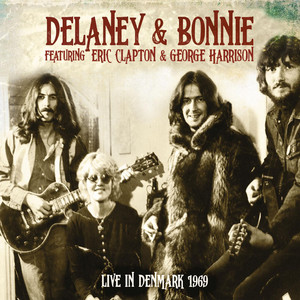
"Something" provided a launching pad for Harrison's solo career, but he'd already been dabbling in solo projects since 1968. That year, <a href="spotify:artist:3WrFJ7ztbogyGnTHbHJFl2">the Beatles</a> launched their Apple Corps collective of businesses, one of their enterprises being an experimental label called <a href="spotify:search:label%3A%22Zapple%22">Zapple</a>. George released Wonderwall Music that year, becoming the first <a href="spotify:artist:3WrFJ7ztbogyGnTHbHJFl2">Beatle</a> to release a solo album, and this collection of Indian music was followed in 1969 by Electronic Sound, an album where Harrison experimented with synthesizers. A better indication of the sound George chose to follow once he officially went solo in 1970 came with his on-stage cameos during <a href="spotify:artist:6dTCMsjfH2odCFlNb36SCG">Delaney & Bonnie</a>'s 1969 British tour. Along with <a href="spotify:artist:74ASZWbe4lXaubB36ztrGX">Bob Dylan</a> and <a href="spotify:artist:4vpDg7Y7fU982Ds30zawDA">the Band</a>, these American blues-rockers had an influence on All Things Must Pass, a sprawling triple album produced by <a href="spotify:artist:3jVMgT4X7YeuYE4aludcmE">Phil Spector</a> that functioned as a spectacular introduction to George Harrison the solo artist. Bolstered by "My Sweet Lord," a single that hit number one throughout the world, and the Top Ten "What Is Life," All Things Must Pass topped the charts in the U.S. and U.K., elevating George above <a href="spotify:artist:4x1nvY2FN8jxqAFA0DA02H">John</a>, <a href="spotify:artist:4STHEaNw4mPZ2tzheohgXB">Paul</a>, and <a href="spotify:artist:6DbJi8AcN5ANdtvJcwBSw8">Ringo</a>'s stardom. His rise was not without controversy -- Bright Tunes Publishing sued Harrison for copyright infringement in 1971, claiming "My Sweet Lord" plagiarized <a href="spotify:artist:05sIdEkXAYDbDDdv3T56Oj">the Chiffons</a>' 1963 "He's So Fine"; George lost the case but, in a byzantine turn of events, he wound up with the publishing to both songs after his then-manager Allen Klein purchased the rights to "He's So Fine" -- but there was no question Harrison came into his own.
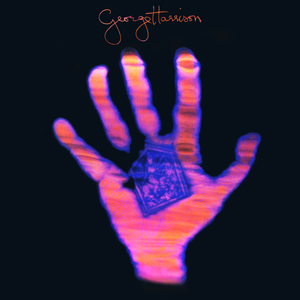
George followed All Things Must Pass with something equally grand: a benefit concert for the refugees of war-torn Bangladesh. Upon the urging of his friend <a href="spotify:artist:4uE9TgBW0AaPDHL1qYbtd0">Ravi Shankar</a>, Harrison arranged a star-studded benefit held at Madison Square Garden on August 1, 1971, enlisting his friends <a href="spotify:artist:6DbJi8AcN5ANdtvJcwBSw8">Starr</a>, <a href="spotify:artist:74ASZWbe4lXaubB36ztrGX">Dylan</a>, <a href="spotify:artist:6PAt558ZEZl0DmdXlnjMgD">Eric Clapton</a>, and <a href="spotify:artist:0IecGJbdBeYSOVtSPRehh5">Billy Preston</a> to play; it was the first all-star charity show, setting the template for those to follow. Although there were problems dispersing funds, the concert was a success, as was the album, which went gold in the U.S. and won the 1973 Grammy for Album of the Year. Also in 1973, Harrison released Living in the Material World, his second studio album and his second number one, assisted by the single "Give Me Love (Give Me Peace on Earth)," a number one hit in the U.S. that topped out at eight in the U.K. He supported the record with an extensive series of North American concerts, the first tour launched by a <a href="spotify:artist:3WrFJ7ztbogyGnTHbHJFl2">Beatle</a>. Upon its conclusion, he released his next album, Dark Horse (his tour shared the same title), a record greeted with mixed reviews and softening sales; it failed to chart in Britain, although it did peak at four in the U.S., where the title track went to number 15.
Harrison closed out his contract with <a href="spotify:search:label%3A%22EMI%22">EMI</a> and <a href="spotify:search:label%3A%22Apple%22">Apple</a> in 1975 with Extra Texture (Read All About It), an album that fared better in the U.K. and performed respectably in the U.S., due to the single "You." He quickly launched his own <a href="spotify:search:label%3A%22Dark+Horse%22">Dark Horse</a> label in 1976, inaugurating the imprint that November with Thirty Three & 1/3. (<a href="spotify:search:label%3A%22Apple%22">Apple</a> released The Best of George Harrison, containing solo and <a href="spotify:artist:3WrFJ7ztbogyGnTHbHJFl2">Beatles</a> cuts, almost simultaneously.) Supported by the modest hits "This Song" and "Crackerbox Palace," the slightly slicker Thirty Three & 1/3 wound up a bigger hit than its two predecessors, thereby starting Harrison's <a href="spotify:search:label%3A%22Dark+Horse%22">Dark Horse</a> years off on a slight rebound. This continued through 1979's eponymous album, a record highlighted by the soft rock hit "Blow Away," a single that peaked at number 16 in the U.S. but went no further than 51 in the U.K.
Harrison rebounded with 1981's Somewhere in England, thanks in no small part to the hit "All Those Years Ago," a song fashioned as a tribute to the murdered <a href="spotify:artist:4x1nvY2FN8jxqAFA0DA02H">John Lennon</a> and featuring contributions from <a href="spotify:artist:6DbJi8AcN5ANdtvJcwBSw8">Ringo Starr</a> and <a href="spotify:artist:4STHEaNw4mPZ2tzheohgXB">Paul</a> and <a href="spotify:artist:6QEKXJs8gQCiyBq5L8knco">Linda McCartney</a>. Despite this hit -- which went to two in the U.S. and 13 in the U.K. -- the record failed to go gold in either America or Britain, and Gone Troppo, released just a year later, sank from view quickly. George slid into a relatively quiet phase, concentrating on raising his son <a href="spotify:artist:0BNG5EOWoNlIE1Q1c4L0Kh">Dhani</a> -- he was born in 1978, the first and only son of George and Olivia Harrison, who also married in 1978. Harrison concentrated on his film company HandMade Films, a company started in 1978 with the intent of financing <a href="spotify:artist:5IxfhXIHjAOAqibxl90NZO">Monty Python</a>'s silver-screen debut Life of Brian but gained momentum in the early '80s thanks to the release of 1980's Bob Hoskins gangster drama The Long Good Friday and Terry Gilliam's 1981 fantasy Time Bandits; the company would also release the acclaimed Mona Lisa (1986) and Withnail and I (1987), before becoming mired in money problems surrounding the runaway production of the 1986 Sean Penn and <a href="spotify:artist:6tbjWDEIzxoDsBA1FuhfPW">Madonna</a> vehicle Shanghai Surprise. George stayed involved in music largely through live guest appearances, popping up at charity concerts and tributes, but he also appeared on <a href="spotify:artist:65Gh3BfK84aTIugiRCgLBA">Dave Edmunds</a>' oldies-inspired soundtrack for 1985's Porky's Revenge.
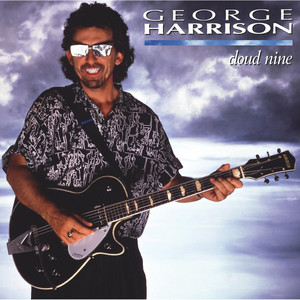
Eventually, Harrison began work on his ninth studio album, hiring <a href="spotify:artist:3bTAaMx9nf237AkBnGw3vL">Jeff Lynne</a> of <a href="spotify:artist:7jefIIksOi1EazgRTfW2Pk">Electric Light Orchestra</a> as co-producer. <a href="spotify:artist:3bTAaMx9nf237AkBnGw3vL">Lynne</a> brought a lush, glossy sheen to 1987's Cloud Nine, a sound that was instrumental to the record's success. Preceded by a bouncy rendition of <a href="spotify:artist:5DG3ZUxWmaQySIbGHdq03J">James Ray</a>'s forgotten chestnut "Got My Mind Set on You," a single that turned into a number one hit in the U.S. and reached two in the U.K., Cloud Nine was an undeniable comeback, reaching the Top Ten on both sides of the Atlantic and earning a platinum certification in the U.S., assisted in part by its second single, "When We Was Fab." In the wake of its success, Harrison and <a href="spotify:artist:3bTAaMx9nf237AkBnGw3vL">Lynne</a> returned to the studio to record a B-side with the assistance of <a href="spotify:artist:74ASZWbe4lXaubB36ztrGX">Bob Dylan</a>, <a href="spotify:artist:0JDkhL4rjiPNEp92jAgJnS">Roy Orbison</a>, and <a href="spotify:artist:2UZMlIwnkgAEDBsw1Rejkn">Tom Petty</a>. This session turned into a full album with the superstars calling themselves <a href="spotify:artist:2hO4YtXUFJiUYS2uYFvHNK">the Traveling Wilburys</a>. Accompanied by the single "Handle with Care," their record, The Traveling Wilburys, Vol. 1, appeared in October 1988 and it was selling well prior to the December death of <a href="spotify:artist:0JDkhL4rjiPNEp92jAgJnS">Orbison</a>. Its second single, "End of the Line," helped cement its success and it wound up being certified platinum three times in the U.S., reaching a peak of three; it wound up in the Top Ten in every major country around the world, save the U.K., where it topped out at number 16. The <a href="spotify:artist:2hO4YtXUFJiUYS2uYFvHNK">Traveling Wilburys</a> released a second album, Traveling Wilburys, Vol. 3, in the fall of 1990. While it didn't sell as well as its predecessor, the record nevertheless went to number 11 in the U.S., where it also went platinum.
Following the 1992 release of Live in Japan and some live appearances that year, Harrison once again receded from the spotlight, reuniting with the surviving <a href="spotify:artist:3WrFJ7ztbogyGnTHbHJFl2">Beatles</a> to assemble their 1994 archival Anthology project, an effort that also included working two existing <a href="spotify:artist:4x1nvY2FN8jxqAFA0DA02H">Lennon</a> demos into a finished project with the assistance of <a href="spotify:artist:3bTAaMx9nf237AkBnGw3vL">Lynne</a>. After Anthology wrapped, Harrison produced <a href="spotify:artist:4uE9TgBW0AaPDHL1qYbtd0">Ravi Shankar</a>'s 1997 album Chants of India, but his output slowed further following a 1997 diagnosis of throat cancer. Over the next few years, Harrison dealt with several different health issues (he also suffered a serious knife attack by an intruder in 1999), and in 2001 his lung cancer spread to his brain. On November 29, 2001, Harrison passed away from lung cancer.
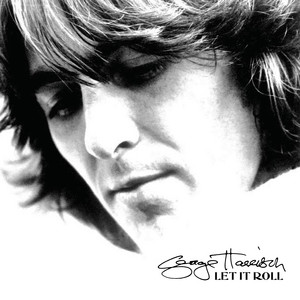
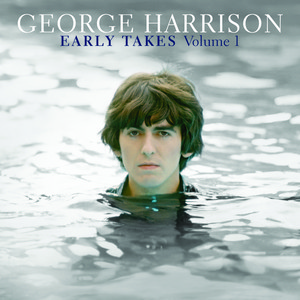
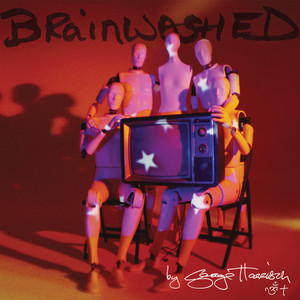
After his death, his son <a href="spotify:artist:0BNG5EOWoNlIE1Q1c4L0Kh">Dhani</a> and <a href="spotify:artist:3bTAaMx9nf237AkBnGw3vL">Jeff Lynne</a> completed Harrison's unreleased recordings and they were released as Brainwashed in 2002. George was inducted into the Rock and Roll Hall of Fame in 2004 and, over the next decade, there were several archival projects, including a 2004 box set of his <a href="spotify:search:label%3A%22Dark+Horse%22">Dark Horse</a> recordings and the 2009 compilation Let It Roll. In 2011, his life was the subject of a documentary film from Martin Scorsese called George Harrison: Living in the Material World; it was accompanied by a collection of rarities called Early Takes: Vol. 1. George's <a href="spotify:search:label%3A%22Apple%22">Apple</a> recordings were remastered and released in 2014 as a box set called The Apple Years 1968-75. A hefty, handsome collection of LP reissues -- aptly titled "The 50th Anniversary Edition" -- of All Things Must Pass was commemorated by a series of deluxe reissues of the landmark album, each featuring a new mix supervised by <a href="spotify:artist:0BNG5EOWoNlIE1Q1c4L0Kh">Dhani Harrison</a> and <a href="spotify:artist:4twIyXTqTXEXd9FZDtwoOA">Paul Hicks</a>. The Super Deluxe editions also contained a wealth of demos and outtakes. ~ Stephen Thomas Erlewine, Rovi
Still, it wasn't until the 1970 release of All Things Must Pass, the post-<a href="spotify:artist:3WrFJ7ztbogyGnTHbHJFl2">Beatles</a> triple album that was effectively his solo debut, that the general audience appreciated the depth of his talents. All Things Must Pass and its smash single "My Sweet Lord" -- a single that topped the charts around the world -- also cemented Harrison's image as a mystic seeker, a reputation underscored by his 1971 superstar charity event The Concert for Bangladesh and 1973's Living in the Material World, back-to-back hits that established him as a superstar outside of <a href="spotify:artist:3WrFJ7ztbogyGnTHbHJFl2">the Beatles</a>. His winning streak hit some rough spots in the mid-'70s, with his last two albums for <a href="spotify:search:label%3A%22Apple%22">Apple</a> -- 1974's Dark Horse and 1975's Extra Texture (Read All About It) -- slowing his momentum, leading him to a respectable plateau where he stayed after establishing his <a href="spotify:search:label%3A%22Dark+Horse%22">Dark Horse</a> label in 1976 with the release of Thirty Three & 1/3. Over the next six years, Harrison recorded fairly steadily and racked up some hits, but he didn't have a full-fledged comeback until 1987's <a href="spotify:artist:3bTAaMx9nf237AkBnGw3vL">Jeff Lynne</a>-produced Cloud Nine. Thanks to the singles "Got My Mind Set on You" and "When We Was Fab," the album became a Top Ten hit around the world and Harrison followed the record quickly with the supergroup <a href="spotify:artist:2hO4YtXUFJiUYS2uYFvHNK">the Traveling Wilburys</a>, whose 1988 album Traveling Wilburys, Vol. 1 grew out of solo sessions for a Harrison B-side. The <a href="spotify:artist:2hO4YtXUFJiUYS2uYFvHNK">Wilburys</a> turned out to be George's last hurrah. After their final album in 1990, Harrison turned toward the <a href="spotify:artist:3WrFJ7ztbogyGnTHbHJFl2">Beatles</a> Anthology reunion, and then maintained a low profile as he battled two types of cancer, succumbing to lung cancer in 2001. By that point, his legacy as one of the most influential musicians of the 20th century was secure.
George Harrison was born in Liverpool on February 25, 1943, the last of the four children Harold and Louise Harrison had. He fell in love with music at an early age, sketching pictures of guitars in his school notebooks before he acquired his first guitar in 1956. Like many British teenagers, he was equally inspired by rock & roll and skiffle, the variation of folk popularized by <a href="spotify:artist:6dIOTeSQDBSR6gwsL0WB2n">Lonnie Donegan</a>. He played in a skiffle group called the Rebels prior to meeting an older fellow schoolmate named <a href="spotify:artist:4STHEaNw4mPZ2tzheohgXB">Paul McCartney</a>. This set George on the path of joining a different skiffle outfit -- one <a href="spotify:artist:4STHEaNw4mPZ2tzheohgXB">McCartney</a> had with <a href="spotify:artist:4x1nvY2FN8jxqAFA0DA02H">John Lennon</a> -- when he was just 15. Named <a href="spotify:artist:3frJniZNsChzTgI37gT54C">the Quarrymen</a>, the group would turn into <a href="spotify:artist:3WrFJ7ztbogyGnTHbHJFl2">the Beatles</a>, with that group's lineup solidifying in 1962 when <a href="spotify:artist:6DbJi8AcN5ANdtvJcwBSw8">Ringo Starr</a> replaced original drummer <a href="spotify:artist:41ZUI3a7yx5P3nfzkUZlDr">Pete Best</a>.
Harrison sang the lead vocal on "Do You Want to Know a Secret" on the group's 1963 debut Please Please Me, and his first original song came later that year when "Don't Bother Me" showed up on With the Beatles. Over the next few years, he'd sing lead on songs either written by <a href="spotify:artist:4x1nvY2FN8jxqAFA0DA02H">Lennon</a> & <a href="spotify:artist:4STHEaNw4mPZ2tzheohgXB">McCartney</a> or by one of his idols -- on 1964's Beatles for Sale, he sang <a href="spotify:artist:5hIClg6noTaCzMu2s5wp4f">Carl Perkins</a>' "Everybody's Trying to Be My Baby" -- but generally gained attention for his nimble guitar, which alternately rang and stung. He started to emerge as a writing force in 1965 with songs on Help! and Rubber Soul -- the latter contained two noteworthy compositions in the sneering "Think for Yourself" and "If I Needed Someone" -- but in 1966 he made a forceful impression with Revolver's barbed "Taxman" and "Love You To," the latter indicating his newfound love for Indian music and culture and Eastern spirituality. Soon, <a href="spotify:artist:3WrFJ7ztbogyGnTHbHJFl2">the Beatles</a> followed his lead on a pilgrimage to India in 1967, during which their manager <a href="spotify:artist:2A3KGd7NkgkLzqudWj7jbc">Brian Epstein</a> died, thereby setting the group off on a path toward its eventual dissolution. Harrison's increased artistic growth during this period certainly fueled the breakup. Upon returning from India, George entered a purple patch of creativity, producing more songs than he was allowed to feature for the band's 1968 double album The Beatles. Tensions between the group members reached a boiling point during the sessions for Get Back, a project that was shelved and turned into Let It Be in early 1970, but the band got together for one last album, Abbey Road, a 1969 effort bolstered by "Something," a Harrison ballad that turned into a modern standard almost immediately upon release.
"Something" provided a launching pad for Harrison's solo career, but he'd already been dabbling in solo projects since 1968. That year, <a href="spotify:artist:3WrFJ7ztbogyGnTHbHJFl2">the Beatles</a> launched their Apple Corps collective of businesses, one of their enterprises being an experimental label called <a href="spotify:search:label%3A%22Zapple%22">Zapple</a>. George released Wonderwall Music that year, becoming the first <a href="spotify:artist:3WrFJ7ztbogyGnTHbHJFl2">Beatle</a> to release a solo album, and this collection of Indian music was followed in 1969 by Electronic Sound, an album where Harrison experimented with synthesizers. A better indication of the sound George chose to follow once he officially went solo in 1970 came with his on-stage cameos during <a href="spotify:artist:6dTCMsjfH2odCFlNb36SCG">Delaney & Bonnie</a>'s 1969 British tour. Along with <a href="spotify:artist:74ASZWbe4lXaubB36ztrGX">Bob Dylan</a> and <a href="spotify:artist:4vpDg7Y7fU982Ds30zawDA">the Band</a>, these American blues-rockers had an influence on All Things Must Pass, a sprawling triple album produced by <a href="spotify:artist:3jVMgT4X7YeuYE4aludcmE">Phil Spector</a> that functioned as a spectacular introduction to George Harrison the solo artist. Bolstered by "My Sweet Lord," a single that hit number one throughout the world, and the Top Ten "What Is Life," All Things Must Pass topped the charts in the U.S. and U.K., elevating George above <a href="spotify:artist:4x1nvY2FN8jxqAFA0DA02H">John</a>, <a href="spotify:artist:4STHEaNw4mPZ2tzheohgXB">Paul</a>, and <a href="spotify:artist:6DbJi8AcN5ANdtvJcwBSw8">Ringo</a>'s stardom. His rise was not without controversy -- Bright Tunes Publishing sued Harrison for copyright infringement in 1971, claiming "My Sweet Lord" plagiarized <a href="spotify:artist:05sIdEkXAYDbDDdv3T56Oj">the Chiffons</a>' 1963 "He's So Fine"; George lost the case but, in a byzantine turn of events, he wound up with the publishing to both songs after his then-manager Allen Klein purchased the rights to "He's So Fine" -- but there was no question Harrison came into his own.
George followed All Things Must Pass with something equally grand: a benefit concert for the refugees of war-torn Bangladesh. Upon the urging of his friend <a href="spotify:artist:4uE9TgBW0AaPDHL1qYbtd0">Ravi Shankar</a>, Harrison arranged a star-studded benefit held at Madison Square Garden on August 1, 1971, enlisting his friends <a href="spotify:artist:6DbJi8AcN5ANdtvJcwBSw8">Starr</a>, <a href="spotify:artist:74ASZWbe4lXaubB36ztrGX">Dylan</a>, <a href="spotify:artist:6PAt558ZEZl0DmdXlnjMgD">Eric Clapton</a>, and <a href="spotify:artist:0IecGJbdBeYSOVtSPRehh5">Billy Preston</a> to play; it was the first all-star charity show, setting the template for those to follow. Although there were problems dispersing funds, the concert was a success, as was the album, which went gold in the U.S. and won the 1973 Grammy for Album of the Year. Also in 1973, Harrison released Living in the Material World, his second studio album and his second number one, assisted by the single "Give Me Love (Give Me Peace on Earth)," a number one hit in the U.S. that topped out at eight in the U.K. He supported the record with an extensive series of North American concerts, the first tour launched by a <a href="spotify:artist:3WrFJ7ztbogyGnTHbHJFl2">Beatle</a>. Upon its conclusion, he released his next album, Dark Horse (his tour shared the same title), a record greeted with mixed reviews and softening sales; it failed to chart in Britain, although it did peak at four in the U.S., where the title track went to number 15.
Harrison closed out his contract with <a href="spotify:search:label%3A%22EMI%22">EMI</a> and <a href="spotify:search:label%3A%22Apple%22">Apple</a> in 1975 with Extra Texture (Read All About It), an album that fared better in the U.K. and performed respectably in the U.S., due to the single "You." He quickly launched his own <a href="spotify:search:label%3A%22Dark+Horse%22">Dark Horse</a> label in 1976, inaugurating the imprint that November with Thirty Three & 1/3. (<a href="spotify:search:label%3A%22Apple%22">Apple</a> released The Best of George Harrison, containing solo and <a href="spotify:artist:3WrFJ7ztbogyGnTHbHJFl2">Beatles</a> cuts, almost simultaneously.) Supported by the modest hits "This Song" and "Crackerbox Palace," the slightly slicker Thirty Three & 1/3 wound up a bigger hit than its two predecessors, thereby starting Harrison's <a href="spotify:search:label%3A%22Dark+Horse%22">Dark Horse</a> years off on a slight rebound. This continued through 1979's eponymous album, a record highlighted by the soft rock hit "Blow Away," a single that peaked at number 16 in the U.S. but went no further than 51 in the U.K.
Harrison rebounded with 1981's Somewhere in England, thanks in no small part to the hit "All Those Years Ago," a song fashioned as a tribute to the murdered <a href="spotify:artist:4x1nvY2FN8jxqAFA0DA02H">John Lennon</a> and featuring contributions from <a href="spotify:artist:6DbJi8AcN5ANdtvJcwBSw8">Ringo Starr</a> and <a href="spotify:artist:4STHEaNw4mPZ2tzheohgXB">Paul</a> and <a href="spotify:artist:6QEKXJs8gQCiyBq5L8knco">Linda McCartney</a>. Despite this hit -- which went to two in the U.S. and 13 in the U.K. -- the record failed to go gold in either America or Britain, and Gone Troppo, released just a year later, sank from view quickly. George slid into a relatively quiet phase, concentrating on raising his son <a href="spotify:artist:0BNG5EOWoNlIE1Q1c4L0Kh">Dhani</a> -- he was born in 1978, the first and only son of George and Olivia Harrison, who also married in 1978. Harrison concentrated on his film company HandMade Films, a company started in 1978 with the intent of financing <a href="spotify:artist:5IxfhXIHjAOAqibxl90NZO">Monty Python</a>'s silver-screen debut Life of Brian but gained momentum in the early '80s thanks to the release of 1980's Bob Hoskins gangster drama The Long Good Friday and Terry Gilliam's 1981 fantasy Time Bandits; the company would also release the acclaimed Mona Lisa (1986) and Withnail and I (1987), before becoming mired in money problems surrounding the runaway production of the 1986 Sean Penn and <a href="spotify:artist:6tbjWDEIzxoDsBA1FuhfPW">Madonna</a> vehicle Shanghai Surprise. George stayed involved in music largely through live guest appearances, popping up at charity concerts and tributes, but he also appeared on <a href="spotify:artist:65Gh3BfK84aTIugiRCgLBA">Dave Edmunds</a>' oldies-inspired soundtrack for 1985's Porky's Revenge.
Eventually, Harrison began work on his ninth studio album, hiring <a href="spotify:artist:3bTAaMx9nf237AkBnGw3vL">Jeff Lynne</a> of <a href="spotify:artist:7jefIIksOi1EazgRTfW2Pk">Electric Light Orchestra</a> as co-producer. <a href="spotify:artist:3bTAaMx9nf237AkBnGw3vL">Lynne</a> brought a lush, glossy sheen to 1987's Cloud Nine, a sound that was instrumental to the record's success. Preceded by a bouncy rendition of <a href="spotify:artist:5DG3ZUxWmaQySIbGHdq03J">James Ray</a>'s forgotten chestnut "Got My Mind Set on You," a single that turned into a number one hit in the U.S. and reached two in the U.K., Cloud Nine was an undeniable comeback, reaching the Top Ten on both sides of the Atlantic and earning a platinum certification in the U.S., assisted in part by its second single, "When We Was Fab." In the wake of its success, Harrison and <a href="spotify:artist:3bTAaMx9nf237AkBnGw3vL">Lynne</a> returned to the studio to record a B-side with the assistance of <a href="spotify:artist:74ASZWbe4lXaubB36ztrGX">Bob Dylan</a>, <a href="spotify:artist:0JDkhL4rjiPNEp92jAgJnS">Roy Orbison</a>, and <a href="spotify:artist:2UZMlIwnkgAEDBsw1Rejkn">Tom Petty</a>. This session turned into a full album with the superstars calling themselves <a href="spotify:artist:2hO4YtXUFJiUYS2uYFvHNK">the Traveling Wilburys</a>. Accompanied by the single "Handle with Care," their record, The Traveling Wilburys, Vol. 1, appeared in October 1988 and it was selling well prior to the December death of <a href="spotify:artist:0JDkhL4rjiPNEp92jAgJnS">Orbison</a>. Its second single, "End of the Line," helped cement its success and it wound up being certified platinum three times in the U.S., reaching a peak of three; it wound up in the Top Ten in every major country around the world, save the U.K., where it topped out at number 16. The <a href="spotify:artist:2hO4YtXUFJiUYS2uYFvHNK">Traveling Wilburys</a> released a second album, Traveling Wilburys, Vol. 3, in the fall of 1990. While it didn't sell as well as its predecessor, the record nevertheless went to number 11 in the U.S., where it also went platinum.
Following the 1992 release of Live in Japan and some live appearances that year, Harrison once again receded from the spotlight, reuniting with the surviving <a href="spotify:artist:3WrFJ7ztbogyGnTHbHJFl2">Beatles</a> to assemble their 1994 archival Anthology project, an effort that also included working two existing <a href="spotify:artist:4x1nvY2FN8jxqAFA0DA02H">Lennon</a> demos into a finished project with the assistance of <a href="spotify:artist:3bTAaMx9nf237AkBnGw3vL">Lynne</a>. After Anthology wrapped, Harrison produced <a href="spotify:artist:4uE9TgBW0AaPDHL1qYbtd0">Ravi Shankar</a>'s 1997 album Chants of India, but his output slowed further following a 1997 diagnosis of throat cancer. Over the next few years, Harrison dealt with several different health issues (he also suffered a serious knife attack by an intruder in 1999), and in 2001 his lung cancer spread to his brain. On November 29, 2001, Harrison passed away from lung cancer.
After his death, his son <a href="spotify:artist:0BNG5EOWoNlIE1Q1c4L0Kh">Dhani</a> and <a href="spotify:artist:3bTAaMx9nf237AkBnGw3vL">Jeff Lynne</a> completed Harrison's unreleased recordings and they were released as Brainwashed in 2002. George was inducted into the Rock and Roll Hall of Fame in 2004 and, over the next decade, there were several archival projects, including a 2004 box set of his <a href="spotify:search:label%3A%22Dark+Horse%22">Dark Horse</a> recordings and the 2009 compilation Let It Roll. In 2011, his life was the subject of a documentary film from Martin Scorsese called George Harrison: Living in the Material World; it was accompanied by a collection of rarities called Early Takes: Vol. 1. George's <a href="spotify:search:label%3A%22Apple%22">Apple</a> recordings were remastered and released in 2014 as a box set called The Apple Years 1968-75. A hefty, handsome collection of LP reissues -- aptly titled "The 50th Anniversary Edition" -- of All Things Must Pass was commemorated by a series of deluxe reissues of the landmark album, each featuring a new mix supervised by <a href="spotify:artist:0BNG5EOWoNlIE1Q1c4L0Kh">Dhani Harrison</a> and <a href="spotify:artist:4twIyXTqTXEXd9FZDtwoOA">Paul Hicks</a>. The Super Deluxe editions also contained a wealth of demos and outtakes. ~ Stephen Thomas Erlewine, Rovi
Monthly Listeners
9.6 million
Monthly Listeners History
Track the evolution of monthly listeners over the last 28 days.
Followers
3.3 million
Followers History
Track the evolution of followers over the last 28 days.
Total Streams
8.1 million
Total Streams History
Track the evolution of total streams over the last 28 days. This data is calculated from all tracks listed in the artist's discography.
Top Cities
175,551 listeners
162,771 listeners
134,399 listeners
123,836 listeners
121,736 listeners