Data may be outdated
Last updated: 1 month ago — Click refresh to get the latest statistics.
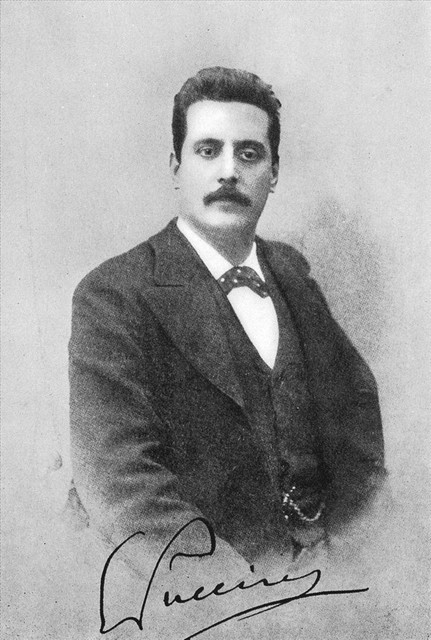
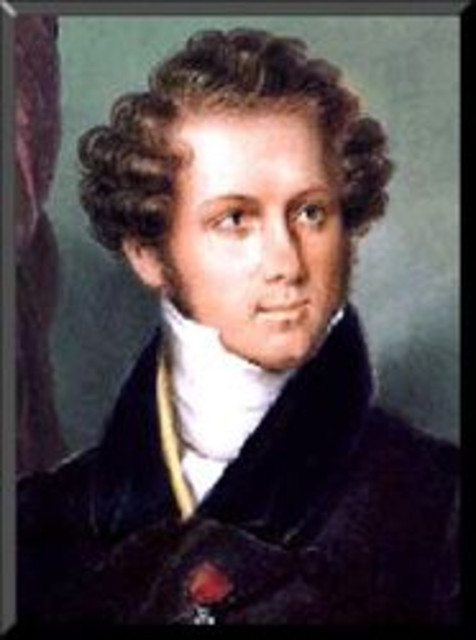
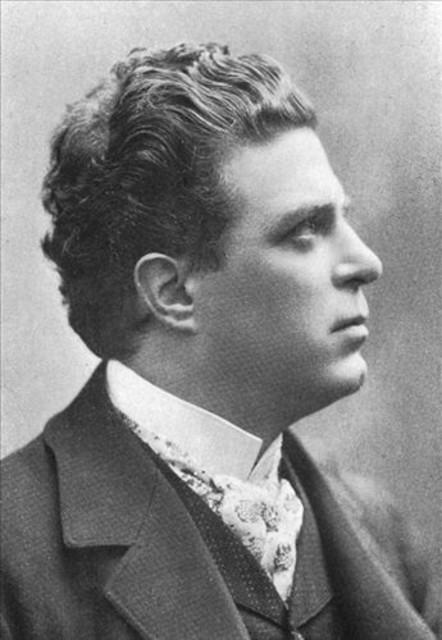
Young Giacomo took organ lessons early on from his uncle, Fortunato Magi, and later from <a href="spotify:artist:2zWFgibTM124mbAm2yFixb">Carlo Angeloni</a>. At ten, he sang in local church choirs and by age 14 was freelancing as an organist at religious services. His first compositions were for organ, often incorporating operatic and folk elements. By age 18, under the spell of <a href="spotify:artist:1JOQXgYdQV2yfrhewqx96o">Verdi</a>'s Aida, he decided he would study composition with a view to writing opera. At around this time, he composed his first large-scale work, a cantata, Preludio Sinfonico, for an 1877 competition. Other pieces came in the next few years, but none of significance.
In 1880, Puccini entered the Milan Conservatory, where he studied for three years under <a href="spotify:artist:088fpww3Ae4U9cMZv5O6m8">Ponchielli</a> and <a href="spotify:artist:06GaeXANkmOHTl28xHSE0A">Bazzini</a>. While there, he wrote his first opera, Le villi, which he once more entered in a competition. Though he lost, <a href="spotify:artist:4QHgItlRsXcYDTm3eJoFDP">Arrigo Boito</a> and, more importantly, publisher Giulio Ricordi helped arrange a premiere in Milan on May 31, 1884. The work was enthusiastically received, and Puccini was on his way.
Around this time the composer met Elvira Gemignani, wife of a merchant in Lucca. They carried on an illicit affair, and she gave birth to his son in 1886. When her husband died in 1904, the two were married. Puccini's next opera, Edgar, was poorly received at its 1889 premiere. Subsequent revisions failed to rescue it from its encumbering libretto. His next effort, however, Manon Lescaut, was a sensational success at its 1893 Turin premiere. Subsequent performances in Italy and abroad bolstered the composer's growing reputation.
Puccini's next three operas confirmed his preeminence in Italian opera. La Bohème (1896), Tosca (1900), and Madama Butterfly (1904) were not immediately as successful as Manon Lescaut, but in time achieved greater acclaim. By the middle of the 20th century, they had become -- and remain today -- his most often performed and recorded works.
Puccini suffered a creative dry spell for a time and was unable to finish another opera until the moderately successful La fanciulla del West (1910), which premiered in New York with <a href="spotify:artist:4xpgBZSojKNEQqQHXrwSXA">Toscanini</a> conducting and <a href="spotify:artist:2uB3KPGd1ZUGRsox7N1iH5">Caruso</a> singing the role of Johnson. His sluggishness of inspiration owed much to charges by his wife that he was having an affair with a servant girl, charges that drove the hapless, and as it turned out, innocent young girl to suicide in 1909.
In 1913, Puccini accepted a lucrative commission from Vienna interests, which resulted in La rondine. Received warmly at its 1917 Monte Carlo premiere, it faded under the judgment it was the least of his operatic efforts. Puccini followed this disappointment with his trilogy of one-act operas, Il trittico -- comprised of Il tabarro, Suor Angelica, and Gianni Schicchi -- all premiered at the <a href="spotify:artist:14AbeD1op5phNiIVzzRVWr">Metropolitan Opera</a> in New York in 1918. Only the latter work, a comedy, was well received.
While Puccini was working on his last opera, Turandot, he was diagnosed with throat cancer (1923). During radiation treatment in Brussels, he suffered a heart attack and died on November 29, 1924.
Monthly Listeners
2.0 million
Monthly Listeners History
Track the evolution of monthly listeners over the last 28 days.
Followers
523,883
Followers History
Track the evolution of followers over the last 28 days.
Total Streams
3.0 billion
Total Streams History
Track the evolution of total streams over the last 28 days. This data is calculated from all tracks listed in the artist's discography.















![Gianni Schicchi: "O mio babbino caro" [Gianni Schicchi]](https://i.scdn.co/image/ab67616d0000b2734761ab90b0ac7e48fbb8fa5c)