Last updated: 2 days ago
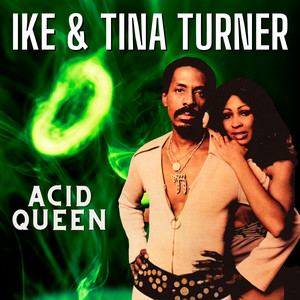
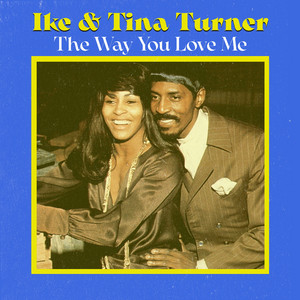
As husband and wife, Ike & Tina Turner headed up one of the most potent live acts on the R&B circuit during the '60s and early '70s. Guitarist and bandleader <a href="spotify:artist:0FAxkBiT0g3jKF2AaKEipb">Ike</a> kept his ensemble tight and well-drilled while throwing in his own distinctively twangy plucking; lead vocalist <a href="spotify:artist:1zuJe6b1roixEKMOtyrEak">Tina</a> was a ferocious whirlwind of power and energy, a raw sexual dynamo who was impossible to contain when she hit the stage, leading some critics to call her the first female singer to embody the true spirit of rock & roll. In their prime, the Ike & Tina Turner Revue specialized in a hard-driving, funked-up hybrid of soul and rock that, in its best moments, rose to a visceral frenzy that few R&B acts of any era could hope to match. Effusively praised by white rock luminaries like <a href="spotify:artist:22bE4uQ6baNwSHPVcDxLCe">the Rolling Stones</a> and <a href="spotify:artist:4NgfOZCL9Ml67xzM0xzIvC">Janis Joplin</a>, <a href="spotify:artist:1zuJe6b1roixEKMOtyrEak">Tina</a> was unquestionably the star of the show, with a hugely powerful, raspy voice that ranks among the all-time soul greats. For all their concert presence, the Turners sometimes had problems translating their strong points to record; they cut singles for an endless succession of large and small independent labels throughout their career, and suffered from a shortage of the strong original material that artists with more stable homes (<a href="spotify:search:label%3A%22Motown%22">Motown</a>, <a href="spotify:search:label%3A%22Atlantic%22">Atlantic</a>, <a href="spotify:search:label%3A%22Stax%22">Stax</a>, etc.) often enjoyed. The couple's well-documented marital difficulties (a mild way of describing <a href="spotify:artist:0FAxkBiT0g3jKF2AaKEipb">Ike</a>'s violent, drug-fueled cruelty) eventually dissolved their partnership in the mid-'70s. <a href="spotify:artist:1zuJe6b1roixEKMOtyrEak">Tina</a>, of course, went on to become an icon and a symbol of survival after the resurgence of her solo career in the '80s, but it was the years she spent with <a href="spotify:artist:0FAxkBiT0g3jKF2AaKEipb">Ike</a> that made the purely musical part of her legend.
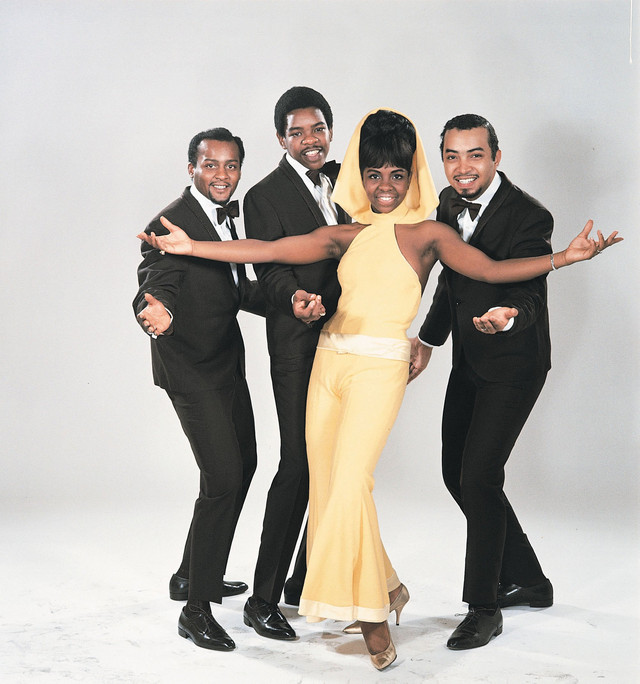
<a href="spotify:artist:0FAxkBiT0g3jKF2AaKEipb">Izear Luster "Ike" Turner, Jr.</a> was born in Clarksdale, Mississippi, in 1931; initially a pianist, he formed his first band in high school and put together the Kings of Rhythm in the late '40s. In 1951, that group cut the pivotal "Rocket 88," a tune often pinpointed as the first-ever rock & roll record; however, since sax player <a href="spotify:artist:5pEcgMFu5zKwK5NDdpEIIj">Jackie Brenston</a> took the vocal, the song was credited to <a href="spotify:artist:5pEcgMFu5zKwK5NDdpEIIj">Brenston & His Delta Cats</a> rather than <a href="spotify:artist:0FAxkBiT0g3jKF2AaKEipb">Turner & the Kings of Rhythm</a>. Not long after, <a href="spotify:artist:0FAxkBiT0g3jKF2AaKEipb">Turner</a> switched from piano to guitar, and he and his band became a prolific session outfit in Memphis, backing various <a href="spotify:search:label%3A%22Sun%22">Sun</a> artists and bluesmen during the early '50s. <a href="spotify:artist:0FAxkBiT0g3jKF2AaKEipb">Turner</a> moved the Kings of Rhythm to East St. Louis in the mid-'50s, where they became kingpins of the local R&B circuit. In 1956, he met a teenage, gospel-trained singer from Nutbush, Tennessee, named <a href="spotify:artist:1zuJe6b1roixEKMOtyrEak">Anna Mae Bullock</a>, and promised her a chance to sing with his band. That chance kept failing to materialize, until one night <a href="spotify:artist:1zuJe6b1roixEKMOtyrEak">Bullock</a> simply grabbed the microphone and started belting. Impressed, <a href="spotify:artist:0FAxkBiT0g3jKF2AaKEipb">Turner</a> made her a part of his revue, changing her name to <a href="spotify:artist:1zuJe6b1roixEKMOtyrEak">Tina</a>. After <a href="spotify:artist:1zuJe6b1roixEKMOtyrEak">Tina</a> became pregnant by the band's saxophonist, <a href="spotify:artist:2oolIWne8t9nCr3P0v5v2Y">Raymond Hill</a>, she moved into <a href="spotify:artist:0FAxkBiT0g3jKF2AaKEipb">Turner</a>'s house, an arrangement that led to their own relationship; the two were married in 1958 and soon had a child of their own.
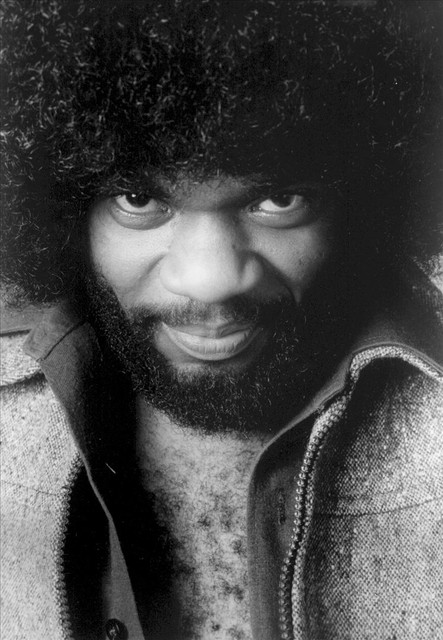
In late 1959, <a href="spotify:artist:0FAxkBiT0g3jKF2AaKEipb">Turner</a>'s band entered the studio to cut a song called "A Fool in Love" for the <a href="spotify:search:label%3A%22Sue+Records%22">Sue Records</a> label. The scheduled male vocalist failed to show up for the session, and <a href="spotify:artist:1zuJe6b1roixEKMOtyrEak">Tina</a> was pressed into service. Released in 1960, "A Fool in Love" shot to the number two spot on the R&B charts, also making the pop Top 30. <a href="spotify:artist:1zuJe6b1roixEKMOtyrEak">Tina</a> was now clearly the focal point of the act, which <a href="spotify:artist:0FAxkBiT0g3jKF2AaKEipb">Turner</a> rechristened the Ike & Tina Turner Revue; with a large, horn-filled ensemble and a group of leggy backup singers dubbed <a href="spotify:artist:4vNCmeT4klWtM1xgF0oohu">the Ikettes</a> (who complemented <a href="spotify:artist:1zuJe6b1roixEKMOtyrEak">Tina</a>'s short-skirted, uninhibited gyrating), the Revue eventually developed a reputation for putting on one of the most exciting live shows in R&B. The R&B chart hits came fast and furious during the early '60s: 1961's "I Idolize You" (number five) and "It's Gonna Work Out Fine" (number two), 1962's "Poor Fool" (number four) and "Tra La La La La" (number nine). It was an impressive run, but the well went dry over the next several years; <a href="spotify:artist:0FAxkBiT0g3jKF2AaKEipb">Ike</a> supplied much of the band's original material, and although he was responsible for many of their early successes, he simply wasn't a world-class songwriter who could deliver hit-caliber tunes with regularity. Much of the Revue's repertoire consisted of bluesy, chitlin circuit R&B that wasn't exceptionally memorable. Ike & Tina branched out from <a href="spotify:search:label%3A%22Sue+Records%22">Sue Records</a> and spent the next few years issuing records on additional labels, including <a href="spotify:search:label%3A%22Kent%22">Kent</a>, <a href="spotify:search:label%3A%22Modern%22">Modern</a>, and <a href="spotify:search:label%3A%22Loma%22">Loma</a>. While they had some undeniable high points and several chart entries, none reached the level of their initial run of Top Ten hits.

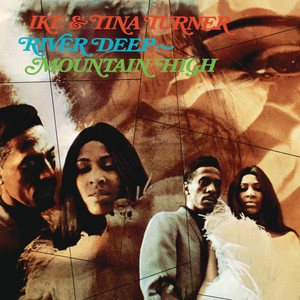
In 1966, the Turners worked with legendary producer <a href="spotify:artist:3jVMgT4X7YeuYE4aludcmE">Phil Spector</a>, who was seeking a way to restore his artistic and commercial standing at the forefront of pop music in the wake of advances by <a href="spotify:artist:3oDbviiivRWhXwIE8hxkVV">the Beach Boys</a> and <a href="spotify:artist:3WrFJ7ztbogyGnTHbHJFl2">Beatles</a>. The powerful instrument that was <a href="spotify:artist:1zuJe6b1roixEKMOtyrEak">Tina</a>'s voice appealed to <a href="spotify:artist:3jVMgT4X7YeuYE4aludcmE">Spector</a>'s sense of grandeur, and he determined that a massive-scale production framing that voice would rank as his greatest masterpiece. <a href="spotify:artist:0FAxkBiT0g3jKF2AaKEipb">Ike</a> already had a reputation for demanding control, and <a href="spotify:artist:3jVMgT4X7YeuYE4aludcmE">Spector</a> struck his deal accordingly: although the records would be fully credited to Ike & Tina Turner, <a href="spotify:artist:0FAxkBiT0g3jKF2AaKEipb">Ike</a> would not be allowed to enter the studio or alter the finished recordings (in effect, <a href="spotify:artist:3jVMgT4X7YeuYE4aludcmE">Spector</a> was paying him not to meddle). The centerpiece of <a href="spotify:artist:3jVMgT4X7YeuYE4aludcmE">Spector</a>'s collaboration with <a href="spotify:artist:1zuJe6b1roixEKMOtyrEak">Tina</a> was "River Deep - Mountain High," a monumental pop symphony that cost over $22,000 to produce (in 1966, this was a whopping sum for an album, let alone a single). The single represented <a href="spotify:artist:3jVMgT4X7YeuYE4aludcmE">Spector</a>'s so-called Wall of Sound style at its most gloriously excessive, and <a href="spotify:artist:1zuJe6b1roixEKMOtyrEak">Tina</a>'s was one of the few voices in popular music strong enough to cut through the monolithic orchestral backing. With the high cost and his own slipping stature, <a href="spotify:artist:3jVMgT4X7YeuYE4aludcmE">Spector</a> was betting the farm on "River Deep - Mountain High," and although it rocketed into the British Top Five and made <a href="spotify:artist:1zuJe6b1roixEKMOtyrEak">Tina</a> a star in the U.K., it flopped in America, where its mixture of Black and white musical aesthetics was still slightly ahead of its time. A crushed <a href="spotify:artist:3jVMgT4X7YeuYE4aludcmE">Spector</a> retreated from the music business not long after, and his <a href="spotify:search:label%3A%22Philles%22">Philles</a> label yanked the accompanying album of the same name from American release (<a href="spotify:artist:3jVMgT4X7YeuYE4aludcmE">Spector</a> wound up producing only five of the 12 cuts). Although some critics dismiss "River Deep - Mountain High" as overproduced bombast, many still consider it one of rock's greatest singles; <a href="spotify:artist:7FIoB5PHdrMZVC3q2HE5MS">George Harrison</a> famously described it as "a perfect record from start to finish."
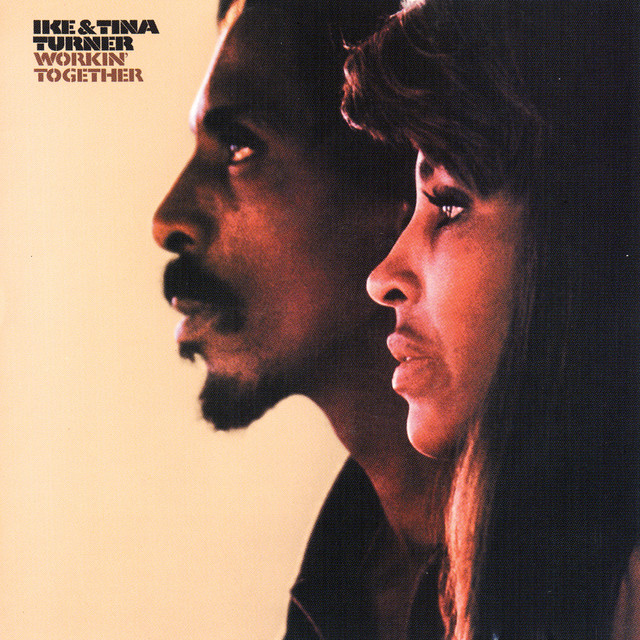
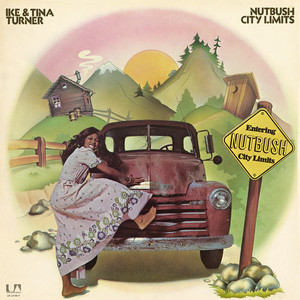
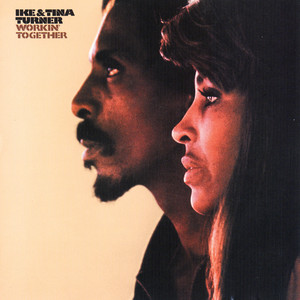
After the <a href="spotify:artist:3jVMgT4X7YeuYE4aludcmE">Spector</a> deal fell through, Ike & Tina returned to their somewhat mercenary recording habits, cutting songs for <a href="spotify:search:label%3A%22Modern%22">Modern</a> and Innis, then moving to <a href="spotify:search:label%3A%22Minit%22">Minit</a> and <a href="spotify:search:label%3A%22Blue+Thumb%22">Blue Thumb</a> in 1969. That year, they went on the road as the opening act for <a href="spotify:artist:22bE4uQ6baNwSHPVcDxLCe">the Rolling Stones</a>, and <a href="spotify:artist:0FAxkBiT0g3jKF2AaKEipb">Ike</a> slightly retooled the Revue's sound to appeal to white rock audiences in addition to their core Black following. In 1970, they signed with <a href="spotify:search:label%3A%22Liberty%22">Liberty</a>/United Artists and recorded Come Together, which incorporated contemporary rock & roll covers into their repertoire; versions of <a href="spotify:artist:3WrFJ7ztbogyGnTHbHJFl2">the Beatles</a>' title track and <a href="spotify:artist:5m8H6zSadhu1j9Yi04VLqD">Sly & the Family Stone</a>'s "I Want to Take You Higher" made the R&B Top 30. Released later that year, Workin' Together became the most popular album of their career, making the Top 25 on the strength of a storming reinterpretation of <a href="spotify:artist:3IYUhFvPQItj6xySrBmZkd">CCR</a>'s "Proud Mary." Featuring a notorious spoken intro by <a href="spotify:artist:1zuJe6b1roixEKMOtyrEak">Tina</a>, the "nice...and rough" version of "Proud Mary" gave Ike & Tina their first Top Five hit on the pop charts and returned them to the same heights on the R&B side as well; it also won them a Grammy. The covers gimmick couldn't last forever, though, and their formula soon grew predictable; their last major success was 1973's "Nutbush City Limits," a semi-autobiographical song written by <a href="spotify:artist:1zuJe6b1roixEKMOtyrEak">Tina</a> that made the R&B Top 20 and just missed that placing on the pop side. By that point, <a href="spotify:artist:1zuJe6b1roixEKMOtyrEak">Tina</a> had grown increasingly uninterested in the duo's well-established act, and was tiring of the largely unchallenging material she continued to perform.
Unfortunately, the music itself wasn't the only factor in Ike & Tina's downturn. As a bandleader, <a href="spotify:artist:0FAxkBiT0g3jKF2AaKEipb">Ike</a> had long been a disciplinarian, but during the '60s he developed severe addictions to alcohol and, especially, cocaine. Wanting to maintain control over the star of his show at any cost, <a href="spotify:artist:0FAxkBiT0g3jKF2AaKEipb">Turner</a> kept his wife in line through an increasingly violent pattern of emotional and physical abuse; often drug-related, his flights of rage could result in severe beatings or burns that pushed <a href="spotify:artist:1zuJe6b1roixEKMOtyrEak">Tina</a> to attempt suicide in 1968, according to her autobiography. She continued to endure <a href="spotify:artist:0FAxkBiT0g3jKF2AaKEipb">Ike</a>'s dominance through the early '70s, and her performances were clearly weary by the end; finally, she walked out on her husband and generally declined to pursue claims for financial compensation from their work together. Their divorce became official in 1976. After a long period of struggle, <a href="spotify:artist:1zuJe6b1roixEKMOtyrEak">Tina</a> re-emerged triumphantly in the '80s as a superstar solo act; <a href="spotify:artist:0FAxkBiT0g3jKF2AaKEipb">Ike</a>, meanwhile, ran his own recording studio for a time, but his drug problems worsened, resulting in several arrests. Sadly, and perhaps fittingly, he was serving prison time when he and his former wife were jointly inducted into the Rock and Roll Hall of Fame in 1991 and was unable to attend the ceremony.
<a href="spotify:artist:0FAxkBiT0g3jKF2AaKEipb">Ike</a> kicked his addiction while behind bars and lectured to young people about the dangers of drugs after his release while also making a return to music. Trying to help a friend who was using crack cocaine, <a href="spotify:artist:0FAxkBiT0g3jKF2AaKEipb">Ike</a> relapsed and was using again in his final years. In 2006, he released Risin' with the Blues, which earned him a Grammy Award for Best Traditional Blues Album. <a href="spotify:artist:0FAxkBiT0g3jKF2AaKEipb">Ike Turner</a> died on December 12, 2007, due to emphysema and cocaine toxicity, at the age of 76. <a href="spotify:artist:1zuJe6b1roixEKMOtyrEak">Tina</a>, meanwhile, remained a major star even after her retirement in 2009, following an international concert tour marking her 50th year in show business. She participated in the creation of a stage musical, Tina!, celebrating her life and music that opened in 2018. It was her last great triumph; <a href="spotify:artist:1zuJe6b1roixEKMOtyrEak">Tina Turner</a> died on May 24, 2023 at the age of 83. ~ Steve Huey, Rovi
<a href="spotify:artist:0FAxkBiT0g3jKF2AaKEipb">Izear Luster "Ike" Turner, Jr.</a> was born in Clarksdale, Mississippi, in 1931; initially a pianist, he formed his first band in high school and put together the Kings of Rhythm in the late '40s. In 1951, that group cut the pivotal "Rocket 88," a tune often pinpointed as the first-ever rock & roll record; however, since sax player <a href="spotify:artist:5pEcgMFu5zKwK5NDdpEIIj">Jackie Brenston</a> took the vocal, the song was credited to <a href="spotify:artist:5pEcgMFu5zKwK5NDdpEIIj">Brenston & His Delta Cats</a> rather than <a href="spotify:artist:0FAxkBiT0g3jKF2AaKEipb">Turner & the Kings of Rhythm</a>. Not long after, <a href="spotify:artist:0FAxkBiT0g3jKF2AaKEipb">Turner</a> switched from piano to guitar, and he and his band became a prolific session outfit in Memphis, backing various <a href="spotify:search:label%3A%22Sun%22">Sun</a> artists and bluesmen during the early '50s. <a href="spotify:artist:0FAxkBiT0g3jKF2AaKEipb">Turner</a> moved the Kings of Rhythm to East St. Louis in the mid-'50s, where they became kingpins of the local R&B circuit. In 1956, he met a teenage, gospel-trained singer from Nutbush, Tennessee, named <a href="spotify:artist:1zuJe6b1roixEKMOtyrEak">Anna Mae Bullock</a>, and promised her a chance to sing with his band. That chance kept failing to materialize, until one night <a href="spotify:artist:1zuJe6b1roixEKMOtyrEak">Bullock</a> simply grabbed the microphone and started belting. Impressed, <a href="spotify:artist:0FAxkBiT0g3jKF2AaKEipb">Turner</a> made her a part of his revue, changing her name to <a href="spotify:artist:1zuJe6b1roixEKMOtyrEak">Tina</a>. After <a href="spotify:artist:1zuJe6b1roixEKMOtyrEak">Tina</a> became pregnant by the band's saxophonist, <a href="spotify:artist:2oolIWne8t9nCr3P0v5v2Y">Raymond Hill</a>, she moved into <a href="spotify:artist:0FAxkBiT0g3jKF2AaKEipb">Turner</a>'s house, an arrangement that led to their own relationship; the two were married in 1958 and soon had a child of their own.
In late 1959, <a href="spotify:artist:0FAxkBiT0g3jKF2AaKEipb">Turner</a>'s band entered the studio to cut a song called "A Fool in Love" for the <a href="spotify:search:label%3A%22Sue+Records%22">Sue Records</a> label. The scheduled male vocalist failed to show up for the session, and <a href="spotify:artist:1zuJe6b1roixEKMOtyrEak">Tina</a> was pressed into service. Released in 1960, "A Fool in Love" shot to the number two spot on the R&B charts, also making the pop Top 30. <a href="spotify:artist:1zuJe6b1roixEKMOtyrEak">Tina</a> was now clearly the focal point of the act, which <a href="spotify:artist:0FAxkBiT0g3jKF2AaKEipb">Turner</a> rechristened the Ike & Tina Turner Revue; with a large, horn-filled ensemble and a group of leggy backup singers dubbed <a href="spotify:artist:4vNCmeT4klWtM1xgF0oohu">the Ikettes</a> (who complemented <a href="spotify:artist:1zuJe6b1roixEKMOtyrEak">Tina</a>'s short-skirted, uninhibited gyrating), the Revue eventually developed a reputation for putting on one of the most exciting live shows in R&B. The R&B chart hits came fast and furious during the early '60s: 1961's "I Idolize You" (number five) and "It's Gonna Work Out Fine" (number two), 1962's "Poor Fool" (number four) and "Tra La La La La" (number nine). It was an impressive run, but the well went dry over the next several years; <a href="spotify:artist:0FAxkBiT0g3jKF2AaKEipb">Ike</a> supplied much of the band's original material, and although he was responsible for many of their early successes, he simply wasn't a world-class songwriter who could deliver hit-caliber tunes with regularity. Much of the Revue's repertoire consisted of bluesy, chitlin circuit R&B that wasn't exceptionally memorable. Ike & Tina branched out from <a href="spotify:search:label%3A%22Sue+Records%22">Sue Records</a> and spent the next few years issuing records on additional labels, including <a href="spotify:search:label%3A%22Kent%22">Kent</a>, <a href="spotify:search:label%3A%22Modern%22">Modern</a>, and <a href="spotify:search:label%3A%22Loma%22">Loma</a>. While they had some undeniable high points and several chart entries, none reached the level of their initial run of Top Ten hits.
In 1966, the Turners worked with legendary producer <a href="spotify:artist:3jVMgT4X7YeuYE4aludcmE">Phil Spector</a>, who was seeking a way to restore his artistic and commercial standing at the forefront of pop music in the wake of advances by <a href="spotify:artist:3oDbviiivRWhXwIE8hxkVV">the Beach Boys</a> and <a href="spotify:artist:3WrFJ7ztbogyGnTHbHJFl2">Beatles</a>. The powerful instrument that was <a href="spotify:artist:1zuJe6b1roixEKMOtyrEak">Tina</a>'s voice appealed to <a href="spotify:artist:3jVMgT4X7YeuYE4aludcmE">Spector</a>'s sense of grandeur, and he determined that a massive-scale production framing that voice would rank as his greatest masterpiece. <a href="spotify:artist:0FAxkBiT0g3jKF2AaKEipb">Ike</a> already had a reputation for demanding control, and <a href="spotify:artist:3jVMgT4X7YeuYE4aludcmE">Spector</a> struck his deal accordingly: although the records would be fully credited to Ike & Tina Turner, <a href="spotify:artist:0FAxkBiT0g3jKF2AaKEipb">Ike</a> would not be allowed to enter the studio or alter the finished recordings (in effect, <a href="spotify:artist:3jVMgT4X7YeuYE4aludcmE">Spector</a> was paying him not to meddle). The centerpiece of <a href="spotify:artist:3jVMgT4X7YeuYE4aludcmE">Spector</a>'s collaboration with <a href="spotify:artist:1zuJe6b1roixEKMOtyrEak">Tina</a> was "River Deep - Mountain High," a monumental pop symphony that cost over $22,000 to produce (in 1966, this was a whopping sum for an album, let alone a single). The single represented <a href="spotify:artist:3jVMgT4X7YeuYE4aludcmE">Spector</a>'s so-called Wall of Sound style at its most gloriously excessive, and <a href="spotify:artist:1zuJe6b1roixEKMOtyrEak">Tina</a>'s was one of the few voices in popular music strong enough to cut through the monolithic orchestral backing. With the high cost and his own slipping stature, <a href="spotify:artist:3jVMgT4X7YeuYE4aludcmE">Spector</a> was betting the farm on "River Deep - Mountain High," and although it rocketed into the British Top Five and made <a href="spotify:artist:1zuJe6b1roixEKMOtyrEak">Tina</a> a star in the U.K., it flopped in America, where its mixture of Black and white musical aesthetics was still slightly ahead of its time. A crushed <a href="spotify:artist:3jVMgT4X7YeuYE4aludcmE">Spector</a> retreated from the music business not long after, and his <a href="spotify:search:label%3A%22Philles%22">Philles</a> label yanked the accompanying album of the same name from American release (<a href="spotify:artist:3jVMgT4X7YeuYE4aludcmE">Spector</a> wound up producing only five of the 12 cuts). Although some critics dismiss "River Deep - Mountain High" as overproduced bombast, many still consider it one of rock's greatest singles; <a href="spotify:artist:7FIoB5PHdrMZVC3q2HE5MS">George Harrison</a> famously described it as "a perfect record from start to finish."
After the <a href="spotify:artist:3jVMgT4X7YeuYE4aludcmE">Spector</a> deal fell through, Ike & Tina returned to their somewhat mercenary recording habits, cutting songs for <a href="spotify:search:label%3A%22Modern%22">Modern</a> and Innis, then moving to <a href="spotify:search:label%3A%22Minit%22">Minit</a> and <a href="spotify:search:label%3A%22Blue+Thumb%22">Blue Thumb</a> in 1969. That year, they went on the road as the opening act for <a href="spotify:artist:22bE4uQ6baNwSHPVcDxLCe">the Rolling Stones</a>, and <a href="spotify:artist:0FAxkBiT0g3jKF2AaKEipb">Ike</a> slightly retooled the Revue's sound to appeal to white rock audiences in addition to their core Black following. In 1970, they signed with <a href="spotify:search:label%3A%22Liberty%22">Liberty</a>/United Artists and recorded Come Together, which incorporated contemporary rock & roll covers into their repertoire; versions of <a href="spotify:artist:3WrFJ7ztbogyGnTHbHJFl2">the Beatles</a>' title track and <a href="spotify:artist:5m8H6zSadhu1j9Yi04VLqD">Sly & the Family Stone</a>'s "I Want to Take You Higher" made the R&B Top 30. Released later that year, Workin' Together became the most popular album of their career, making the Top 25 on the strength of a storming reinterpretation of <a href="spotify:artist:3IYUhFvPQItj6xySrBmZkd">CCR</a>'s "Proud Mary." Featuring a notorious spoken intro by <a href="spotify:artist:1zuJe6b1roixEKMOtyrEak">Tina</a>, the "nice...and rough" version of "Proud Mary" gave Ike & Tina their first Top Five hit on the pop charts and returned them to the same heights on the R&B side as well; it also won them a Grammy. The covers gimmick couldn't last forever, though, and their formula soon grew predictable; their last major success was 1973's "Nutbush City Limits," a semi-autobiographical song written by <a href="spotify:artist:1zuJe6b1roixEKMOtyrEak">Tina</a> that made the R&B Top 20 and just missed that placing on the pop side. By that point, <a href="spotify:artist:1zuJe6b1roixEKMOtyrEak">Tina</a> had grown increasingly uninterested in the duo's well-established act, and was tiring of the largely unchallenging material she continued to perform.
Unfortunately, the music itself wasn't the only factor in Ike & Tina's downturn. As a bandleader, <a href="spotify:artist:0FAxkBiT0g3jKF2AaKEipb">Ike</a> had long been a disciplinarian, but during the '60s he developed severe addictions to alcohol and, especially, cocaine. Wanting to maintain control over the star of his show at any cost, <a href="spotify:artist:0FAxkBiT0g3jKF2AaKEipb">Turner</a> kept his wife in line through an increasingly violent pattern of emotional and physical abuse; often drug-related, his flights of rage could result in severe beatings or burns that pushed <a href="spotify:artist:1zuJe6b1roixEKMOtyrEak">Tina</a> to attempt suicide in 1968, according to her autobiography. She continued to endure <a href="spotify:artist:0FAxkBiT0g3jKF2AaKEipb">Ike</a>'s dominance through the early '70s, and her performances were clearly weary by the end; finally, she walked out on her husband and generally declined to pursue claims for financial compensation from their work together. Their divorce became official in 1976. After a long period of struggle, <a href="spotify:artist:1zuJe6b1roixEKMOtyrEak">Tina</a> re-emerged triumphantly in the '80s as a superstar solo act; <a href="spotify:artist:0FAxkBiT0g3jKF2AaKEipb">Ike</a>, meanwhile, ran his own recording studio for a time, but his drug problems worsened, resulting in several arrests. Sadly, and perhaps fittingly, he was serving prison time when he and his former wife were jointly inducted into the Rock and Roll Hall of Fame in 1991 and was unable to attend the ceremony.
<a href="spotify:artist:0FAxkBiT0g3jKF2AaKEipb">Ike</a> kicked his addiction while behind bars and lectured to young people about the dangers of drugs after his release while also making a return to music. Trying to help a friend who was using crack cocaine, <a href="spotify:artist:0FAxkBiT0g3jKF2AaKEipb">Ike</a> relapsed and was using again in his final years. In 2006, he released Risin' with the Blues, which earned him a Grammy Award for Best Traditional Blues Album. <a href="spotify:artist:0FAxkBiT0g3jKF2AaKEipb">Ike Turner</a> died on December 12, 2007, due to emphysema and cocaine toxicity, at the age of 76. <a href="spotify:artist:1zuJe6b1roixEKMOtyrEak">Tina</a>, meanwhile, remained a major star even after her retirement in 2009, following an international concert tour marking her 50th year in show business. She participated in the creation of a stage musical, Tina!, celebrating her life and music that opened in 2018. It was her last great triumph; <a href="spotify:artist:1zuJe6b1roixEKMOtyrEak">Tina Turner</a> died on May 24, 2023 at the age of 83. ~ Steve Huey, Rovi
Monthly Listeners
965,937
Monthly Listeners History
Track the evolution of monthly listeners over the last 28 days.
Followers
335,507
Followers History
Track the evolution of followers over the last 28 days.
Total Streams
549.1 million
Total Streams History
Track the evolution of total streams over the last 28 days. This data is calculated from all tracks listed in the artist's discography.