Data may be outdated
Last updated: 8 months ago — Click refresh to get the latest statistics.
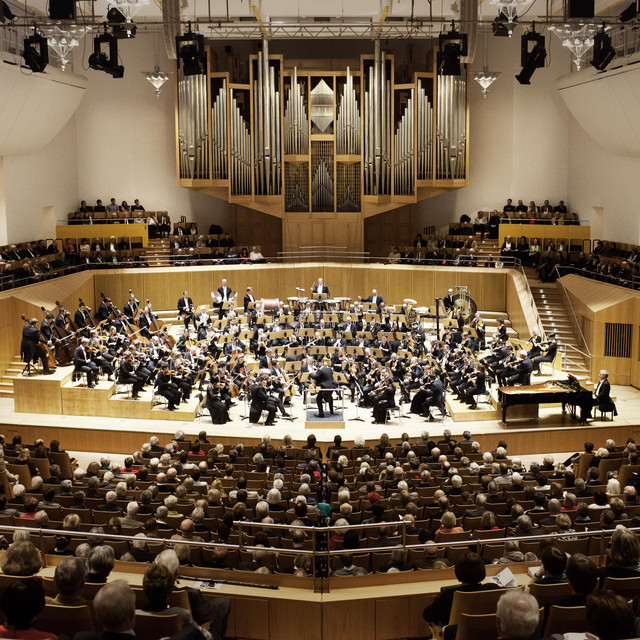
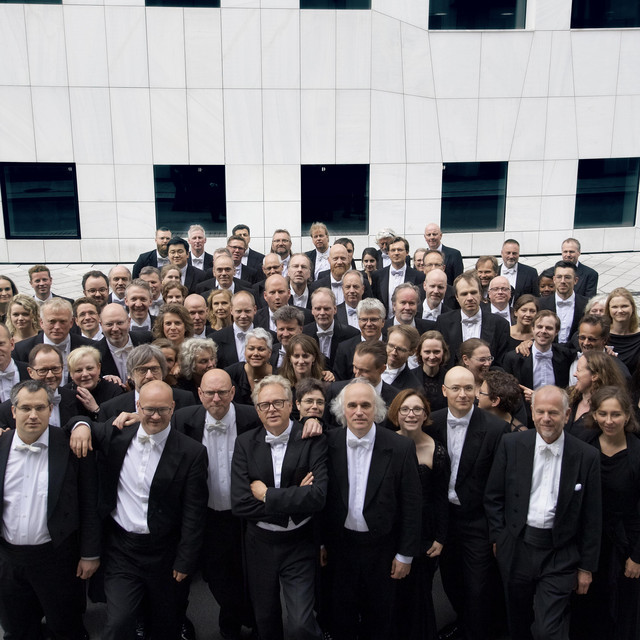
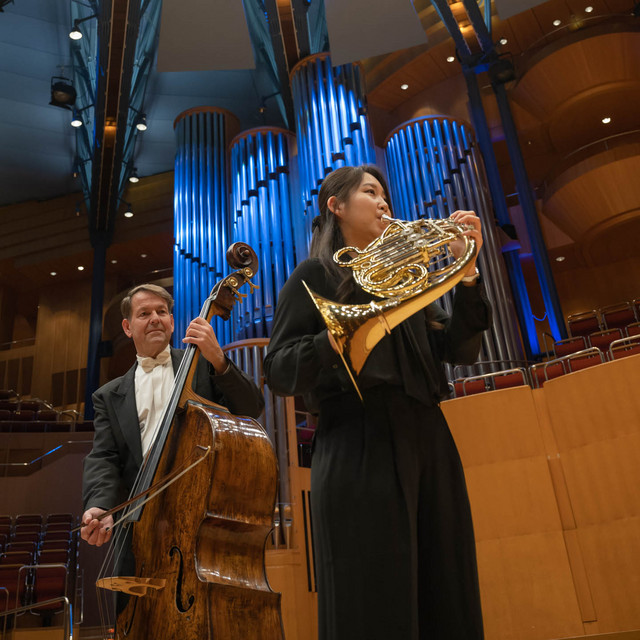
The St. Louis Symphony Orchestra is the second oldest professional orchestra in the U.S.; only the <a href="spotify:artist:3gacryguGmpmCvgPGt2CBI">New York Philharmonic</a> was established earlier. Though its history has been turbulent at times, the quality and prestige of the St. Louis Symphony has shown through in performances and recordings, for which it has been nominated for 60 Grammy Awards, with nine wins.
The SLSO was founded in 1880 as the St. Louis Choral Society by its first music director, Joseph Otten. It originally focused on choral works, and in 1881-1882, was accompanied by a small orchestra. In 1890, the St. Louis Choral Society merged with the St. Louis Musical Union, a small orchestra that was founded in 1881 by August Waldauer. With the merger, the name was changed to the St. Louis Choral-Symphony Society. Otten remained as the music director until 1894 when he was succeeded by Alfred Ernst. Ernst expanded the group's concert schedule, and when the World's Fair was held in St. Louis in 1904, he led the orchestra in performances nearly every day of the fair. These appearances garnered new attention to the group from the city and state. Along with the arrival of its third music director in 1907, Max Zuch, the Society was renamed the St. Louis Symphony Orchestra. Zuch expanded the orchestra's concert schedule further and incorporated popular music concerts with classical to broaden the orchestra's audience. Following Zuch's death in 1921, <a href="spotify:artist:1VXg1CurZZhhICzanrpI0q">Rudolf Genz</a> was named the permanent conductor. <a href="spotify:artist:1VXg1CurZZhhICzanrpI0q">Genz</a> led the orchestra in children's concerts and on tours, but his programming choices of contemporary music by the likes of <a href="spotify:artist:7ie36YytMoKtPiL7tUvmoE">Stravinsky</a> and <a href="spotify:artist:2ANtgfhQkKpsW6EYSDqldz">Mahler</a> were met disapprovingly by audiences, and he was forced to resign in 1927.
The SLSO was led by guest conductors for the next four seasons before hiring <a href="spotify:artist:3i9zo6m90f9mokNIXqCu0M">Vladimir Golschmann</a> as its next music director in 1931. Under <a href="spotify:artist:3i9zo6m90f9mokNIXqCu0M">Golschmann</a>, the SLSO attracted world-class soloists and higher quality principals. He led the SLSO until 1958, serving as conductor emeritus from 1955-1958 while the orchestra searched for its new director. Following <a href="spotify:artist:3i9zo6m90f9mokNIXqCu0M">Golschmann</a> were Eduard van Remoortel (1958-1962) and Eleazar De Carvalho (1962-1968). Under De Carvalho, the SLSO moved to its current home at Powell Hall in 1968. De Carvalho's programming of contemporary music was met with a similar reaction from his audience as <a href="spotify:artist:1VXg1CurZZhhICzanrpI0q">Genz</a> years earlier. <a href="spotify:artist:6zgla7izAy39uJS1BlWCno">Walter Susskind</a> (1968-1975) followed De Carvalho and returned the SLSO to a more standard repertoire. He expanded the roster further, raised the quality of the performances, and initiated several festivals with the orchestra, including the Mississippi River Festival. <a href="spotify:artist:6zgla7izAy39uJS1BlWCno">Susskind</a> was succeeded by <a href="spotify:artist:1N4mnF6dUnTojr7pN4bQl5">Jerzy Semkow</a> (1975-1979). In 1976, <a href="spotify:artist:68tBK9r9zdViB8V73G5SA9">Richard Hayman</a> was brought on as the SLSO's pops conductor; he held this title until 2014.
In 1979, the SLSO hired <a href="spotify:artist:0xcogVKoT8y5OBIg3L0fua">Leonard Slatkin</a> as its next music director; with this appointment, the SLSO cemented its role as a leader among orchestras in the U.S. and elsewhere. In 1970, <a href="spotify:artist:0xcogVKoT8y5OBIg3L0fua">Slatkin</a> founded the St. Louis Youth Orchestra and accelerated the orchestra's recording output. He programmed a mix of standard and contemporary repertoire, with an emphasis on American music, commissioning and premiering many new works. <a href="spotify:artist:0xcogVKoT8y5OBIg3L0fua">Slatkin</a> remained in this post until 1996 when he was named conductor laureate. <a href="spotify:artist:5UlxV9XPbZZX4d8HTdFO7P">Hans Vonk</a> (1996-2002) followed <a href="spotify:artist:0xcogVKoT8y5OBIg3L0fua">Slatkin</a> and was, in turn, followed by David Robertson (2005-2018). Under Robertson, the SLSO nurtured a long, fruitful relationship with composer <a href="spotify:artist:35OhI7DSls022v9Bz9r0VZ">John Adams</a>: The SLSO, under Robertson, won a 2015 Grammy Award for John Adams: City Noir. In 2017, the SLSO announced <a href="spotify:artist:7FPSLDmxB1UckL2c2NN1kb">Stéphane Denève</a> as its next music director; he assumed this position in 2019.
The SLSO's recording history began in the 1930s under <a href="spotify:artist:3i9zo6m90f9mokNIXqCu0M">Golschmann</a>. It has recorded for <a href="spotify:search:label%3A%22EMI%22">EMI</a>, <a href="spotify:search:label%3A%22Nonesuch%22">Nonesuch</a>, its own label, <a href="spotify:search:label%3A%22Arch+Media%22">Arch Media</a>, and most notably, <a href="spotify:search:label%3A%22RCA%22">RCA</a>, which signed <a href="spotify:artist:0xcogVKoT8y5OBIg3L0fua">Slatkin</a> and the SLSO to a 30-release contract in the 1980s. Its recordings have been recognized by many organizations and with many awards. In 2019, the SLSO, led by Robertson and joined by soloist <a href="spotify:artist:34GSTDMJq8E2aqyV2b7G7z">Orli Shaham</a>, issued an album of Mozart piano concertos on <a href="spotify:search:label%3A%22Canary+Classics%22">Canary Classics</a>.
The SLSO was founded in 1880 as the St. Louis Choral Society by its first music director, Joseph Otten. It originally focused on choral works, and in 1881-1882, was accompanied by a small orchestra. In 1890, the St. Louis Choral Society merged with the St. Louis Musical Union, a small orchestra that was founded in 1881 by August Waldauer. With the merger, the name was changed to the St. Louis Choral-Symphony Society. Otten remained as the music director until 1894 when he was succeeded by Alfred Ernst. Ernst expanded the group's concert schedule, and when the World's Fair was held in St. Louis in 1904, he led the orchestra in performances nearly every day of the fair. These appearances garnered new attention to the group from the city and state. Along with the arrival of its third music director in 1907, Max Zuch, the Society was renamed the St. Louis Symphony Orchestra. Zuch expanded the orchestra's concert schedule further and incorporated popular music concerts with classical to broaden the orchestra's audience. Following Zuch's death in 1921, <a href="spotify:artist:1VXg1CurZZhhICzanrpI0q">Rudolf Genz</a> was named the permanent conductor. <a href="spotify:artist:1VXg1CurZZhhICzanrpI0q">Genz</a> led the orchestra in children's concerts and on tours, but his programming choices of contemporary music by the likes of <a href="spotify:artist:7ie36YytMoKtPiL7tUvmoE">Stravinsky</a> and <a href="spotify:artist:2ANtgfhQkKpsW6EYSDqldz">Mahler</a> were met disapprovingly by audiences, and he was forced to resign in 1927.
The SLSO was led by guest conductors for the next four seasons before hiring <a href="spotify:artist:3i9zo6m90f9mokNIXqCu0M">Vladimir Golschmann</a> as its next music director in 1931. Under <a href="spotify:artist:3i9zo6m90f9mokNIXqCu0M">Golschmann</a>, the SLSO attracted world-class soloists and higher quality principals. He led the SLSO until 1958, serving as conductor emeritus from 1955-1958 while the orchestra searched for its new director. Following <a href="spotify:artist:3i9zo6m90f9mokNIXqCu0M">Golschmann</a> were Eduard van Remoortel (1958-1962) and Eleazar De Carvalho (1962-1968). Under De Carvalho, the SLSO moved to its current home at Powell Hall in 1968. De Carvalho's programming of contemporary music was met with a similar reaction from his audience as <a href="spotify:artist:1VXg1CurZZhhICzanrpI0q">Genz</a> years earlier. <a href="spotify:artist:6zgla7izAy39uJS1BlWCno">Walter Susskind</a> (1968-1975) followed De Carvalho and returned the SLSO to a more standard repertoire. He expanded the roster further, raised the quality of the performances, and initiated several festivals with the orchestra, including the Mississippi River Festival. <a href="spotify:artist:6zgla7izAy39uJS1BlWCno">Susskind</a> was succeeded by <a href="spotify:artist:1N4mnF6dUnTojr7pN4bQl5">Jerzy Semkow</a> (1975-1979). In 1976, <a href="spotify:artist:68tBK9r9zdViB8V73G5SA9">Richard Hayman</a> was brought on as the SLSO's pops conductor; he held this title until 2014.
In 1979, the SLSO hired <a href="spotify:artist:0xcogVKoT8y5OBIg3L0fua">Leonard Slatkin</a> as its next music director; with this appointment, the SLSO cemented its role as a leader among orchestras in the U.S. and elsewhere. In 1970, <a href="spotify:artist:0xcogVKoT8y5OBIg3L0fua">Slatkin</a> founded the St. Louis Youth Orchestra and accelerated the orchestra's recording output. He programmed a mix of standard and contemporary repertoire, with an emphasis on American music, commissioning and premiering many new works. <a href="spotify:artist:0xcogVKoT8y5OBIg3L0fua">Slatkin</a> remained in this post until 1996 when he was named conductor laureate. <a href="spotify:artist:5UlxV9XPbZZX4d8HTdFO7P">Hans Vonk</a> (1996-2002) followed <a href="spotify:artist:0xcogVKoT8y5OBIg3L0fua">Slatkin</a> and was, in turn, followed by David Robertson (2005-2018). Under Robertson, the SLSO nurtured a long, fruitful relationship with composer <a href="spotify:artist:35OhI7DSls022v9Bz9r0VZ">John Adams</a>: The SLSO, under Robertson, won a 2015 Grammy Award for John Adams: City Noir. In 2017, the SLSO announced <a href="spotify:artist:7FPSLDmxB1UckL2c2NN1kb">Stéphane Denève</a> as its next music director; he assumed this position in 2019.
The SLSO's recording history began in the 1930s under <a href="spotify:artist:3i9zo6m90f9mokNIXqCu0M">Golschmann</a>. It has recorded for <a href="spotify:search:label%3A%22EMI%22">EMI</a>, <a href="spotify:search:label%3A%22Nonesuch%22">Nonesuch</a>, its own label, <a href="spotify:search:label%3A%22Arch+Media%22">Arch Media</a>, and most notably, <a href="spotify:search:label%3A%22RCA%22">RCA</a>, which signed <a href="spotify:artist:0xcogVKoT8y5OBIg3L0fua">Slatkin</a> and the SLSO to a 30-release contract in the 1980s. Its recordings have been recognized by many organizations and with many awards. In 2019, the SLSO, led by Robertson and joined by soloist <a href="spotify:artist:34GSTDMJq8E2aqyV2b7G7z">Orli Shaham</a>, issued an album of Mozart piano concertos on <a href="spotify:search:label%3A%22Canary+Classics%22">Canary Classics</a>.
Monthly Listeners
34,423
Monthly Listeners History
Track the evolution of monthly listeners over the last 28 days.
Followers
3,579
Followers History
Track the evolution of followers over the last 28 days.
Top Cities
481 listeners

462 listeners

314 listeners

279 listeners
278 listeners
Related Artists
Paavo Berglund