Data may be outdated
Last updated: 8 months ago — Click refresh to get the latest statistics.
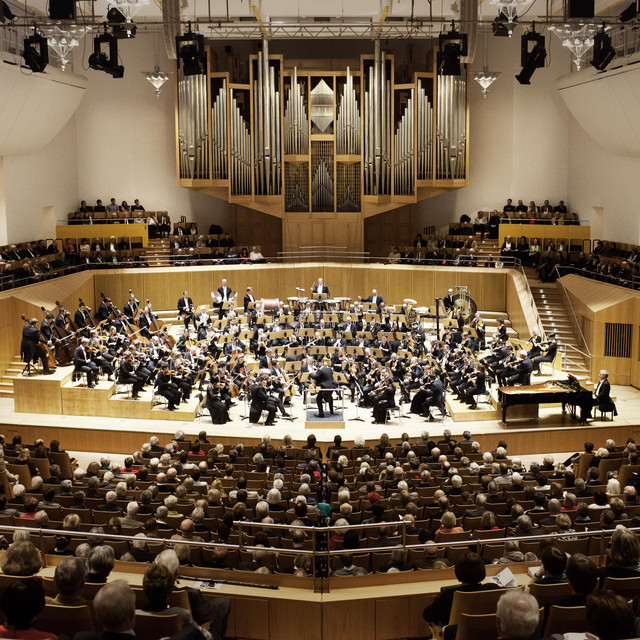
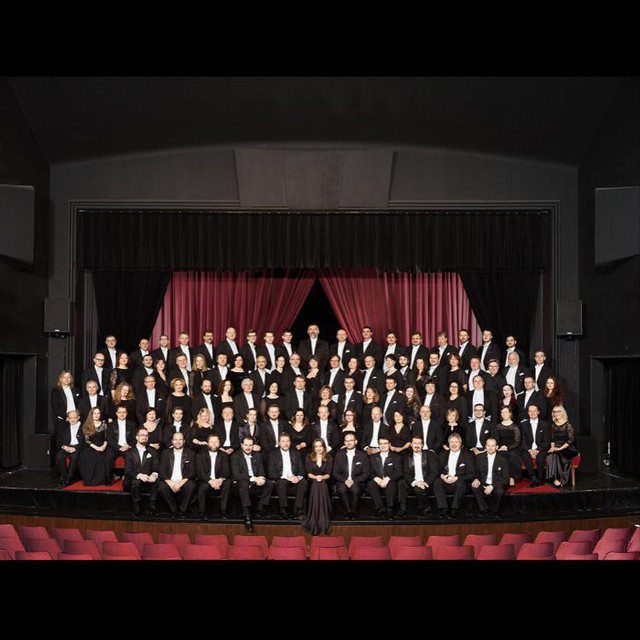
The Hungarian National Philharmonic Orchestra, whose history under various names dates back more than a century, is internationally renowned. The orchestra has benefited from continuity at the podium, with just eight music directors over its long existence. The Hungarian National Philharmonic plays major roles in the music life of Hungary and its capital, Budapest. It has a large catalog of recordings, some of them in the easy listening genre, and in 2024, it was heard on a recording of an unusual version of Massenet's opera Werther.
What is now the Hungarian National Philharmonic Orchestra (Hungarian: Nemzeti Filharmonikus Zeneka) was founded in 1923 in Budapest. Its original name was the Metropolitan Orchestra (Hungarian: Székesfővárosi Zeneka). The orchestra's first principal conductor was Dezső Bor, who held the position until 1939. He was succeeded by Béla Csilléry (1939-1945), the team of Lászlé Somogyi and <a href="spotify:artist:0BjUTtTzgWxoQkbGjz4NmZ">Ferenc Fricsay</a> (1945-1952), <a href="spotify:artist:1psO8523hUonzyToXiXMkh">János Ferencsik</a> (1952-1984), <a href="spotify:artist:0xpPJrazyuOJrjCxYuBLc2">Ken-Ichiro Kobayashi</a> (1987-1997, the group's and thus far only non-Hungarian conductor, who remained active with the group in an honorary capacity), <a href="spotify:artist:5Gi9bw3svtZMwonzcQG2wm">Zoltán Kocsis</a> (1997-2016), <a href="spotify:artist:5j4ihWIizxo6HU5ekm74SI">Zsolt Hamar</a> (late 2010s), and, as of the mid-2020s, György Vashegyi. In 1952, the group's name was changed to the Hungarian State Symphony Orchestra (Hungarian: Magyar Állami Hangversenyzenekar), and in 1997, under <a href="spotify:artist:5Gi9bw3svtZMwonzcQG2wm">Kocsis</a>, it assumed its present name. The orchestra's history on recordings dates back to the 1960s; an early CD release was a reissue of a complete cycle of Beethoven symphonies recorded under <a href="spotify:artist:1psO8523hUonzyToXiXMkh">Ferencsik</a>.
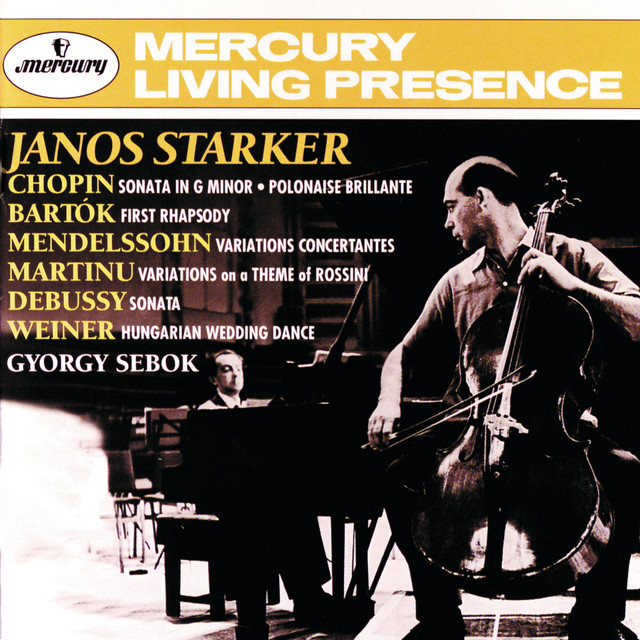
Even under Communism, the orchestra had an international reputation and attracted prestigious guest conductors, including <a href="spotify:artist:3EQvBmWlfyaRLGDuVfKmve">Lorin Maazel</a>, <a href="spotify:artist:52sDxFX9DvIxUupTy8f1yx">Leopold Stokowski</a>, <a href="spotify:artist:6HclTVD03WSY6GUpN16BkP">Claudio Abbado</a>, and <a href="spotify:artist:1e8TlvBk6qegjR3fkYZ9hV">Ernest Ansermet</a>. The orchestra also featured top-notch international soloists, such as pianist <a href="spotify:artist:4hBgCK8FyJ5bV36ZZLB56X">Sviatoslav Richter</a>, violinist <a href="spotify:artist:32i0ni9RO8Q7T7T7ZqkGU2">Yehudi Menuhin</a>, and cellist <a href="spotify:artist:6D7itIGHznFfHx3ZDqCk3j">János Starker</a>. Under <a href="spotify:artist:5Gi9bw3svtZMwonzcQG2wm">Kocsis</a>, whose term as conductor was cut short by his death in 2016, the orchestra began to tour internationally, appearing in almost every European country as well as in the U.S. The orchestra frequently appeared on collections of orchestral easy listening music in the 1990s and 2000s. In 2006, it began recording "<a href="spotify:artist:5zyNXVd952fWOjkdGHCvPd">Bartók</a> 125," a major recorded edition of <a href="spotify:artist:5zyNXVd952fWOjkdGHCvPd">Bartók</a>'s music on the <a href="spotify:search:label%3A%22Hungaroton%22">Hungaroton</a> label, marking the composer's 125th birthday, and planned to include 31 CDs. The orchestra has also recorded for <a href="spotify:search:label%3A%22Red+Bus+Classical%22">Red Bus Classical</a>, <a href="spotify:search:label%3A%22BMC+Records%22">BMC Records</a>, <a href="spotify:search:label%3A%22Celestial+Harmonies%22">Celestial Harmonies</a>, and the opera specialty label <a href="spotify:search:label%3A%22Palazzetto+Bru+Zane%22">Palazzetto Bru Zane</a>, which, in 2024, released the orchestra's recording of the baritone version of Massenet's opera Werther. ~ James Manheim, Rovi
What is now the Hungarian National Philharmonic Orchestra (Hungarian: Nemzeti Filharmonikus Zeneka) was founded in 1923 in Budapest. Its original name was the Metropolitan Orchestra (Hungarian: Székesfővárosi Zeneka). The orchestra's first principal conductor was Dezső Bor, who held the position until 1939. He was succeeded by Béla Csilléry (1939-1945), the team of Lászlé Somogyi and <a href="spotify:artist:0BjUTtTzgWxoQkbGjz4NmZ">Ferenc Fricsay</a> (1945-1952), <a href="spotify:artist:1psO8523hUonzyToXiXMkh">János Ferencsik</a> (1952-1984), <a href="spotify:artist:0xpPJrazyuOJrjCxYuBLc2">Ken-Ichiro Kobayashi</a> (1987-1997, the group's and thus far only non-Hungarian conductor, who remained active with the group in an honorary capacity), <a href="spotify:artist:5Gi9bw3svtZMwonzcQG2wm">Zoltán Kocsis</a> (1997-2016), <a href="spotify:artist:5j4ihWIizxo6HU5ekm74SI">Zsolt Hamar</a> (late 2010s), and, as of the mid-2020s, György Vashegyi. In 1952, the group's name was changed to the Hungarian State Symphony Orchestra (Hungarian: Magyar Állami Hangversenyzenekar), and in 1997, under <a href="spotify:artist:5Gi9bw3svtZMwonzcQG2wm">Kocsis</a>, it assumed its present name. The orchestra's history on recordings dates back to the 1960s; an early CD release was a reissue of a complete cycle of Beethoven symphonies recorded under <a href="spotify:artist:1psO8523hUonzyToXiXMkh">Ferencsik</a>.
Even under Communism, the orchestra had an international reputation and attracted prestigious guest conductors, including <a href="spotify:artist:3EQvBmWlfyaRLGDuVfKmve">Lorin Maazel</a>, <a href="spotify:artist:52sDxFX9DvIxUupTy8f1yx">Leopold Stokowski</a>, <a href="spotify:artist:6HclTVD03WSY6GUpN16BkP">Claudio Abbado</a>, and <a href="spotify:artist:1e8TlvBk6qegjR3fkYZ9hV">Ernest Ansermet</a>. The orchestra also featured top-notch international soloists, such as pianist <a href="spotify:artist:4hBgCK8FyJ5bV36ZZLB56X">Sviatoslav Richter</a>, violinist <a href="spotify:artist:32i0ni9RO8Q7T7T7ZqkGU2">Yehudi Menuhin</a>, and cellist <a href="spotify:artist:6D7itIGHznFfHx3ZDqCk3j">János Starker</a>. Under <a href="spotify:artist:5Gi9bw3svtZMwonzcQG2wm">Kocsis</a>, whose term as conductor was cut short by his death in 2016, the orchestra began to tour internationally, appearing in almost every European country as well as in the U.S. The orchestra frequently appeared on collections of orchestral easy listening music in the 1990s and 2000s. In 2006, it began recording "<a href="spotify:artist:5zyNXVd952fWOjkdGHCvPd">Bartók</a> 125," a major recorded edition of <a href="spotify:artist:5zyNXVd952fWOjkdGHCvPd">Bartók</a>'s music on the <a href="spotify:search:label%3A%22Hungaroton%22">Hungaroton</a> label, marking the composer's 125th birthday, and planned to include 31 CDs. The orchestra has also recorded for <a href="spotify:search:label%3A%22Red+Bus+Classical%22">Red Bus Classical</a>, <a href="spotify:search:label%3A%22BMC+Records%22">BMC Records</a>, <a href="spotify:search:label%3A%22Celestial+Harmonies%22">Celestial Harmonies</a>, and the opera specialty label <a href="spotify:search:label%3A%22Palazzetto+Bru+Zane%22">Palazzetto Bru Zane</a>, which, in 2024, released the orchestra's recording of the baritone version of Massenet's opera Werther. ~ James Manheim, Rovi
Monthly Listeners
12,673
Monthly Listeners History
Track the evolution of monthly listeners over the last 28 days.
Followers
1,177
Followers History
Track the evolution of followers over the last 28 days.
Top Cities
268 listeners

233 listeners

203 listeners

108 listeners

103 listeners
Related Artists


Janáček Philharmonic Orchestra


Staatsphilharmonie Rheinland-Pfalz

Paavo Berglund


Vasily Kalinnikov

Ole Schmidt

Horst Stein



Thierry Fischer



Leó Weiner