Data may be outdated
Last updated: 9 months ago — Click refresh to get the latest statistics.
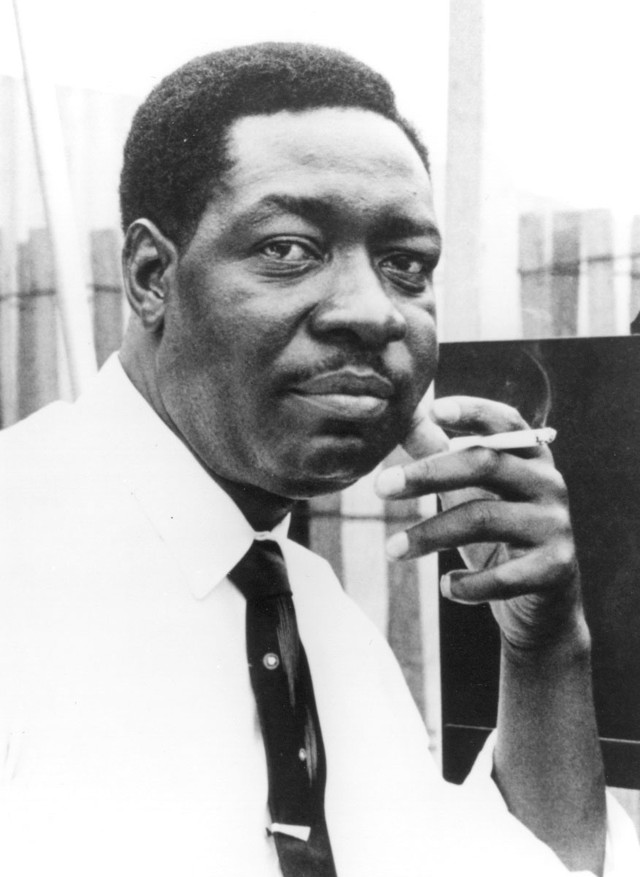
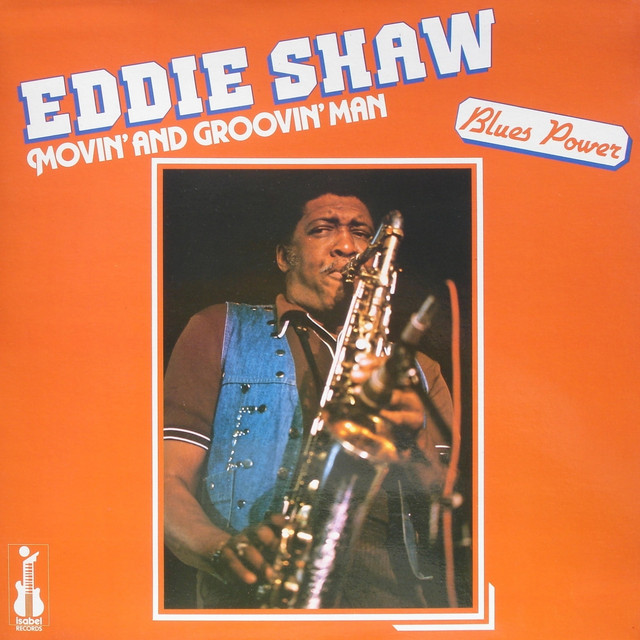
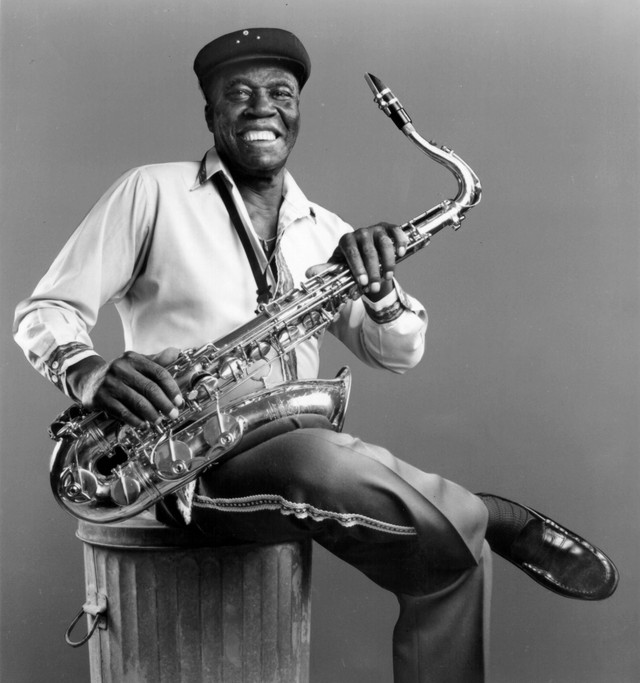
When it comes to blues, Chicago's strictly a guitar and harmonica town. Saxophonists who make a living leading a blues band in the Windy City are scarce as hen's teeth. But Eddie Shaw did precisely that after his longtime boss, <a href="spotify:artist:0Wxy5Qka8BN9crcFkiAxSR">Howlin' Wolf</a>, died in 1976. The powerfully constructed tenor saxist rubbed elbows with an amazing array of luminaries over his 60-plus years in the business. By the time he was 14, Shaw was jamming with <a href="spotify:artist:0FAxkBiT0g3jKF2AaKEipb">Ike Turner</a>'s combo around Greenville, Mississippi. At a gig in Itta Bena where Shaw sat in, <a href="spotify:artist:4y6J8jwRAwO4dssiSmN91R">Muddy Waters</a> extended the young saxman an invitation he couldn't refuse: a steady job with <a href="spotify:artist:4y6J8jwRAwO4dssiSmN91R">Waters</a>' unparalleled band in Chicago. After a few years, Shaw switched his on-stage allegiance to <a href="spotify:artist:4y6J8jwRAwO4dssiSmN91R">Waters</a>' chief rival, the ferocious <a href="spotify:artist:0Wxy5Qka8BN9crcFkiAxSR">Howlin' Wolf</a>, staying with him until the very end and eventually graduating to a featured role as <a href="spotify:artist:0Wxy5Qka8BN9crcFkiAxSR">Wolf</a>'s bandleader. Shaw also shared a West Side bandstand or two along the way with <a href="spotify:artist:5dCuFngSPyOOnTAvrC7v2s">Freddie King</a>, <a href="spotify:artist:1h0hOL3bVcYlg4xcSjU7fP">Otis Rush</a>, and <a href="spotify:artist:0XErJwG6aCEj7NpKsEZrrO">Magic Sam</a>. The saxist did a 1966 session with <a href="spotify:artist:0XErJwG6aCEj7NpKsEZrrO">Sam</a> that produced his first single, the down-in-the-alley instrumental "Blues for the West Side" (available on <a href="spotify:search:label%3A%22Delmark%22">Delmark</a>'s Sweet Home Chicago anthology). Shaw also blew his heart out on <a href="spotify:artist:0XErJwG6aCEj7NpKsEZrrO">Sam</a>'s 1968 <a href="spotify:search:label%3A%22Delmark%22">Delmark</a> encore LP, Black Magic.
Eddie Shaw's own solo recording career finally took off during the late '70s, with a standout appearance on <a href="spotify:search:label%3A%22Alligator%22">Alligator</a>'s Living Chicago Blues, Vol. 1 anthology in 1978, followed by his own LPs for <a href="spotify:search:label%3A%22Simmons%22">Simmons</a>, <a href="spotify:search:label%3A%22Rooster+Blues%22">Rooster Blues</a> (In the Land of the Crossroads), and the Austrian <a href="spotify:search:label%3A%22Wolf+imprint%22">Wolf imprint</a>, for whom he recorded from the '90s into the 21st century with albums such as Home Alone (1995), The Blues Is Nothing But Good News! (1996), Too Many Highways (1999), and Give Me Time (2005). (Shaw's lead guitar-playing son <a href="spotify:artist:4APkv2eNX8LSuP7KC5ju43">Eddie, Jr.</a> -- aka Vaan Shaw -- became a member of his father's band and also recorded for <a href="spotify:search:label%3A%22the+Wolf+label%22">the Wolf label</a>; his other son, Stan Shaw, is a noted film and TV actor.) In 2012, Stringtown Records released Still Riding High by Eddie Shaw & the 757 Allstars. Shaw won Blues Music Awards in 2013 and 2014, and Chicago mayor Rahm Emanuel proclaimed May 3 as Eddie Shaw Day in the city. After his long and illustrious blues career, Eddie Shaw died in Chicago in January 2018 at the age of 80. ~ Bill Dahl, Rovi
Eddie Shaw's own solo recording career finally took off during the late '70s, with a standout appearance on <a href="spotify:search:label%3A%22Alligator%22">Alligator</a>'s Living Chicago Blues, Vol. 1 anthology in 1978, followed by his own LPs for <a href="spotify:search:label%3A%22Simmons%22">Simmons</a>, <a href="spotify:search:label%3A%22Rooster+Blues%22">Rooster Blues</a> (In the Land of the Crossroads), and the Austrian <a href="spotify:search:label%3A%22Wolf+imprint%22">Wolf imprint</a>, for whom he recorded from the '90s into the 21st century with albums such as Home Alone (1995), The Blues Is Nothing But Good News! (1996), Too Many Highways (1999), and Give Me Time (2005). (Shaw's lead guitar-playing son <a href="spotify:artist:4APkv2eNX8LSuP7KC5ju43">Eddie, Jr.</a> -- aka Vaan Shaw -- became a member of his father's band and also recorded for <a href="spotify:search:label%3A%22the+Wolf+label%22">the Wolf label</a>; his other son, Stan Shaw, is a noted film and TV actor.) In 2012, Stringtown Records released Still Riding High by Eddie Shaw & the 757 Allstars. Shaw won Blues Music Awards in 2013 and 2014, and Chicago mayor Rahm Emanuel proclaimed May 3 as Eddie Shaw Day in the city. After his long and illustrious blues career, Eddie Shaw died in Chicago in January 2018 at the age of 80. ~ Bill Dahl, Rovi
Monthly Listeners
67,029
Monthly Listeners History
Track the evolution of monthly listeners over the last 28 days.
Followers
3,040
Followers History
Track the evolution of followers over the last 28 days.
Top Cities
1,734 listeners

762 listeners

630 listeners

620 listeners
592 listeners

Related Artists







Fenton Robinson

Jimmie Vaughan