Data may be outdated
Last updated: 8 months ago — Click refresh to get the latest statistics.
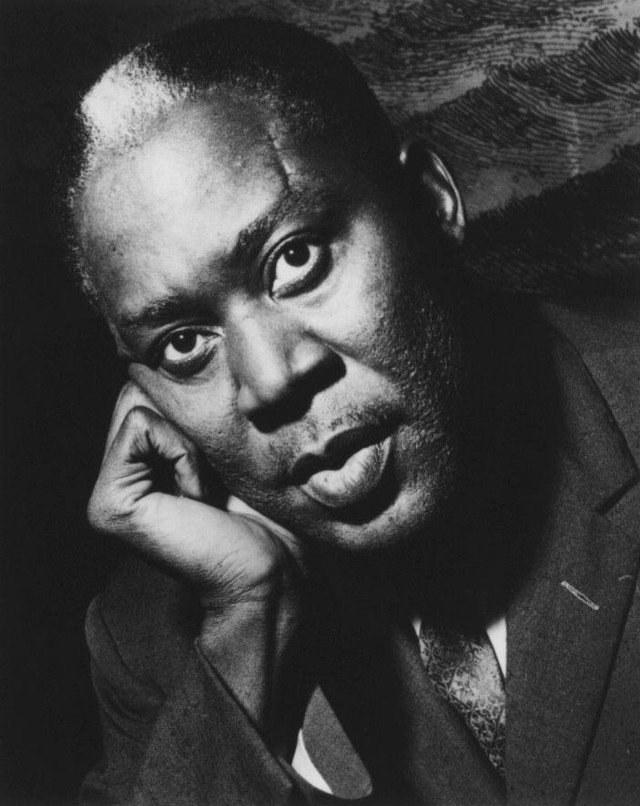
A core member of <a href="spotify:artist:4y6J8jwRAwO4dssiSmN91R">Muddy Waters</a>' legendary bands of the 1950s and '60s, pianist, vocalist, and composer Otis Spann is widely considered the standard bearer for postwar blues pianists. Spann played on most of <a href="spotify:artist:4y6J8jwRAwO4dssiSmN91R">Waters</a>' classic <a href="spotify:search:label%3A%22Chess%22">Chess</a> sides between 1953 and 1969, the driving engine on numerous <a href="spotify:artist:4y6J8jwRAwO4dssiSmN91R">Waters</a>' jukebox and radio hits including "Got My Mojo Working" and "Mannish Boy." He offered a barnstorming approach to boogie woogie and stride in developing the Chicago blues piano style. His own debut, 1960's Otis Spann Is the Blues, also featured the guitar and vocals of <a href="spotify:artist:5hId7yMy0kbGP6IiKWVDql">Robert Lockwood, Jr</a>. The Blues of Otis Spann appeared in 1964 and featured the mysterious guitarist "Brother" (a pseudonym for <a href="spotify:artist:4y6J8jwRAwO4dssiSmN91R">Waters</a>). Spann cut well-received sides for <a href="spotify:search:label%3A%22Bluesway%22">Bluesway</a> -- 1966's The Blues Is Where It's At and 1968's The Bottom of the Blues. In 1969, he released five albums, among them Cryin' Time for <a href="spotify:search:label%3A%22Vanguard%22">Vanguard</a>, The Biggest Thing Since Colossus for <a href="spotify:search:label%3A%22Blue+Horizon%22">Blue Horizon</a>, and Super Black Blues with <a href="spotify:artist:6nPKmEbQmR8jGZEm7ArOFX">T-Bone Walker</a> and <a href="spotify:artist:1DTgcOxytJHD8p17mhSgd7">Big Joe Turner</a>. He was inducted into the Blues Hall of Fame in 1980.
Spann's birth date and birthplace are in dispute. Some claim he was born in Jackson, Mississippi, in 1930, but blues researchers Bob Eagle and <a href="spotify:search:label%3A%22Eric+LeBlanc%22">Eric LeBlanc</a> concluded from census records and other official information that he was born in 1924 in Belzoni, Mississippi. His birth father was, according to apocryphal sources, a pianist called Friday Ford. His mother, Josephine Erby, was a guitarist who played with <a href="spotify:artist:2WGyRLosdDgGJTLijIPpNC">Memphis Minnie</a> and <a href="spotify:artist:5ESobCkc6JI4tIMxQttqeg">Bessie Smith</a>. Spann's stepfather, Frank Houston Spann, was a preacher and musician. Otis was one of five children. He began playing the piano at seven, with some instruction from Friday Ford, Frank Spann, and, reportedly,<a href="spotify:artist:1C7crJJ0HPOCCllrBaw6Rz"> Little Brother Montgomery</a>. At 14, he was playing in bands around Jackson. He found inspiration in the 78 rpm records of <a href="spotify:artist:6MaCG0Ef8DahWf6Mn0Ikve">Big Maceo</a>. After his mother's death, he followed his stepfather to Chicago where he worked as a bricklayer. In the Windy City, Spann began pursuing day work and professional music opportunities, <a href="spotify:artist:6MaCG0Ef8DahWf6Mn0Ikve">Big Maceo</a> took the young pianist under his wing.
Spann gigged on his own and with guitarist <a href="spotify:artist:34FB3bhjBNkf5NW4Blnf3G">Morris Pejoe</a> before hooking up with <a href="spotify:artist:4y6J8jwRAwO4dssiSmN91R">Waters</a> in 1952. His first <a href="spotify:search:label%3A%22Chess%22">Chess</a> date behind the Chicago icon the next year produced "Blow Wind Blow." Subsequent <a href="spotify:artist:4y6J8jwRAwO4dssiSmN91R">Waters</a> classics sporting Spann's ivories include "Hoochie Coochie Man," "I'm Ready," and "Just Make Love to Me."
Strangely, <a href="spotify:search:label%3A%22Chess%22">Chess</a> somehow failed to recognize Spann's vocal abilities. His own <a href="spotify:search:label%3A%22Chess%22">Chess</a> output was limited to a 1954 single, "It Must Have Been the Devil," that featured <a href="spotify:artist:5xLSa7l4IV1gsQfhAMvl0U">B.B. King</a> on guitar, and sessions in 1956 and 1963 that remained in the can for decades. So Spann looked elsewhere and waxed the stunning Otis Spann Is the Blues for <a href="spotify:search:label%3A%22Candid%22">Candid</a> with guitarist <a href="spotify:artist:5hId7yMy0kbGP6IiKWVDql">Robert Jr. Lockwood</a> in 1960, and recorded with <a href="spotify:artist:74g0xdNndEjFzMKSRFUMNM">Lonnie Johnson</a> in Copenhagen in 1963, resulting in the following year's See See Rider for <a href="spotify:search:label%3A%22Storyville%22">Storyville</a> -- it also netted a mostly solo outing for the pianist. 1964's The Blues of Otis Spann for British <a href="spotify:search:label%3A%22Decca%22">Decca</a> found him in the company of <a href="spotify:artist:4y6J8jwRAwO4dssiSmN91R">Waters</a> (as "<a href="spotify:artist:4y6J8jwRAwO4dssiSmN91R">Brother</a>") and <a href="spotify:artist:6PAt558ZEZl0DmdXlnjMgD">Eric Clapton</a>. That same year he cut The Blues Never Die! for <a href="spotify:search:label%3A%22Prestige%22">Prestige</a>, sharing vocal duties with <a href="spotify:artist:6mY93oNfUaUwZq67yn3R8k">James Cotton</a>. <a href="spotify:search:label%3A%22Testament%22">Testament</a> recorded Spann as a leader, releasing Otis Spann's Chicago Blues in 1965.
The Blues Is Where It's At, Spann's enduring 1966 album for <a href="spotify:search:label%3A%22ABC-Bluesway%22">ABC-Bluesway</a>, sounded like a live recording but was actually a studio date enlivened by a gaggle of enthusiastic onlookers who applauded every song (<a href="spotify:artist:4y6J8jwRAwO4dssiSmN91R">Waters</a>, guitarist <a href="spotify:artist:20OzBfnrlNjhmpMUrWPoQ7">Sammy Lawhorn</a>, and <a href="spotify:artist:7uXRhPx85VnJVpiEXdEqHl">George "Harmonica" Smith</a> were among the support crew on the date). A <a href="spotify:search:label%3A%22Bluesway%22">Bluesway</a> encore, The Bottom of the Blues, followed in 1968 and featured Otis' wife, <a href="spotify:artist:0foIosf2OiBYPuPbGiIRlu">Lucille Spann</a>, helping out on vocals. That same year he recorded Cryin' Time for <a href="spotify:search:label%3A%22Vanguard%22">Vanguard</a>.
Spann's last few years with <a href="spotify:artist:4y6J8jwRAwO4dssiSmN91R">Muddy Waters</a> were memorable for their collaboration on the <a href="spotify:search:label%3A%22Chess%22">Chess</a> set Fathers and Sons, but the pianist was clearly pining to pursue his solo career. He signed with <a href="spotify:search:label%3A%22Blue+Horizon%22">Blue Horizon</a> and recorded with British blues-rockers <a href="spotify:artist:08GQAI4eElDnROBrJRGE0X">Fleetwood Mac</a>, who served as his backing band on 1969's The Biggest Thing Since Colossus. After turning over the <a href="spotify:artist:4y6J8jwRAwO4dssiSmN91R">Waters</a>' band's piano chair to <a href="spotify:artist:6h3s7UekUkRHes73EG5N55">Pinetop Perkins</a> in 1969, Spann released The Everlasting Blues vs. Otis Span and Up in the Queen's Pad for <a href="spotify:search:label%3A%22Spivey%22">Spivey</a>, Super Black Blues -- with <a href="spotify:artist:6nPKmEbQmR8jGZEm7ArOFX">T-Bone Walker</a> and <a href="spotify:artist:1DTgcOxytJHD8p17mhSgd7">Big Joe Turner</a> -- for <a href="spotify:search:label%3A%22BluesTime%22">BluesTime</a>/Flying Dutchman, and Sweet Giant of the Blues for <a href="spotify:search:label%3A%22Prestige%22">Prestige</a>. That year also saw the release of the archival I Was Raised in Mississippi, which was recorded in New York in 1960.
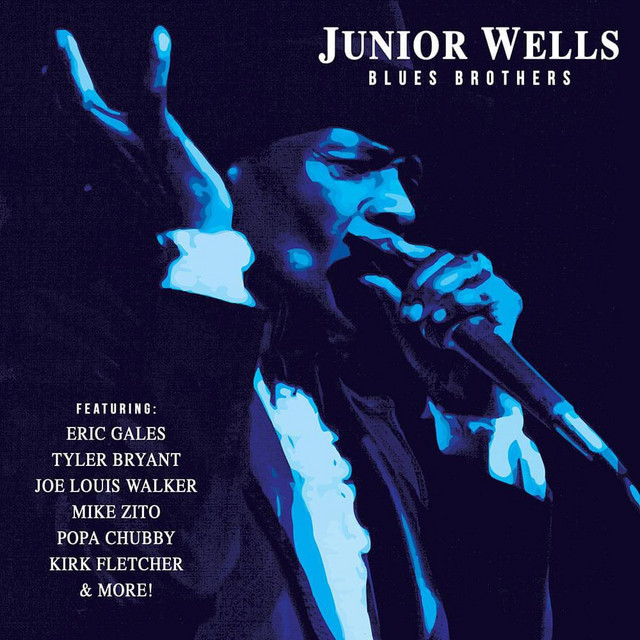
Fate didn't grant Spann much time to achieve his solo dreams, however. He died from liver cancer in April 1970. That very year, <a href="spotify:search:label%3A%22Delmark%22">Delmark</a> released Southside Blues Jam by <a href="spotify:artist:78CBFzwo7wwNaaTYVP5btK">Junior Wells</a>. Recorded between 1969 and early 1970, Spann was a featured collaborator alongside the leader and guitarist <a href="spotify:artist:2gCsNOpiBaMNh20jQ5prf0">Buddy Guy</a>. The set won lavish praise for Spann's imaginative soloing and his interplay with <a href="spotify:artist:2gCsNOpiBaMNh20jQ5prf0">Guy</a>.
In 1972, the Ann Arbor Blues and Jazz Festival re-named their location Otis Spann Memorial Field. In 1980, he and 19 of his peers were inducted into the freshman class of the Blues Hall of Fame.
Spann's grave was unmarked for nearly three decades. Steve Salter (president of the Killer Blues Headstone Project) wrote to Blues Revue magazine, asking them to help him remedy the situation. After an editorial was published, global blues enthusiasts donated to the cause. On June 6, 1999, the gravestone was unveiled in a private ceremony. Spann's influence endures into the 21st century. His work has appeared on dozens of compilations and his catalog has been reissued several times. ~ Bill Dahl & Thom Jurek, Rovi
Spann's birth date and birthplace are in dispute. Some claim he was born in Jackson, Mississippi, in 1930, but blues researchers Bob Eagle and <a href="spotify:search:label%3A%22Eric+LeBlanc%22">Eric LeBlanc</a> concluded from census records and other official information that he was born in 1924 in Belzoni, Mississippi. His birth father was, according to apocryphal sources, a pianist called Friday Ford. His mother, Josephine Erby, was a guitarist who played with <a href="spotify:artist:2WGyRLosdDgGJTLijIPpNC">Memphis Minnie</a> and <a href="spotify:artist:5ESobCkc6JI4tIMxQttqeg">Bessie Smith</a>. Spann's stepfather, Frank Houston Spann, was a preacher and musician. Otis was one of five children. He began playing the piano at seven, with some instruction from Friday Ford, Frank Spann, and, reportedly,<a href="spotify:artist:1C7crJJ0HPOCCllrBaw6Rz"> Little Brother Montgomery</a>. At 14, he was playing in bands around Jackson. He found inspiration in the 78 rpm records of <a href="spotify:artist:6MaCG0Ef8DahWf6Mn0Ikve">Big Maceo</a>. After his mother's death, he followed his stepfather to Chicago where he worked as a bricklayer. In the Windy City, Spann began pursuing day work and professional music opportunities, <a href="spotify:artist:6MaCG0Ef8DahWf6Mn0Ikve">Big Maceo</a> took the young pianist under his wing.
Spann gigged on his own and with guitarist <a href="spotify:artist:34FB3bhjBNkf5NW4Blnf3G">Morris Pejoe</a> before hooking up with <a href="spotify:artist:4y6J8jwRAwO4dssiSmN91R">Waters</a> in 1952. His first <a href="spotify:search:label%3A%22Chess%22">Chess</a> date behind the Chicago icon the next year produced "Blow Wind Blow." Subsequent <a href="spotify:artist:4y6J8jwRAwO4dssiSmN91R">Waters</a> classics sporting Spann's ivories include "Hoochie Coochie Man," "I'm Ready," and "Just Make Love to Me."
Strangely, <a href="spotify:search:label%3A%22Chess%22">Chess</a> somehow failed to recognize Spann's vocal abilities. His own <a href="spotify:search:label%3A%22Chess%22">Chess</a> output was limited to a 1954 single, "It Must Have Been the Devil," that featured <a href="spotify:artist:5xLSa7l4IV1gsQfhAMvl0U">B.B. King</a> on guitar, and sessions in 1956 and 1963 that remained in the can for decades. So Spann looked elsewhere and waxed the stunning Otis Spann Is the Blues for <a href="spotify:search:label%3A%22Candid%22">Candid</a> with guitarist <a href="spotify:artist:5hId7yMy0kbGP6IiKWVDql">Robert Jr. Lockwood</a> in 1960, and recorded with <a href="spotify:artist:74g0xdNndEjFzMKSRFUMNM">Lonnie Johnson</a> in Copenhagen in 1963, resulting in the following year's See See Rider for <a href="spotify:search:label%3A%22Storyville%22">Storyville</a> -- it also netted a mostly solo outing for the pianist. 1964's The Blues of Otis Spann for British <a href="spotify:search:label%3A%22Decca%22">Decca</a> found him in the company of <a href="spotify:artist:4y6J8jwRAwO4dssiSmN91R">Waters</a> (as "<a href="spotify:artist:4y6J8jwRAwO4dssiSmN91R">Brother</a>") and <a href="spotify:artist:6PAt558ZEZl0DmdXlnjMgD">Eric Clapton</a>. That same year he cut The Blues Never Die! for <a href="spotify:search:label%3A%22Prestige%22">Prestige</a>, sharing vocal duties with <a href="spotify:artist:6mY93oNfUaUwZq67yn3R8k">James Cotton</a>. <a href="spotify:search:label%3A%22Testament%22">Testament</a> recorded Spann as a leader, releasing Otis Spann's Chicago Blues in 1965.
The Blues Is Where It's At, Spann's enduring 1966 album for <a href="spotify:search:label%3A%22ABC-Bluesway%22">ABC-Bluesway</a>, sounded like a live recording but was actually a studio date enlivened by a gaggle of enthusiastic onlookers who applauded every song (<a href="spotify:artist:4y6J8jwRAwO4dssiSmN91R">Waters</a>, guitarist <a href="spotify:artist:20OzBfnrlNjhmpMUrWPoQ7">Sammy Lawhorn</a>, and <a href="spotify:artist:7uXRhPx85VnJVpiEXdEqHl">George "Harmonica" Smith</a> were among the support crew on the date). A <a href="spotify:search:label%3A%22Bluesway%22">Bluesway</a> encore, The Bottom of the Blues, followed in 1968 and featured Otis' wife, <a href="spotify:artist:0foIosf2OiBYPuPbGiIRlu">Lucille Spann</a>, helping out on vocals. That same year he recorded Cryin' Time for <a href="spotify:search:label%3A%22Vanguard%22">Vanguard</a>.
Spann's last few years with <a href="spotify:artist:4y6J8jwRAwO4dssiSmN91R">Muddy Waters</a> were memorable for their collaboration on the <a href="spotify:search:label%3A%22Chess%22">Chess</a> set Fathers and Sons, but the pianist was clearly pining to pursue his solo career. He signed with <a href="spotify:search:label%3A%22Blue+Horizon%22">Blue Horizon</a> and recorded with British blues-rockers <a href="spotify:artist:08GQAI4eElDnROBrJRGE0X">Fleetwood Mac</a>, who served as his backing band on 1969's The Biggest Thing Since Colossus. After turning over the <a href="spotify:artist:4y6J8jwRAwO4dssiSmN91R">Waters</a>' band's piano chair to <a href="spotify:artist:6h3s7UekUkRHes73EG5N55">Pinetop Perkins</a> in 1969, Spann released The Everlasting Blues vs. Otis Span and Up in the Queen's Pad for <a href="spotify:search:label%3A%22Spivey%22">Spivey</a>, Super Black Blues -- with <a href="spotify:artist:6nPKmEbQmR8jGZEm7ArOFX">T-Bone Walker</a> and <a href="spotify:artist:1DTgcOxytJHD8p17mhSgd7">Big Joe Turner</a> -- for <a href="spotify:search:label%3A%22BluesTime%22">BluesTime</a>/Flying Dutchman, and Sweet Giant of the Blues for <a href="spotify:search:label%3A%22Prestige%22">Prestige</a>. That year also saw the release of the archival I Was Raised in Mississippi, which was recorded in New York in 1960.
Fate didn't grant Spann much time to achieve his solo dreams, however. He died from liver cancer in April 1970. That very year, <a href="spotify:search:label%3A%22Delmark%22">Delmark</a> released Southside Blues Jam by <a href="spotify:artist:78CBFzwo7wwNaaTYVP5btK">Junior Wells</a>. Recorded between 1969 and early 1970, Spann was a featured collaborator alongside the leader and guitarist <a href="spotify:artist:2gCsNOpiBaMNh20jQ5prf0">Buddy Guy</a>. The set won lavish praise for Spann's imaginative soloing and his interplay with <a href="spotify:artist:2gCsNOpiBaMNh20jQ5prf0">Guy</a>.
In 1972, the Ann Arbor Blues and Jazz Festival re-named their location Otis Spann Memorial Field. In 1980, he and 19 of his peers were inducted into the freshman class of the Blues Hall of Fame.
Spann's grave was unmarked for nearly three decades. Steve Salter (president of the Killer Blues Headstone Project) wrote to Blues Revue magazine, asking them to help him remedy the situation. After an editorial was published, global blues enthusiasts donated to the cause. On June 6, 1999, the gravestone was unveiled in a private ceremony. Spann's influence endures into the 21st century. His work has appeared on dozens of compilations and his catalog has been reissued several times. ~ Bill Dahl & Thom Jurek, Rovi
Monthly Listeners
43,209
Monthly Listeners History
Track the evolution of monthly listeners over the last 28 days.
Followers
59,813
Followers History
Track the evolution of followers over the last 28 days.
Top Cities
713 listeners

569 listeners

459 listeners

457 listeners
408 listeners