Data may be outdated
Last updated: 1 month ago — Click refresh to get the latest statistics.
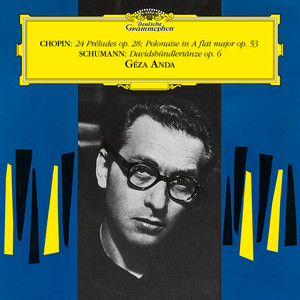
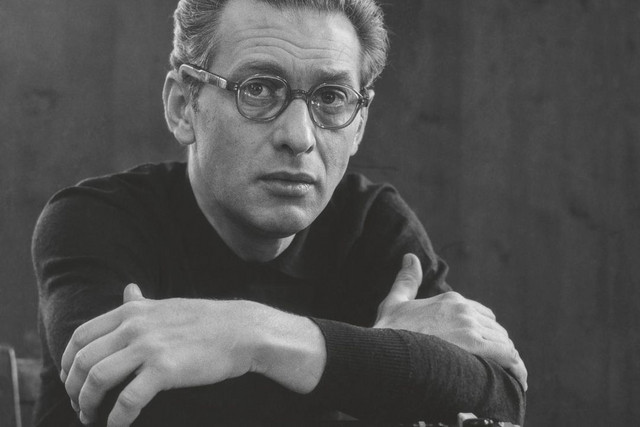
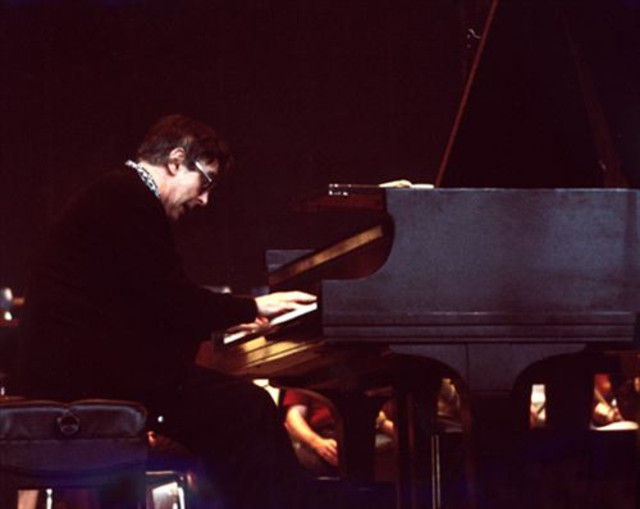
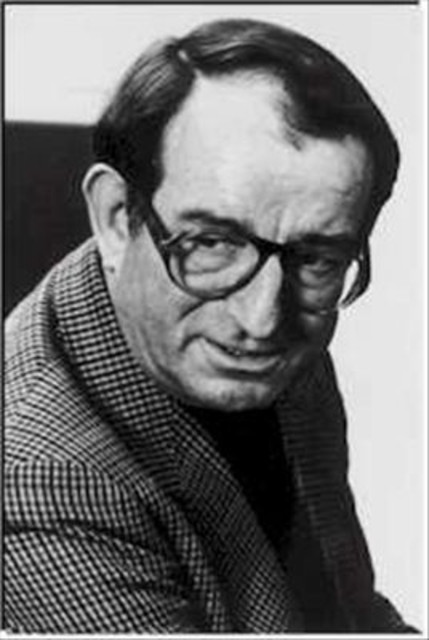
Anda was born in 1921 in Budapest; after studying with Imre Stefaniai and Imre Keeri-Szanto, he became a piano pupil of <a href="spotify:artist:4svbYK3Jck5FTklqYmeRPK">Ernst von Dohnányi</a> at the Royal Music Academy. A stipend allowed him to travel to Berlin, where he performed <a href="spotify:artist:1C3sffOOvQNUwg4YIsvKqy">Franck</a>'s Symphonic Variations under <a href="spotify:artist:4tvRZdoY4H9Wgcf0w1rZqs">Furtwängler</a>. Anda remained in Berlin during the first years of World War II, but in 1942 he fled to Switzerland, where he encountered the great pianist and teacher <a href="spotify:artist:4D1JoQ2bhE1vA7EmnnYC0E">Edwin Fischer</a>. <a href="spotify:artist:4D1JoQ2bhE1vA7EmnnYC0E">Fischer</a> was a proponent of performing the <a href="spotify:artist:4NJhFmfw43RLBLjQvxDuRS">Mozart</a> piano concertos while conducting from the keyboard, and Anda would later adopt this practice, adding bench-led performances of all the concertos (even the early ones) to his repertoire. Anda was among the first to explore the whole range of <a href="spotify:artist:4NJhFmfw43RLBLjQvxDuRS">Mozart</a>'s concertos at a time when only the greatest hits were heard in concert halls; his outstanding 1960s recordings of the complete cycle with the Camerata Academica of the Salzburg Mozarteum remain a milestone in the history of recorded music.
Anda's style was noteworthy for its transparency of texture and its singing qualities, which led <a href="spotify:artist:4tvRZdoY4H9Wgcf0w1rZqs">Furtwängler</a> to dub him a "troubadour" of the piano. His flawless technique allowed him to invest his performances with considerable individuality: his readings of <a href="spotify:artist:2UqjDAXnDxejEyE0CzfUrZ">Schumann</a>, for instance, were breathtakingly multidimensional, full of asides and highly appropriate introspective commentary conveyed from within <a href="spotify:artist:2UqjDAXnDxejEyE0CzfUrZ">Schumann</a>'s notes. He was especially influenced by his artistic partnership with the great Romanian pianist <a href="spotify:artist:4HNzRQlaUVSYkQcBvrDJV9">Clara Haskil</a>, with whom he played two-piano repertoire from 1953 to 1958. Her moral commitment to conveying music's essence deepened Anda's own musical insight; his subsequent performances reflected a new harnessing of Anda's strong musical personality to the service of the music's meaning.
Although his repertoire was wide and ranged across core Classical-Romantic territory, it is likely that Anda will be most remembered for his interpretations of the music of his countryman <a href="spotify:artist:5zyNXVd952fWOjkdGHCvPd">Béla Bartók</a>, whose three piano concertos he recorded in 1959 and 1960. These performances are masterpieces of technical ease and artistic mastery, and remain available in commercial release. A few months before the end of his too-brief life, Anda went into the studio and left a final testament of waltzes by <a href="spotify:artist:7y97mc3bZRFXzT2szRM4L4">Chopin</a>, interpreted in an astonishing otherworldly manner. Anda allows the rhythmic impulse of <a href="spotify:artist:7y97mc3bZRFXzT2szRM4L4">Chopin</a>'s triple-time to hover almost motionlessly, as if contemplated from a distant and ethereal height.
Monthly Listeners
50,593
Monthly Listeners History
Track the evolution of monthly listeners over the last 28 days.
Followers
7,515
Followers History
Track the evolution of followers over the last 28 days.
Total Streams
93.4 million
Total Streams History
Track the evolution of total streams over the last 28 days. This data is calculated from all tracks listed in the artist's discography.
Top Cities





Related Artists

Alfred Prinz




Andrew Marriner





Franz Joseph Haydn


Sir Clifford Curzon

Popular Tracks
1683 tracks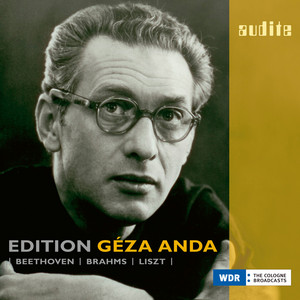


Concerto for Piano No. 21 in C Major, K. 467 - "Elvira Madigan": II. Andante cantabile
May 2, 2013
9.2 million
streams

Piano Concerto No. 21 in C Major, K. 467 - "Elvira Madigan": II. Andante cantabile
May 2, 2013
9.2 million
streams

Piano Concerto No. 21 in C Major, K. 467 "Elvira Madigan": II. Andante
Apr 10, 2014
9.2 million
streams
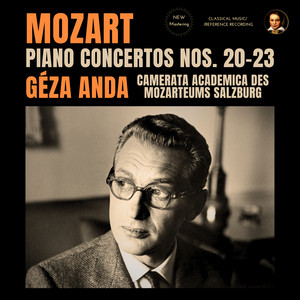
Piano Concerto No. 21 in C Major, K. 467: II. Andante - 2025 Remastered, Salzburg 1961
Jan 1, 1964
9.2 million
streams
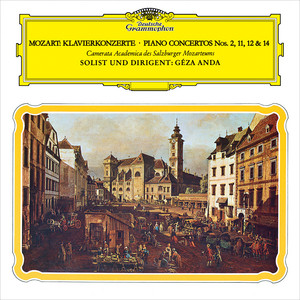

Piano Concerto No. 21 in C Major, K. 467: II. Andante "Elvira Madigan"
Oct 1, 2016
7.9 million
streams