Data may be outdated
Last updated: 9 months ago — Click refresh to get the latest statistics.
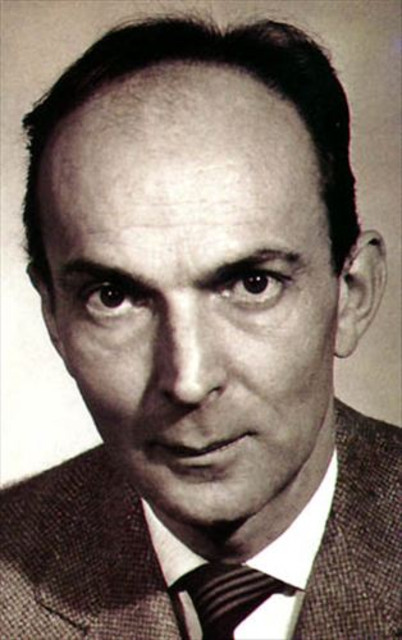
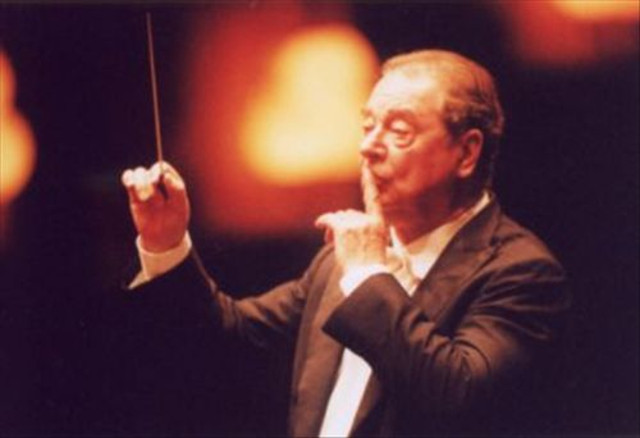
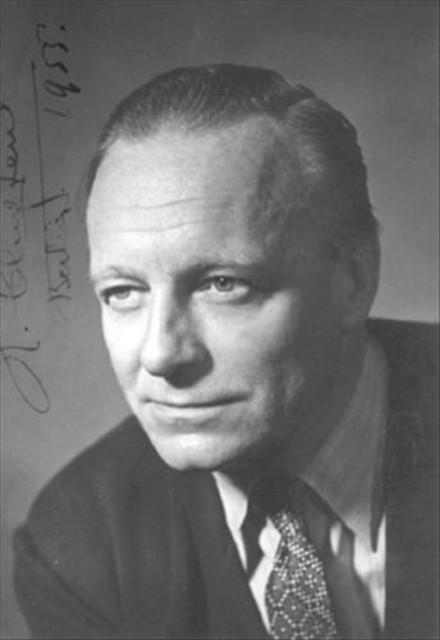
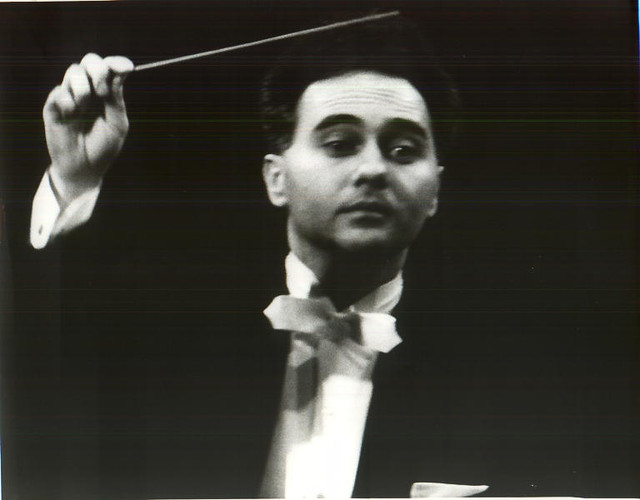
An inordinately gifted conductor, István Kertész died at age 43 in a tragic drowning off the Israeli coast. He had already reached full maturity as a musician, proving his worth in opera, oratorio, and the symphonic repertory. His interests were wide-ranging, including works from the Classical and Romantic periods and large portions of twentieth century music.
Beginning with private lessons in childhood, Kertész studied piano and violin. He continued with violin training at the Ferenc Liszt Academy in Budapest, adding composition under the supervision of such teachers as <a href="spotify:artist:1emaGd6t7KihZTyIePqseu">Weiner</a> and <a href="spotify:artist:7MjAFDEchgyC28I0asclTE">Kodály</a>. He pursued his conducting studies with László Somogyi, at the same time benefiting from studying the performances of <a href="spotify:artist:2ljDHW0zt90SrHDwjVIGXs">Otto Klemperer</a>, who was then working at the Hungarian State Opera. In 1953, Kertész was appointed resident conductor at Györ, two years later transferring his activities to Budapest, where he was hired as coach and conductor. Following the political uprising and Soviet response in 1956, Kertész moved with his family to Germany, subsequently acquiring German citizenship.
From 1958 to 1963, Kertész was general music director at Augsburg. His British debut took place with the <a href="spotify:artist:6I6fmQU7HGrUsCm4B5Nlk3">Royal Liverpool Philharmonic Orchestra</a> in 1960, followed by appearances with the <a href="spotify:artist:5yxyJsFanEAuwSM5kOuZKc">London Symphony Orchestra</a> in 1961. His American debut came with a tour with the NDR Symphony Orchestra in 1961, during which he made a positive impression on American audiences and critics alike. An appointment as general music director in Cologne came in 1964 and 1966 brought both a Covent Garden debut, directing Un ballo in maschera. A global tour with the <a href="spotify:artist:5yxyJsFanEAuwSM5kOuZKc">London Symphony Orchestra</a> led to his succeeding <a href="spotify:artist:5fL4LVKRLKkyN1Xalpt0xx">Pierre Monteux</a> as LSO principal conductor in 1966. In 1971, he became music director of Cologne's Gürzenich-Orchester, a position he held until his death two years later.
Kertész was decidedly non-interventionist as a conductor. With scrupulous attention to the composer's directions, his interpretations were more remarkable for sound musicianship than for striking individualism. Still, his performances often held high drama, and he was intentional about advocacy of works he believed in, which, in light of his broad interests, were numerous. At Cologne, he presented the German premiere of <a href="spotify:artist:1JOQXgYdQV2yfrhewqx96o">Verdi</a>'s Stiffelio as well as <a href="spotify:artist:4NJhFmfw43RLBLjQvxDuRS">Mozart</a>'s La clemenza di Tito (a work he recorded in its first complete edition on disc).
For Decca, Kertész recorded a superb Bluebeard's Castle with <a href="spotify:artist:1Jgntox16Lhl0bFoRhV3Ar">Christa Ludwig</a> and <a href="spotify:artist:5Sv7K5dTZGilfyrxYIFVSJ">Walter Berry</a>, still unsurpassed after several decades. His complete recordings of the <a href="spotify:artist:6n7nd5iceYpXVwcx8VPpxF">Dvorák</a>, <a href="spotify:artist:5wTAi7QkpP6kp8a54lmTOq">Brahms</a>, and <a href="spotify:artist:2p0UyoPfYfI76PCStuXfOP">Schubert</a> symphonies still enjoy honorable places among the best versions committed to disc. The first Western recording of <a href="spotify:artist:7MjAFDEchgyC28I0asclTE">Kodály</a>'s Háry János (the complete opera) was made with the <a href="spotify:artist:5yxyJsFanEAuwSM5kOuZKc">London Symphony</a> under Kertész's direction. The Decca label coupling of <a href="spotify:artist:6n7nd5iceYpXVwcx8VPpxF">Dvorák</a>'s Requiem and <a href="spotify:artist:7MjAFDEchgyC28I0asclTE">Kodály</a>'s Psalmus Hungaricus is another fitting tribute to a superb artist too soon departed.
In addition to <a href="spotify:artist:5zyNXVd952fWOjkdGHCvPd">Bartók</a>, Kertész was an indefatigable champion of works by <a href="spotify:artist:7ie36YytMoKtPiL7tUvmoE">Stravinsky</a>, <a href="spotify:artist:7xkiLJgEoKMVDgTh0s2Mqu">Henze</a>, and <a href="spotify:artist:7MJ1pB5d6Vjmzep2zQlorn">Britten</a>. <a href="spotify:artist:7MJ1pB5d6Vjmzep2zQlorn">Britten</a>'s Billy Budd was first presented to German audiences under Kertész's baton and he directed the first performance of the War Requiem heard in Vienna. For Ravinia Festival audiences, Kertész directed the War Requiem with the Chicago Symphony Orchestra & Chorus shortly before his death. With soloists <a href="spotify:artist:17eIrSvaDVhY5cA3F7yi0c">Phyllis Curtin</a>, <a href="spotify:artist:1ZHJoS53NtBHIT7ZgwUlFx">Robert Tear</a>, and <a href="spotify:artist:7p96xKoNSFAgmg4SgvqXcm">John Shirley-Quirk</a>, the conductor's shattering interpretation left audience members limp.
Beginning with private lessons in childhood, Kertész studied piano and violin. He continued with violin training at the Ferenc Liszt Academy in Budapest, adding composition under the supervision of such teachers as <a href="spotify:artist:1emaGd6t7KihZTyIePqseu">Weiner</a> and <a href="spotify:artist:7MjAFDEchgyC28I0asclTE">Kodály</a>. He pursued his conducting studies with László Somogyi, at the same time benefiting from studying the performances of <a href="spotify:artist:2ljDHW0zt90SrHDwjVIGXs">Otto Klemperer</a>, who was then working at the Hungarian State Opera. In 1953, Kertész was appointed resident conductor at Györ, two years later transferring his activities to Budapest, where he was hired as coach and conductor. Following the political uprising and Soviet response in 1956, Kertész moved with his family to Germany, subsequently acquiring German citizenship.
From 1958 to 1963, Kertész was general music director at Augsburg. His British debut took place with the <a href="spotify:artist:6I6fmQU7HGrUsCm4B5Nlk3">Royal Liverpool Philharmonic Orchestra</a> in 1960, followed by appearances with the <a href="spotify:artist:5yxyJsFanEAuwSM5kOuZKc">London Symphony Orchestra</a> in 1961. His American debut came with a tour with the NDR Symphony Orchestra in 1961, during which he made a positive impression on American audiences and critics alike. An appointment as general music director in Cologne came in 1964 and 1966 brought both a Covent Garden debut, directing Un ballo in maschera. A global tour with the <a href="spotify:artist:5yxyJsFanEAuwSM5kOuZKc">London Symphony Orchestra</a> led to his succeeding <a href="spotify:artist:5fL4LVKRLKkyN1Xalpt0xx">Pierre Monteux</a> as LSO principal conductor in 1966. In 1971, he became music director of Cologne's Gürzenich-Orchester, a position he held until his death two years later.
Kertész was decidedly non-interventionist as a conductor. With scrupulous attention to the composer's directions, his interpretations were more remarkable for sound musicianship than for striking individualism. Still, his performances often held high drama, and he was intentional about advocacy of works he believed in, which, in light of his broad interests, were numerous. At Cologne, he presented the German premiere of <a href="spotify:artist:1JOQXgYdQV2yfrhewqx96o">Verdi</a>'s Stiffelio as well as <a href="spotify:artist:4NJhFmfw43RLBLjQvxDuRS">Mozart</a>'s La clemenza di Tito (a work he recorded in its first complete edition on disc).
For Decca, Kertész recorded a superb Bluebeard's Castle with <a href="spotify:artist:1Jgntox16Lhl0bFoRhV3Ar">Christa Ludwig</a> and <a href="spotify:artist:5Sv7K5dTZGilfyrxYIFVSJ">Walter Berry</a>, still unsurpassed after several decades. His complete recordings of the <a href="spotify:artist:6n7nd5iceYpXVwcx8VPpxF">Dvorák</a>, <a href="spotify:artist:5wTAi7QkpP6kp8a54lmTOq">Brahms</a>, and <a href="spotify:artist:2p0UyoPfYfI76PCStuXfOP">Schubert</a> symphonies still enjoy honorable places among the best versions committed to disc. The first Western recording of <a href="spotify:artist:7MjAFDEchgyC28I0asclTE">Kodály</a>'s Háry János (the complete opera) was made with the <a href="spotify:artist:5yxyJsFanEAuwSM5kOuZKc">London Symphony</a> under Kertész's direction. The Decca label coupling of <a href="spotify:artist:6n7nd5iceYpXVwcx8VPpxF">Dvorák</a>'s Requiem and <a href="spotify:artist:7MjAFDEchgyC28I0asclTE">Kodály</a>'s Psalmus Hungaricus is another fitting tribute to a superb artist too soon departed.
In addition to <a href="spotify:artist:5zyNXVd952fWOjkdGHCvPd">Bartók</a>, Kertész was an indefatigable champion of works by <a href="spotify:artist:7ie36YytMoKtPiL7tUvmoE">Stravinsky</a>, <a href="spotify:artist:7xkiLJgEoKMVDgTh0s2Mqu">Henze</a>, and <a href="spotify:artist:7MJ1pB5d6Vjmzep2zQlorn">Britten</a>. <a href="spotify:artist:7MJ1pB5d6Vjmzep2zQlorn">Britten</a>'s Billy Budd was first presented to German audiences under Kertész's baton and he directed the first performance of the War Requiem heard in Vienna. For Ravinia Festival audiences, Kertész directed the War Requiem with the Chicago Symphony Orchestra & Chorus shortly before his death. With soloists <a href="spotify:artist:17eIrSvaDVhY5cA3F7yi0c">Phyllis Curtin</a>, <a href="spotify:artist:1ZHJoS53NtBHIT7ZgwUlFx">Robert Tear</a>, and <a href="spotify:artist:7p96xKoNSFAgmg4SgvqXcm">John Shirley-Quirk</a>, the conductor's shattering interpretation left audience members limp.
Monthly Listeners
38,638
Monthly Listeners History
Track the evolution of monthly listeners over the last 28 days.
Followers
1,363
Followers History
Track the evolution of followers over the last 28 days.
Top Cities
563 listeners

475 listeners

470 listeners

310 listeners

294 listeners

Related Artists





Lawrence Foster

Horst Stein