Last updated: 1 day ago
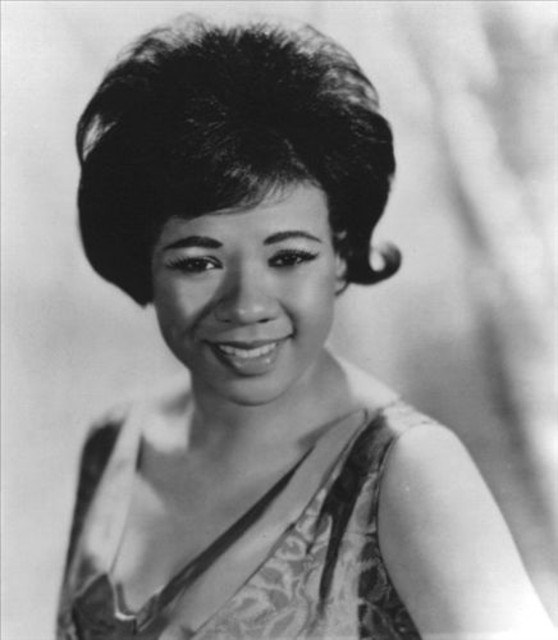
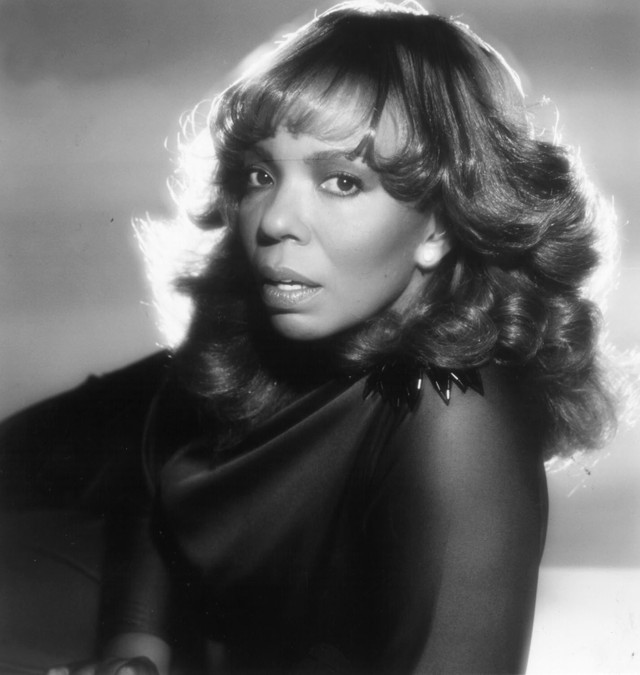
With a seemingly innate balance of effervescent fervor and poised elegance, Mary Wells played an essential role in the early <a href="spotify:search:label%3A%22Motown%22">Motown</a> sound. Not for nothing could she lay claim to the "original queen of Motown" title. She had just graduated from high school when she debuted on the fledgling label with the self-written "Bye Bye Baby" (1960), the first of her 14 Top Ten R&B hits, and her second one, "I Don't Want to Take a Chance" (1961), was the first Top 40 pop hit by a female <a href="spotify:search:label%3A%22Motown%22">Motown</a> act. A subsequent partnership with <a href="spotify:artist:0h9smro0z3HqUbD94jotU8">Smokey Robinson</a> brought greater success highlighted by the Grammy-nominated "You Beat Me to the Punch" (1962) and Wells' signature hit, the number one R&B and pop smash "My Guy" (1964). From there, Wells recorded steadily for other labels into the mid-'70s, and returned to the studio the next decade, scoring her final charting single with "Gigolo" (1981). She continued performing until she was diagnosed with laryngeal cancer, and died in 1992 from complications of the disease and pneumonia. In 1999, "My Guy" was inducted into the Grammy Hall of Fame.
Wells grew up in Detroit's Black Bottom neighborhood. She sang in church and performed at talent shows, and got her foot into the industry door when she approached <a href="spotify:artist:40jhxYtt7ZbZmyNcly0Nme">Johnnie Mae Matthews</a> with a song she was working on. Asked for songwriting help, <a href="spotify:artist:40jhxYtt7ZbZmyNcly0Nme">Matthews</a> obliged and also signed Wells to her Northern Records label, but Wells quickly split after <a href="spotify:artist:40jhxYtt7ZbZmyNcly0Nme">Matthews</a> prioritized another act. Wells had written "Bye Bye Baby" with <a href="spotify:artist:4VnomLtKTm9Ahe1tZfmZju">Jackie Wilson</a> in mind, so she went to the 20 Grand nightclub and tracked down <a href="spotify:artist:4xRLKAf96K6YdGDWjY6ra8">Berry Gordy</a>, who had written material for <a href="spotify:artist:4VnomLtKTm9Ahe1tZfmZju">Wilson</a> and had recently launched the <a href="spotify:search:label%3A%22Tamla%22">Tamla</a> label. Instead of taking the song to <a href="spotify:artist:4VnomLtKTm9Ahe1tZfmZju">Wilson</a>, <a href="spotify:artist:4xRLKAf96K6YdGDWjY6ra8">Gordy</a> added Wells to the roster of new <a href="spotify:search:label%3A%22Tamla%22">Tamla</a> subsidiary <a href="spotify:search:label%3A%22Motown%22">Motown</a>, and had the young singer -- a recent Northwestern High School graduate -- record "Bye Bye Baby." As a consequence of the 20-plus takes it took to finish, "Bye Bye Baby" displayed none of the smoothness for which Wells would become known, but the hoarsely belted number resonated on a commercial level, peaking at number eight on the Billboard R&B chart and nearly cracking the Top 40 of the pop chart.
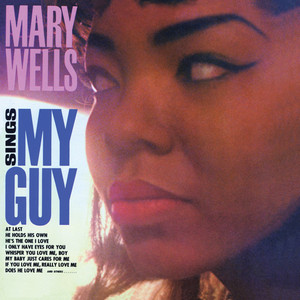
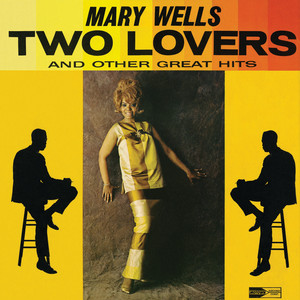
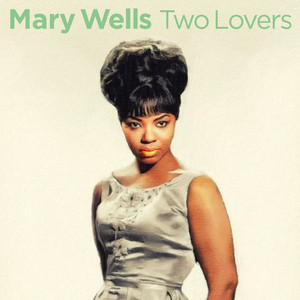
<a href="spotify:artist:4xRLKAf96K6YdGDWjY6ra8">Gordy</a> and <a href="spotify:artist:0szXBmaZC3KFJdoZ9nW1c0">William "Mickey" Stevenson</a> wrote and produced Wells' next couple singles, including the number 33 pop hit "I Don't Want to Take a Chance." <a href="spotify:artist:4xRLKAf96K6YdGDWjY6ra8">Gordy</a> then paired Wells with <a href="spotify:artist:0h9smro0z3HqUbD94jotU8">Smokey Robinson</a>, yielding instant results with the number eight pop hit "The One Who Really Loves You," followed by five additional hits over the rest of 1962 and 1963. One of them, "You Beat Me to the Punch," earned Wells a Grammy nomination for Best Rock & Roll Recording. Another two were featured on Two Lovers and Other Great Hits, Wells' first charting album (and third overall). "My Guy," the mere start of a whirlwind 1964, crowned the pop chart for two weeks in May, just weeks after <a href="spotify:search:label%3A%22Motown%22">Motown</a> issued Wells' and <a href="spotify:artist:3koiLjNrgRTNbOwViDipeA">Marvin Gaye</a>'s duets album Together, as well as Wells' Greatest Hits, shrewdly containing "My Guy." Before the end of the year, <a href="spotify:search:label%3A%22Motown%22">Motown</a> also issued Mary Wells Sings My Guy. These three LPs placed respectively at numbers 42, 18, and 111 on the Billboard album chart.
Dissatisfied with her <a href="spotify:search:label%3A%22Motown%22">Motown</a> pay, Wells left the label and signed with <a href="spotify:search:label%3A%2220th+Century+Fox%22">20th Century Fox</a>, a move <a href="spotify:artist:4xRLKAf96K6YdGDWjY6ra8">Berry Gordy</a> fought with the claim that the singer had another year left on her contract. The dispute was settled out of court, but one stipulation was that Wells would receive no future royalties from her <a href="spotify:search:label%3A%22Motown%22">Motown</a> recordings. The singer moved forward with <a href="spotify:search:label%3A%2220th+Century+Fox%22">20th Century Fox</a>, and in 1965 released a self-titled album and Love Songs to the Beatles. The first LP, produced almost exclusively by <a href="spotify:artist:4mmEKUZZBwnzg4m6hizPyN">Andre Williams</a>, yielded four charting singles that included "Use Your Head," a number 34 pop hit written by <a href="spotify:search:label%3A%22Motown%22">Motown</a> hitmaker <a href="spotify:artist:3MKwHkhEjcvzva2rasZeWD">Barrett Strong</a>, <a href="spotify:artist:0wbrRIw2po5DV4LeaHw55S">the Dells</a>' Chuck Barksdale, and future <a href="spotify:artist:4QQgXkCYTt3BlENzhyNETg">Earth, Wind & Fire</a> co-founder <a href="spotify:artist:4dUwbgj6jgmsBTRxVuCLEP">Wade Flemons</a>. Love Songs to the Beatles, a Bernie Wayne production, was a tribute album that followed Wells' stint opening for the Fab Four on their U.K. tour the previous October.
Just before the end of 1965, Wells was on another label, <a href="spotify:search:label%3A%22Atco%22">Atco</a>, releasing "Dear Lover," composed by Carl Davis and <a href="spotify:artist:291mUsBOCDxH7D6Gb0ibA3">Gerald Sims</a>. The following year, it became Wells' last Top Ten R&B hit, peaking at number six, and it led to the album Two Sides of Mary Wells, produced entirely by Davis. Also in 1966, Wells and Cecil Womack co-wrote "Sweeter Than the Day Before" for Womack's family group, <a href="spotify:artist:0n8GWTNsS9bnb4ZMUKg5VH">the Valentinos</a>. Wells and Womack were married that year, established their joint publishing company Well-Wom, and worked extensively together on Servin' Up Some Soul, Wells' lone album for <a href="spotify:search:label%3A%22Jubilee%22">Jubilee</a>. "C & M Womack" were credited with the bulk of the writing and all of the production. Out of three singles, "The Doctor" was the one that charted, registering at number 65 on the Hot 100 and number 22 on the R&B chart. From 1969 through 1974, Wells released a total of six singles for <a href="spotify:search:label%3A%22Jubilee%22">Jubilee</a> and <a href="spotify:search:label%3A%22Reprise%22">Reprise</a>, and half of them charted, with the <a href="spotify:artist:7xGGqA85UIWX1GoTVM4itC">Staple Singers</a>-meets-<a href="spotify:artist:2AV6XDIs32ofIJhkkDevjm">Curtis Mayfield</a> "Dig the Way I Feel" faring the best at number 35 R&B. Wells and Womack divorced in 1977. (The couple had three children together, including Cecil Jr., aka producer Meech Wells.)
While Wells had continued to perform, she didn't release any music until 1981, the year she issued In and Out of Love on <a href="spotify:search:label%3A%22Epic%22">Epic</a>. The album was helmed primarily by <a href="spotify:artist:1dsx3mI9jtfEIA4dZJj5c4">Greg Perry</a>, while lone charting single "Gigolo," an uptempo number in the vein of <a href="spotify:artist:61UT1Zj9dFgPAjZfwnsqsb">Teena Marie</a>, was made with Larry, Fonce, and Rodney Mizell. Wells would release three more albums on as many independent labels. Easy Touch, issued in 1982, was a covers-oriented set recorded with a band in Nashville. A year later, she teamed with <a href="spotify:artist:3Bhgbs9kIwl8SuU0eIqN6b">the Crusaders</a>' <a href="spotify:artist:55PU5eP7Ndxn5T3TvBdXZ2">Wayne Henderson</a> as producer of the descriptively titled The Old, the New and the Best of Mary Wells. Lastly, she linked with Northern soul DJ, producer, and songwriter <a href="spotify:artist:6JjQdNViLxTyXWejSfNASK">Ian Levine</a> for Keeping My Mind on Love, released on <a href="spotify:artist:6JjQdNViLxTyXWejSfNASK">Levine</a>'s London-based <a href="spotify:search:label%3A%22Motorcity%22">Motorcity</a> label in 1990. Having already struggled with multiple bouts of tuberculosis dating back to her childhood, Wells began to deal with throat issues and labored breathing, and was eventually diagnosed with laryngeal cancer. She lacked health insurance, though many of her contemporaries supported her, and she was also able to offset her medical expenses with the settlement from a 1991 lawsuit she filed against Motown for unpaid royalties. Wells advocated for cancer research before she died on July 26, 1992. ~ Andy Kellman, Rovi
Monthly Listeners
804,494
Monthly Listeners History
Track the evolution of monthly listeners over the last 28 days.
Followers
355,279
Followers History
Track the evolution of followers over the last 28 days.
Total Streams
517.8 million
Total Streams History
Track the evolution of total streams over the last 28 days. This data is calculated from all tracks listed in the artist's discography.
Top Cities
36,111 listeners

15,937 listeners

10,317 listeners
12,564 listeners
9,705 listeners