Data may be outdated
Last updated: 9 months ago — Click refresh to get the latest statistics.
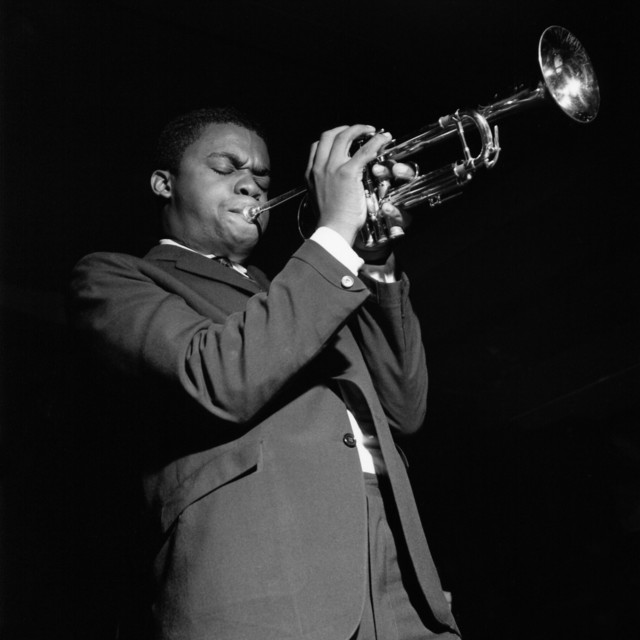
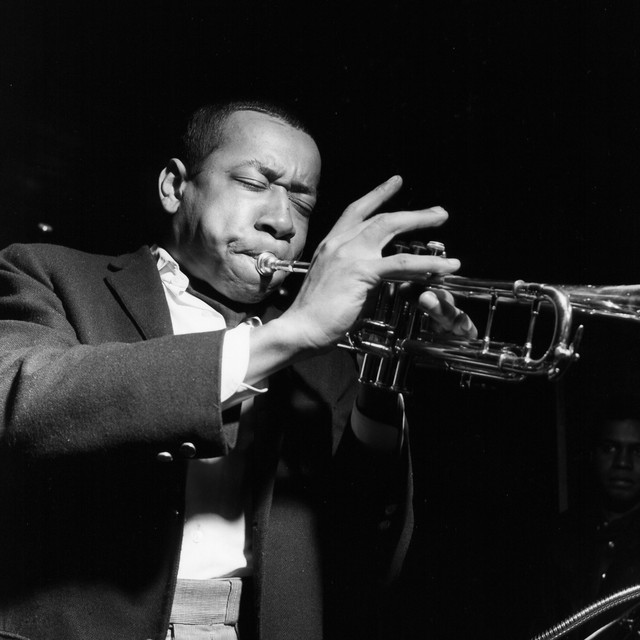
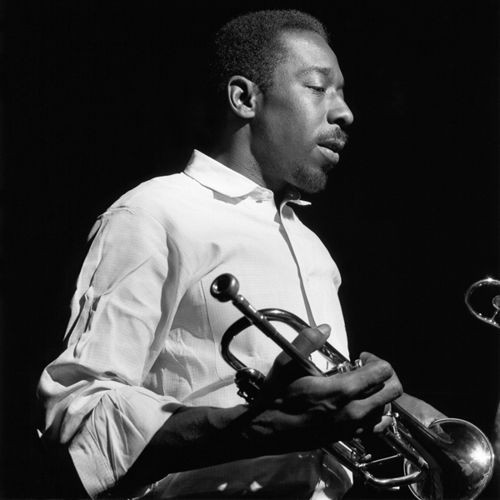
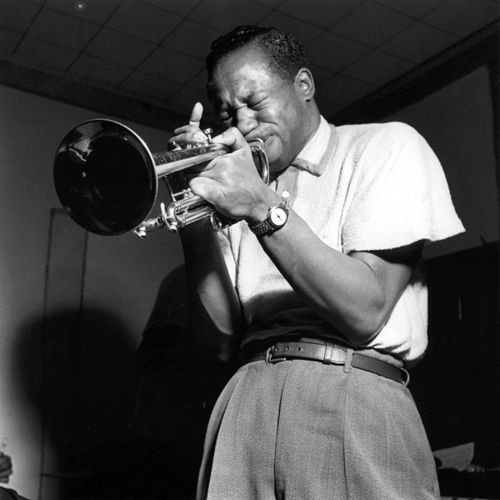
One of the greatest trumpeters of all time, Clifford Brown's death in a car accident at the age of 25 was one of the most profound losses to the jazz world. Yet, "Brownie" (as he was affectionately known) left behind one of the most impressive and lasting bodies of work, and it continues to hold sway on musicians decades after his passing. Brown was master of the trumpet, blessed with a warm, fat tone and deep grasp of bebop harmony. Influenced by his idol <a href="spotify:artist:0w2MvntXz3P5Ko3oslGJoG">Fats Navarro</a>, he quickly rose through the ranks of the leading trumpeters of his time, ascending to the top echelon alongside icons like <a href="spotify:artist:5RzjqfPS0Bu4bUMkyNNDpn">Dizzy Gillespie</a> and <a href="spotify:artist:0kbYTNQb4Pb1rPbbaF0pT4">Miles Davis</a>. Following his early work with <a href="spotify:artist:4w8eKJO83kKgKRLbMKM2zB">Tadd Dameron</a> and <a href="spotify:artist:6QQuESLtKhAOcLW2TeWC2t">Art Blakey</a>, Brown cemented his place in jazz history forming his landmark quintet with drummer <a href="spotify:artist:6jrlNnS5B830kpi40j3S6g">Max Roach</a> and recording a handful of classic albums in Clifford Brown & Max Roach, Brown and Roach Incorporated, and Study in Brown, all of which helped define the hard bop sound of the late '50s. It's hard to believe that he was still improving at the time of his death in 1956.
Born in 1930 in Wilmington, Delaware, Brown became interested in music at a young age and even sang in a family vocal group alongside his three brothers. By age 13, he was playing trumpet at school and taking private lessons with noted Delaware trumpeter and educator Robert "Boysie" Lowery. Jazz gigs followed and by 1948 Brown was playing regularly in the Philadelphia area, gaining encouragement from and even sitting in with players like <a href="spotify:artist:5RzjqfPS0Bu4bUMkyNNDpn">Dizzy Gillespie</a> and <a href="spotify:artist:4Ww5mwS7BWYjoZTUIrMHfC">Charlie Parker</a>. He enrolled as a math major at Delaware State College and in 1949 transferred to Maryland State College on a music scholarship. There, he learned writing and arranging. It was also during this period that he met two major figures in his life, drummer <a href="spotify:artist:6jrlNnS5B830kpi40j3S6g">Max Roach</a> and trumpeter <a href="spotify:artist:0w2MvntXz3P5Ko3oslGJoG">Fats Navarro</a>, the latter of whom quickly became a major influence on his playing.
In June 1950, Brown was injured in a serious car accident that forced him to stop performing. A month later, <a href="spotify:artist:0w2MvntXz3P5Ko3oslGJoG">Navarro</a> died of a drug overdose. Despite these setbacks, Brown recovered, returned to action in 1952 as a member of <a href="spotify:artist:6Ig2Kvj0yE3pduMdZrPPfP">Chris Powell</a>'s R&B ensemble the Blue Flames. The following year, he joined pianist <a href="spotify:artist:4w8eKJO83kKgKRLbMKM2zB">Tadd Dameron</a>'s group and toured Europe with <a href="spotify:artist:2PjgZkwAEk7UTin4jP6HLP">Lionel Hampton</a>'s Orchestra. While overseas, he ignored <a href="spotify:artist:2PjgZkwAEk7UTin4jP6HLP">Hampton</a>'s edict banning his musicians from recording, and led several of his own sessions alongside altoist <a href="spotify:artist:60pVDktf5EH4d3IxkHozpa">Gigi Gryce</a>. Upon his return to the states, he made his Blue Note debut with 1953's A New Star on the Horizon. Recorded just prior to his departure for Europe, the album featured a group with <a href="spotify:artist:60pVDktf5EH4d3IxkHozpa">Gryce</a>, tenor player <a href="spotify:artist:4WjOiUFD5b9kpa8LfdxkvM">Charlie Rouse</a>, <a href="spotify:artist:7wBFjZMHsC6nfV0HOSd6uI">Modern Jazz Quartet</a>'s pianist <a href="spotify:artist:7G7zZjjTwBZ9vzaoogk95s">John Lewis</a> and bassist <a href="spotify:artist:0vKbTTNdtagd8xiERj6Szb">Percy Heath</a>, and drummer <a href="spotify:artist:6QQuESLtKhAOcLW2TeWC2t">Art Blakey</a>. Other sessions followed, including a 1954 proto-<a href="spotify:artist:6ykfXAed2KOLOMI3R0TZdz">Jazz Messengers</a> quintet with <a href="spotify:artist:6QQuESLtKhAOcLW2TeWC2t">Blakey</a> recorded at Birdland.
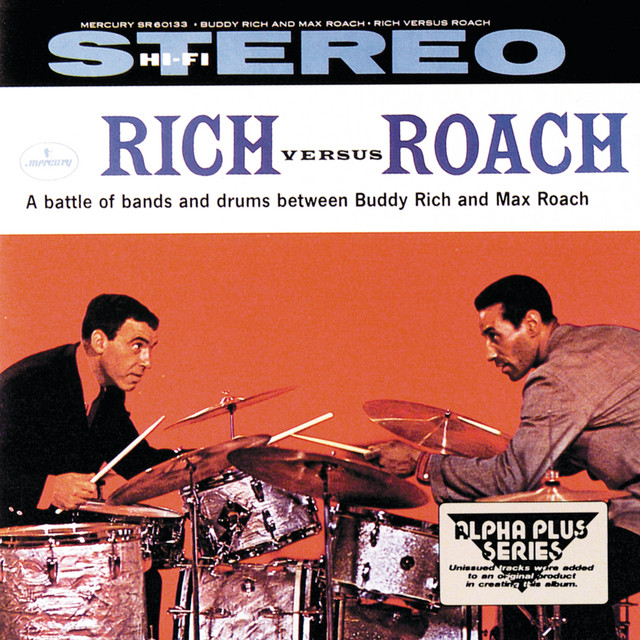
By the middle of 1954, he had formed a quintet with drummer <a href="spotify:artist:6jrlNnS5B830kpi40j3S6g">Max Roach</a>. Largely considered one of the premiere hard bop bands of the era, the group also featured tenor saxophonist <a href="spotify:artist:1jcPgyzUoFrMSI5jloL3LD">Harold Land</a>, pianist <a href="spotify:artist:2HQT5NglL0BOkpV2vmQ5yc">Richie Powell</a>, and bassist George Morrow. They made their debut with 1954's Brown and Roach Incorporated, followed several months later by Clifford Brown and Max Roach. In 1955, Brown released two more soon to be classic albums: the ballads-heavy session Clifford Brown with Strings and his third with <a href="spotify:artist:6jrlNnS5B830kpi40j3S6g">Roach</a>, Study in Brown. A fourth Brown and <a href="spotify:artist:6jrlNnS5B830kpi40j3S6g">Roach</a> record, At Basin Street, arrived in 1956 and found <a href="spotify:artist:1jcPgyzUoFrMSI5jloL3LD">Land</a> replaced by <a href="spotify:artist:1VEzN9lxvG6KPR3QQGsebR">Sonny Rollins</a>.
In June 1956, Brown, <a href="spotify:artist:2HQT5NglL0BOkpV2vmQ5yc">Richie Powell</a>, and <a href="spotify:artist:2HQT5NglL0BOkpV2vmQ5yc">Powell</a>'s wife, Nancy, were killed in a car accident while driving to Chicago after a jam session in Philadelphia. Brown, who was 25 years old, was later buried in Mt. Zion Cemetery in Wilmington, Delaware. After his death, more albums were released that kept his legacy alive, including two compilation Memorial Albums and 1973's The Beginning and the End, which featured his early Blue Flames sessions, as well as a miraculous ad hoc recording of the final Philadelphia jam session. Amazingly, a filmed appearance of Brown performing two songs on comedian <a href="spotify:artist:7pMMQr1wMaCt2NLRakSmgx">Soupy Sales</a>' 1955 variety show was discovered after being lost for 40 years and is the only known footage of the trumpeter. There have also been superb box sets released by <a href="spotify:search:label%3A%22Mosaic%22">Mosaic</a>, and collecting all of his work for labels like <a href="spotify:search:label%3A%22EmArcy%22">EmArcy</a>, <a href="spotify:search:label%3A%22Blue+Note%22">Blue Note</a>, and <a href="spotify:search:label%3A%22Pacific+Jazz%22">Pacific Jazz</a>. Already by the late '50s, Brown had already become a major influence on the next generation of players, and trumpeters like <a href="spotify:artist:0fTHKjepK5HWOrb2rkS5Em">Freddie Hubbard</a>, <a href="spotify:artist:0yvEf1tqWWPiZu4ZbjyKGs">Woody Shaw</a>, and <a href="spotify:artist:0z1dQNcFhJxJjJPg9TQH3t">Charles Tolliver</a> would build upon his work. Even decades after his death, Brown's influence continues to be felt as successive generations look upon him as a paradigm for jazz excellence. ~ Matt Collar, Rovi
Born in 1930 in Wilmington, Delaware, Brown became interested in music at a young age and even sang in a family vocal group alongside his three brothers. By age 13, he was playing trumpet at school and taking private lessons with noted Delaware trumpeter and educator Robert "Boysie" Lowery. Jazz gigs followed and by 1948 Brown was playing regularly in the Philadelphia area, gaining encouragement from and even sitting in with players like <a href="spotify:artist:5RzjqfPS0Bu4bUMkyNNDpn">Dizzy Gillespie</a> and <a href="spotify:artist:4Ww5mwS7BWYjoZTUIrMHfC">Charlie Parker</a>. He enrolled as a math major at Delaware State College and in 1949 transferred to Maryland State College on a music scholarship. There, he learned writing and arranging. It was also during this period that he met two major figures in his life, drummer <a href="spotify:artist:6jrlNnS5B830kpi40j3S6g">Max Roach</a> and trumpeter <a href="spotify:artist:0w2MvntXz3P5Ko3oslGJoG">Fats Navarro</a>, the latter of whom quickly became a major influence on his playing.
In June 1950, Brown was injured in a serious car accident that forced him to stop performing. A month later, <a href="spotify:artist:0w2MvntXz3P5Ko3oslGJoG">Navarro</a> died of a drug overdose. Despite these setbacks, Brown recovered, returned to action in 1952 as a member of <a href="spotify:artist:6Ig2Kvj0yE3pduMdZrPPfP">Chris Powell</a>'s R&B ensemble the Blue Flames. The following year, he joined pianist <a href="spotify:artist:4w8eKJO83kKgKRLbMKM2zB">Tadd Dameron</a>'s group and toured Europe with <a href="spotify:artist:2PjgZkwAEk7UTin4jP6HLP">Lionel Hampton</a>'s Orchestra. While overseas, he ignored <a href="spotify:artist:2PjgZkwAEk7UTin4jP6HLP">Hampton</a>'s edict banning his musicians from recording, and led several of his own sessions alongside altoist <a href="spotify:artist:60pVDktf5EH4d3IxkHozpa">Gigi Gryce</a>. Upon his return to the states, he made his Blue Note debut with 1953's A New Star on the Horizon. Recorded just prior to his departure for Europe, the album featured a group with <a href="spotify:artist:60pVDktf5EH4d3IxkHozpa">Gryce</a>, tenor player <a href="spotify:artist:4WjOiUFD5b9kpa8LfdxkvM">Charlie Rouse</a>, <a href="spotify:artist:7wBFjZMHsC6nfV0HOSd6uI">Modern Jazz Quartet</a>'s pianist <a href="spotify:artist:7G7zZjjTwBZ9vzaoogk95s">John Lewis</a> and bassist <a href="spotify:artist:0vKbTTNdtagd8xiERj6Szb">Percy Heath</a>, and drummer <a href="spotify:artist:6QQuESLtKhAOcLW2TeWC2t">Art Blakey</a>. Other sessions followed, including a 1954 proto-<a href="spotify:artist:6ykfXAed2KOLOMI3R0TZdz">Jazz Messengers</a> quintet with <a href="spotify:artist:6QQuESLtKhAOcLW2TeWC2t">Blakey</a> recorded at Birdland.
By the middle of 1954, he had formed a quintet with drummer <a href="spotify:artist:6jrlNnS5B830kpi40j3S6g">Max Roach</a>. Largely considered one of the premiere hard bop bands of the era, the group also featured tenor saxophonist <a href="spotify:artist:1jcPgyzUoFrMSI5jloL3LD">Harold Land</a>, pianist <a href="spotify:artist:2HQT5NglL0BOkpV2vmQ5yc">Richie Powell</a>, and bassist George Morrow. They made their debut with 1954's Brown and Roach Incorporated, followed several months later by Clifford Brown and Max Roach. In 1955, Brown released two more soon to be classic albums: the ballads-heavy session Clifford Brown with Strings and his third with <a href="spotify:artist:6jrlNnS5B830kpi40j3S6g">Roach</a>, Study in Brown. A fourth Brown and <a href="spotify:artist:6jrlNnS5B830kpi40j3S6g">Roach</a> record, At Basin Street, arrived in 1956 and found <a href="spotify:artist:1jcPgyzUoFrMSI5jloL3LD">Land</a> replaced by <a href="spotify:artist:1VEzN9lxvG6KPR3QQGsebR">Sonny Rollins</a>.
In June 1956, Brown, <a href="spotify:artist:2HQT5NglL0BOkpV2vmQ5yc">Richie Powell</a>, and <a href="spotify:artist:2HQT5NglL0BOkpV2vmQ5yc">Powell</a>'s wife, Nancy, were killed in a car accident while driving to Chicago after a jam session in Philadelphia. Brown, who was 25 years old, was later buried in Mt. Zion Cemetery in Wilmington, Delaware. After his death, more albums were released that kept his legacy alive, including two compilation Memorial Albums and 1973's The Beginning and the End, which featured his early Blue Flames sessions, as well as a miraculous ad hoc recording of the final Philadelphia jam session. Amazingly, a filmed appearance of Brown performing two songs on comedian <a href="spotify:artist:7pMMQr1wMaCt2NLRakSmgx">Soupy Sales</a>' 1955 variety show was discovered after being lost for 40 years and is the only known footage of the trumpeter. There have also been superb box sets released by <a href="spotify:search:label%3A%22Mosaic%22">Mosaic</a>, and collecting all of his work for labels like <a href="spotify:search:label%3A%22EmArcy%22">EmArcy</a>, <a href="spotify:search:label%3A%22Blue+Note%22">Blue Note</a>, and <a href="spotify:search:label%3A%22Pacific+Jazz%22">Pacific Jazz</a>. Already by the late '50s, Brown had already become a major influence on the next generation of players, and trumpeters like <a href="spotify:artist:0fTHKjepK5HWOrb2rkS5Em">Freddie Hubbard</a>, <a href="spotify:artist:0yvEf1tqWWPiZu4ZbjyKGs">Woody Shaw</a>, and <a href="spotify:artist:0z1dQNcFhJxJjJPg9TQH3t">Charles Tolliver</a> would build upon his work. Even decades after his death, Brown's influence continues to be felt as successive generations look upon him as a paradigm for jazz excellence. ~ Matt Collar, Rovi
Monthly Listeners
379,501
Monthly Listeners History
Track the evolution of monthly listeners over the last 28 days.
Followers
154,017
Followers History
Track the evolution of followers over the last 28 days.
Top Cities
5,231 listeners

4,574 listeners

4,255 listeners
3,520 listeners
3,369 listeners