Data may be outdated
Last updated: 1 month ago — Click refresh to get the latest statistics.
Coltrane was the son of John R. Coltrane, a tailor and amateur musician, and Alice (Blair) Coltrane. Two months after his birth, his maternal grandfather, the Reverend William Blair, was promoted to presiding elder in the A.M.E. Zion Church and moved his family, including his infant grandson, to High Point, North Carolina, where Coltrane grew up. Shortly after he graduated from grammar school in 1939, his father, his grandparents, and his uncle died, leaving him to be raised in a family consisting of his mother, his aunt, and his cousin. His mother worked as a domestic to support the family. The same year, he joined a community band in which he played clarinet and E flat alto horn; he took up the alto saxophone in his high school band. During World War II, Coltrane's mother, aunt, and cousin moved north to New Jersey to seek work, leaving him with family friends; in 1943, when he graduated from high school, he too headed north, settling in Philadelphia. Eventually, the family was reunited there.
While taking jobs outside music, Coltrane briefly attended the Ornstein School of Music and studied at Granoff Studios. He also began playing in local clubs. In 1945, he was drafted into the navy and stationed in Hawaii. He never saw combat, but he continued to play music and, in fact, made his first recording with a quartet of other sailors on July 13, 1946. A performance of <a href="spotify:artist:4w8eKJO83kKgKRLbMKM2zB">Tadd Dameron</a>'s "Hot House," it was released in 1993 on the Rhino Records anthology The Last Giant. Coltrane was discharged in the summer of 1946 and returned to Philadelphia. That fall, he began playing in the Joe Webb Band. In early 1947, he switched to the King Kolax Band. During the year, he switched from alto to tenor saxophone. One account claims that this was as the result of encountering alto saxophonist <a href="spotify:artist:4Ww5mwS7BWYjoZTUIrMHfC">Charlie Parker</a> and feeling the better-known musician had exhausted the possibilities on the instrument; another says that the switch occurred simply because Coltrane next joined a band led by <a href="spotify:artist:0R3bGv703d8JFKdZxsHr58">Eddie "Cleanhead" Vinson</a>, who was an alto player, forcing Coltrane to play tenor. He moved on to <a href="spotify:artist:5GX8UFlG4vXVXDv8KqDLvk">Jimmy Heath</a>'s group in mid-1948, staying with the band, which evolved into <a href="spotify:artist:3z4qqrJqPWfTl9CSUNxb93">the Howard McGhee All Stars</a> until early 1949, when he returned to Philadelphia. That fall, he joined a big band led by <a href="spotify:artist:5RzjqfPS0Bu4bUMkyNNDpn">Dizzy Gillespie</a>, remaining until the spring of 1951, by which time the band had been trimmed to a septet. On March 1, 1951, he took his first solo on record during a performance of "We Love to Boogie" with <a href="spotify:artist:5RzjqfPS0Bu4bUMkyNNDpn">Gillespie</a>.
At some point during this period, Coltrane became a heroin addict, which made him more difficult to employ. He played with various bands, mostly around Philadelphia, during the early '50s, his next important job coming in the spring of 1954, when <a href="spotify:artist:7lRFrrINQTY35g8hq0kXY5">Johnny Hodges</a>, temporarily out of the <a href="spotify:artist:4F7Q5NV6h5TSwCainz8S5A">Duke Ellington</a> band, hired him. But he was fired because of his addiction in September 1954. He returned to Philadelphia, where he was playing when he was hired by <a href="spotify:artist:0kbYTNQb4Pb1rPbbaF0pT4">Miles Davis</a> a year later. His association with <a href="spotify:artist:0kbYTNQb4Pb1rPbbaF0pT4">Davis</a> was the big break that finally established him as an important jazz musician. <a href="spotify:artist:0kbYTNQb4Pb1rPbbaF0pT4">Davis</a>, a former drug addict himself, had kicked his habit and gained recognition at the Newport Jazz Festival in July 1955, resulting in a contract with <a href="spotify:search:label%3A%22Columbia+Records%22">Columbia Records</a> and the opportunity to organize a permanent band, which, in addition to him and Coltrane, consisted of pianist <a href="spotify:artist:35iymrFS4VnsKn35ebHKX9">Red Garland</a>, bassist <a href="spotify:artist:0M1UOBJZ9tcKJbrbnVlHZG">Paul Chambers</a>, and drummer <a href="spotify:artist:4WhH68K75YKSAwHAqWFpi1">"Philly" Joe Jones</a>. This unit immediately began to record extensively, not only because of the <a href="spotify:search:label%3A%22Columbia%22">Columbia</a> contract, but also because <a href="spotify:artist:0kbYTNQb4Pb1rPbbaF0pT4">Davis</a> had signed with the major label before fulfilling a deal with jazz independent <a href="spotify:search:label%3A%22Prestige+Records%22">Prestige Records</a> that still had five albums to run. The trumpeter's <a href="spotify:search:label%3A%22Columbia%22">Columbia</a> debut, 'Round About Midnight, which he immediately commenced recording, did not appear until March 1957. The first fruits of his association with Coltrane came in April 1956 with the release of The New Miles Davis Quintet (aka Miles), recorded for <a href="spotify:search:label%3A%22Prestige%22">Prestige</a> on November 16, 1955. During 1956, in addition to his recordings for <a href="spotify:search:label%3A%22Columbia%22">Columbia</a>, <a href="spotify:artist:0kbYTNQb4Pb1rPbbaF0pT4">Davis</a> held two marathon sessions for <a href="spotify:search:label%3A%22Prestige%22">Prestige</a> to fulfill his obligation to the label, which released the material over a period of time under the titles Cookin' (1957), Relaxin' (1957), Workin' (1958), and Steamin' (1961).
Coltrane's association with <a href="spotify:artist:0kbYTNQb4Pb1rPbbaF0pT4">Davis</a> inaugurated a period when he began to frequently record as a sideman. <a href="spotify:artist:0kbYTNQb4Pb1rPbbaF0pT4">Davis</a> may have been trying to end his association with <a href="spotify:search:label%3A%22Prestige%22">Prestige</a>, but Coltrane began appearing on many of the label's sessions. After he became better known in the '60s, <a href="spotify:search:label%3A%22Prestige%22">Prestige</a> and other labels began to repackage this work under his name, as if he had been the leader, a process that has continued to the present day. (<a href="spotify:search:label%3A%22Prestige%22">Prestige</a> was acquired by <a href="spotify:search:label%3A%22Fantasy+Records%22">Fantasy Records</a> in 1972, and many of the recordings in which Coltrane participated have been reissued on Fantasy's <a href="spotify:search:label%3A%22Original+Jazz+Classics%22">Original Jazz Classics</a> [<a href="spotify:search:label%3A%22OJC%22">OJC</a>] imprint.)
Coltrane tried and failed to kick heroin in the summer of 1956, and in October, <a href="spotify:artist:0kbYTNQb4Pb1rPbbaF0pT4">Davis</a> fired him, though the trumpeter had relented and taken him back by the end of November. Early in 1957, Coltrane formally signed with <a href="spotify:search:label%3A%22Prestige%22">Prestige</a> as a solo artist, though he remained in the <a href="spotify:artist:0kbYTNQb4Pb1rPbbaF0pT4">Davis</a> band and also continued to record as a sideman for other labels. In April, <a href="spotify:artist:0kbYTNQb4Pb1rPbbaF0pT4">Davis</a> fired him again. This may have given him the impetus to finally kick his drug habit, and freed of the necessity of playing gigs with <a href="spotify:artist:0kbYTNQb4Pb1rPbbaF0pT4">Davis</a>, he began to record even more frequently. On May 31, 1957, he finally made his recording debut as a leader, putting together a pickup band consisting of trumpeter Johnny Splawn, baritone saxophonist <a href="spotify:artist:5bvUxCgdZnoa2bxxTx0G6f">Sahib Shihab</a>, pianists <a href="spotify:artist:4cP0bprQSFtZdI9QEKKZA3">Mal Waldron</a> and <a href="spotify:artist:35iymrFS4VnsKn35ebHKX9">Red Garland</a> (on different tracks), bassist <a href="spotify:artist:0M1UOBJZ9tcKJbrbnVlHZG">Paul Chambers</a>, and drummer <a href="spotify:artist:53yX28INJxLAZYpUbANw3K">Al "Tootie" Heath</a>. They cut an album <a href="spotify:search:label%3A%22Prestige%22">Prestige</a> simply titled Coltrane upon release in September 1957. (It has since been reissued under the title First Trane.)
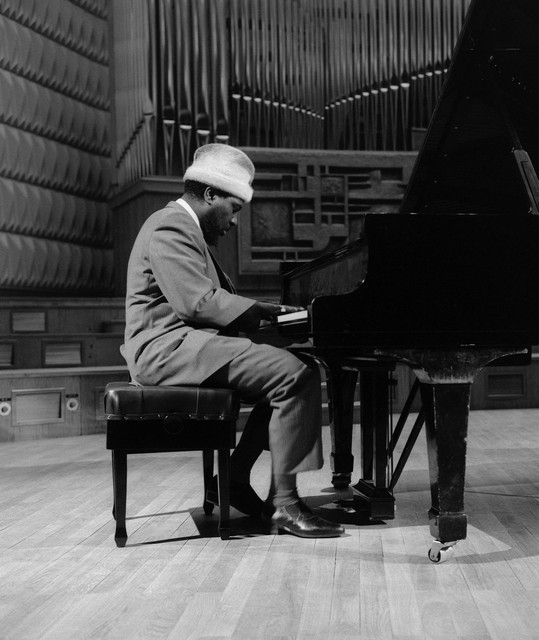
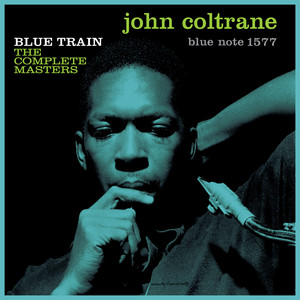
In June 1957, Coltrane joined <a href="spotify:artist:4PDpGtF16XpqvXxsrFwQnN">the Thelonious Monk Quartet</a>, consisting of <a href="spotify:artist:4PDpGtF16XpqvXxsrFwQnN">Monk</a> on piano, <a href="spotify:artist:4NWHLPe11EOyvjbxXprtzK">Wilbur Ware</a> on bass, and <a href="spotify:artist:03dISoKvlChFOGWAnmS6uG">Shadow Wilson</a> on drums. During this period, he developed a technique of playing several notes at once, and his solos began to go on longer. In August, he recorded material belatedly released on the <a href="spotify:search:label%3A%22Prestige%22">Prestige</a> albums Lush Life (1960) and The Last Trane (1965), as well as the material for John Coltrane with the Red Garland Trio, released later in the year. (It was later reissued under the title Traneing In.) But Coltrane's second album to be recorded and released contemporaneously under his name alone was cut in September for <a href="spotify:search:label%3A%22Blue+Note+Records%22">Blue Note Records</a>. This was Blue Train, featuring trumpeter <a href="spotify:artist:38C3okxv3fyyOIQUVPCdGX">Lee Morgan</a>, trombonist <a href="spotify:artist:2Ma7hbsouPDXerzHHcfnVK">Curtis Fuller</a>, pianist <a href="spotify:artist:65uKPt40QH8dMBLuoJHPVY">Kenny Drew</a>, and the <a href="spotify:artist:0kbYTNQb4Pb1rPbbaF0pT4">Miles Davis</a> rhythm section of <a href="spotify:artist:5tdGXBxRVers4lWxUqRMzn">Chambers</a> and <a href="spotify:artist:4WhH68K75YKSAwHAqWFpi1">"Philly" Joe Jones</a>; it was released in December 1957. That month, Coltrane rejoined <a href="spotify:artist:0kbYTNQb4Pb1rPbbaF0pT4">Davis</a>, playing in what was now a sextet that also featured <a href="spotify:artist:5v74mT11KGJqadf9sLw4dA">Cannonball Adderley</a>. In January 1958, he led a recording session for <a href="spotify:search:label%3A%22Prestige%22">Prestige</a> that produced tracks later released on Lush Life, The Last Trane, and The Believer (1964). In February and March, he recorded <a href="spotify:artist:0kbYTNQb4Pb1rPbbaF0pT4">Davis</a>' album Milestones, released later in 1958. In between the sessions, he cut his third album to be released under his name alone, Soultrane, issued in September by <a href="spotify:search:label%3A%22Prestige%22">Prestige</a>. Also in March 1958, he cut tracks as a leader that would be released later on the <a href="spotify:search:label%3A%22Prestige%22">Prestige</a> collection Settin' the Pace (1961). In May, he again recorded for <a href="spotify:search:label%3A%22Prestige%22">Prestige</a> as a leader, though the results would not be heard until the release of Black Pearls in 1964.
Coltrane appeared as part of the <a href="spotify:artist:0kbYTNQb4Pb1rPbbaF0pT4">Miles Davis</a> group at the Newport Jazz Festival in July 1958. The band's set was recorded and released in 1964 on an LP also featuring a performance by <a href="spotify:artist:4PDpGtF16XpqvXxsrFwQnN">Thelonious Monk</a> as Miles & Monk at Newport. In 1988, <a href="spotify:search:label%3A%22Columbia%22">Columbia</a> reissued the material on an album called Miles & Coltrane. The performance inspired a review in Down Beat, the leading jazz magazine, that was an early indication of the differing opinions on Coltrane that would be expressed throughout the rest of his career and long after his death. The review referred to his "angry tenor," which, it said, hampered the solidarity of the <a href="spotify:artist:0kbYTNQb4Pb1rPbbaF0pT4">Davis</a> band. The review led directly to an article published in the magazine on October 16, 1958, in which critic Ira Gitler defended the saxophonist and coined the much-repeated phrase "sheets of sound" to describe his playing.
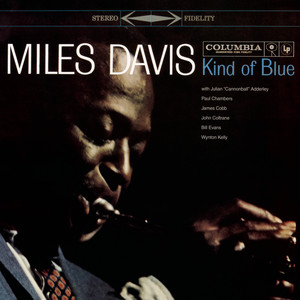
Coltrane's next <a href="spotify:search:label%3A%22Prestige%22">Prestige</a> session as a leader occurred in July 1958 and resulted in tracks later released on the albums Standard Coltrane (1962), Stardust (1963), and Bahia (1965). All of these tracks were later compiled on a reissue called The Stardust Session. He did a final session for <a href="spotify:search:label%3A%22Prestige%22">Prestige</a> in December 1958, recording tracks later released on The Believer, Stardust, and Bahia. This completed his commitment to the label, and he signed to <a href="spotify:search:label%3A%22Atlantic+Records%22">Atlantic Records</a>, making his first recording for his new employers on January 15, 1959 with a session on which he was co-billed with vibes player <a href="spotify:artist:23i8EixXKG0EWGRCfHlUGN">Milt Jackson</a>, though it did not appear until 1961 with the LP Bags and Trane. In March and April 1959, Coltrane participated with the <a href="spotify:artist:0kbYTNQb4Pb1rPbbaF0pT4">Davis</a> group on the album Kind of Blue. Released on August 17, 1959, this landmark album known for its "modal" playing (improvisations based on scales or "modes," rather than chords) became one of the best-selling and most-acclaimed recordings in the history of jazz.
By the end of 1959, Coltrane had recorded what would be his <a href="spotify:search:label%3A%22Atlantic%22">Atlantic</a> debut, Giant Steps, released in early 1960. The album, consisting entirely of Coltrane compositions, in a sense marked his real debut as a leading jazz performer, even though the 33-year-old musician had released three previous solo albums and made numerous other recordings. His next <a href="spotify:search:label%3A%22Atlantic%22">Atlantic</a> album, Coltrane Jazz, was mostly recorded in November and December 1959 and released in February 1961. In April 1960, he finally left the <a href="spotify:artist:0kbYTNQb4Pb1rPbbaF0pT4">Davis</a> band and formally launched his solo career, beginning an engagement at the Jazz Gallery in New York, accompanied by pianist <a href="spotify:artist:6KEBRNgSvb95hjK9Nh0tzt">Steve Kuhn</a> (soon replaced by <a href="spotify:artist:2EsmKkHsXK0WMNGOtIhbxr">McCoy Tyner</a>), bassist <a href="spotify:artist:37SVnwHrnnfBR1Gb0Yq7GD">Steve Davis</a>, and drummer <a href="spotify:artist:5HWSWx1uHCqorf70HByfjW">Pete La Roca</a> (later replaced by <a href="spotify:artist:6FmHMrX0jETx6WNGzyZKRs">Billy Higgins</a> and then <a href="spotify:artist:4dUMhhUjQ2YcNTvab29hYF">Elvin Jones</a>). During this period, he increasingly played soprano saxophone as well as tenor.
In October 1960, Coltrane recorded a series of sessions for <a href="spotify:search:label%3A%22Atlantic%22">Atlantic</a> that would produce material for several albums, including a final track used on Coltrane Jazz and tunes used on My Favorite Things (March 1961), Coltrane Plays the Blues (July 1962), and Coltrane's Sound (June 1964). His soprano version of "My Favorite Things," from the <a href="spotify:artist:4IbAZwt75dpehMOgcC3GnP">Richard Rodgers</a>/<a href="spotify:artist:1DsYsmAtNbrMkoyrIXP6HU">Oscar Hammerstein II</a> musical The Sound of Music, would become a signature song for him. During the winter of 1960-1961, bassist <a href="spotify:artist:3mBoT9nTZ12JQPfrOrwD3p">Reggie Workman</a> replaced <a href="spotify:artist:37SVnwHrnnfBR1Gb0Yq7GD">Steve Davis</a> in his band, and saxophone and flute player <a href="spotify:artist:6rxxu32JCGDpKKMPHxnSJp">Eric Dolphy</a> gradually became a member of the group.
In the wake of the commercial success of "My Favorite Things," Coltrane's star rose, and he was signed away from <a href="spotify:search:label%3A%22Atlantic%22">Atlantic</a> as the flagship artist of the newly formed <a href="spotify:search:label%3A%22Impulse%21+Records%22">Impulse! Records</a> label, an imprint of <a href="spotify:search:label%3A%22ABC-Paramount%22">ABC-Paramount</a>, though in May he cut a final album for <a href="spotify:search:label%3A%22Atlantic%22">Atlantic</a>, Olé (February 1962). The following month, he completed his <a href="spotify:search:label%3A%22Impulse%21%22">Impulse!</a> debut, Africa/Brass. By this time, his playing was frequently in a style alternately dubbed "avant-garde," "free," or "The New Thing." Like <a href="spotify:artist:47odibUtrN3lnWx0p0pk2P">Ornette Coleman</a>, he played seemingly formless, extended solos that some listeners found tremendously impressive, and others decried as noise. In November 1961, John Tynan, writing in Down Beat, referred to Coltrane's playing as "anti-jazz." That month, however, Coltrane recorded one of his most celebrated albums, Live at the Village Vanguard, an LP paced by the 16-minute improvisation "Chasin' the Trane."
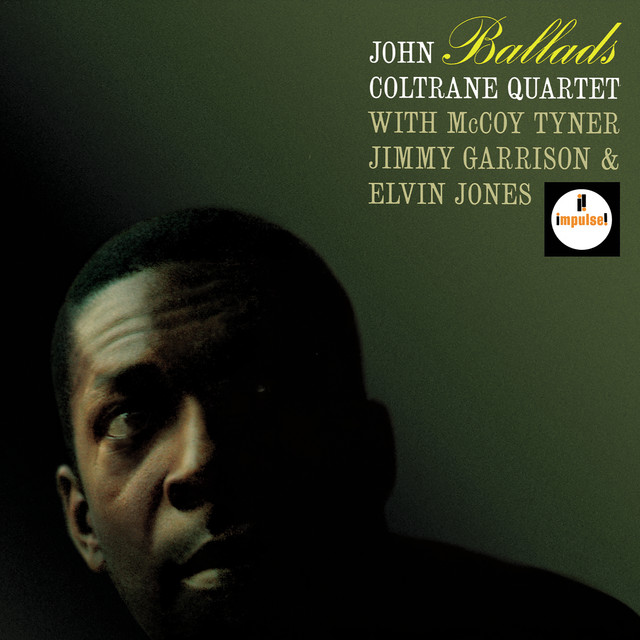
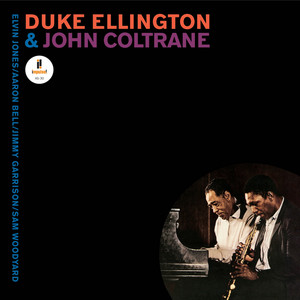
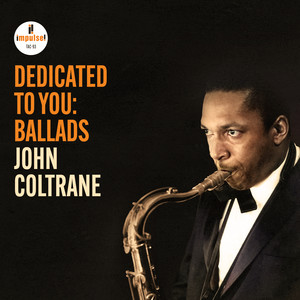
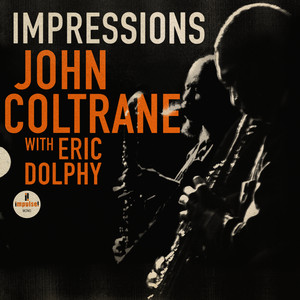
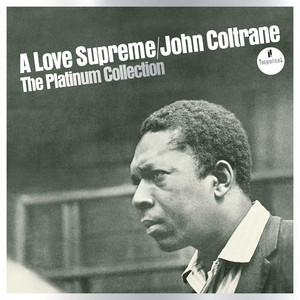
Between April and June 1962, Coltrane cut his next <a href="spotify:search:label%3A%22Impulse%21%22">Impulse!</a> studio album, another release called simply Coltrane when it appeared later in the year. Working with producer <a href="spotify:artist:1wYPhZg9lFjhOWiCXd9023">Bob Thiele</a>, he began to do extensive studio sessions, far more than <a href="spotify:search:label%3A%22Impulse%21%22">Impulse!</a> could profitably release at the time, especially with <a href="spotify:search:label%3A%22Prestige%22">Prestige</a> and <a href="spotify:search:label%3A%22Atlantic%22">Atlantic</a> still putting out their own archival albums. But the material would serve the label well after the saxophonist's untimely death. <a href="spotify:artist:1wYPhZg9lFjhOWiCXd9023">Thiele</a> acknowledged that Coltrane's next three <a href="spotify:search:label%3A%22Impulse%21%22">Impulse!</a> albums to be released, Ballads, Duke Ellington and John Coltrane, and John Coltrane with Johnny Hartman (all 1963), were recorded at his behest to quiet the critics of Coltrane's more extreme playing. Impressions (1963), drawn from live and studio recordings made in 1962 and 1963, was a more representative effort, as was 1964's Live at Birdland, also a combination of live and studio tracks, despite its title. But Crescent, also released in 1964, seemed to find a middle ground between traditional and free playing, and was welcomed by critics. This trend was continued with 1965's A Love Supreme, one of Coltrane's best-loved albums, which earned him two Grammy nominations, for Jazz Composition and Performance, and became his biggest-selling record. Also during the year, <a href="spotify:search:label%3A%22Impulse%21%22">Impulse!</a> released the standards collection The John Coltrane Quartet Plays... and another album of "free" playing, Ascension, as well as New Thing at Newport, a live album consisting of one side by Coltrane and the other by <a href="spotify:artist:7C2DSqaNkh0w77O5Jz1FKh">Archie Shepp</a>.
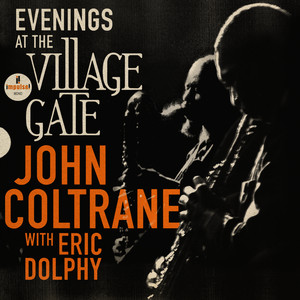
The year 1966 saw the release of the albums Kulu Se Mama and Meditations, Coltrane's last recordings to appear during his lifetime, though he had finished and approved release for his next album, Expression, the Friday before his death in July 1967. He died suddenly of liver cancer, entering the hospital on a Sunday and expiring in the early morning hours of the next day. He had left behind a considerable body of unreleased work that came out in subsequent years, including "Live" at the Village Vanguard Again! (1967), Om (1967), Cosmic Music (1968), Selflessness (1969), Transition (1969), Sun Ship (1971), Africa/Brass, Vol. 2 (1974), Interstellar Space (1974), and First Meditations (For Quartet) (1977), all on <a href="spotify:search:label%3A%22Impulse%21%22">Impulse!</a>
Compilations and releases of archival live recordings brought him a series of Grammy nominations, including Best Jazz Performance for the <a href="spotify:search:label%3A%22Atlantic%22">Atlantic</a> album The Coltrane Legacy in 1970; Best Jazz Performance, Group, and Best Jazz Performance, Soloist, for "Giant Steps" from the <a href="spotify:search:label%3A%22Atlantic%22">Atlantic</a> album Alternate Takes in 1974; and Best Jazz Performance, Group, and Best Jazz Performance, Soloist, for Afro Blue Impressions in 1977. He won the 1981 Grammy for Best Jazz Performance, Soloist, for Bye Bye Blackbird, an album of recordings made live in Europe in 1962, and he was given the Grammy Lifetime Achievement Award in 1992, 25 years after his death.
Even more previously unreleased material has surfaced since then, including the discovery of the <a href="spotify:artist:4PDpGtF16XpqvXxsrFwQnN">Monk</a> and Coltrane live concert At Carnegie Hall and a complete version of his 1966 Seattle concert, Offering: Live at Temple University. The saxophonist was also the subject of director John Scheinfeld's acclaimed 2017 film Chasing Trane: The John Coltrane Documentary. In 2018, <a href="spotify:search:label%3A%22Impulse%21%22">Impulse!</a> released Both Directions at Once: The Lost Album, an archival release documenting a previously unheard session from 1963. The next year brought another unreleased album, Blue World, which dated from a June 1964 session recorded in between the sessions for Crescent and A Love Supreme.
John Coltrane is sometimes described as one of jazz's most influential musicians, and certainly there are other artists whose playing is heavily indebted to him. Perhaps more to the point, Coltrane is influential by example, inspiring musicians to experiment, take chances, and devote themselves to their craft. The controversy about his work has never died down, but partially as a result, his name lives on and his recordings continue to remain available and to be reissued frequently. ~ William Ruhlmann, Rovi
Monthly Listeners
2.7 million
Monthly Listeners History
Track the evolution of monthly listeners over the last 28 days.
Followers
1.9 million
Followers History
Track the evolution of followers over the last 28 days.
Total Streams
3.8 billion
Total Streams History
Track the evolution of total streams over the last 28 days. This data is calculated from all tracks listed in the artist's discography.