Data may be outdated
Last updated: 9 months ago — Click refresh to get the latest statistics.
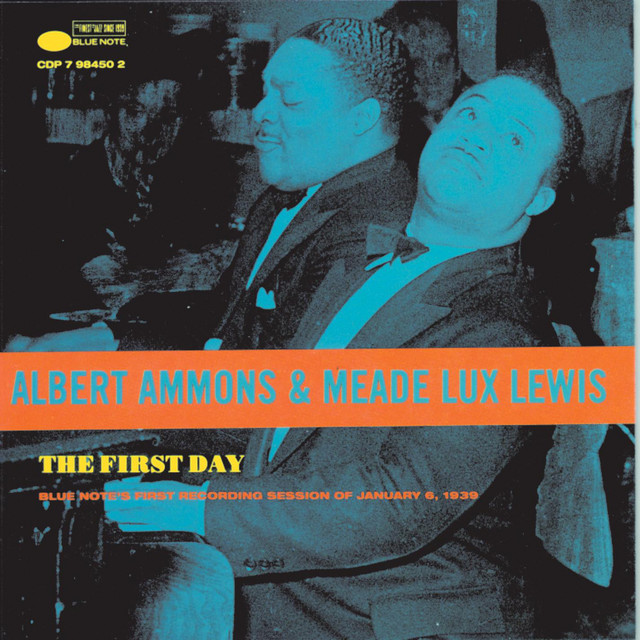
One of the driving forces behind the advent of boogie-woogie piano, Clarence "Pine Top" Smith ranks among the most influential blues figures of the 1920s. Born January 11, 1904, in Troy, AL, he was raised in nearby Birmingham; a self-taught player, he began performing at area house parties while in his mid-teens, and after relocating to Pittsburgh accompanied <a href="spotify:artist:1ygXiRxKSfb927vhBH1ruH">Ma Rainey</a> and <a href="spotify:artist:7x8h8nMdamj4hpSrAuwN9I">Butterbeans & Susie</a>. On the advice of fellow pianist <a href="spotify:artist:0fxj49BqciMUH7S23WVEkN">Cow Cow Davenport</a> -- himself a seminal figure in boogie-woogie's development -- Smith relocated to Chicago in 1928, where he lived in the same apartment house as <a href="spotify:artist:7MiRMD4od8lrhJ8sd0etP0">Meade "Lux" Lewis</a> and <a href="spotify:artist:1pfiDZtUYY64LDWQZ941BN">Albert Ammons</a>, conditions that resulted in frequent all-night jam sessions; there, he also made a name for himself on the city's house-rent party and club circuits. While boogie-woogie's exact origins are a mystery, Smith's energetic "Pine Top's Boogie Woogie" (cut during his first Vocalion label sessions in 1928) marked the first known use of the phrase on record, and its lyrics -- a cry of "Hold it now/Stop/Boogie Woogie!" -- became the template for any number of subsequent piano tunes. Another recording session followed in early 1929, but just weeks later, on March 15, Smith's bright career came to an abrupt halt when he was shot and killed by a stray bullet during a dancehall fracas; he was just 25 at the time of his death, leaving behind a legacy of only 11 recorded tracks. ~ Jason Ankeny, Rovi
Monthly Listeners
4,626
Monthly Listeners History
Track the evolution of monthly listeners over the last 28 days.
Followers
1,638
Followers History
Track the evolution of followers over the last 28 days.
Top Cities





Related Artists






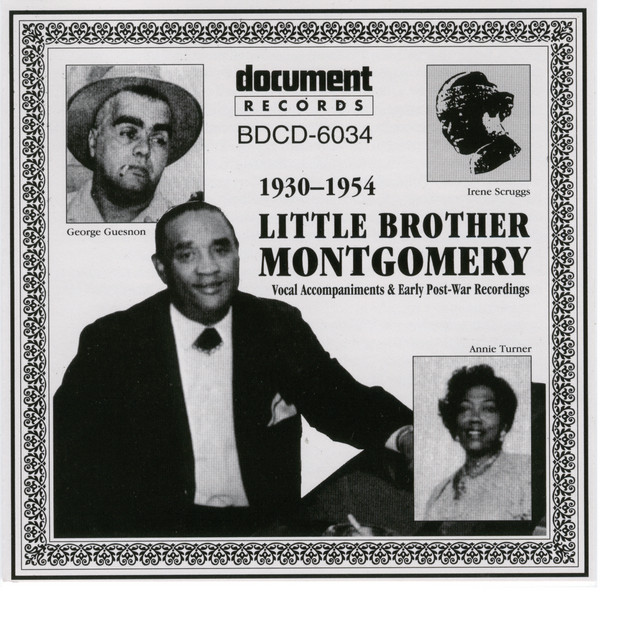
Little Brother Montgomery